
News
Countries tighten travel rules to slow Omicron spread


Saudi Arabia, Nigeria, Norway, Ghana confirm first cases of the new Omicron COVID-19 variant as countries tighten travel rules.
The United States, Japan and Malaysia have announced tighter travel restrictions in an attempt to slow the spread of the new Omicron coronavirus variant as more countries confirmed their first cases.
Japan and Hong Kong said on Wednesday they would expand travel curbs, and Malaysia temporarily banned travellers from countries deemed at risk, news agencies reported.
Hong Kong added Japan, Portugal and Sweden to its travel restrictions while Uzbekistan said it would suspend flights with Hong Kong as well as South Africa. Japan, which had already barred all new foreign entrants, reported its second case of the new variant and said it would expand its entry ban to foreigners with resident status from 10 African countries.
Malaysia temporarily barred travellers from eight African countries and said Britain and the Netherlands could join the list.
In North America, air travellers to the US were set to face tougher COVID-19 testing rules.
The Centers for Disease Control and Prevention (CDC) said late on Tuesday that the US would require all air travellers entering the country to show a negative COVID-19 test performed within one day of departure.
Currently, vaccinated international travellers can present a negative result obtained within three days from their point of departure. The new one-day testing requirement would apply to US citizens as well as foreign nationals.
Global spread
Saudi Arabia’s health ministry said it recorded the Gulf’s first confirmed case of the Omicron variant in a citizen returning from North Africa.
Nigeria said it had confirmed two cases of the Omicron variant among travellers who had arrived from South Africa in the past week. Ghana and Norway also reported their first cases of the new variant on Wednesday.
Brazilian health regulator Anvisa said late on Tuesday that two Brazilians had tested positive for the Omicron strain, the first reported cases in Latin America. A traveller arriving in Sao Paulo from South Africa and his wife, who had not travelled, had tested positive.
Germany, which is battling a surge in COVID-19 infections and deaths, reported that four fully vaccinated people had tested positive for Omicron in the south of the country but had moderate symptoms.
It also reported the highest number of deaths from coronavirus since mid-February on Wednesday, as hospitals warned that the country could have 6,000 people in intensive care by Christmas, above the peak of last winter.
Other countries braced for more cases: Australia said at least two people visited several locations in Sydney while likely infectious and Denmark said an infected person had taken part in a large concert.
The World Health Organization (WHO) said “blanket travel bans will not prevent the international spread, and they place a heavy burden on lives and livelihoods”, while advising those unwell, vulnerable or 60 years or over and unvaccinated to postpone travel.
Global health officials have offered reassurances and reiterated calls for people to get vaccinated.
BioNTech’s CEO said the vaccine it makes in a partnership with Pfizer would likely offer strong protection against severe disease from Omicron.
European Medicines Agency Executive Director Emer Cooke earlier said that laboratory analyses should indicate over the next couple of weeks whether the blood of vaccinated people has sufficient antibodies to neutralise the new variant.
The European Union brought forward the start of its vaccine distribution programme for five-to-11-year-old children by a week to December 13.
Britain, the US and European countries have expanded their booster programmes in response to the new variant.
First reported in South Africa a week ago, Omicron has highlighted the disparity between substantial vaccination pushes in rich nations and sparse inoculation in the developing world.

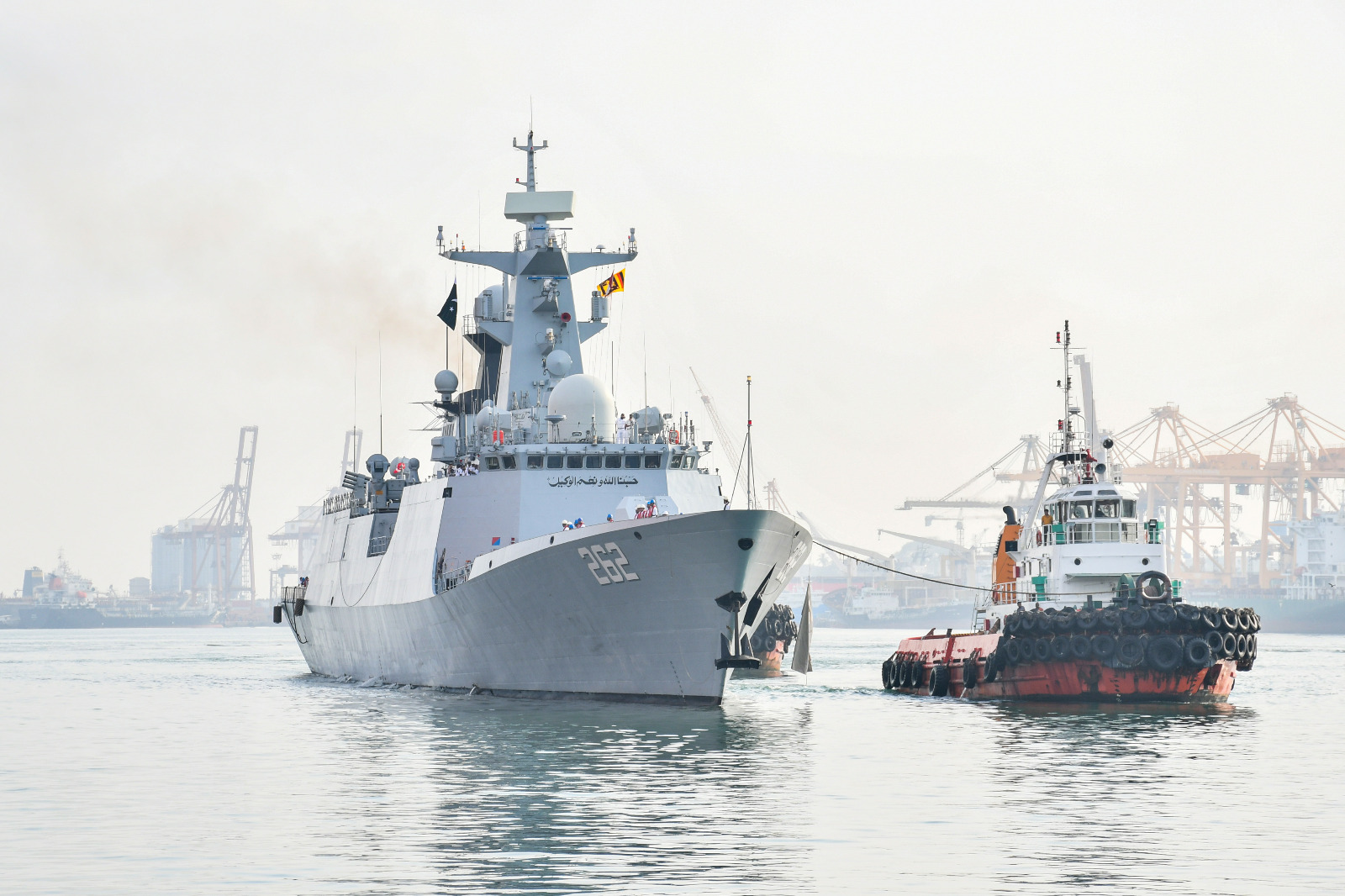
The Pakistan Navy Ship (PNS) TAIMUR and ASLAT arrived at the Port of Colombo on a goodwill visit on 12 Apr 26.
The visiting ships were welcomed by the Sri Lanka Navy in
compliance with naval traditions.
The duo of ships is commanded by Captain NIAMAT SAEED KHAN (PNS TAIMUR) and Captain NADIR MATEEN AFRIDI (PNS ASLAT).
Meanwhile, the ships are expected to conduct a Bilateral Naval Exercise LION STAR V with the Sri Lanka Navy in Colombo seas.
Latest News
Heat index likely to increase up to ‘Caution level’ at some places in the Northern, North-central, North-western, Western, Sabaragamuwa, Southern and Eastern provinces and Monaragala district


Warm Weather Advisory
Issued by the Natural Hazards Early Warning Centre at 3.30 p.m. on 11 April 2026, valid for 12 April 2026
The Heat index, the temperature felt on the human body is likely to increase up to ‘Caution level’ at some places in the Northern, North-central, North-western, Western, Sabaragamuwa, Southern and Eastern provinces and Monaragala district.
The Heat Index Forecast is calculated by using relative humidity and maximum temperature and this is the condition that is felt on your body. This is not the forecast of maximum temperature. It is generated by the Department of Meteorology for the next day period and prepared by using global numerical weather prediction model data.

Effect of the heat index on human body is mentioned in the above table and it is prepared on the advice of the Ministry of Health and Indigenous Medical Services.
ACTION REQUIRED
Job sites: Stay hydrated and takes breaks in the shade as often as possible.
Indoors: Check up on the elderly and the sick.
Vehicles: Never leave children unattended.
Outdoors: Limit strenuous outdoor activities, find shade and stay hydrated.
Dress: Wear lightweight and white or light-colored clothing.
Note: In addition, please refer to advisories issued by the Disaster Preparedness & Response Division, Ministry of Health in this regard as well. For further clarifications please contact 011-7446491.
Latest News
Sun directly overhead Cheddikulam, Kebithigollewa, Gomarankadawala and Nilaveli about 12:11 noon. today [12]

On the apparent northward relative motion of the sun, it is going to be directly over the latitudes of Sri Lanka from 05th to 15th of April in this year.
The nearest areas of Sri Lanka over which the sun is overhead today (12th) are Cheddikulam, Kebithigollewa, Gomarankadawala and Nilaveli about 12:11 noon.

PNS TAIMUR & ASLAT arrive in Colombo

Sanju Samson and Jamie Overton deliver first points for Chennai Super Kings

Arya, Prabhsimran and Shreyas help Punjab Kings ace another 200-plus chase

Beauty of Sri Lanka in focus: Global showcase blends art, diplomacy and conservation

Showers expected in the Western, Sabaragamuwa, Central, Southern, North-western and Uva provinces and in Ampara, Batticaloa and Polonnaruwa districts after 1.00 p.m.

Heat index likely to increase up to ‘Caution level’ at some places in the Northern, North-central, North-western, Western, Sabaragamuwa, Southern and Eastern provinces and Monaragala district

‘Dates have the highest sugar content to fight Coronavirus’

Sunday Island 27 December – Headlines

#SundayIsland 17th December – Headlines

Sunday Island – 28th March

Sunday Island Headlines – 21 March

Sunday Island – 21st February – Headlines
-

 News6 days ago
Lankan-origin actress Subashini found dead in India
-

 News4 days ago
AG: Coal procurement full of irregularities
-

 Business3 days ago
Israeli attack on Lebanon triggers local stock market volatility
-

 News19 hours ago
CEB orders temporary shutdown of large rooftop solar systems
-

 Business4 days ago
Hayleys Mobility introduces Premium OMODA C9 PHEV
-

 Business3 days ago
HNB Assurance marks 25 years with strategic transformation to ‘HNB Life’
-

 Sports4 days ago
DS to face St. Anthony’s in ‘Bridges of Brotherhood’ cricket encounter
-

 News6 days ago
UN Regional Director launches SL’s first Country Gender Equality Profile during official visit