
Business
Cost efficiencies drive vibrant 9-month growth for ComBank

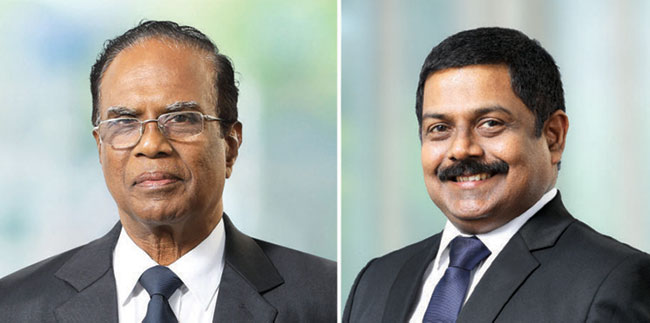
The Commercial Bank of Ceylon Group has achieved characteristically equitable growth for the nine months ending 30th September 2021, despite a slowing down in some key contributors in the third quarter of the year.
The Group, comprising the Commercial Bank of Ceylon PLC – Sri Lanka’s largest private sector bank – its subsidiaries and an associate, has reported a gross income of Rs 120.050 billion for the period, an improvement of 5.66% over the corresponding nine months of 2020, with the third quarter recording a growth of 4.34% in comparison with the 6.34% growth achieved for the first half of 2021.
Interest income, the biggest component of gross income, grew by 3.43% to Rs 96.227 billion, improving on the 3.20% growth achieved up to June 2021, and interest expenses continued to decline, albeit at a lower rate than in the first half of the year, the Group said. Consequently, interest expenses reduced by 13.42% to Rs 48.693 billion for the nine months, enabling the Group to post net interest income of Rs 47.533 billion, recording an increase of 29.18%.
Among the other principal contributors to gross income, fee and commission income grew by 32.21% to Rs 11.002 billion; net other operating income improved by 13.91% to Rs 7.808 billion assisted by higher exchange gains; net gains from de-recognition of financial assets contributed Rs 2.976 billion and net gains from trading amounted to Rs 2.037 billion, an increase of 171.95%. Net gains from de-recognition of financial assets witnessed a decline of 36.10% due to a reduction in profits from the sale of Treasury Bonds and Sovereign Bonds by Rs 1.417 billion, in comparison with the third quarter of last year, the Group said.
Total operating income at Rs 68.951 billion for the nine months, reflected a growth of 23.53% and the Group’s noteworthy achievement of restricting impairment charges to Rs 17.997 billion during the period under review, an increase of only 7.56% as compared with a 47.44% growth at the end of the first half of 2021, resulted in net operating income growing by 30.37% to Rs 50.954 billion. With the Group’s consistency in curtailing growth in operating expenses to 8.39% (8.42% for the first half of 2021), total operating expenses for the nine months increased by Rs 1.647 billion to Rs 21.280 billion.
Consequently, operating profit before VAT on financial services grew by a significant 52.55% to Rs 29.674 billion for the nine months, improving on the 41.09% growth recorded at the end of the first six months of the year.
Commercial Bank Chairman Justice K. Sripavan noted that these results demonstrate Commercial Bank’s strong ability to maintain healthy and balanced growth in core banking operations to mitigate the impacts of fluctuations in income from fee-based operations and other operating income. “Each quarter sees the Bank maintaining or improving on its key performance ratios to become even more financially stable and better-positioned to continue its mission as a systemically important bank,” he said.
The Bank’s Managing Director S. Renganathan elaborated that Commercial Bank continued to improve its CASA ratio, cost-income ratio, provisioning for impairment and provision cover in the period reviewed, disclosing that charges for impairment and other losses had in fact declined by a remarkable 41.87% in the third quarter. “These are excellent indicators of our unrelenting focus on banking fundamentals even as we continue to provide concessions to our customers in consideration of the difficult circumstances that prevail,” Renganathan said. “It is most noteworthy that in terms of profitability, the Group has also surpassed its 2020 full-year performance at the end of the third quarter of 2021 while improving its interest margins, return on assets and return on equity.”
The Group paid Rs 4.608 billion as value added tax on financial services for the nine months, which was up 50.55% in line with the growth in profits. As a result, profit before tax for the period amounted to Rs 25.067 billion, an improvement of 52.90%. Income tax increased by 15.92% to Rs 6.049 billion, the relatively lower rate attributable to the reduction in the income tax rate. Consequently, profit after tax for the nine months reviewed grew by 70.17% to Rs 19.017 billion. Notably, this is Rs 1.931 billion or 11.30% more than the Group’s net profit for the full year of 2020. Total taxes paid by the Group in respect of the nine months amounted to Rs 10.981 billion.
Taken separately, Commercial Bank of Ceylon PLC reported profit before tax of Rs 24.425 billion for the period, with a growth of 56.91% and profit after tax of Rs 18.606 billion, recording an improvement of 75.61%.
Total assets of the Group grew by Rs 200 billion or 11.35% over the nine months to reach Rs 1.962 trillion as at 30th September 2021.
Gross loans and advances increased by Rs 105.195 billion or 10.94% to Rs 1.067 trillion, recording a monthly average growth of Rs 11.688 billion over the nine months. The growth of the loan book over the preceding year was 12.36%.
Total deposits of the Group recorded an improvement of Rs 161.272 billion or 12.53% in the nine months reviewed at a monthly average of Rs 17.919 billion to reach Rs 1.448 trillion as at 30th September 2021. Deposit growth over the preceding 12 months was 18.51%.
In other key indicators, the Bank’s basic and diluted earnings per share improved by 54.72% from Rs 10.07 to Rs 15.58, while its net assets value per share increased to Rs 137.00 from Rs 134.67 as at end 2020.
The CASA ratio improved to an impressive 47.05%, an industry benchmark, from 42.72% at the end of 2020 and 41.97% at the end of the third quarter of 2020, while the Bank’s Cost to Income Ratio (CIR) before VAT on Financial Services improved to 30.73% at the end of the period under review from 33.95% at the end of 2020 and 38.51% at the end of 2019. The cost to income ratio inclusive of VAT on financial services improved to 37.55% from 39.96% at end 2020 and 49.41% at the end of 2019.
The Bank’s Tier 1 Capital Adequacy Ratio (CAR) stood at 12.182% as at 30th September 2021, and its Total Capital Ratio at 16.128%, both comfortably above the revised minimum requirements of 9% and 13% respectively imposed by the regulator consequent to the COVID-19 pandemic.
The Bank’s gross non-performing loans (NPL) ratio improved to 4.94% from 5.11% at end 2020 and 5.20% a year previously, while its net NPL ratio improved to 1.83% from 2.18% as at 31st December 2020 and 3.04% as at 30th September 2020. As a result, provision cover based on existing Central Bank of Sri Lanka (CBSL) regulatory requirements improved to 63.03% at the end of the reviewed nine months, from 57.42% at end 2020 and 41.47% a year previously. The Bank’s impaired loan (stage 3) ratio and impairment (stage 3) to stage 3 loans ratio as at 30th September 2021 stood at 6.83% and 31.92% respectively, compared to 6.78% and 30.87% respectively, at the end of 2020.
The Bank’s interest margin also improved to 3.37% from 3.17% for the year 2020, and 3.17% for the first nine months of the previous year. Return on assets (before taxes) and return on equity stood at 1.78% and 15.51% respectively for the nine months ending 30th September 2021 compared to 1.51% and 11.28% for 2020 and 1.37% and 10.28% at the end of the third quarter of 2020.
Sri Lanka’s first fully carbon neutral bank, the first Sri Lankan bank to be listed among the Top 1000 Banks of the World and the only Sri Lankan bank to be so listed for 11 years consecutively, Commercial Bank operates a network of 268 branches and 931 automated machines in Sri Lanka. The Bank’s overseas operations encompass Bangladesh, where the Bank operates 19 outlets; Myanmar, where it has a Microfinance company in Nay Pyi Taw; and the Maldives, where the Bank has a fully-fledged Tier I Bank with a majority stake.



Sri Lanka has reached a staff-level agreement with the International Monetary Fund to secure the next tranche of funding under its ongoing bailout programme, marking a key step in the country’s fragile economic recovery.
The agreement, announced this week, will enable Sri Lanka to access approximately USD 700 million, subject to approval by the IMF Executive Board. The funds form part of the USD 2.9 billion Extended Fund Facility (EFF) programme agreed following the 2022 economic crisis.
The latest development covers the combined fifth and sixth reviews of Sri Lanka’s reform programme, indicating that the country has made sufficient progress to move forward, while highlighting the need to sustain reform efforts.
Sri Lanka’s economy has shown signs of stabilisation in recent months, supported by improved revenue collection, easing inflation, and a gradual buildup of foreign reserves. However, the recovery remains vulnerable to both domestic and external pressures.
By Ifham Nizam

Initially CSE trading was somewhat volatile despite the ceasefire in West Asia but it experienced further volatility after Israel attacked Lebanon yesterday.
However, the IMF delegation which is now in Sri Lanka to release two tranches of its relief package created some positive sentiments for the market, analysts said.
The All Share Price Index went down by 73.06 points, while the S and P SL20 rose by 10.57 points.
Turnover stood at Rs 2.96 billion with six crossings. Those crossings were: JKH 5.5 million shares crossed to the tune of Rs 807.6 million and its shares traded at Rs 19.70, CIC Holdings two million shares crossed for Rs 54 million; its shares traded at Rs 32, Access Engineering 600,000 shares crossed for Rs 44.4 million; its shares traded at Rs 74, Central Finance 116,000 shares crossed to the tune of Rs 27.5 million ; its shares sold at Rs 237, LMF 250,000 shares crossed for Rs 22.8 million; its shares fetched Rs 91.10 and Kelani Cables 200,000 shares crossed for Rs 21 million and its shares traded at Rs 105.
In the retail market seven companies that mainly contributed to the turnover were; Dialog Rs237 million (7.5 million shares traded), LMF Rs 203 million (22 million shares traded), Colombo Dockyard Rs 199.7 million (1.1 million shares traded), HBA Foods Rs 163 million (18.5 million shares traded), JKH Rs 156 million (7.8 million shares traded), JKH Rs 156 million (7.8 million shares traded), Softlogic Holdings Rs 117 million (9.6 million shares traded) and Acme Printers Rs 107 million (15.6 million shares traded). During the day 133.3 million share volumes changed hands in 23666 transactions.
It is said that manufacturing sector counters, like JKH, performed well, while food sector counters, especially LMF and HBA Foods, performed well. Other sectors too performed somewhat well during the day.
Yesterday the rupee was quoted a Rs 315.42/48 to the US dollar in the spot market from 315.30/40 the previous day, dealers said, while bond yields were quoted higher.
By Hiran H. Senewiratne

Marking 25 years of trust, growth, and service excellence, HNB Assurance PLC has unveiled its new corporate identity, transitioning to HNB Life PLC a strategic evolution that reflects the company’s forward-looking vision and commitment to empowering lives with protection and the freedom to thrive, no matter where life takes them.
This milestone signifies more than a change in name or visual identity. It represents a deliberate transformation shaped by strong performance over the past few years, during which the company has achieved remarkable growth, strengthened its market position and enhanced its customer-centric capabilities.
The newly introduced logo, inspired by the form of a wing, symbolises HNB Life’s role as a proactive enabler. It reflects the organisation’s commitment to supporting individuals in navigating life’s journey with confidence, empowering them to pursue their aspirations and live life on their own terms.
The official unveiling took place at a launch event attended by key stakeholders, strategic business partners, well-wishers and employees.
Addressing the gathering, Chairman, Stuart Chapman highlighted the significance of this transformation, stating, “As we mark 25 years of progress, the transition to HNB Life reflects our strategic intent to evolve with the changing needs of our customers and the broader market. This new identity embodies our purpose, to enable and empower individuals to achieve what they truly aspire to in life, with confidence and security. As a company we are extremely excited on what the future holds for as, as we build on an incredible foundation laid over the past two and a half decades.”
The new Vision of the Company is “To be the leader in empowering lives with protection and freedom to thrive, no matter where life takes them”.

PM on inspection tour of newly renovated Colombo Central Bus Stand

Israel to hold direct talks with Lebanon but no ceasefire, Netanyahu says

Sun directly overhead Nagawilluwa, Galgamuwa, Sigiriya, Palugasdamana and Mankerni about 12:11 noon today (10)

Showers expected in the Western, Sabaragamuwa, Southern and Uva provinces and in Kandy and Nuwara-Eliya districts after 2.00 p.m

Opposition tells Minister Kumara Jayakody to resign

Coal tender scandal: FSP to move court against illegal deals

‘Dates have the highest sugar content to fight Coronavirus’

Sunday Island 27 December – Headlines

#SundayIsland 17th December – Headlines

Sunday Island – 28th March

Sunday Island Headlines – 21 March

Sunday Island – 21st February – Headlines
-

 Features5 days ago
Ranjith Siyambalapitiya turns custodian of a rare living collection
-

 News5 days ago
Global ‘Walk for Peace’ to be held in Lanka
-

 News3 days ago
Lankan-origin actress Subashini found dead in India
-

 Features5 days ago
Beyond the Blue Skies: A Tribute to Captain Elmo Jayawardena
-

 Features5 days ago
Aspects of Ceylon/Sri Lanka Foreign Relations – 1948 to 1976
-

 Business1 day ago
Hayleys Mobility introduces Premium OMODA C9 PHEV
-

 News1 day ago
AG: Coal procurement full of irregularities
-

 Sports1 day ago
DS to face St. Anthony’s in ‘Bridges of Brotherhood’ cricket encounter