
News
COPF chair deadlock persists despite president consenting to Harsha

By HIMAL KOTELAWALA
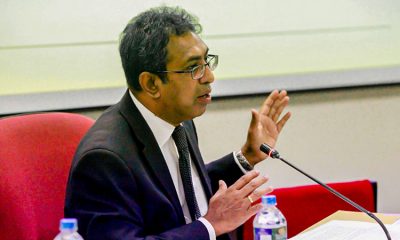
ECONOMYNEXT –President Ranil Wickremesinghe has agreed to the appointment of main opposition Samagi Jana Balawegaya (SJB) MP Harsha de Silva as chair of the Committee on Public Finance (COPF) but disagreement within the committee has led to a deadlock, MPs said.
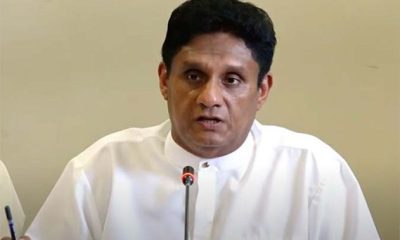
Opposition and SJB leader Sajith Premdasa told parliament on Thursday that the president has conveyed to SJB legislators de Silva and Kabir Hashim at a meeting attended by Prime Minister Dinesh Gunawardena and Leader of the House Susil Premajayantha that he is agreeable to the appointment.
“I would like to know if there is some problem within the government and if that is why the president’s directives are not followed,” said Premadasa.
Responding to the opposition leader, Chief Government Whip Prasanna Ranatunga acknowledged that the president had indeed agreed to de Silva’s appointment but government MPs in the COPF have expressed concern.
“As you said, the president has agreed, but in discussions between the MPs of the committee – we have no issue with Harsha de Silva – but our MPs have a small concern about his conduct,” said Ranatunga.
Chief Opposition Whip Lakshman Kiriella noted that parliament’s standing orders do not say that a committee chair cannot be appointed because MPs are opposed to it. Ranatunga, however, countered that majority support from the committee was needed, which Kiriella again refuted.
The issue of COPF chair has dragged for weeks now, said Premadasa asking why the government was so adamant on blocking de Silva’s appointment.
The SJB and other opposition groups have been crying foul over the government’s refusal to appoint the economist-turned-politician as COPF chair. An allegedly surreptitious attempt to have de Silva’s SJB colleague Mayantha Dissanayake came a cropper after Dissanayake, who had initially accepted the position, resigned mere days later. Government MPs have claimed that the SJB had wanted Dissanayake to step down due to internal rifts in the party.
For his part, de Silva has said the government has been violating parliamentary procedures and governance by running the committee without a chairman since January.
On May 12, the main opposition questioned the legality of raising a ceiling on Treasury bills to 6,000 billion rupees from 5,000 billion over dispute over the committee chairmanship.








The Colombo Municipal Council (CMC) has resumed parking fees in the city with effect from today (23).
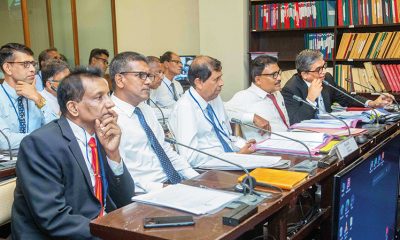
Parking management and fee collection will recommence from 6 am, following a decision by the Finance Standing Committee of the Council.
Charges were temporarily suspended from March 18 due to heavy traffic and long queues near fuel stations. Authorities said the situation had improved with the introduction of the QR code system and odd-even rationing.
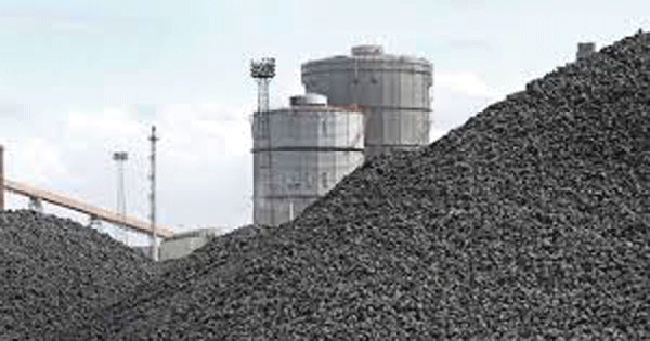
The ongoing controversy surrounding the importation of substandard coal to the Lakvijaya (Norochcholai) Coal Power Plant has spiralled into a full-blown national energy crisis, with severe technical disruptions, mounting financial losses, and growing fears of widespread power outages, a former General Manager of the Ceylon Electricity Board has warned.
Speaking with authority shaped by decades of experience, the retired electrical engineer did not mince his words: “This is not a routine operational issue. This is a systemic failure that is now threatening energy security.”
At the heart of the crisis lies the compromised quality of coal supplied to the Lakvijaya plant, the country’s largest coal-fired power station.
According to the former CEB chief, the plant’s generation capacity has dropped sharply due to coal that fails to meet the required Gross Calorific Value (GCV) of 5,900 kcal/kg.
“Generation losses in the range of 80 to nearly 180 megawatts are not minor fluctuations. They represent a serious erosion of base-load capacity at a time when demand is steadily rising,” he said.
The technical consequences have been immediate and severe. Coal mills—critical components in pulverising coal for combustion—have reportedly clogged due to high ash content and poor grindability, particularly in Unit 3.
Engineers have been forced to resort to diesel-fired burner guns to stabilise boiler operations, a move the former GM described as “a costly and inefficient emergency measure.”
“Diesel is not meant to be a fallback for sustained operations. It is a last resort. When you start relying on it regularly, you are effectively admitting that the system is failing,” he added.
Beyond immediate disruptions, the long-term risks to infrastructure are deeply concerning. Substandard coal increases the likelihood of slagging and fouling within boilers, potentially leading to overheating and irreversible damage.
“You are not just losing power generation today—you are shortening the lifespan of multi-billion-rupee assets,” he warned.
The financial fallout has been equally staggering. Internal estimates from the CEB and the Public Utilities Commission of Sri Lanka suggest that losses from multiple coal shipments range between Rs. 7.5 billion and Rs. 8.5 billion.
Compounding the crisis is the cost of replacement power. With the coal plant unable to operate at full capacity, authorities have increasingly turned to diesel-based emergency generation.
“The economics are brutal,” the former GM explained. “A unit of electricity from coal costs roughly Rs. 20 to 25. Diesel generation can go up to Rs. 60 or even Rs. 75. That gap translates into tens of millions of rupees in additional daily expenditure.”
He estimated that the country is incurring an extra burden of over Rs. 50 million per day due to this forced shift—costs that ultimately fall on the public.
Even more troubling, he noted, is that contractual penalties imposed on suppliers are insufficient to offset the losses.
“The recoverable penalties are nowhere near the actual damage. There is a gap of nearly Rs. 2 billion, which means the taxpayer is left footing the bill,” he said.
The environmental implications of the crisis add another layer of urgency. One shipment reportedly contained ash levels as high as 21 percent—almost double the acceptable standard.
“This means thousands of tonnes of additional waste. Where is it going? How is it being managed?” the former GM questioned.
Worse still, when diesel burners are used to stabilise boilers, Electrostatic Precipitators (ESPs)—designed to capture harmful fly ash—must be temporarily shut down. This results in the release of toxic particulates into the atmosphere.
“You are talking about emissions containing mercury, arsenic, and lead. These are not abstract risks. They have direct consequences for public health, particularly for communities living around Norochcholai,” he stressed.
The crisis has also exposed serious lapses in procurement and governance. The former GM pointed to the reduction of procurement timelines from 42 days to just 21 days, as well as the lowering of supplier eligibility thresholds.
“These are not procedural tweaks—they fundamentally alter the integrity of the procurement process,” he said, adding that such changes may have limited competition and allowed less experienced suppliers into the system.
He also raised concerns over reports that coal had been fed directly into boilers before independent quality verification.
“If true, that is a dangerous precedent. Quality assurance exists for a reason. Bypassing it undermines operational safety and accountability,” he noted, while acknowledging the CEB’s position that direct feeding was intended to avoid double handling.
Looking ahead, the timing of the crisis could not be worse. With the southwest monsoon approaching, experts fear that delays in procurement or the rejection of substandard shipments could push fresh imports into a period when rough seas make unloading at Norochcholai extremely difficult.
“If shipments are delayed into the monsoon window, you are staring at a real risk of supply disruptions. That is when load shedding becomes unavoidable,” the former GM warned.
He called for immediate corrective measures, including stricter quality enforcement, transparent procurement practices, and accountability at all levels.
“This is a preventable crisis. But it requires decisive action. Otherwise, we are heading towards a situation where technical failure, financial loss, and environmental damage converge into a national emergency,” he said.
By Ifham Nizam

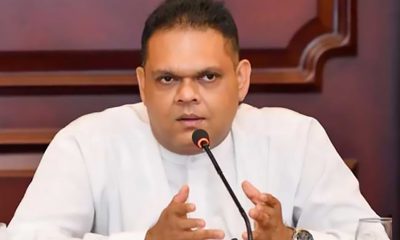
Sri Lanka was collaborating with the International Committee of the Red Cross (ICRC) to create a consolidated national database for missing persons, Justice Minister Harshana Nanayakkara told Parliament on Friday. The initiative aims to address longstanding fragmentation in state records, he said.
“The government acknowledges that the absence of a fully credible National Consolidated database has been a long-standing challenge,” Nanayakkara said, noting that information is currently scattered across the Office on Missing Persons (OMP), the Human Rights Commission, and several previous ad hoc commissions.
The move seeks to bring transparency to a process often criticized by families of the disappeared for its lack of clarity. The current fragmentation has hindered the creation of a unified record, the Minister added.
To tackle this, the OMP has begun consolidating data from different sources into a temporary database to preserve existing records. A formal proposal for a comprehensive long-term Database Management System has also been developed. The government plans to seek international technical support to ensure the system meets humanitarian, legal, and accountability standards.
Nanayakkara said a requirement identification process is underway with relevant stakeholders.
In parallel, the OMP is being revamped to improve data collection, including better coordination with law enforcement and civil registries and the introduction of digital platforms to enhance accuracy.

CMC resumes parking fees

Substandard coal deepens energy crisis, warns former CEB Chief

Sri Lanka, ICRC to develop unified national database for missing persons

Experts urge hydration and fruit intake amid heatwave

Healthguard Distribution powers Sri Lanka’s ‘Port to Pharmacy’ medicine supply chain

Fuel: Feints, hooks and rhetoric

‘Dates have the highest sugar content to fight Coronavirus’

Sunday Island 27 December – Headlines

#SundayIsland 17th December – Headlines

Sunday Island – 28th March

Sunday Island Headlines – 21 March

Sunday Island – 21st February – Headlines
-

 News5 days ago
CIABOC questions Ex-President GR on house for CJ’s maid
-

 News6 days ago
Sri Lankan marine scientist Asha de Vos honoured at UNGA opening
-

 News6 days ago
Australian HC debunks misleading travel risk claims for Sri Lanka
-

 News4 days ago
Bailey Bridge inaugurated at Chilaw
-

 Latest News6 days ago
Wednesdays declared a government holiday with effect from 18th March
-

 News4 days ago
Pay hike demand: CEB workers climb down from 40 % to 15–20%
-

 News3 days ago
CIABOC tells court Kapila gave Rs 60 mn to MR and Rs. 20 mn to Priyankara
-

 News7 days ago
Fuel rationing begins: Police deployed as queues return