
News
Continued UNHRC scrutiny of Sri Lanka’s human rights record crucial: HRW


The United Nations Human Rights Council should maintain its rigorous scrutiny of Sri Lanka’s worsening human rights situation and press for genuine improvements, Human Rights Watch said on Friday.
They further said: “At the Council’s upcoming session, which begins on September 13, 2021, UN member countries should express their alarm about the ongoing abuses by the government of President Gotabaya Rajapaksa and the weakening of independent governmental institutions, civilian governance, and the rule of law. These countries should demonstrate their willingness to press the Sri Lankan government to meet its international human rights obligations,” they said.
“Since Gotabaya Rajapaksa took office in 2019, the limited progress Sri Lanka had made in addressing past atrocities and ending abuses has been disastrously reversed,” said Meenakshi Ganguly, South Asia director at Human Rights Watch.
“Continued international attention and pressure can help reduce the risks faced by minority communities, activists, and journalists, who live in heightened fear of the authorities”.
“Earlier in 2021, the Human Rights Council adopted an important resolution, 46/1, to advance accountability for past rights violations and war crimes committed in Sri Lanka. The resolution also mandated regular reporting by the UN High Commissioner for Human Rights. In 2020, the Rajapaksa administration had renounced the previous administration’s commitments to the Human Rights Council to provide justice and end abuses.”
“The administration is using its security and intelligence agencies to check and intimidate the families of abuse victims and others who are seeking to uphold human rights. When we talk to the families of the ‘disappeared,’they say they can be arrested at any time,” a human rights defender in northern Sri Lanka told Human Rights Watch. “That they can arrest you for anything.”
“The authorities are using arrests and threats issued under the draconian Prevention of Terrorism Act (PTA) to silence calls for justice in the Tamil majority North and East, and to arbitrarily detain Muslims in counter-terrorism operations. In August, Inspector General of Police C.D. Wickramaratne said that 311 people were in custody for the deadly 2019 Easter bombings, many of them for over two years. However, no one has yet been brought to trial in connection with the attacks,” Human Rights Watch said.
“President Rajapaksa issued an ordinance under the PTA this year that allows for two years in detention without trial for the “rehabilitation” of people accused of causing “disharmony,” and another that creates a new PTA detention center at a notorious police facility in Colombo that would permit even more abuse under the terrorism law. These actions contradict the government’s claim to foreign diplomats that it was preparing to reform the PTA, which has been used to facilitate the arbitrary detention and torture of prisoners since its introduction in 1979.
Under the PTA, a prisoner can be held for up to 18 months without being produced in court. A newly formed “advisory board” of three presidential appointees to review pretrial detention orders under this law offers no credible legal protection against abuses”, Human Rights Watch said.
“The police Terrorism Investigation Division (TID) has been used to stifle civil society. They regularly visit the NGOs (nongovernmental organizations) and talk about the financial reports and staff lists and phone numbers,” an activist in the east, who described the visits as a method of surveillance and intimidation, told Human Rights Watch. “The TID visits NGOs regularly. It’s kind of routine.”
“An amendment to the constitution in 2020 undermined the independence of the judiciary by empowering the president to appoint senior judges. The amendment also undercut the independence of the Human Rights Commission of Sri Lanka, the status of which is now under review by the Global Alliance of National Human Rights Institutions. Recent appointments to the Office of Missing Persons, which is supposed to discover what happened to thousands of victims of enforced disappearance over several decades, have further undermined its credibility. The appointees include a former Inspector General of Police accused of destroying evidence in the murder of a journalist.
A presidential commission established in January 2020 to examine supposed cases of “political victimization” has recommended halting investigations or prosecutions in the few cases of serious abuses where there had been limited progress, and instead opening investigations against police investigators for allegedly falsifying evidence.” Human Rights Watch said.
“In August 2021, the Attorney General dropped charges against a former commander of the Navy implicated in the enforced disappearance of 11 men and boys between 2008 and 2009. Senior Superintendent of Police Shani Abeysekera, who led that and other major human rights investigations, received death threats and was imprisoned for a year and half, until the Court of Appeal found that the case against him was “fabricated.” Meanwhile, the government has sought to persuade diplomats at the Human Rights Council that an accountability process still exists, by referring to a separate presidential commission established by President Rajapaksa in January with a mandate to reexamine the reports of the numerous previous domestic commissions “to ascertain whether there have been violations of international human rights law and international humanitarian law,” and whether previous recommendations had been implemented, ” Human Rights Watch said.
“On August 31, the Sri Lankan Foreign Ministry circulated a document to foreign diplomats in which the government claims, without basis, to have made “continued and tangible progress … in addressing issues related to achieving peace, reconciliation, and development, including accountability, within the domestic legal framework of Sri Lanka.”
They further said: “In fact, the government’s approach has been to emphasize “compensation” to victims over justice and accountability, as Justice Minister Ali Sabry said at an event organized by the Office of Missing Persons on August 31. The Foreign Ministry claims that these payments – about US$500 each in cases in which the victim died – will help bring “closure” and “reconciliation.”
“Far from promoting reconciliation, the government has repeatedly adopted policies that alienate Sri Lanka’s beleaguered minority communities. Tamils and Muslims in the North and East have complained of a concerted government policy to seize land belonging to members of their communities on various pretexts, including by a presidential task force on archaeology composed of Buddhist monks and members of the security forces.
Foreign governments should take firm and coordinated action to press the Sri Lankan government to reverse course”, Human Rights Watch said.
“The European Union should insist that Sri Lanka complies with its human rights obligations to maintain tariff free market access under GSP+, as should the United Kingdom under its similar program. Donor governments and multilateral agencies, such as the UN Office on Drugs and Crime, should immediately withhold support for Sri Lankan security forces until they take steps to halt and address violations, in compliance with UN due diligence standards.”
“Governments should also consider imposing targeted sanctions on senior figures implicated in grave abuses, and pursue prosecutions under universal jurisdiction, as recommended by the UN human rights chief, Michele Bachelet, earlier this year.”
“No one should be in any doubt that Sri Lanka’s human rights situation is deeply alarming and getting worse,” said. “UN member states should recognize that the government is sensitive to international pressure, and make the protection of human rights in Sri Lanka their priority,” Ganguly said.


Prof. Priyanga Dunusinghe has warned that Sri Lanka could face a catastrophic situation due to a rapid and sharp drop in revenue caused by the escalating Gulf war.
Appearing on Derana ‘Big Focus’ yesterday, the Professor in Economics in the Department of Economics, and Head – Department of Information Technology, University of Colombo, Dunusinghe said that that drop in remittances from the Middle East, as well as exports, should be examined against the backdrop of runaway oil prices.
Dunusinghe said so responding to interviewer Pasan de Silva who sought expert opinion on the crisis. Referring to continuing Iranian retaliatory attacks on Gulf countries hosting US military bases, the academic pointed out that approximately one million Sri Lankans were employed in the region.
Global oil prices rose to over $100 per barrel on 08 March, for the first time since the Russia-Ukraine war erupted in February 2022. By noon prices were around USD 115 per barrel.
If a consensus couldn’t be reached soon, the consequences for Sri Lanka would be devastating, Dunusinghe said, suggesting that the government should seriously consider, what he called, a relatively small but immediate fuel hike to cushion the impact of future fuel price hikes.
Dunusinghe explained that in addition to the drop in remittances from the Middle East, Sri Lanka could lose employment opportunities in the war devastated region. Responding to the interviewer, the Prof said that if the situation further deteriorated the government would have to face the daunting challenge of evacuating Sri Lankans from the Middle East.
Referring to the devastating impact of Cyclone Ditwah, Dunusinghe pointed out that in terms of the agreement with the IMF, finalised in 2023, the debt repayment would have to be recommenced in 2028. The new Middle East war has placed the country in an extremely difficult situation, Dunusinghe said, while emphasising the responsibility on the part of the government to address the issues at hand immediately.
The rapidly changing oil markets indicated that regardless of optimism expressed by the US and Israel of swift victory, the ground realities were quite different, the academic said.
By Shamindra Ferdinando
The NPP governmnet has completed a major restructuring of its power sector, marking one of the most significant transformations in the country’s electricity industry in recent times, Minister of Power and Energy Engineer Kumara Jayakody says.
Addressing directors and senior officials of the newly established institutions in the power sector, while also connecting with employees of the new entities, via Zoom, the Minister said the restructuring programme had now been fully implemented with the objective of strengthening the sector, while ensuring continued state ownership.
Jayakody said the reforms represented a decisive step towards building a stronger and more resilient electricity sector, capable of meeting both present and future challenges facing the country.
“We have completed the restructuring programme that marks one of the biggest transformations in Sri Lanka’s power sector. Let us work together with dedication and commitment, within the newly established institutions, to realise the dream of ‘a prosperous country and a beautiful life,’” the Minister said.
The Minister stressed that the current government had reversed earlier attempts, by the previous administration, to break up the Ceylon Electricity Board (CEB) into 12 entities, as part of a privatisation drive.
Instead, he said, the government had established several new companies that would remain 100 percent state-owned, thereby safeguarding public ownership of the electricity sector, while introducing the structural reforms needed to modernise and strengthen the industry.
According to Jayakody, the restructuring initiative was carefully designed to ensure that the electricity sector would remain under state control while being equipped with the institutional capacity required to address emerging energy demands, technological changes and economic pressures.
He noted that one of the government’s key priorities, during the reform process, had been the protection of employee rights and privileges.
“As a government representing working people, we paid special attention to protecting the rights and benefits of employees. We assure you that the privileges and rights enjoyed by you as CEB employees will continue without even the slightest reduction when you join the new institutions,” the Minister said.
He added that the government had also taken steps to address long-standing grievances raised by employees and trade unions in the power sector.
Jayakody said many of the demands made by workers over the years had now been fulfilled, including some that had not yet been formally requested by unions or employee representatives.
“Many of the issues raised by workers in the past have now been resolved. In some instances, the government moved to address concerns even before they were formally requested by employees or trade unions,” he said.
The Minister also noted that throughout the restructuring process, the government had maintained a regular dialogue with trade unions representing workers in the electricity sector.
He said the authorities had held discussions with union representatives on several occasions and listened to their concerns before finalising key aspects of the restructuring programme.
Jayakody emphasised that the establishment of the new institutions represented a significant milestones in the development of Sri Lanka’s electricity sector.
“At this important moment, when a major step is being taken towards the development of the country’s power sector, I invite all of you to treat this as a national mission and make the fullest use of the opportunities available within these new institutions,” he said.
The Minister also expressed his appreciation to all those who had contributed to the successful completion of the restructuring programme.
He said the transformation of the electricity sector had required the cooperation and commitment of many stakeholders, including officials, employees and policymakers.
Energy sector analysts say the restructuring of the power sector is expected to play a critical role in improving efficiency, governance and long-term planning in electricity generation, transmission and distribution.
Sri Lanka’s electricity industry has faced several challenges in recent years, including rising fuel costs, supply disruptions and the need for increased investment in renewable energy and grid infrastructure.
Officials say the new institutional framework is expected to enhance operational efficiency while ensuring that the strategic assets of the electricity sector remain under state ownership.
The government maintains that the restructuring programme will ultimately strengthen the country’s energy security while supporting broader economic development.
By Ifham Nizam
News
Pilleyan held over Eastern Uni VC’s 2006 disappearance seeks SC intervention: Case to be taken up on 18 March
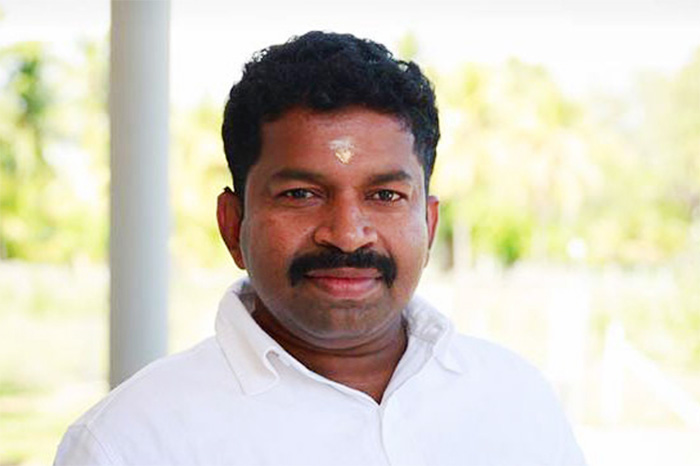
The Supreme Court yesterday declared that the Fundamental Rights (FR) petition filed by former State Minister, one-time Eastern Province Chief Minister, and ex-LTTE combatant Sivanesathurai Chandrakanthan, alias Pilleyan, would be called on 18 March.
The petition has challenged Pilleyan’s arrest and detention by the Criminal Investigation Department (CID) in terms of Prevention of Terrorism Act (PTA). Pilleyan was taken into custody in April last year over his alleged involvement in the disappearance of the Vice Chancellor of the Eastern University Prof. Raveendranath in December 2006. Prof. Raveendranath was on his way to attend a conference of the Sri Lanka Association for the Advancement of Science (SLAAS),
When the petition was taken up yesterday, the three-judge bench considered the facts presented and directed that the matter be called for examination on 18 March.
The Director of the CID, the Inspector General of Police (IGP), and the Attorney General, among others, have been named as respondents in the case.
The petitioner has sought a court ruling declaring that his arrest, and subsequent detention were unlawful and constitute a violation of his fundamental human rights, as they were executed without any justifiable cause.

Prof. Dunusinghe warns Lanka at serious risk due to ME war

Power sector restructuring completed; new state-owned entities established: Govt.

Pilleyan held over Eastern Uni VC’s 2006 disappearance seeks SC intervention: Case to be taken up on 18 March

Lanka takes part in Thai Red Cross Charity Bazaar

India hammer New Zealand to retain T20 World Cup crown

Advocata Institute highlights regulatory barrier limiting women’s overtime earnings

‘Dates have the highest sugar content to fight Coronavirus’

Sunday Island 27 December – Headlines

#SundayIsland 17th December – Headlines

Sunday Island – 28th March

Sunday Island Headlines – 21 March

Sunday Island – 21st February – Headlines
-

 News4 days ago
University of Wolverhampton confirms Ranil was officially invited
-

 News5 days ago
Legal experts decry move to demolish STC dining hall
-

 News4 days ago
Female lawyer given 12 years RI for preparing forged deeds for Borella land
-

 News3 days ago
Peradeniya Uni issues alert over leopards in its premises
-

 Business5 days ago
Cabinet nod for the removal of Cess tax imposed on imported good
-
 News4 days ago
Library crisis hits Pera university
-

 News3 days ago
Wife raises alarm over Sallay’s detention under PTA
-
 Business6 days ago
War in Middle East sends shockwaves through Sri Lanka’s export sector