
Opinion
Confusion on fourth Norochcholai coal power plant

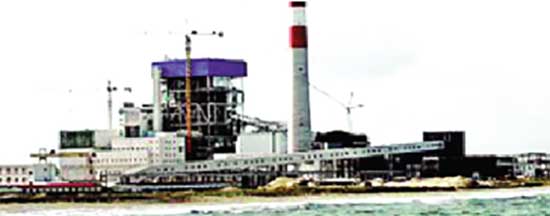
The statement appearing in your issue of 31st July, where Chairman CEB, Vijitha Herath, says ‘They have not awarded the construction to anyone as the technical and environmental impact study was ongoing’ is rather confusing, when the same news item says ‘However, the Cabinet had decided to award the contract to the China Machinery Engineering Corporation [CMEC] due to the contribution from 3×300 plants’.
There was an earlier news item, where Minister for Power and Energy Mahinda Ameraweera had said ‘The fourth Coal Power plant at Norochcholai would not be built without addressing the concerns of all stakeholders’. This statement of the Minister, gives the impression that a contractor has not yet been selected, perhaps withdrawing the earlier Cabinet paper where it was proposed to award the contract to CMEC and also as a Joint Venture.
The statement of Chairman CEB that the proposal to award the tender to CMEC is due to the contribution from the 3×300 plants could be contested. Would not any other contractor who had constructed the 3×300 plants have made the same contribution?
It should also be stressed that President Gotabhaya Rajapaksa, had said in no uncertain terms at the last Presidential Elections, and also after assuming office as President, that he will not approve any project without a feasibility and viability study and strictly follow tender procedure.
If the pledge of the President is to be kept, CEB should by now call for worldwide tenders, as this is a loan from China, and select the best and the lowest offer. If this is done, it could be presumed, China may offer the lowest with attractive terms as China seems to be keen in having a hold in this vital sector.
G.A.D.SIRIMAL
Boralesgamuwa


Broader Strategic Consequences
One of the most significant strategic consequences of the war is the accelerated erosion of U.S. political and moral hegemony. This is not a sudden phenomenon precipitated solely by the present conflict; rather, the war has served to illuminate an already evolving global reality—that the era of uncontested U.S. dominance is in decline. The resurgence of Donald Trump and the reassertion of his “America First” doctrine reflect deep-seated domestic economic and political challenges within the United States. These internal pressures have, in turn, shaped a more unilateral and inward-looking foreign policy posture, further constraining Washington’s capacity to exercise global leadership.
Moreover, the conduct of the war has significantly undermined the political and moral authority of the United States. Perceived violations of international humanitarian law, coupled with the selective application of international norms, have weakened the credibility of U.S. advocacy for a “rules-based international order.” Such inconsistencies have reinforced perceptions of double standards, particularly among states in the Global South. Skepticism toward Western normative leadership is expected to deepen, contributing to the gradual fragmentation of the international system. In this broader context, the ongoing crisis can be seen as symptomatic of a more fundamental transformation: the progressive waning of a global order historically anchored in U.S. hegemony and the emergence of a more contested and pluralistic international landscape.
The regional implications of the crisis are likely to be profound, particularly given the centrality of the Persian Gulf to the global political economy. As a critical hub of energy production and maritime trade, instability in this region carries systemic consequences that extend far beyond its immediate geography. Whatever may be the outcome, whether through the decisive weakening of Iran or the inability of external powers to dismantle its leadership and strategic capabilities, the post-conflict regional order will differ markedly from its pre-war configuration. In this evolving context, traditional power hierarchies, alliance structures, and deterrence dynamics are likely to undergo significant recalibration.
A key lesson underscored by the war is the deep interconnectivity of the contemporary global economic order. In an era of highly integrated production networks and supply chains, disruptions in a single strategic node can generate cascading effects across the global system. As such, regional conflicts increasingly assume global significance. The structural realities of globalisation make it difficult to contain economic and strategic shocks within regional boundaries, as impacts rapidly transmit through trade, energy, and financial networks. In this context, peace and stability are no longer purely regional concerns but global public goods, essential to the functioning and resilience of the international system
The conflict highlights the emergence of a new paradigm of warfare shaped by the integration of artificial intelligence, cyber capabilities, and unmanned systems. The extensive use of unmanned combat aerial vehicles (UCAVs)—a trend previously demonstrated in the Russia–Ukraine War—has been further validated in this theatre. However, unlike the Ukraine conflict, where Western powers have provided sustained military, technological, and financial backing, the present confrontation reflects a more direct asymmetry between a dominant global hegemon and a Global South state. Iran’s deployment of drone swarms and AI-enabled targeting systems illustrates that key elements of Fourth Industrial Revolution (4IR) warfare are no longer confined to technologically advanced Western states. These capabilities are increasingly accessible to Global South actors, lowering barriers to entry and significantly enhancing their capacity to wage effective asymmetric warfare. In this evolving context, technological diffusion is reshaping the strategic landscape, challenging traditional military hierarchies and altering the balance between conventional superiority and innovative, cost-effective combat strategies.
The war further exposed and deepened the weakening of global governance institutions, particularly the United Nations. Many of these institutions were established in 1945, reflecting the balance of power and geopolitical realities of the immediate post-Second World War era. However, the profound transformations in the international system since then have rendered aspects of this institutional architecture increasingly outdated and less effective.
The war has underscored the urgent need for comprehensive international governance reforms to ensure that international institutions remain credible, representative, and capable of addressing contemporary security challenges. The perceived ineffectiveness of UN human rights mechanisms in responding to violations of international humanitarian law—particularly in contexts such as the West Bank and the Gaza Strip, and more recently in Iran—has amplified calls for institutional renewal or the development of alternative frameworks for maintaining international peace and security. Moreover, the selective enforcement of international law and the persistent paralysis in conflict resolution mechanisms risk accelerating the fragmentation of global norms. If sustained, this trajectory would signal not merely the weakening but the possible demise of the so-called liberal international order, accelerating the erosion of both the legitimacy and the effective authority of existing multilateral institutions, and deepening the crisis of global governance.
Historically, major wars have often served as harbingers of new eras in international politics, marking painful yet decisive transitions from one order to another. Periods of systemic decline are typically accompanied by instability, uncertainty, and profound disruption; yet, it is through such crises that the contours of an emerging order begin to take shape. The present conflict appears to reflect such a moment of transition, where the strains within the existing global system are becoming increasingly visible.
Notably, key European powers are exhibiting a gradual shift away from exclusive reliance on the U.S. security umbrella, seeking instead a more autonomous and assertive role in global affairs. At the same time, the war is likely to create strategic space for China to expand its influence. As the United States becomes more deeply entangled militarily and politically, China may consolidate its position as a stabilising economic actor and an alternative strategic partner. This could be reflected in intensified energy diplomacy, expanded infrastructure investments, and a more proactive role in regional conflict management, advancing Beijing’s long-term objective of reshaping global governance structures.
However, this transition does not imply a simple replacement of Pax Americana with Pax Sinica. Rather, the emerging global order is likely to be more diffuse, pluralistic, and multilateral in character. In this sense, the ongoing transformation aligns with broader narratives of an “Asian Century,” in which power is redistributed across multiple centers rather than concentrated in a single hegemon. The war, therefore, may ultimately be understood not merely as a geopolitical crisis, but as a defining inflection point in the reconfiguration of the global order.
Conclusion: A New Era on the Horizon
History shows that major wars often signal the birth of new eras—painful, disruptive, yet transformative. The present conflict is no exception. It has exposed the vulnerabilities of the existing world order, challenged U.S. dominance, and revealed the limits of established global governance.
European powers are beginning to chart a more independent course, reducing reliance on the U.S. security umbrella, while China is poised to expand its influence as an economic stabiliser and strategic partner. Through energy diplomacy, infrastructure investments, and active engagement in regional conflicts, Beijing is quietly shaping the contours of a more multipolar world. Yet this is not the rise of Pax Sinica replacing Pax Americana. The emerging order is likely to be multilateral, fluid, and competitive—a world in which multiple powers, old and new, share the stage. The war, in all its turbulence, may therefore mark the dawn of a genuinely new global era, one where uncertainty coexists with opportunity, and where the next chapter of international politics is being written before our eyes.
by Gamini Keerawella
(First part of this article appeared yesterday (08 April)
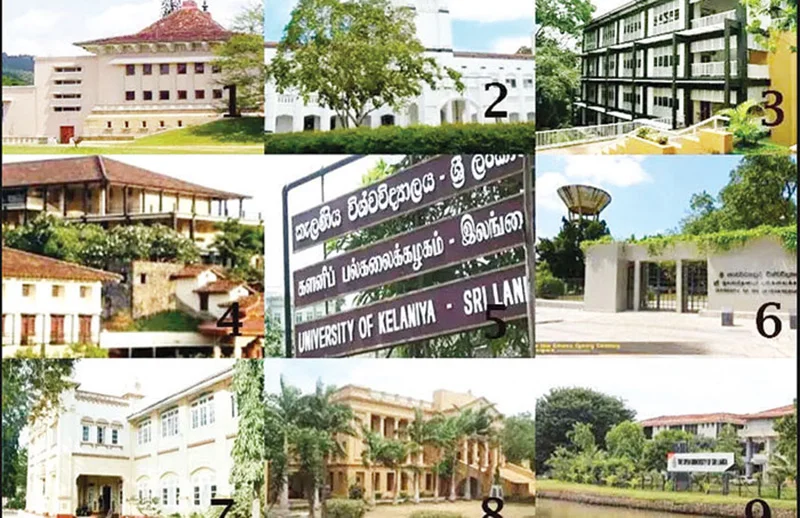
130,000 students are left out each year—academics hold the key
Each year, Sri Lanka’s G.C.E. Advanced Level examination produces a wave of hope—this year, nearly 175,000 students qualified for university entrance. Yet only 45,000 will be admitted to state universities. That leaves more than 130,000 young people stranded—qualified, ambitious, but excluded. This is not just a statistic; it is a national crisis. And while policymakers debate infrastructure and funding, the country’s academics must step forward as catalysts of change.
Beyond the Numbers: A National Responsibility
Education is the backbone of Sri Lanka’s development. Denying access to tens of thousands of qualified students risks wasting talent, fueling inequality, and undermining national progress. The gap is not simply about seats in lecture halls—it is about the future of a generation. Academics, as custodians of knowledge, cannot remain passive observers. They must reimagine the delivery of higher education to ensure opportunity is not a privilege for the few.
Expanding Pathways, Not Just Campuses
The traditional model of four-year degrees in brick-and-mortar universities cannot absorb the demand. Academics can design short-term diplomas and certificate programmes that provide immediate access to learning. These programmes, focused on employable skills, would allow thousands to continue their education while easing pressure on degree programmes. Equally important is the digital transformation of education. Online and blended learning modules can extend access to rural students, breaking the monopoly of physical campuses. With academic leadership, Sri Lanka can build a reliable system of credit transfers, enabling students to begin their studies at affiliated institutions and later transfer to state universities.
Partnerships That Protect Quality
Private universities and vocational institutes already absorb many students who miss out on state admissions. But concerns about quality and recognition persist. Academics can bridge this divide by providing quality assurance and standardised curricula, supervising joint degree programmes, and expanding the Open University system. These partnerships would ensure that students outside the state system receive affordable, credible, and internationally recognised education.
Research and Advocacy: Shaping Policy
Academics are not only teachers—they are researchers and thought leaders. By conducting labour market studies, they can align higher education expansion with employability. Evidence-based recommendations to the University Grants Commission (UGC) can guide strategic intake increases, regional university expansion, and government investment in digital infrastructure. In this way, academics can ensure reforms are not reactive, but visionary.
Industry Engagement: Learning Beyond the Classroom
Sri Lanka’s universities must become entrepreneurship hubs and innovation labs. Academics can design programmes that connect students directly with industries, offering internship-based learning and applied research opportunities. This approach reduces reliance on classroom capacity while equipping students with practical skills. It also reframes education as a partnership between universities and the economy, rather than a closed system.
Making the Most of What We Have
Even within existing constraints, academics can expand capacity. Training junior lecturers and adjunct faculty, sharing facilities across universities, and building international collaborations for joint programmes and scholarships are practical steps. These measures maximise resources while opening new avenues for students.
A Call to Action
Sri Lanka’s university admission crisis is not just about numbers—it is about fairness, opportunity, and national development. Academics must lead the way in transforming exclusion into empowerment. By expanding pathways, strengthening partnerships, advocating for policy reform, engaging with industry, and optimizing resources, they can ensure that qualified students are not left behind.
“Education for all, not just the fortunate few.”
Dr. Arosh Bandula (Ph.D. Nottingham), Senior Lecturer, Department of Agricultural Economics & Agribusiness, Faculty of Agriculture, University of Ruhuna
by Dr. Arosh Bandula
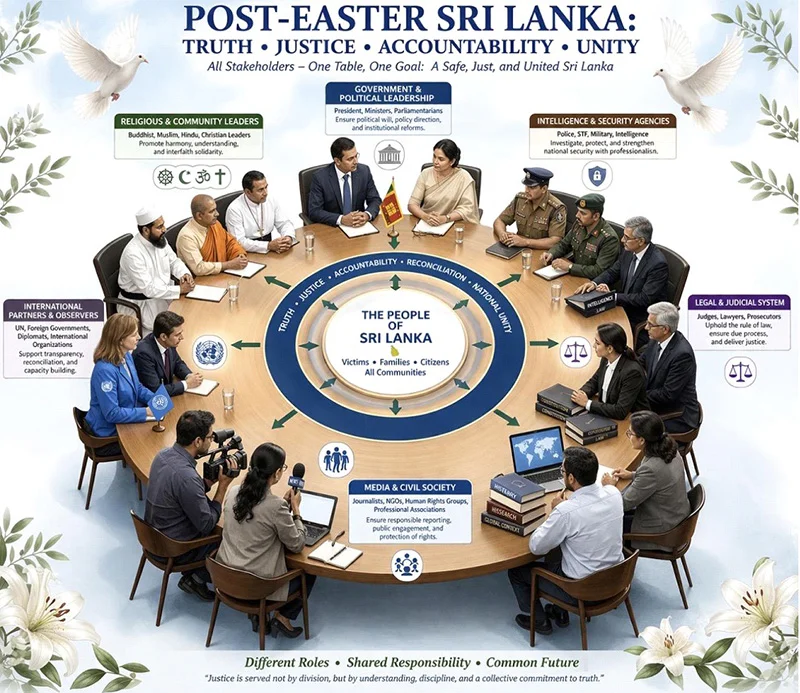
As Sri Lanka approaches the seventh commemoration of the Easter Sunday attacks, the national mood is once again marked by grief, reflection, and an enduring sense of incompleteness. Nearly seven years later, the tragedy continues to cast a long shadow not only over the victims and their families, but over the institutions and narratives that have since emerged.
Commemoration, however, must go beyond ritual. It must be anchored in clarity, accountability, and restraint. What is increasingly evident in the post-Easter landscape is not merely a search for truth, but a contest over how that truth is framed, interpreted, and presented to the public.
In recent times, public discourse has been shaped by book launches, panel discussions, and media interventions that claim to offer new insights into the attacks. While such contributions are not inherently problematic, the manner in which certain narratives are advanced raises legitimate concerns. The selective disclosure of information particularly when it touches on intelligence operations demands careful scrutiny.
Sri Lanka’s legal and institutional framework is clear on the sensitivity of such matters. The Official Secrets Act (No. 32 of 1955) places strict obligations on the handling of information related to national security. Similarly, the Police Ordinance and internal administrative regulations governing intelligence units emphasize confidentiality, chain of command, and the responsible use of information. These are not mere formalities; they exist to safeguard both operational integrity and national interest.
When individual particularly those with prior access to intelligence structures enter the public domain with claims that are not subject to verification, it raises critical questions. Are these disclosures contributing to justice and accountability, or are they inadvertently compromising institutional credibility and future operational capacity?
The challenge lies in distinguishing between constructive transparency and selective exposure.
The Presidential Commission of Inquiry into the Easter Sunday Attacks provided one of the most comprehensive official examinations of the attacks. Its findings highlighted a complex web of failures: lapses in intelligence sharing, breakdowns in inter-agency coordination, and serious deficiencies in political oversight. Importantly, it underscored that the attacks were not the result of a single point of failure, but a systemic collapse across multiple levels of governance.
Yet, despite the existence of such detailed institutional findings, public discourse often gravitates toward simplified narratives. There is a tendency to identify singular “masterminds” or to attribute responsibility in ways that align with prevailing political or ideological positions. While such narratives may be compelling, they risk obscuring the deeper structural issues that enabled the attacks to occur.
Equally significant is the broader socio-political context in which these narratives are unfolding. Sri Lanka today remains a society marked by fragile intercommunal relations. The aftermath of the Easter attacks saw heightened suspicion, polarisation, and, in some instances, collective blame directed at entire communities. Although there have been efforts toward reconciliation, these fault lines have not entirely disappeared.
In this environment, the language and tone of public discourse carry immense weight. The framing of terrorism whether as a localized phenomenon or as part of a broader ideological construct must be handled with precision and responsibility. Overgeneralization or the uncritical use of labels can have far-reaching consequences, including the marginalization of communities and the erosion of social cohesion.
At the same time, it is essential to acknowledge that the global discourse on terrorism is itself contested. Competing narratives, geopolitical interests, and selective historiography often shape how events are interpreted. For Sri Lanka, the challenge is to avoid becoming a passive recipient of external frameworks that may not fully reflect its own realities.
A professional and unbiased approach requires a commitment to evidence-based analysis. This includes:
· Engaging with primary sources, including official reports and judicial findings
·
· Cross-referencing claims with verifiable data
·
· Recognizing the limits of publicly available information, particularly in intelligence matters

It also requires intellectual discipline the willingness to question assumptions, to resist convenient conclusions, and to remain open to complexity.
The role of former officials and subject-matter experts in this discourse is particularly important. Their experience can provide valuable insights, but it also carries a responsibility. Public interventions must be guided by professional ethics, respect for institutional boundaries, and an awareness of the potential impact on national security.
There is a fine balance to be maintained. On one hand, democratic societies require transparency and accountability. On the other, the premature or uncontextualized release of sensitive information can undermine the very systems that are meant to protect the public.
As Sri Lanka reflects on the events of April 2019, it must resist the temptation to reduce a national tragedy into competing narratives or political instruments. The pursuit of truth must be methodical, inclusive, and grounded in law.
Easter is not only a moment of remembrance. It is a test of institutional maturity and societal resilience.
The real question is not whether new narratives will emerge they inevitably will. The question is whether Sri Lanka has the capacity to engage with them critically, responsibly, and in a manner that strengthens, rather than weakens, the foundations of its national security and social harmony.
In the end, justice is not served by noise or conjecture. It is served by patience, rigor, and an unwavering commitment to truth.
Mahil Dole is a former senior law enforcement officer and national security analyst, with over four decades of experience in policing and intelligence, including serving as Head of Counter-Intelligence at the State Intelligence Service of Sri Lanka and a graduate of the Asia Pacific Center for Security Studies in Hawai, USA.
by Mahil Dole
Former Senior Law Enforcement Officer National Security Analyst; Former Head of Counter-Intelligence, State Intelligence Service)

Sooryavanshi blitz, Jurel 81* help Rajasthan Royals take down Royal Challengers Bengaluru with ease

Sun directly overhead Pomparippu, Anuradhapura, Mihinthale, Galenbindunuwewa, Agbopura and Serunuwara about 12:11 noon today (11)

Showers expected in the Western, Sabaragamuwa, North-western , Southern and Uva provinces and in Anuradhapura, Mannar, Kandy and Nuwara-Eliya districts after 2.00 p.m.

Opposition NCM against Energy Minister defeated

Chinese Ambassador assures Lanka China will not allow a fuel crisis to develop here

Minister Jayatissa blames administrations since 2010 for not following proper procedures when procuring coal

‘Dates have the highest sugar content to fight Coronavirus’

Sunday Island 27 December – Headlines

#SundayIsland 17th December – Headlines

Sunday Island – 28th March

Sunday Island Headlines – 21 March

Sunday Island – 21st February – Headlines
-

 Features7 days ago
Ranjith Siyambalapitiya turns custodian of a rare living collection
-

 News7 days ago
Global ‘Walk for Peace’ to be held in Lanka
-

 News5 days ago
Lankan-origin actress Subashini found dead in India
-

 News3 days ago
AG: Coal procurement full of irregularities
-

 Business2 days ago
Israeli attack on Lebanon triggers local stock market volatility
-

 Features7 days ago
Beyond the Blue Skies: A Tribute to Captain Elmo Jayawardena
-

 Features7 days ago
Aspects of Ceylon/Sri Lanka Foreign Relations – 1948 to 1976
-

 Business3 days ago
Hayleys Mobility introduces Premium OMODA C9 PHEV