
Business
Climate risks, poverty, and recovery financing in focus at CEPA policy panel

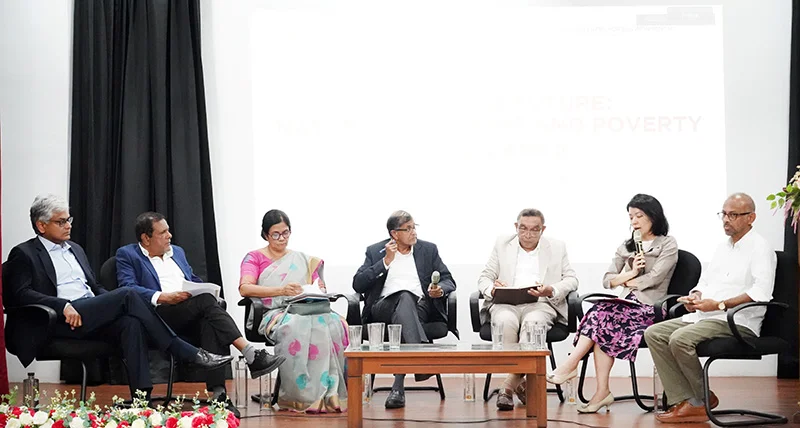
Sri Lanka’s rising exposure to climate-related disasters and their growing implications for poverty, development planning, and fiscal sustainability were examined at a high-level policy panel organised by the Centre for Poverty Analysis (CEPA), in collaboration with the Centre for Environmental Studies and Sustainable Development of the Open University of Sri Lanka.
The discussion, titled “Facing the Future: Environmental Disasters and Poverty in Sri Lanka,” was held on 26 January at the Open University of Sri Lanka, Nawala, against the backdrop of Cyclone Ditwah and a series of climate shocks that have intensified vulnerabilities as the country recovers from the 2022 economic crisis.
Addressing post-disaster recovery financing, John Keells Holdings Chairperson and CEO Krishan Balendra said the private sector’s role has been focused on mobilising funds rather than determining reconstruction priorities. He noted that fiscal discipline maintained since the economic crisis allowed the Government to finance immediate relief without emergency market borrowing. The Rebuilding Sri Lanka Fund, he said, has so far mobilised over Rs. 8.4 billion from private sector sources, with additional commitments expected as overseas partners complete approval processes.
Several panellists highlighted that Sri Lanka’s disaster risks are being amplified by weaknesses in development planning and institutional coordination. Prof. Jagath Munasinghe of the University of Moratuwa observed that while Sri Lanka has numerous institutions and plans, the core challenge lies in poor coordination and weak implementation frameworks. He stressed that the country has repeatedly failed to undertake advance risk and damage assessments despite decades of exposure to floods, landslides, and other disasters, limiting opportunities to genuinely “build back better.”
From an environmental economics perspective, Dr. Herath Gunathilake emphasised that climate-related disasters are scientifically linked to global climate change, even as global governance systems for climate action weaken. Given Sri Lanka’s limited capacity to influence global emissions outcomes, he argued that national policy must place greater emphasis on adaptation, resilience, and disaster preparedness, while continuing to meet international climate responsibilities.
Concerns were also raised regarding environmental regulation and enforcement. Kusala Mahalekama, Director, Strategic Environmental Assessment at the Central Environmental Authority, pointed to capacity constraints in monitoring compliance with Environmental Impact Assessment (EIA) conditions, particularly in infrastructure, irrigation, and energy projects. She underscored the importance of expanding Strategic Environmental Assessments (SEA) at national and regional levels to integrate disaster risk reduction into policies, plans, and programmes, allowing for better mapping of vulnerable ecosystems and communities.
Linking environmental vulnerability with long-standing development challenges, CEPA Executive Director Prof. Sirimal Abeyratne noted that Sri Lanka’s limited urbanisation and industrialisation have resulted in nearly 78.5% of the population living in rural areas, often in environmentally fragile locations such as riverbanks, coastal belts, and landslide-prone zones. He stressed that disaster mitigation should focus on reducing people’s exposure to risk through better spatial planning, urban development, and livelihood diversification, rather than attempting to prevent natural events themselves.
-

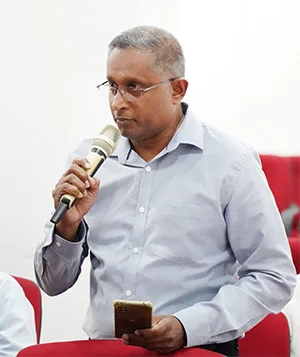
- Dr. Indika Bulankulame, Senior Research Member and Head of Communications at CEPA, delivering the welcome address at the event.
-
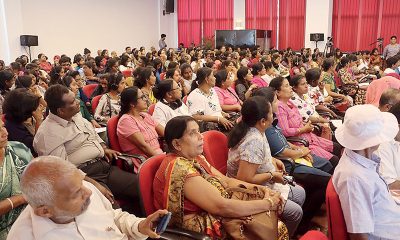
- Participants engage with the panelists during the Q&A session of the discussion.
Delivering opening remarks, UNDP Resident Representative Azusa Kubota highlighted the importance of nationally led assessment and recovery frameworks. She explained that different post-disaster assessment tools serve distinct purposes and should not be directly compared. Sri Lanka’s Post-Disaster Needs Assessment (PDNA) led by the Disaster Management Centre and Ministry of Finance, she said, represents the most comprehensive national instrument to guide emergency financing, recovery planning, and a coordinated “Building Back Better” approach based on hazard-informed planning and stronger institutional collaboration.
The discussion was moderated by Dr. Ganeshan Wignaraja, Senior Advisor at CEPA and Visiting Fellow at ODI, UK. Participants agreed that without deeper integration of disaster risk reduction into development planning, climate shocks could undermine recovery gains and place renewed pressure on public finances and livelihoods.


The Central Bank kept its overnight policy rate unchanged yesterday as it awaited the latest review of a US $2.9-billion International Monetary Fund programme.
‘The Central Bank will maintain the overnight policy rate at 7.75 percent and stable inflation, healthy credit growth and steady economic expansion are the reasons for the decision, Central Bank Governor Dr Nandalal Weerasinghe said. The Central Bank Governor stated this yesterday at the monthly policy review meeting held at Central Bank head office in Colombo.
‘The Board arrived at this decision after carefully considering evolving developments and the outlook on the domestic front and global uncertainties, the Governor said.
Dr Weerasinghe said that the Board is of the view that the current monetary policy stance will support steering inflation towards the target of 5 percent
The CBSL Governor added: ‘Inflation measured by the Colombo Consumer Price Index (CCPI) remained unchanged at 2.1 percent in December 2025. However, food prices edged higher in December compared to November.
‘ This was due to supply chain disruptions caused by Cyclone Ditwah and higher demand for food during the festive season.
‘Inflation is projected to accelerate gradually and move towards the target of 5 percent by the second half of 2026. Core inflation, which excludes price changes in volatile food, energy and transport from the CCPI basket, has also shown some acceleration in recent months.
‘Core inflation is expected to accelerate further as demand in the economy strengthens. Meanwhile, inflation expectations appear to be well anchored around the inflation target.
‘The economy grew by 5.0 percent during the first nine months of 2025. Despite the slowdown in economic activity following Cyclone Ditwah in late 2025, early indicators reflect greater resilience.
‘Credit disbursed to the private sector by commercial banks and other financial institutions continued its notable expansion in late 2025.
‘This reflects increased demand for credit amid improving economic
activity and increased vehicle imports. Post-cyclone rebuilding is expected to sustain this momentum.
‘The external current account is estimated to have recorded a sizeable surplus in 2025, despite the widening of the trade deficit. Foreign remittances remained healthy during 2025.
‘Despite large debt service payments during the year, Gross Official Reserves were built up to USD 6.8 bn by the end of 2025.
‘This was mainly supported by the net foreign exchange purchases by the Central Bank and inflows from multilateral agencies. The Sri Lanka rupee depreciated by 5.6 percent against the US dollar in 2025 and has remained broadly stable thus far during this year. This includes the swap facility from the People’s Bank of China.
‘The Board remains prepared to implement appropriate policy measures to ensure that inflation stabilises around the target, while supporting the economy to reach its potential.’
By Hiran H Senewiratne
Business
JKH posts strong Q3 EBITDA growth of 68% to Rs.23.76 billion driven by momentum across the portfolio

Summarised below are the key operational and financial highlights of our performance during the quarter under review:
The Group continued to deliver a strong performance, with all businesses reporting improved profitability.
The operationalisation of two of the Group’s largest projects, the City of Dreams Sri Lanka integrated resort and the West Container Terminal (WCT-1) at the Port of Colombo, continued to progress well. The encouraging quarter-on-quarter momentum demonstrates the strong ramp up potential of both projects.
The country faced an unexpected challenge in November with Cyclone Ditwah, which impacted parts of Southeast and South Asia. The cyclone caused loss of lives, affected a significant portion of the population, and resulted in considerable infrastructure damage in certain areas of Sri Lanka. While the operations of the Group were disrupted during the few days of the cyclone, there were no significant operational or financial impact as a direct result of the cyclone and related flooding.
The Group and its staff supported relief efforts through various initiatives, including a substantial contribution of Rs.500 million from John Keells Holdings PLC and its affiliate companies towards the Government’s ‘Rebuilding Sri Lanka’ initiative.
Group earnings before interest, tax, depreciation and amortisation (EBITDA) at Rs.23.76 billion in the third quarter of the financial year 2025/26 is an increase of 68% against Group EBITDA of Rs.14.15 billion recorded in the third quarter of the previous financial year.
Cumulative Group EBITDA for the first nine months of the financial year 2025/26 at Rs.55.10 billion is an increase of 84% against the EBITDA of Rs.29.94 billion recorded in the same period of the financial year 2024/25.
During the quarter under review, the Group recorded fair value gains on investment property amounting to Rs.2.30 billion [2024/25 Q3: Rs.955 million], and net exchange losses of Rs.759 million [2024/25 Q3: gain of Rs.782 million], mainly due to the impact of the deprecation of the Rupee on the foreign currency denominated loan at City of Dreams Sri Lanka.
Profit attributable to equity holders of the parent is Rs.6.48 billion in the quarter under review, which includes fair value gains on investment property and net exchange losses amounting to Rs.1.45 billion. Profit attributable to equity holders of the parent for the corresponding period of the previous financial year was Rs.2.85 billion, which included fair value gains on investment property and net exchange gains amounting to Rs.1.70 billion.
The second interim dividend for FY2026 of Rs. 0.10 per share is aligned with the first interim dividend paid in November 2025. This reflects the expectation that the current momentum of performance will sustain or further improve going forward. The outlay for the second interim dividend is Rs.1.77 billion, which is an increase compared to Rs.881 million in the previous year.
(JKH)

Since 2016, InsureMe has been transforming Sri Lanka’s insurance industry as the country’s first end-to-end digital insurance aggregator, licensed by the Insurance Regulatory Commission of Sri Lanka (IRCSL). Built on innovation and trust, InsureMe makes insurance simple, transparent, and accessible through its proprietary digital platforms.
InsureMe has strengthened its leadership with the appointments of Sagara Gamage and Randeewa Malalasoriya as Non-Executive Independent Directors, enhancing the company’s governance and strategic direction. Sagara, a Fellow Member of the Association of Chartered Certified Accountants (UK) and the Institute of Chartered Accountants of Sri Lanka, holds a Global MBA in Finance from the University of Manchester (UK) and brings over 20 years of experience in finance, governance, and operational transformation across multiple sectors in the Middle East and South Asia. Randeewa, the Director and Chief Executive Officer of the CBL Natural Foods Cluster, offers more than two decades of leadership in export agriculture, manufacturing, and sustainability. He holds an MBA from Cardiff Metropolitan University (UK) and is pursuing a Doctor of Business Administration at the Asian Institute of Technology (Thailand), bringing a strong focus on sustainable business and innovation.

Dry weather will prevail in the most parts of the island.

No changes to IMF agreement despite Cyclone Ditwah impact

IMF lauds Sri Lanka’s economic turnaround, highlights regional resilience

ICT, WNPS unite to protect sea turtles along Colombo coast

Solheim on carbon-neutrality in sustainable tourism

CBSL keeps overnight policy rates unchanged; latest review of IMF program awaited

‘Dates have the highest sugar content to fight Coronavirus’

Sunday Island 27 December – Headlines

#SundayIsland 17th December – Headlines

Sunday Island – 28th March

Sunday Island Headlines – 21 March

Sunday Island – 21st February – Headlines
-
 Business3 days ago
ComBank, UnionPay launch SplendorPlus Card for travelers to China
-

 Business4 days ago
ComBank advances ForwardTogether agenda with event on sustainable business transformation
-
 Opinion4 days ago
Conference “Microfinance and Credit Regulatory Authority Bill: Neither Here, Nor There”
-

 Opinion6 days ago
A puppet show?
-

 Opinion3 days ago
Luck knocks at your door every day
-
 Features6 days ago
‘Building Blocks’ of early childhood education: Some reflections
-

 Business5 days ago
Dialog Brings the ICC Men’s T20 Cricket World Cup 2026 Closer to Sri Lankans
-

 News4 days ago
Rising climate risks and poverty in focus at CEPA policy panel tomorrow at Open University