
News
Chinese scientist’s 31 trips in quest for Lankans’ safe water


(Xinhua) —In an office drawer of Chinese scientist Wei Yuansong lies a thank-you letter written in Sinhalese and signed off by an entire Sri Lankan village.
The letter, having passed through many hands and franked in various locations, tells shared memories of a decade-long fight against a killer kidney disease that had plagued the locals for years due to a lack of safe drinking water.
“We express our heartfelt gratitude to Professor Wei for providing us with safe and tasty drinking water,” folks from the Nildiya village wrote.
Now serving as the director of the Laboratory of Water Pollution Control Technology at the Chinese Academy of Sciences, Wei told Xinhua that his connection with Sri Lanka began in August 2013, when an email from Doctor S.K.Weragoda asked about water treatment collaboration to address the Chronic Kidney Disease of Unknown Etiology (CKDu) in that country.
At that time, CKDu was a major public health issue in Sri Lanka, with over 40,000 people suffering from it since the mid-1990s, statistics showed. In 2016, then Sri Lankan President Maithripala Sirisena called the disease a “national disaster” that affected 20,828 patients and caused 5,000 deaths per year.
Preliminary research by the World Health Organization indicated a strong correlation between the disease and local groundwater pumped for drinking, and correspondence with Sri Lankan scientists made the issue come into the view of their Chinese counterparts.
In August 2014, Wei made his first travel to Sri Lanka, initiating an arduous research journey together with Weragoda. Each day, they took hours of bumpy road trips deep into the heavily affected areas and paid home visits to villagers for epidemic inquiries.
However, the duo encountered many cold shoulders and doubts. “Many locals thought that the Chinese, like other (foreign researchers), were here to write papers, not to genuinely help them,” Wei recalled. The two scientists had to wade through difficult conversations to win their trust and were eventually welcomed to take samples crucial for their analysis.
Following preliminary research and extensive coordination between Chinese and Sri Lankan partners, a deal was inked in March 2015, enabling joint research on the causes of CKDu and drinking water safety. Since then, Wei frequented Sri Lanka along with more Chinese scientists to conduct thorough research into water treatment solutions that fit local conditions.
Over the following years, the Chinese academy and its partner built four drinking water facilities in Sri Lanka, providing safe drinking water to over 5,000 villagers and more than 1,300 students, followed by a China-Sri Lanka Joint Research and Demonstration Center for Water Technology (JRDC) founded in the central city of Kandy.
The center has since trained more than 30 local medical workers, 20 kidney disease investigators, 20 water professionals, and 30 graduate students. Two joint CKDu-related research papers by Wei’s team won the Sri Lankan President’s Awards for Scientific Research in 2023 and 2024.
“The local people now trust Chinese scientists wholeheartedly … villagers with kidney disease said they no longer go to the hospital for years thanks to the help of Chinese scientists,” said Titus Cooray, a Ph.D. student at the JRDC.
This July, Wei came and attended a China-Sri Lanka joint research workshop at the JRDC themed on climate change, marine sustainability and other topics, with participants from nearly ten countries, including the United States, Canada and the Maldives.
“This is my 31st trip to Sri Lanka. We have laid the foundation from zero to one, and future collaboration will undoubtedly progress from one to infinity,” Wei told Xinhua at the event.
“China has transitioned from being a participant to a leader in global environmental governance, and we aim to bring more benefits to the Sri Lankan people through scientific cooperation and to make this project a model of the ‘Belt and Road’ international cooperation,” he noted.


* New Auditor General should not have been sworn in before Speaker – Opp.
* Suspended House Dy. Sec. Gen. Chaminda Kularatne takes his case to CA today
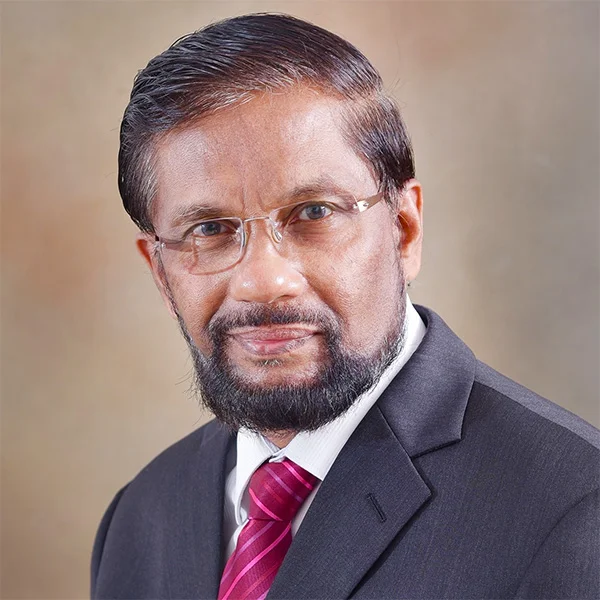
General Secretary of the National People’s Power (NPP) Dr. Nihal Abeysinghe yesterday said that there was no need for Speaker Dr. Jagath Wickramaratne to step down in view of the complaint lodged against him with the CIABOC (Commission to Investigate Allegations of Bribery or Corruption).
NPP General Secretary said so in response to The Island query whether the parliamentary group of the ruling party discussed the growing Opposition calls for the Speaker, who is also the Chairman of the Constitutional Council, to step down to facilitate the investigation.
The NPP parliamentary group consists of 159 MPs, including 18 National List (NL) members.
NL member Dr. Abeysinghe asked whether any other person, who had been investigated by the CIABOC, stepped down from his or her position to facilitate the inquiry.
The top official emphasised that the CIABOC could go ahead with its investigation without any hindrance.

Chamindra and Dr. Jagath
Opposition sources said that there hadn’t been a similar situation before and the CIABOC investigation into Speaker Dr. Wickramaratne is unprecedented as he heads the 10-member CC responsible and directly involved in all key appointments, including that of members to the CIABOC.
Sources pointed out that the newly appointed Auditor General, Ms. Samudrika Jayaratne, took the oath of secrecy before the Speaker on 5 February in Parliament after suspended Deputy General Secretary of Parliament Chaminda Kularatne complained to CIABOC.
In accordance with Section 9 of the National Audit Act, No. 19 of 2018, Jayaratne took the oath of secrecy in her capacity as the Auditor General of the National Audit Office and Chairperson of the Audit Service Commission.
Sources said that Kularatne would move the Court of Appeal today (10) against his removal at the behest of the Staff Advisory Committee, headed by the Speaker.
By Shamindra Ferdinando

The Trincomalee Magistrate’s Court yesterday (09) further remanded 10 persons, including four Buddhist monks, arrested on 19 January, 2026, for allegedly placing a Buddha statue in the coastal reservation, on 16 January.
The Buddhist monks, including Ven. Balangoda Kassapa Thera, and six other individuals, were further remanded until 11 February.
They have been accused of violating the Coast Conservation Act by placing a Buddha statue on a block of land belonging to the Trincomalee Bodhiraja Temple.
Of the four monks, Ven Balangoda Kassapa Thera and Ven Trincomalee Kalyanawansa Tissa Thera moved the Court of Appeal against the Magistrate’s Court decision. The case was heard on 22 January before a Bench comprising the President of the Court of Appeal, Justice Rohantha Abeysuriya, and Justice K. Priyantha Fernando.
Manohara de Silva, PC, and President’s Counsel Uditha Igalahewa, PC, appearing for the petitioners, urged the Court to take up the matter urgently, describing it as a case of exceptional importance.
However, the Court of Appeal on 3 February dismissed the petitions against the remanding of Ven Balangoda Kassapa Thera and Ven Trincomalee Kalyanawansa Tissa Thera.
The order was issued by the Court of Appeal bench consisting of the President of the Court of Appeal, Justice Rohantha Abesuriya and Justice Priyantha Fernando.
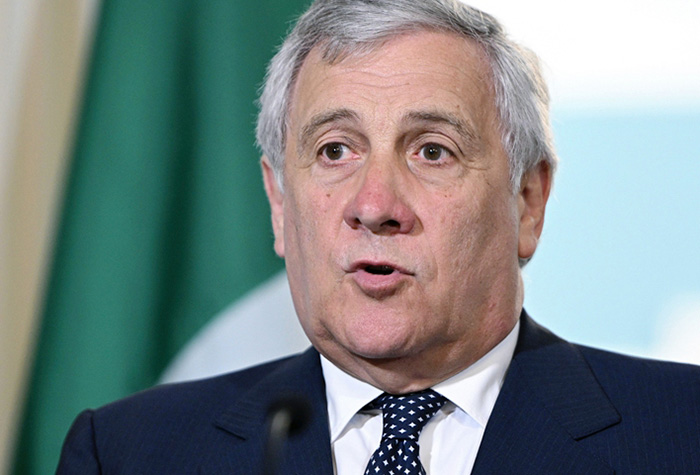
February 06 :Milano–Cortina 2026 will be a-global event, bringing to Italy 3,500 athletes from over 90 countries, competing in 304 events, with an estimated worldwide audience of three billion people. Today’s opening ceremony in Italy will also be attended by around 50 Heads of State and Government from across the world.
Milano–Cortina 2026 will not be solely about sport; above all, it will represent development, innovation and a forward-looking vision. With an estimated economic impact of EUR 5.3 billion, the Olympic Winter Games will leave a lasting legacy in terms of infrastructure and territorial development. They will also serve as a powerful instrument of soft power, delivering a durable strengthening of Italy’s international positioning.
For the first time in history, the Olympic Winter Games will “diffuse”: two emblematic cities—Milan and Cortina—and an entire system of territories—Lombardy, Veneto and Trentino-Alto Adige—united by a sustainable and inclusive vision. This constitutes a first, clear political signal.
The Winter Games generate effects that extend well beyond the sporting dimension, influencing infrastructure, territorial development, industrial value chains and the international standing of Italy.
The organisational framework of the Olympic Winter Games foresees the involvement of approximately 18,000 volunteers, alongside a dedicated diplomatic task force bringing together young officials, institutions and local communities. This commitment confirms Italy’s capacity to successfully host events of global scale, as demonstrated most recently by the Jubilee.
AN INTEGRATED STRATEGY
The Ministry of Foreign Affairs and International Cooperation has accompanied the arrival of the Olympic Winter Games with an integrated strategy, launched two years ago with the establishment of the Office for Sports Diplomacy and developed through an international roadshow across Europe, North America and Asia, involving athletes, media and businesses.
The strategy has pursued a twofold objective: to promote the territories and communities involved and to strengthen Italy’s image as an innovative, sustainable and welcoming country. The Olympic Winter Games have featured prominently in numerous initiatives, including Expo Osaka 2025, international Business Forums and the Italian Sport Day around the world.
For these reasons, Italy has chosen to invest decisively in sports diplomacy, making it a structural component of its foreign policy action. The Olympic Games embody values such as fair and peaceful competition among young people from across the world and have always stood as universal symbols of peace, respect and inclusion. In an international context marked by conflict, sport remains a credible space for dialogue. The Olympic Games were born in the name of peace.
Italy has reaffirmed this commitment by facilitating the adoption of the United Nations Resolution on the Olympic Truce, supported by the Holy Father and the President of the Republic—an appeal for sport to contribute to silencing the weapons.
In the past year alone, more than 233,000 people have been killed by armed violence, resulting in over 123 million displaced persons worldwide. Italy continues to play a leading diplomatic and humanitarian role, working for peace in Ukraine and Gaza, while also addressing less visible conflicts, such as in Sudan, where millions have been forced to flee. Through humanitarian initiatives such as Food for Gaza and Italy for Sudan, Italy remains at the forefront of efforts to protect civilian populations, particularly children, who are among the most affected by the consequences of war.
A UNIQUE OPPORTUNITY
Milano—Cortina 2026 therefore represents a unique opportunity to reaffirm Italy’s identity and core values. Through these Olympic Winter Games, Italy seeks to address the world as a builder of peace, growth and international cooperation. The “Games of Peace” will be a shared commitment, embraced collectively.
by Antonio Tajani, Foreign Minister of Italy

New Zealand brace for unfamiliar opponents UAE

Namibia begin campaign in crucial game against Netherlands

Markram, Ngidi help South Africa ease past dogged Canada

Pakistan withdraw boycott of India match at T20 World Cup

Mainly dry weather will prevail in the most parts of the island.

NPP: Speaker won’t step down, CIABOC can investigate him

‘Dates have the highest sugar content to fight Coronavirus’

Sunday Island 27 December – Headlines

#SundayIsland 17th December – Headlines

Sunday Island – 28th March

Sunday Island Headlines – 21 March

Sunday Island – 21st February – Headlines
-

 Features2 days ago
My experience in turning around the Merchant Bank of Sri Lanka (MBSL) – Episode 3
-

 Business3 days ago
Zone24x7 enters 2026 with strong momentum, reinforcing its role as an enterprise AI and automation partner
-
 Business2 days ago
Remotely conducted Business Forum in Paris attracts reputed French companies
-

 Business2 days ago
Four runs, a thousand dreams: How a small-town school bowled its way into the record books
-

 Business2 days ago
ComBank and Hayleys Mobility redefine sustainable mobility with flexible leasing solutions
-
 Business3 days ago
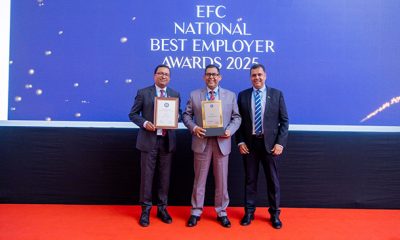
HNB recognized among Top 10 Best Employers of 2025 at the EFC National Best Employer Awards
-

 Business3 days ago
GREAT 2025–2030: Sri Lanka’s Green ambition meets a grid reality check
-

 Editorial5 days ago
All’s not well that ends well?