
News
Chinese investments in Sri Lanka does not automatically translates into political influence – Menon

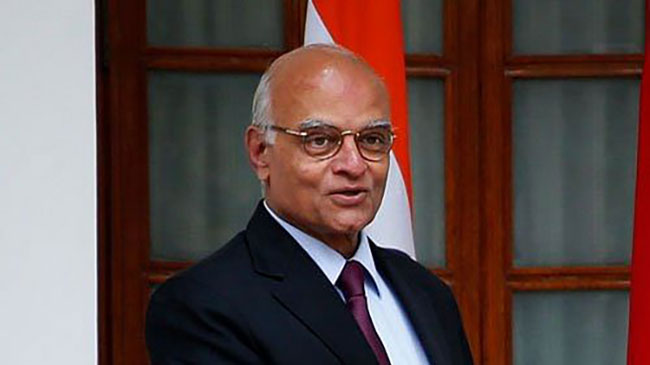
Former Indian Foreign Secretary, Shivshankar Menon has said that although China has invested heavily in countries like Pakistan and Sri Lanka, that does not automatically translate into political influence over a country’s foreign policy, popularity, or into soft power.
He said this responding to a question on the role of China’s Belt and Road Initiative (BRI) plays in advancing China’s economic and soft power interests in South Asia during an interview with E-International Relations magazine.
“The BRI plays a very considerable role in advancing China’s interests. It plays to China’s strengths, which are economic, where it is not really matched by any other power in the subcontinent. Nor do outside powers prioritise countervailing China’s growing influence in the subcontinent. By committing over US$ 100 billion to BRI projects in the subcontinent, China has made herself indispensable to the infrastructure and economic plans of the leaders of several countries in the subcontinent,” he said.
However, at the same time the examples of Pakistan and Sri Lanka suggest that one should be cautious in drawing the conclusion that this automatically translates into political influence over a country’s foreign policy, popularity, or into soft power, he said.
“The attractiveness of the Chinese model or way of doing things is still rather limited, as is their power of attraction. This is still a work in progress and the Chinese leadership has often spoken of the need for China to gain soft power. So, its impact on India’s relations with these countries has not, to my mind, yet peaked. India has other affinities and common interests with our neighbours that China cannot match that I think we should concentrate on, rather than trying to match or imitate China,” he said.
Menon added that in his recent book ‘India and Asian Geopolitics: The Past, Present‘, he suggests that China will not behave as Western powers have. He said that the Chinese are very conscious of their own political and strategic tradition. China, particularly their present leadership, see the last 150 years as a historical aberration, a “century of humiliation,” Menon said.
“It is an aberration in their mind from an imagined past when China was the preeminent power in the world, the largest economy, a technological leader, and so on. Objective historians and non-Chinese might have their own, different view of the past, but it is this perspective and the quest for primacy it produces that seems to drive China’s international behaviour now,” he said.
China’s is a different strategic culture from that of the two previous global superpowers, Great Britain and the USA, he said. The former Indian Foreign Secretary said that China’s geography, history, resource endowment and dependencies on the world are different from those western powers.
“Hence my sense is that they will not behave as western powers have. Today, China is yet to be a global superpower, and it is difficult to predict whether she will succeed in this quest, which is facing resistance,” he said.
Menon also said that if the political relationship between China and India remains adversarial, cutting their economic dependencies on China would become a strategic necessity.
“To my mind, the two countries need to find a new paradigm for the relationship, or a new strategic framework, within which to manage or settle these issues and to take the relationship forward. In other words, the present situation calls for a fundamental reset of India-China relations,” he said.
He added that the biggest challenge for India in the last decade was the fact that the international environment became less supportive of the efforts to transform India, particularly after the global economic crisis that began in 2007-8.
“The rise of China and the growth of China-US strategic rivalry changed the situation, opening new opportunities for India-US relations but also creating challenges in our neighbourhood and on the India-China border where China has been changing the status quo. China has emerged unequivocally as our greatest strategic challenge but is also our greatest trading partner. We now face a complex set of relationships with all our neighbours and the major powers in a world that is adrift between orders,” Menon said.
Menon also said that the idea of hard linear boundaries is a relatively recent one in history, a feature of the Westphalian state that has acquired popular legitimacy with the rise of nationalism. However, South Asia has “old nations in new states” he said, pointing to the limitations of these boundaries.
“For most of history, borders, as opposed to linear boundaries, were zones of interaction and communities straddled these borders, while trading, traveling, and carrying on the normal business of life across these porous borders.
With the evolution of India and its neighbours into modern Westphalian states in the second half of the 21st century, and the partitioning of the subcontinent into post-colonial states, hard boundaries were imposed on ancient communities and nations which did not coincide with natural features or ethnic divisions or with their patterns of life.
This is why border zones in most of our countries have been unstable and increasingly securitised by the state, with unfortunate consequences for the inhabitants. The most extreme example of this phenomenon is Pakistan. But I do believe that there are political and economic solutions to these issues which are increasingly being practised by the other countries in the subcontinent, such as India and Bangladesh,” he said.


Deputy Minister of Digital Economy, Eranga Weeraratne, stated that the Ministry of Education, the Ministry of Women and Child Affairs and the Ministry of Digital Economy are planning to initiate a national assessment and policy review on the impact of social media on children.
The Deputy Minister emphasized that the initiative is expected to be advanced by giving due consideration to the insights of experts across all relevant fields, including child protection, education, health, mental health, cyber security, law and research, as well as by listening to the voices of civil society and youth.
Full statement made by Deputy Minister, Eranga Weeraratne.
“Many parents in Sri Lanka today face the challenge of understanding the impact of social media on their children and determining what measures they should take to ensure their safety. The solution is not to restrict children’s access to technology. Social media offers numerous benefits, including educational opportunities, the development of creative skills and improved communication. However, there is also a reality we must acknowledge. The online environment can often be unsafe, overwhelming and psychologically stressful for children. The resulting harm can negatively affect a child’s sleep, education, friendships and overall mental well-being. In some cases, excessive engagement with social media becomes difficult to control. Attempts to prevent such overuse may sometimes lead to conflicts, anger, or harsh disciplinary measures, which further impact learning and mental health. Consequently, children may experience stress, diminished self-confidence and emotional distress.
Online cyber bullying is another major concern. Additionally, children are often exposed to age-inappropriate content, including violent, sexual, or otherwise harmful material. There have been cases where children repeatedly engage with such harmful content, becoming increasingly absorbed in it. Some online games also present situations that encourage children to engage in disruptive or unsafe behaviour.
In extreme cases, such engagement has even led children to put their lives at risk. For this reason, ensuring the online safety of children has become a national priority in many countries. Our approach, likewise, must be guided by three fundamental principles.
First, the safety of children is paramount. This remains a non-negotiable policy of the government. Second, our actions must be based on evidence and research. We never proceed based on assumptions. Third, while safeguarding rights and privacy, our goal is to minimize excessive surveillance. Striking a balance between rights, safety and innovation is our primary objective.
Many countries around the world are already taking measures in this regard. It has become a timely necessity for us to carefully study these experiences, adapt them to our context and develop a comprehensive programme to protect our children. As a first step, we hope to initiate a national assessment and policy review on the impact of social media on children, in consultation with the Ministry of Education and the Ministry of Women and Child Affairs.”
Experts in fields such as child protection, education, health, mental health, cyber security, law and research, along with the voices of civil society and youth, must be engaged in this effort. This is not a challenge that the government can address alone. Parents, teachers and children themselves all need to participate collaboratively. Through this approach, we can create an environment where our children can make full use of technology safely and responsibly.
News
Public officials must clearly understand public expectations against corruption and fraud – Secretary to the President


In line with the Government’s programme to build a clean, transparent and corruption-free public service, a workshop to brief heads of 250 state institutions that have been instructed to establish Internal Affairs Units was held on Thursday (29) at the auditorium of the Sri Lanka Foundation Institute, under the patronage of Secretary to the President, Dr. Nandika Sanath Kumanayake.
As the first phase of this programme, Internal Affairs Units were previously established in 106 state institutions and the relevant officers were trained accordingly. As part of the second phase, instructions have been issued to establish Internal Affairs Units in an additional 250 state institutions. Accordingly, this workshop was organised by Presidential Secretariat, with the assistance of the Clean Sri Lanka Programme.
Although Sri Lanka continues to maintain relatively high rankings in sectors such as education and healthcare, Secretary to the President, Dr. Nandika Sanath Kumanayake noted that the country is ranked 121st in the 2024 Corruption Perceptions Index, a position that could adversely affect its overall standing in other key sectors.
Addressing the gathering, the Secretary to the President stated that while the primary slogan of the recent public uprising was against the corrupt politics, the allegations were directed not only at corrupt politicians but also at corrupt public officials. He emphasised that the public uprising occurred at a time when the country had become economically bankrupt and its adverse consequences were being directly felt by the people.
He further observed that such public uprisings are not sudden events, but rather the culmination of a prolonged and systematic process, driven by public frustration and the erosion of trust in governance.
Further addressing the workshop, Secretary to the President emphasised that public uprisings should not be underestimated, noting that they represent a powerful expression of public will.
He stated that it is essential for public officials, as well as politicians, to have a clear understanding of public aspirations and public sentiment. As public servants, he stressed, there is an obligation to deliver a clean, transparent and accountable public service to the people.
Accordingly, he explained that a structured programme has been initiated to strengthen the integrity of public service delivery. The establishment of Internal Affairs Units forms a key component of this initiative, aimed at ensuring greater transparency and accountability within state institutions.
Dr. Kumanayake further noted that public officials must remain mindful of upholding ethical standards while performing their duties, as strengthening individual integrity can contribute to transforming the broader culture of corruption within the public sector.
He highlighted that Internal Affairs Units can be viewed both as a mechanism for fostering a culture of integrity within the public service and as a platform that enables the public to raise concerns regarding the conduct of public officials, thereby strengthening accountability and public trust.
At the event, Additional Secretary to the President, Ms. Chandima Wickramasinghe and Senior Lecturer at the University of Kelaniya, Tharindu Dhananjaya Weerasinghe delivered keynote presentations.
Latest News
In order to safeguard the future of the country, a quality human resource must be developed. – Prime Minister
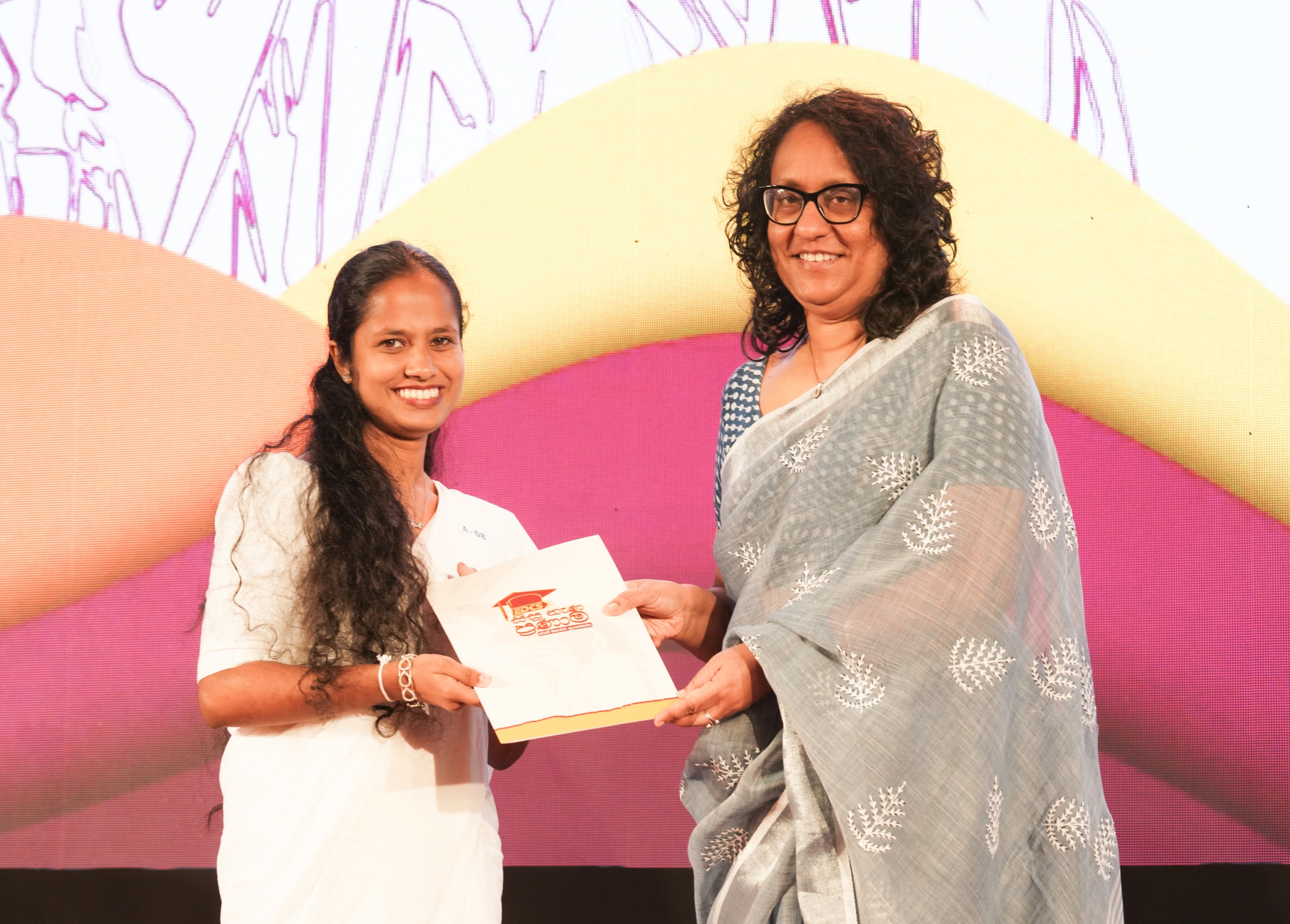
Prime Minister Dr. Harini Amarasuriya stated that in order to ensure the economic, social, and cultural security of the country, it is essential to develop a quality human resource, and that education plays a vital role in achieving this goal.
The Prime Minister emphasized that the government is committed to bring about a transformation in the education sector, and that the government will continue to move forward by overcoming obstacles encountered along the way, guided by a clear vision and purpose.
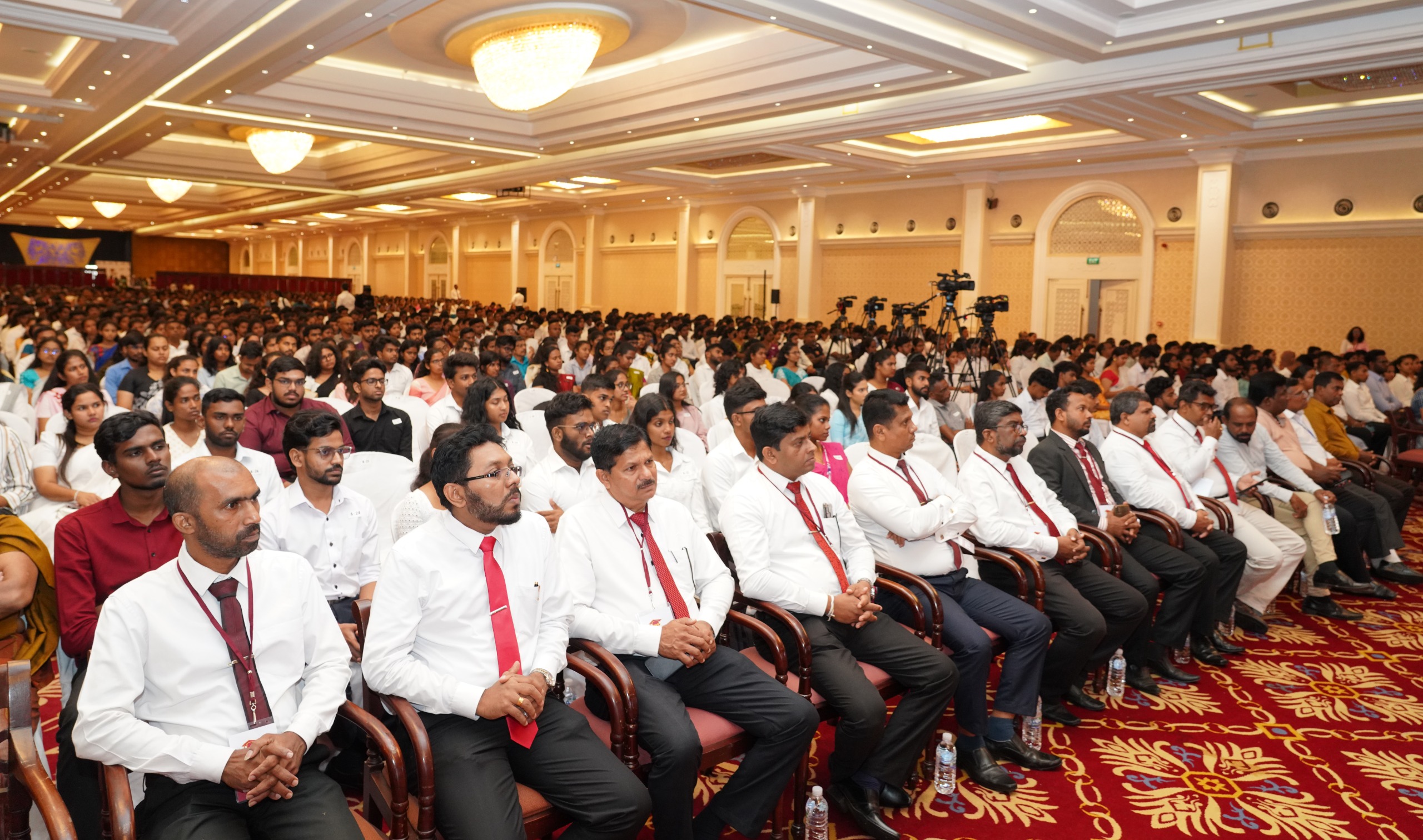
The Prime Minister made these remarks while addressing the EDCS Sisu Nena Pranama scholarship award ceremony held on Saturday (31) at Temple Trees, organized to recognize the children of the members of the Education Co-operative Society (EDCS) who have been selected to state universities for the academic year2023/2024.
Elaborating further, the Prime Minister noted that this program, organized by the Education Service Employees– Co-operative Thrift and Credit Society Ltd, is not merely about providing scholarships, but is an occasion that recognizes and appreciates the dedication of students and their parents who are preparing to shoulder the responsibility of the country’s future.
The Prime Minister also pointed out that it is a remarkable achievement that a society which began in 1930 with just 58 members and a membership fee of one rupee has today grown into the largest cooperative society in South Asia, with approximately 215,000 members.
The Prime Minister further highlighted how rapidly the world is changing, and the increasing necessity of developing human resources in the face of economic and environmental crises. She stressed that the education system must be transformed from the level of school education itself to align with the demands of the modern world, and that students entering universities should become leaders and active participants in this transformation.
Noting that out of nearly 300,000 students who enter primary education each year, only about 40,000 gain admission to universities, the Prime Minister urged students to make use of this opportunity for the development of the country.
Addressing the occasion, Deputy Minister of Labour and General Secretary of Ceylon Teachers Service Union, Mahinda Jayasinghe, stated that due to corruption-free management, it was possible to increase the financial stability of the society from Rs. 1,200 million to Rs. 1,700 million within a short period of approximately nine months.
Under this year’s program, scholarships amount to over Rs. 13.7 million were awarded to 2,292 students who have been selected to state universities.
This scholarship program, which initiated in 1984 with 15 students and an initial fund of Rs. 3,500, has been conducted continuously for 41 years. At present, scholarships of up to a maximum of Rs. 75,000 per student are awarded, demonstrating the collective strength and solidarity of the teaching community.
The event was attended by the Chairman of the Education Development Cooperative Society, Lal Kumara, the Western Province Director of Education, Darshani Iddamalgoda, along with other officials.
[Prime Minister’s Media Division]

National Assessment and Policy Review: The impact of social media on children

Public officials must clearly understand public expectations against corruption and fraud – Secretary to the President

West Indies seal consolation win in ten-over shootout

In order to safeguard the future of the country, a quality human resource must be developed. – Prime Minister

Pathirana: ‘My body just automatically changed the release point’ after injury

U 19 World Cup: Emon five-for gives Bangladesh consolation win against Zimbabwe

‘Dates have the highest sugar content to fight Coronavirus’

Sunday Island 27 December – Headlines

#SundayIsland 17th December – Headlines

Sunday Island – 28th March

Sunday Island Headlines – 21 March

Sunday Island – 21st February – Headlines
-
 Business6 days ago
ComBank, UnionPay launch SplendorPlus Card for travelers to China
-
 Business3 days ago
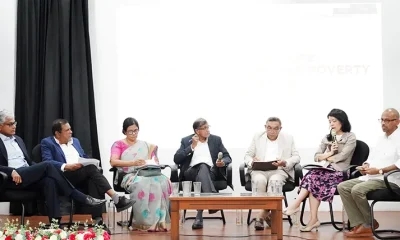
Climate risks, poverty, and recovery financing in focus at CEPA policy panel
-
 Opinion2 days ago
Sri Lanka, the Stars,and statesmen
-

 Business1 day ago
Hayleys Mobility ushering in a new era of premium sustainable mobility
-
 Opinion6 days ago
Luck knocks at your door every day
-

 Business1 day ago
Advice Lab unveils new 13,000+ sqft office, marking major expansion in financial services BPO to Australia
-
 Business1 day ago
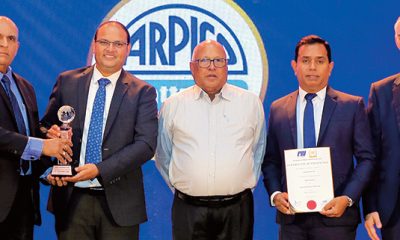
Arpico NextGen Mattress gains recognition for innovation
-

 Editorial1 day ago
Govt. provoking TUs