
Foreign News
China executes two men for committing deadly ‘revenge on society crimes’

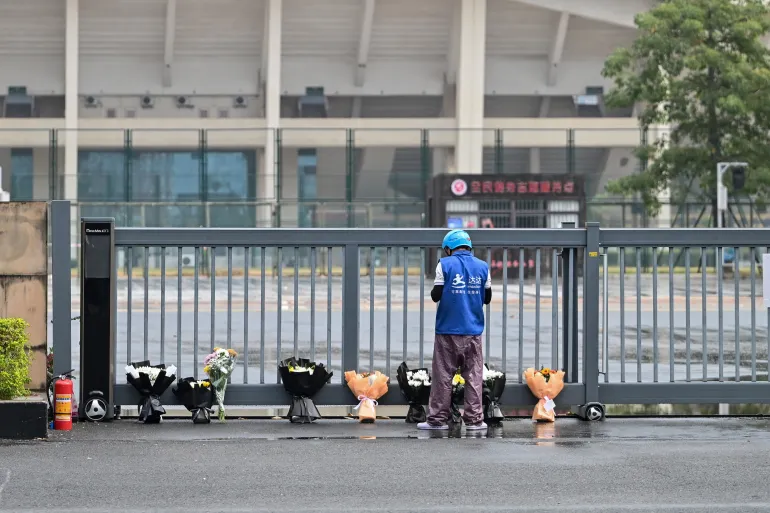
China has executed two men who committed deadly attacks that killed dozens in November, raising concerns about a surge in what are called “revenge on society crimes”, state media reported.
Fan Weiqu, 62, who rammed his car into a crowd outside a sports stadium in the southern city of Zhuhai, killing at least 35 people, was executed on Monday.
The attack was the country’s deadliest in more than a decade, according to authorities. Police said Fan was upset over his divorce settlement.
Also in November, 21-year-old Xu Jiajin killed eight people and injured 17 in a stabbing attack at his vocational school in the eastern city of Wuxi.
Police said Wu had failed his examinations and could not graduate, and was dissatisfied about his pay at an internship. He was also executed on Monday, according to state broadcaster CCTV.
Chinese President Xi Jinping urged local governments to take measures to prevent such attacks, known as “revenge on society crimes”.
The two men’s death sentences were issued by the intermediate people’s courts in the cities of Zhuhai and Wuxi, respectively, in December, and approved by the Supreme People’s Court, according to state media.
Violent crimes are rarer in China than in many Western countries, but the country has seen a rise in recent years. Stabbings and car attacks have challenged the governing Communist Party’s reputation for strict public security and crime prevention.
They also carried a shock factor that led some to question perceived social ills such as frustration with a slowing economy, high unemployment and diminishing social mobility.
China classifies death penalty statistics as a state secret, but some rights groups believe the country executes thousands every year. Executions are traditionally carried out by gunshot, though lethal injections have also been introduced in recent years.
[Aljazeera]

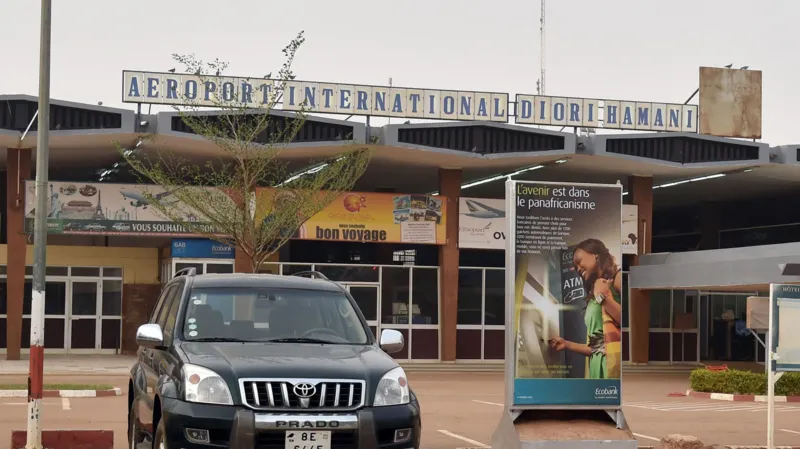
Sustained heavy gunfire and loud explosions have been heard in Niger near the international airport outside the capital, Niamey.
Multiple eyewitness accounts and videos showed air defence systems apparently engaging unidentified projectiles in the early hours of Thursday.
The situation later calmed down, reports say, with an official reportedly saying the situation was now under control, without elaborating.
It is not clear what caused the blasts, or if there were any casualties. There has been no official statement from the military government.
The gunfire and blasts began shortly after midnight, according to residents of a neighbourhood near the Diori Hamani International Airport, the AFP news agency reports. They said calm returned after two hours.
The airport houses an air force base and is located about 10km (six miles) from the presidential palace.
Niger is led by Abdourahamane Tiani who seized power in a 2023 coup that ousted the country’s elected civilian president.
Like its neighbours Burkina Faso and Mali, the country has been fighting jihadist groups who have carried out deadly attacks across the region.
It is also a major producer of uranium.
A huge uranium shipment destined for export has been stuck at the airport amid unresolved legal and diplomatic complications with France after the military government nationalised the country’s uranium mines.
“The situation is under control. There is no need to worry,” the Anadolu news agency quoted a Foreign Affairs ministry official as saying, without elaborating.
The official told the agency they were trying to determine whether the gunfire was linked to the uranium shipment.
[BBC]

A South Korean court has sentenced former First Lady Kim Keon Hee to one year and eight months in prison after finding her guilty of accepting bribes from the Unification Church, according to South Korea’s official Yonhap news agency.
The Seoul Central District Court on Wednesday cleared Kim, the wife of disgraced ex-President Yoon Suk Yeol, of additional charges of stock price manipulation and violating the political funds act.
Kim was accused of receiving bribes and lavish gifts from businesses and politicians, as well as the Unification Church, totaling at least $200,000.
The prosecution team had also indicted Unification Church leader Han Hak-ja, now on trial, after the religious group was suspected of giving Kim valuables, including two Chanel handbags and a diamond necklace, as part of its efforts to win influence with the president’s wife.
Prosecutors in December said Kim had “stood above the law” and colluded with the religious sect to undermine “the constitutionally mandated separation of religion and state”.

Prosecutor Min Joong-ki also said South Korea’s institutions were “severely undermined by abuses of power” committed by Kim.
The former first lady had denied all the charges, claiming the allegations against her were “deeply unjust” in her final testimony last month.
But she has also apologised for “causing trouble despite being a person of no importance”.
[Aljazeera]
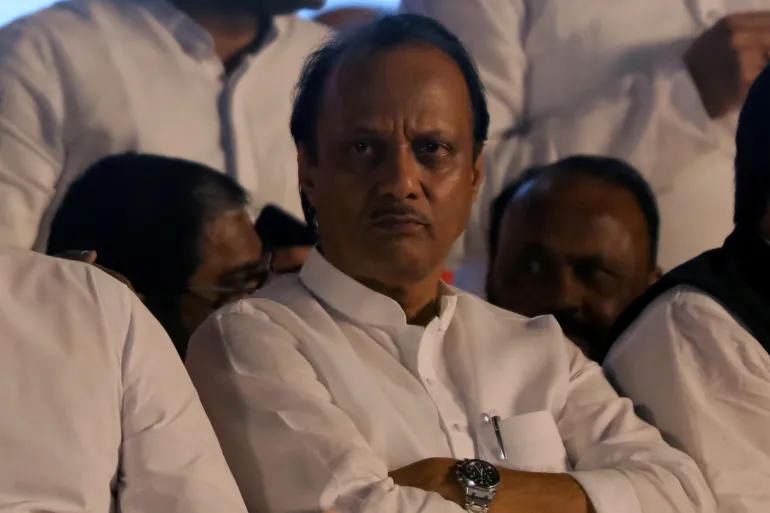
A plane crash has killed the deputy chief minister of India’s Maharashtra state, Ajit Pawar, the country’s aviation regulator has said.
The plane, which took off from the state capital, Mumbai, on Wednesday, crash-landed at the airport in Pawar’s constituency of Baramati, according to the Directorate General of Civil Aviation (DGCA).
Two members of the prominent politician’s staff and two crew members were also reported to have been killed.
The cause of the crash has not yet been officially confirmed.
Flightradar24, an online flight tracking service, said the aircraft was attempting a second approach to Baramati airport when it crashed.
The Times of India newspaper quoted DGCA officials as saying the aircraft, a Learjet 45 operated by a company called VSR, crashed at about 8:45am local time (03:15 GMT).
The daily said Pawar, the nephew of veteran politician Sharad Pawar, who founded the Nationalist Congress Party (NCP), was on his way to attend a public rally for the district council elections.
A witness quoted by the newspaper said the aircraft exploded moments after hitting the ground.
“When we rushed to the spot, the aircraft was on fire. There were four to five more explosions. People tried to pull the passengers out, but the fire was too intense,” said the witness.

Pawar, 66, built his political base through the grassroots cooperative movement. He was a key figure in state politics and served as the second-highest elected official in Maharashtra, as part of the larger federal governing coalition led by Prime Minister Narendra Modi.
He wielded considerable influence in the state’s vibrant sugar belt and was known for his ability to mobilise rural voters.
[Aljazeera]

USA pick former Sri Lanka allrounder Shehan Jayasuriya in T20 World Cup squad

Jofra Archer back as England and Sri Lanka begin World Cup countdown

Showers will occur at times in the Eastern, Northern, North-Central and Uva provinces and in Matale and Nuwara-Eliya districts

DevPro and WCIC come together to accelerate women’s economic empowerment in Sri Lanka

Tobacco and alcohol claim 22,000 lives annually

Development Officers hunger strike drags on for fourth day

‘Dates have the highest sugar content to fight Coronavirus’

Sunday Island 27 December – Headlines

#SundayIsland 17th December – Headlines

Sunday Island – 28th March

Sunday Island Headlines – 21 March

Sunday Island – 21st February – Headlines
-
 Business5 days ago
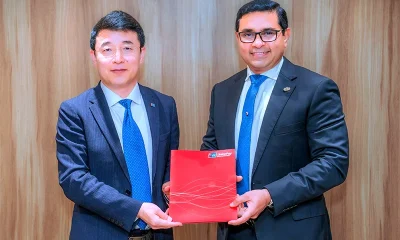
ComBank, UnionPay launch SplendorPlus Card for travelers to China
-

 Business6 days ago
ComBank advances ForwardTogether agenda with event on sustainable business transformation
-
 Opinion6 days ago
Conference “Microfinance and Credit Regulatory Authority Bill: Neither Here, Nor There”
-
 Business2 days ago
Climate risks, poverty, and recovery financing in focus at CEPA policy panel
-
 Opinion23 hours ago
Sri Lanka, the Stars,and statesmen
-

 Opinion5 days ago
Luck knocks at your door every day
-

 Business7 days ago
Dialog Brings the ICC Men’s T20 Cricket World Cup 2026 Closer to Sri Lankans
-

 News6 days ago
Rising climate risks and poverty in focus at CEPA policy panel tomorrow at Open University