
News
China dithers over IMF’s Lanka debt plan, leaves Colombo in limbo – report


With China yet to support Sri Lanka debt restructuring, based on the debt sustainability analysis (DSA) of the IMF and Paris Club, time is running out on Colombo to secure a much-needed loan to revive the nation from the present economic crisis. Sri Lanka is seeking a USD 2.9 billion-dollar loan from the IMF, over four years, in eight installments, said a report published by the Hindustan Times yesterday.
It said: While India has agreed to support the Island nation on the basis of DSA, China still has differences over period of loan moratorium and debt restructuring with the IMF’s Executive Board, scheduled to meet next month. Under the circumstances, the IMF can either give the loan, on arrears, and then wait for China to come on board by IMF spring meeting, or later this year. Sri Lanka owes nearly USD 7.8 billion dollars to China which includes both bilateral lending from EXIM bank and commercial lending from Chinese Development Bank. Over the years, the Rajapaksas, with present President Ranil Wickremesinghe in cahoots, used these loans for sponsoring white elephant projects, like the Hambantota Port, Mattala Airport, Norocholai Power Plant and the Colombo Port City, as a result of which Beijing was given long term tax concessions and a free run of the Island nation.
While China was the favourite destination of the Sri Lankan political leadership, since the present millennium, Colombo chose to stay away from India, under pressure from Beijing, and has still not said yes to the Indian proposal to develop the Trincomalee Port. It is another matter that India provided some four billion dollars’ worth of aid, including food, petrol and medicine, to Sri Lanka, last year, to tide over its raging economic crisis.
With Chinese EXIM bank only willing to extend a two-year debt moratorium to Colombo, as of now, the Sri Lankan economy will hit rock bottom soon, or else IMF will have to give the loan, on arrears, with further stringent conditions. This not only means further political instability, in the Island nation, and the obvious beneficiary of this ferment will be the Communist parties of Sri Lanka, like the JVP.
The political climate of Sri Lanka will remain uncertain but the first indicator of the extent of ferment will be the local elections next month. Unless the mainstream parties are able to recover from the hit, President Wickremesinghe, who is the lone MP from his party, may not be eager to announce the general elections. With USD at an all-time high against the Sri Lankan rupee, and food inflation into double digits, things will get much worse for Sri Lanka before they turn for the better. And this could take at least a decade.

News
Cabinet nod to include the National Savings Bank for the Interest-Free Loan Scheme for Students


The Interest-Free Loan Scheme is implemented to follow government-recognized degree programs in non-governmental higher education institutions for students who have passed the General Certificate of Education (Advanced Level) Examination and have not been eligible to enter a state university.
At present, the People’s Bank and the Bank of Ceylon are the banks that are granting loans under the aforementioned loan scheme. It has been planned to provide loan facilities for 7,000 students under stage 10 of the aforementioned loan scheme.
Accordingly, the Cabinet of Ministers has approved the resolution furnished by the Prime Minister in her capacity as the Minister of Education, Higher Education, and Vocational Education to include the National Savings Bank as a bank that grants loans for students under the aforementioned loan scheme, in addition to the People’s Bank and Bank of Ceylon.
Latest News
PM holds bilateral meetings in the Philippines to strengthen cooperation in Education, Skills Development, and Agricultural Research
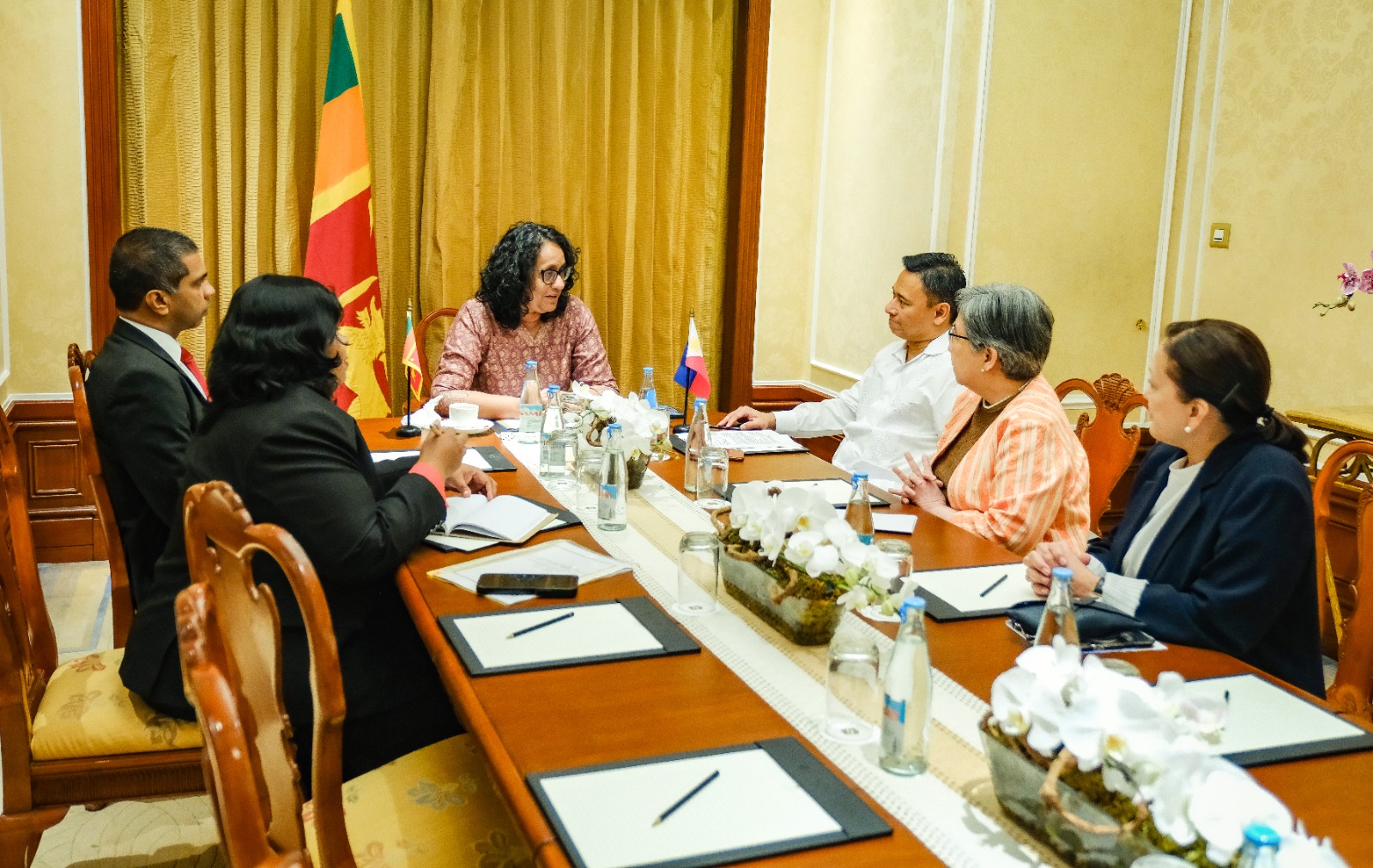
Prime Minister Dr. Harini Amarasuriya held a series of meetings with key Philippine institutions during her official visit to the Philippines from 09–11 March 2026, focusing on strengthening cooperation in education, higher education, technical skills development, and agricultural research.
On 09 March, the Prime Minister met with the Secretary of Education of the Philippines, Sonny Angara. Discussions focused on strengthening bilateral cooperation in the education sector, including sharing best practices in education policy, teacher training, curriculum reforms, and digital learning initiatives. The Prime Minister also briefed the Philippine delegation on Sri Lanka’s ongoing education reforms aimed at modernizing curricula and integrating technology into learning.
The Prime Minister also met with a delegation of the Commission on Higher Education of the Philippines (CHED), led by Chairperson Dr. Shirley C. Agrupis. Discussions centered on the development of higher education in both countries, with particular attention to research collaboration, academic partnerships between universities, student and faculty exchanges, and strengthening quality assurance frameworks.
In a separate meeting, the Prime Minister held talks with the Secretary and Director General of the Technical Education and Skills Development Authority (TESDA), Jose Francisco B. Benitez. The discussions focused on cooperation in technical and vocational education and training (TVET), including knowledge sharing, institutional partnerships, and possible alignment of qualifications frameworks to enhance skills recognition and workforce mobility.
The meetings reaffirmed the commitment of Sri Lanka and the Philippines, along with international research institutions, to strengthen collaboration in education, skills development, and agricultural research in support of sustainable development and human capital growth.
The Sri Lankan delegation included the Ambassador of Sri Lanka to the Philippines, Dr. Chanaka Talpahewa, and Senior Assistant Secretary to the Prime Minister, Ms. P.H. Piyumee Bandara.
[Prime Minister’s Media Division]
Latest News
Heat Index at Caution Level in the Western, Sabaragamuwa and North-western provinces and Monaragala district.

Warm Weather Advisory issued by the Natural Hazards Early Warning Centre of the Department of Meteorology at 3.30 p.m. on 09 March 2026, valid for 10 March 2026.
The public are warned that the Heat index, the temperature felt on the human body is likely to increase up to ‘Caution level’ at some places in Western, Sabaragamuwa and North-western provinces and in Monaragala district.
The Heat Index Forecast is calculated by using relative humidity and maximum temperature and this is the condition that is felt on your body.
This is not the forecast of maximum temperature. It is generated by the Department of Meteorology for the next day period and prepared by using global numerical weather prediction model data.

Effect of the heat index on the human body is mentioned in the above table and it is prepared on the advice of the Ministry of Health and Indigenous Medical Services.
ACTION REQUIRED
Job sites: Stay hydrated and takes breaks in the shade as often as possible.
Indoors: Check up on the elderly and the sick.
Vehicles: Never leave children unattended.
Outdoors: Limit strenuous outdoor activities, find shade and stay hydrated.
Dress: Wear lightweight and white or light-colored clothing.
Note:
In addition, please refer to advisories issued by the Disaster Preparedness & Response Division, Ministry of Health in this regard as well. For further clarifications please contact 011-7446491.

Cabinet nod to include the National Savings Bank for the Interest-Free Loan Scheme for Students

Nepal election 2026: Counting continues with rapper Balendra Shah’s party close to super-majority

Madagascar military leader dissolves government in surprise move

ICC Board meetings in Doha called off due to West Asia conflict

Trump says some sanctions to be lifted on oil producers amid Iran war

PM holds bilateral meetings in the Philippines to strengthen cooperation in Education, Skills Development, and Agricultural Research

‘Dates have the highest sugar content to fight Coronavirus’

Sunday Island 27 December – Headlines

#SundayIsland 17th December – Headlines

Sunday Island – 28th March

Sunday Island Headlines – 21 March

Sunday Island – 21st February – Headlines
-

 News5 days ago
University of Wolverhampton confirms Ranil was officially invited
-

 News6 days ago
Legal experts decry move to demolish STC dining hall
-

 News5 days ago
Female lawyer given 12 years RI for preparing forged deeds for Borella land
-

 News4 days ago
Peradeniya Uni issues alert over leopards in its premises
-

 Business6 days ago
Cabinet nod for the removal of Cess tax imposed on imported good
-

 News5 days ago
Library crisis hits Pera university
-

 News2 days ago
Repatriation of Iranian naval personnel Sri Lanka’s call: Washington
-

 Business7 days ago
Dialog partners with Ratmalana Audiology Centre for World Hearing Day 2026