
Latest News
Chamari Athapaththu leads from front as Sri Lanka rout England by eight wickets

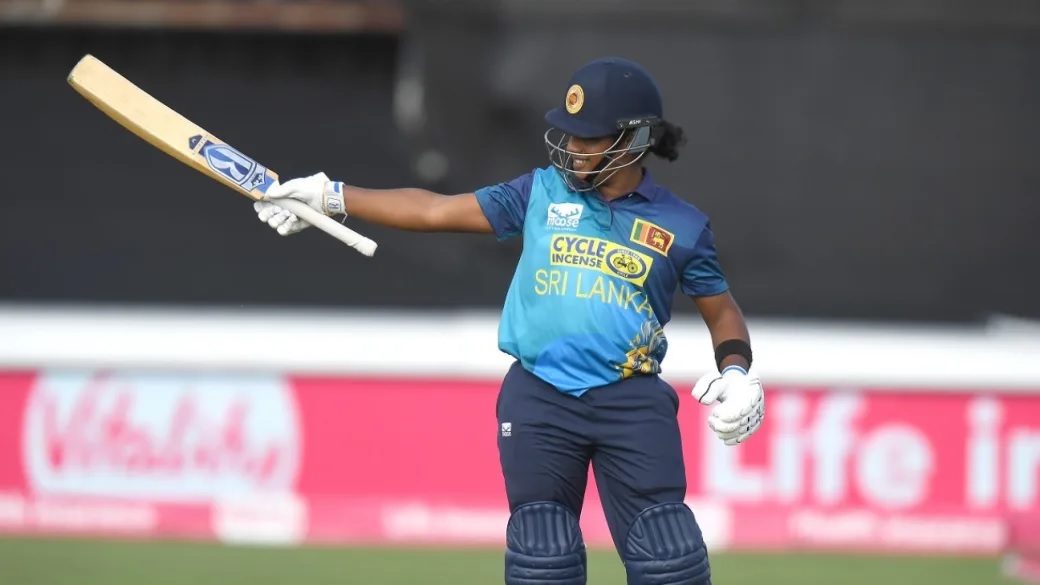
Chamari Athapaththu led from the front in a stunning allround display – first with the ball and then with a rampant 26-ball fifty – as Sri Lanka secured their maiden T20I victory over England in extraordinarily emphatic style by eight wickets, and with a crushing 40 balls remaining, as Heather Knight’s new-look team were served a dramatic reality check, only two days after cruising to victory in the series opener at Hove.
After winning her second toss of the series and choosing to bowl first, Athapaththu showed her team how it needed to be done by bowling the dangerous Danni Wyatt for 1 in her first over, and never let up in her leadership thereafter, as England were hustled out for 104 in 18 overs – a far cry from the 186 for 4 that they had posted in just 17 overs in Thursday’s opening fixture.
Then, sensing a chance to crush England from the outset of the chase, Athapaththu climbed onto the offensive with the bat, cracking eight fours and two sixes with similarly positive support from Harshitha Samarawickrama, who sealed the contest with a massive swipe over midwicket to finish unbeaten on 30 from 35 balls.
Speaking at the toss, Athapaththu insisted – with some justification as things turned out – there had been some “positives” to take from a one-sided series opener at Hove, but recognised that their bowling had to improve after England had romped along at close to two a ball on that occasion.
And so the skipper herself added that burden to her already broadly laden shoulders, to set the tone for an astonishingly unrelentingly display. Despite one loose ball that Maia Bouchier carved for four, Athapaththu’s remit in the contest’s first over was to keep the stumps in play as much as possible, on a hybrid wicket that offered a touch of grip for her spinners, and in sunny afternoon conditions a world away from the dank misery of Hove.
The gambit paid agenda-setting dividends with the sixth ball of Athapaththu’s over. A beautifully flighted offbreak lured Danni Wyatt on the drive, but a hint of dip and spin bowled her clean through the gate for 1. Suddenly a partnership that had realised 77 from 45 balls at Hove had been broken before it had begun, and that carefree youth that had so flourished in game one had a different scenario to counter.
Alice Capsey had made a belligerent 51 from 27 on that occasion; here she was restricted to an anxious 3 from 9 as Inoshi Fernando followed her skipper’s lead in her first outing of the series. First, her tall offbreaks pinned Capsey to the crease for five consecutive dot-balls and a single, then she snapped the trap shut in the field one over later. Itching to break the shackles, Capsey lashed through the line at Sugandika Kumari and Fernando was almost blown off her feet at mid-off as she clung on well to a flat chance.
Bouchier by this stage had connected well on another cuff through the covers, but Fernando’s impact was not done yet. The first ball of her second over was flapped in ungainly fashion straight to Kavisha Dilhari at extra cover, and Bouchier attempted to bend her bat around her helmet as she traipsed off for 12 from 10. Not only were England truly in the m(aia)ire at 21 for 3, but she’d missed a golden opportunity to rebuild a faltering innings, and seize the opportunity for seniority that she’s been handed in the absence of the likes of Tammy Beaumont and Nat Sciver-Brunt.
Instead, England’s hopes were reinvested in a familiar pair of middle-order stalwarts. Heather Knight and Amy Jones saw out a powerplay that, at 32 for 3, realised less than half the 66 for 0 that Sri Lanka had been subjected to at Hove, but neither batter really exuded an air of permanence in an uncompromising match situation – least of all Jones, who so nearly holed out to backward point as an attempted reverse-sweep off Fernando fell inches short.
On 10, Knight successfully over-turned an lbw decision after her attempted reverse-sweep was shown to have flicked her glove before crashing into the pad, but one over later, Jones’ scratchy stay was ended in the opposite fashion – Ranaweera trapped her on the back pad, and after Atapaththu’s last-ditch decision to review, the ball was shown to be thumping the top of leg stump.
Jones was gone for a run-a-ball 12, and if 41 for 4 in the eighth over was a dicey scenario, England’s issues were only just beginning. Freya Kemp picked off two singles off two legal deliveries, only to be stumped off a wide in Dilhari’s next over, as she galloped out of her crease for Sanjeewani to gather well down the leg-side and beat her despairing dive, and all hopes of a competitive total ended when Knight spooned a back-foot punch back to Ranaweera. At 48 for 6, England were fully braced for ignominy.
Only Charlie Dean, last out for a feisty 34 from 26, found anything like the requisite blend of endurance and aggression, including three fours in a row off Ranaweera – two firm sweeps and a well-dispatched full toss.
At the other end, however, the progression continued. Danielle Gibson opted for aggression without endurance, as she survived a slash through deep third that flew inches wide of the fielder, before scuffing a reverse-sweep straight into the lap of backward square.
Sarah Glenn, sporting a new cap to mark her 50th T20I appearance, then snicked off fourth-ball to give Dilhari her second wicket. Though Issy Wong hung around long enough to endure England wouldn’t be setting their new record low total in women;s T20I, when she lashed through a drive at Prabhodhani to be bowled for 13, the end was not long in coming.
If England thought their day had hit its nadir, Athapaththu had further indignities to deliver. She signalled her intention to keep the hammer down with a second-ball drive for four off Kate Cross, and even though Sanjeewani fell in Gibson’s subsequent over (after two no-balls had hinted at England’s anxieties), Sri Lanka’s captain was only just getting warmed up.
Cross’s second over was utterly taken to the cleaners – 21 runs in total, compromising three blazed fours in a row and a simply vast flog over square leg, off the roof off the Felsted School Stand and into the garden of a bemused lady looking on from her balcony. After some similarly rough treatment at the back-end of the first T20I, Cross’s figures for the series now read 4.2-0-55-0 – a reminder perhaps her impeccable lines have been overlooked in this format since 2019.
Nothing, however, was quite as gruesome as the public pillorying that Wong would endure in her first international over of the summer. Her absence from the firing line has been a bit of an ongoing mystery in recent months, given the excitement that surrounded her all-round game last summer, but here was public evidence of a player at war with her own technique.
Her first over of the match lasted for ten deliveries, the first four of which amounted to a tragicomedy in themselves – a huge front-foot no-ball that Harshitha Samarawickrama flicked off her pads for four, followed by a flick to deep square leg off that most of the crowd failed to realise was a free hit . Another leg-side no-ball followed, then another catch off the free hit – an astounding one as it happens, as Cross at mid-off snaffled the ball in her outstretched right hand.
By the end of it all, Wong could only grin in self-effacement as Glenn jogged down to give her a consoling pat on the shoulder, and as Sri Lanka blazed towards their victory target with barely a shot out of place, it was something of a surprise to see her reintroduced with 13 runs still needed and little left to be gained. Three more drilled boundaries duly drew the scores level, leaving Harshitha to heave Cross into the pavilion for the winning six.
Wong’s inclusion for this match had come at the expense of England’s new young thing, Mahika Gaur, and her struggles rather underlined the importance of Knight’s pre-series warning about the youth in this team. Expecting too much too soon is a dangerous thing.
Brief scores:
Sri Lanka 110 for 2 (Chamari Athapaththu 55, Harshitha Samarawickrema 30*, Vishmi Guneratne 18*; Danielle Gibson 1-09, Alice Capsey 1-14) beat England 104 (Charlie Dean 34, Chamari Athapaththu 1-11, Udeshika Prabodhani 2-19, Inoshi Fernando 2-16, Kavisha Dilhari 2-17, Inoka Ranaweera 2-25, Sugandika Kumari 1-16) by eight wickets
(Cricinfo)







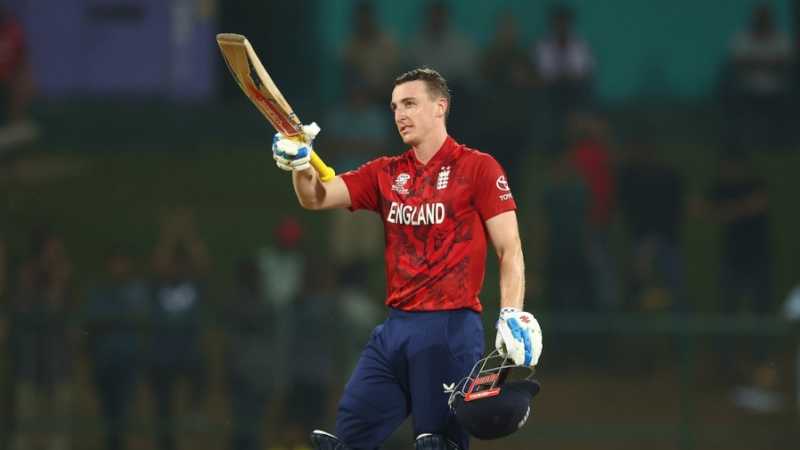
If you want a thing done well, do it yourself. Harry Brook, England’s captain, took matters into his own hands in Pallekele, promoting himself to No. 3 and blazing his maiden T20 international hundred to drag his team past Pakistan and into the semi-finals of the Men’s T20 World Cup 2026 with a game to spare, almost single-handedly.
Brook started the tournament, his first as captain, with 53 against Nepal but had been dismissed by spin for less than 20 for four innings in a row. His response was to move up two spots from No. 5 in order to bat in the powerplay, and he found himself walking out to face the second ball after Shaheen Shah Afridi – recalled by Pakistan – struck with the first ball of England’s chase.
Afridi took three wickets in the powerplay to check England’s progress, and Usman Tariq struck twice in the middle overs to reduce them to 58 for 4 and then 103 for 5. But Brook continued to flay Pakistan’s attack to all parts, reaching a 50-ball hundred by launching Afridi over cover for six and then over mid-off for four.
He was cleaned up one ball later by Afridi’s pinpoint yorker, but walked off to a standing ovation with England needing only 10 to win. They made hard work of it, gifting two wickets to Mohammad Nawaz to take the game into the 20th over, but Jofra Archer smeared Salman Mirza through midwicket as England’s dugout breathed a sigh of relief.
England’s win sealed their qualification for the semi-finals with a match to spare, and they will top the group if they can beat New Zealand in Colombo on Friday. They are yet to put a complete performance together and were shoddy in the field against Pakistan, but have now reached the semi-finals for a fifth men’s T20 World Cup in a row.
Pakistan, meanwhile, must beat Sri Lanka in their final group game and rely on other results falling their way. Despite Shahibzada Farhan’s impressive 63, they always look short on runs after they were bogged down by spin in the middle overs, with Liam Dawson’s 3 for 24 the outstanding performance among England’s attack.
Brief scores:
England 166 for 8 in 19.1 overs (Harry Brook 100, Sam Curran 16, Will Jacks 28; Shaheen Shah Afridi 4-30, Mohammad Nawaz 2-26, Usman Tarique 2-31) beat Pakistan 164 for 9 in 20 overs (Shahibzada Farhan 63, Babar Azam 25, Fakhar Zaman 25, Shadab Khan 23; Jofra Archer 2-32, Jamie Overton 2-26, Liam Dawson 3-24, Adil Rashid 1-31) by two wickets
(Cricinfo)

A major storm hit the US east coast on Monday, bringing record-breaking snow that caused disruptions for millions and thousands of flight cancellations.
Parts of Rhode Island and Massachusetts have seen nearly 37in (94cm) of snowfall, with more than 19in in New York City’s Central Park, the National Weather Service (NWS) said.
Weather warnings stretched from North Carolina to northern Maine, with some in place further north in parts of eastern Canada.
More than 600,000 properties on the US east coast endured power outages, while the Boston Globe – a major US newspaper – said it will not go to print for the first time in its 153-year history due to the storm.
(BBC)
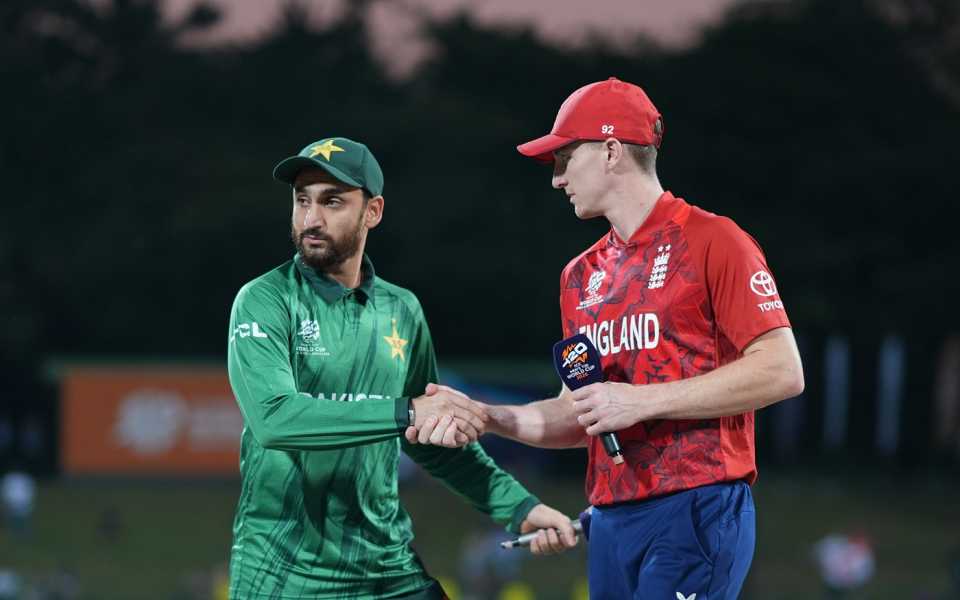
Pakistan have recalled Shaheen Shah Afridi for their Super Eight fixture against England in Pallekle at the expense of Faheem Ashraf, and will bat first after Salman Agha won the toss on a fresh pitch.
Afridi’s nine overs at the T20 World Cup have cost 101 runs and he has been left out for consecutive matches after Pakistan’s heavy defeat to India in Colombo, including their no-result against New Zealand to start the Super Eight stage. But he has been recalled to face England, perhaps due to their top order’s perceived vulnerability against left-arm seam.
Ashraf rescued Pakistan in their opening group-stage match against the Netherlands, hitting 29 not out off 11 balls to secure a three-wicket win. But he has only bowled two overs in the tournament and has been batting down the order.
“It looks like a good pitch,” Agha said at the toss. “We want to put up an above-par score and defend that total.”
England will qualify for the semi-finals if they win either of their remaining Super Eight fixtures, but Brook said that he would rather get the job done this evening than face a must-win match against New Zealand on Friday. “That would be lovely, wouldn’t it? But you never know in T20 cricket, it’s such a fickle game,” he said.
Brook said that he would have chosen to bat first if he had won the toss, but expects a better surface than the one that England played on at Pallekele two days ago in their low-scoring win over Sri Lanka. “Hopefully, it’s going to be a little bit better,” he said. “We haven’t had our perfect game yet. Hopefully, it’s just around the corner.”
England have picked the same team for the fifth consecutive match at this World Cup, and have carded their batting line-up in the same order despite some calls for Brook to be promoted from No. 5.
The fixture is a rematch of the 2022 T20 World Cup final, which England won by five wickets at the MCG, and there are nine survivors across the two teams.
England: Phil Salt, Jos Buttler (wk), Jacob Bethell, Tom Banton, Harry Brook (capt), Sam Curran, Will Jacks, Jamie Overton, Liam Dawson, Jofra Archer, Adil Rashid.
Pakistan: Sahibzada Farhan, Saim Ayub, Salman Agha (capt), Babar Azam, Fakhar Zaman, Shadab Khan, Usman Khan (wk), Mohammad Nawaz, Shaheen Shah Afridi, Salman Mirza, Usman Tariq.
(Cricinfo)

Classy Brook century puts nervy England in the semi-final

More than 5,000 flights cancelled as US east coast digs out of record snow

Pakistan bat vs unchanged England with Afridi back

Navy seize an Indian fishing boat poaching in Mannar seas

Fair weather will prevail except for showers in the Southern province and in Rathnapura, Monaragala and Kaluthara districts after 2.00 p.m

Families of those sentenced to death for killing MP Atukorale seek AKD’s intervention

‘Dates have the highest sugar content to fight Coronavirus’

Sunday Island 27 December – Headlines

#SundayIsland 17th December – Headlines

Sunday Island – 28th March

Sunday Island Headlines – 21 March

Sunday Island – 21st February – Headlines
-

 Features3 days ago
Why does the state threaten Its people with yet another anti-terror law?
-

 Features3 days ago
Reconciliation, Mood of the Nation and the NPP Government
-

 Features3 days ago
Victor Melder turns 90: Railwayman and bibliophile extraordinary
-

 Features2 days ago
LOVEABLE BUT LETHAL: When four-legged stars remind us of a silent killer
-
 Features3 days ago
Victor, the Friend of the Foreign Press
-
 Latest News4 days ago
New Zealand meet familiar opponents Pakistan at spin-friendly Premadasa
-

 Latest News4 days ago
Tariffs ruling is major blow to Trump’s second-term agenda
-

 Latest News4 days ago
ECB push back at Pakistan ‘shadow-ban’ reports ahead of Hundred auction