
Business
CB Governor sets the record straight on speculative theories of US dollar shortage

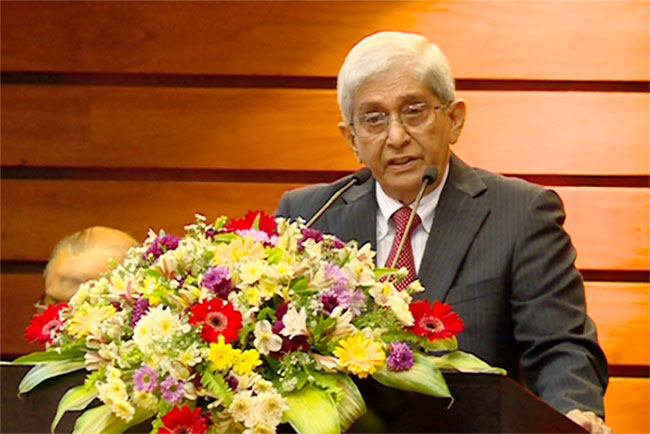
Central Bank Governor Prof. W.D Lakshman
Addressing speculations and concerns in various quarters including by the media about Sri Lanka’s international reserves, foreign currency liquidity in the domestic market and drains on such resources, Central Bank Governor Prof. W.D Lakshman yesterday provided a comprehensive account of the true situation and explained the measures taken by the authorities to ensure judicious management of foreign reserves, inflows, debt repayment, imports and the overall stability in the foreign exchange market.
Reproduced below is the full text
of the press statement issued
by the Governor.
Over the past few days, concerns have been raised by various individuals and media about an assumed shortage of foreign currency liquidity in the domestic market, preventing banks from facilitating imports. Reports published or circulated by some media channels indicate seriously negative viewpoints which can be very harmful to the country. I wish to make the following statement to explain the true position about this subject.
Due to heavy foreign currency borrowings in the past several years, there was adverse speculation, even by the time of the formation of the present Government in 2019/2020, about Sri Lanka’s ability to service its debt service obligations falling due in the near term. In spite of such speculation, and amidst added pressures owing to the COVID-19 pandemic on particularly our tourism cash flows, the Government of Sri Lanka reiterated its stance of ensuring that all its external debt service obligations would be met on time, thus maintaining Sri Lanka’s unblemished record of servicing all its maturing obligations.
To enable the country to perform this formidable task amidst reduced foreign currency inflows, Sri Lanka introduced measures to rationalise selected non-essential imports. Some of these restrictions have been gradually removed, although the Central Bank is of the view that there is further space to curtail non-essential and non-urgent imports, given the continued challenges emanating from multiple waves of COVID-19.
As a result of the measures taken by the Government and the Central Bank in the past 1 ½ years, the Government has been able to substantially reduce its foreign debt to GDP ratio to about 40 per cent and the face value of foreign debt from USD 34.1 billion at end 2019 to USD 32.2 billion by end March 2021, while successfully meeting its maturing debt service obligations. I believe that it is in Sri Lanka’s best interest to address the longstanding merchandise trade gap of USD 10 billion as it places Sri Lanka in a vulnerable position, through careful policy action. While doing this, we would continue to meet our debt service obligations and avoid further damage to the country’s reputation and to investor confidence on the Sri Lankan economy and the financial system.
We have also observed that some segments of the Sri Lankan community motivated by political reasons have continued to fuel adverse speculation about the future path of the exchange rate and the ability of the Government to service its obligations. Such self-serving speculations are unwarranted and are harmful to the general public as well as to the business community themselves. These speculative comments have naturally created some unnecessary short-term imbalance in the foreign exchange market between inflows and outflows. However, it must be noted that the Government and the Central Bank has ensured that trade is not unduly disrupted, and intermediate and capital goods imports are given priority in the process of imports. Total import values have remained considerably high at a monthly average of USD 1.7 billion during March, April and May 2021. High import values in these months show that importers, particularly of essential goods, have not been overly inconvenienced as the published media reports claim.
What the Central Bank is doing now with the participation of all commercial banks, is judicious management of imports and foreign reserves. As cash flows are poised to improve in the next few months, the Central Bank will be evaluating the national balance sheet and external macroeconomic conditions in deciding the future policy response.
As an interim solution in managing the mismatch in cash flows, the Central Bank has been working closely with the banking sector to ensure that stability in the foreign exchange market is maintained. Regular meetings with key officials of the banking community are held by the Central Bank, and the banking community has mutually agreed to manage their outflows within inflows, while giving priority to essential and urgent imports, and discouraging orders of speculative nature. It is such prudent action by banks that is being blown out of proportion by parties with vested interests.
Actions taken by the banking community have been supported by the Central Bank of Sri Lanka through measures taken in relation to mandatory conversions of export proceeds and regulatory measures to dampen speculative activity. The Central Bank has enabled commercial banks and corporates to borrow foreign funds so that the banking system could remain non-reliant on the Official Reserves to finance imports, thus supporting the national effort to continue the process of debt servicing without disturbance.
At present, our focus is managing Sri Lanka’s debt service obligations. In this regard our Gross Official Reserves remain at USD 4 billion, without considering the standby SWAP agreement of approximately USD 1.5 billion with the People’s Bank of China. While there may be short term fluctuations in this level of foreign reserves in the period ahead due to debt servicing of the Government, adequate financing strategies have been lined up to maintain reserves at sufficient levels, through inflows to the country. These include non-debt inflows expected within a short period of time to the Government particularly through its new investment arm, and other inflows to the Government from multilateral and bilateral sources. Inflows expected to the Central Bank include the SWAP facility of USD 250 million from the Bangladesh Bank expected in July 2021, the SAARCFinance SWAP facility from the Reserve Bank of India of USD 400 million expected in August 2021, and the special SWAP facility of USD 1,000 million being negotiated with the Indian counterpart. These are in addition to the receipt of around US dollars 800 million under the IMF SDR allocation expected in August 2021, and the Central Bank purchases of export proceeds and worker remittances from the market, which would help the Central Bank to build Official Reserves through non-debt inflows of around USD 700 million annually in the period ahead. Measures are also being put in place to entice the resident holders of maturing Sri Lanka International Sovereign Bonds (ISB) to repatriate maturity proceeds. It may be noted that 30 per cent of upcoming ISB maturities are held by residents. Moreover, the banking sector and the corporate sector have also seen increased amounts of financial flows at concessionary rates to support real sector activity. Private sector entities are expected to raise funds from overseas counterparts making use of the recent easing of related foreign exchange regulations. Some of these inflows in the period ahead are expected to add to the Official Reserve as well. The recent enactment of the legislation on the Colombo Port City Commission will also enable increased non-debt foreign exchange inflows to the economy.
Overall, I wish to assure the media, the general public, the business community and the investor community that the conditions of foreign currency liquidity observed in the domestic market at present are temporary and are driven by excessive speculative activity. We request these operators in the market to remain calm and not fuel undue speculation, which is not in the national interest, as the careful management of the situation without undue disruption, will result in a beneficial outcome to the country as a whole.





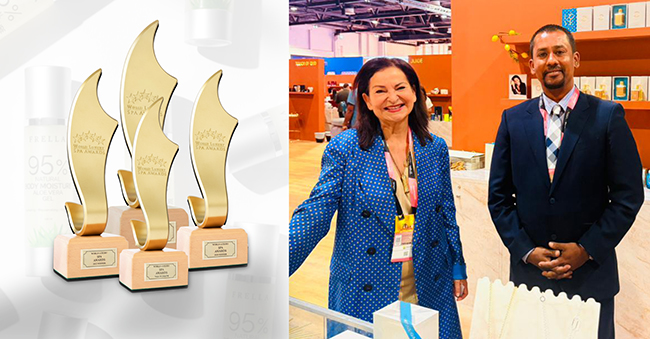
FRELLA, Sri Lankan-born and internationally-respected natural beauty and wellness brand, is setting the stage to expand operations by entering the Sri Lankan retail market. As the country’s only dedicated wellness company operating at an international scale, this move marks a new chapter for a brand with a growing global presence that has already earned the trust of luxury hotels and international customers.
For over seven years, FRELLA has emerged as Sri Lanka’s leading wellness brand, serving clients and partners across more than 15 international markets. The brand’s entry into the Sri Lankan retail market marks a significant milestone, allowing local consumers to access globally respected wellness products developed from the island’s own healing traditions. This retail expansion is supported through a strategic partnership with Baurs, a trusted 170-year-old Swedish multinational company, ensuring sophisticated distribution and access aligned with international retail standards.
FRELLA is rooted in Sri Lanka’s ancient healing traditions and inspired by centuries-old Ayurvedic wisdom. All FRELLA products are specially designed as holistic wellness solutions for the body, skin, hair, and soul, and focuses on providing nourishment, balance, and healthy aging through refined, modern wellness systems.
Business
Writer Business Services enters Sri Lanka to partner with institutions to provide information management and payments solutions


Writer Corporation, one of India’s leading business groups, announced the launch of its subsidiary, Writer Business Services Pvt. Ltd., and the commencement of its operations in Sri Lanka. The expansion reflects Sri Lanka’s strategic importance in Writer’s regional growth plans and its role in supporting a highly regulated digital and financial services market which is currently undergoing digital transformation.
Sri Lanka’s continued focus on strengthening regulatory frameworks, digital platforms, and financial systems is shaping how institutions across banking, government, and enterprise sectors approach their business operations. There is a clear emphasis on secure, compliant, and resilient information and transaction environments that can scale with regulatory and business needs. Writer’s entry into Sri Lanka aligns with this direction, bringing global experience and a partnership-led approach to the market.
As part of its launch, Writer will establish a secure records and information storage facility in Seeduwa, Colombo. Designed to meet global standards for security, compliance, and disaster resilience, the facility will support banks, financial institutions, government bodies, and large enterprises in managing physical and digital information across its lifecycle.
Alongside information management, Writer brings established expertise in integrated payment services to support the modernization of transaction infrastructure across the banking and financial services sector. Its payments capabilities focus on strengthening availability, transaction continuity, and transparency across critical payment channels that underpin institutional reliability and customer confidence.
Writer’s digital payments offerings in Sri Lanka include end-to-end ATM and self-service terminal outsourcing, integrated channel ownership and managed services, field management applications, payment and reconciliation platforms, and remote monitoring with near real-time reporting. These solutions support financial institutions in improving uptime, strengthening governance, and enhancing operational efficiency across payment networks, in line with the continued evolution of electronic and automated payment systems.
Across information management and payments, Writer operates with an integrated portfolio spanning records and information management, business process outsourcing, cloud and digital services, data privacy, cybersecurity and enterprise payments infrastructure. These capabilities support institutions in addressing evolving regulatory requirements, digitization of legacy environments, and rising operational and cyber risks.
Writer’s local presence enables closer collaboration with clients and on-ground delivery, while supporting the development of Centres of Excellence across cybersecurity operations, SOC and NOC services, AI-led solutions, and payments operations and monitoring.
Writer’s Sri Lanka operations will be built, led, and run by Sri Lankan professionals, reflecting a long-term commitment to local talent growth and development.
Commenting on this development, Satyamohan Yanambaka, CEO, Writer Global Services Pvt. Ltd., assured Writer’s long-term commitment to the country’s digital ambitions. He said, “Writer’s entry into Sri Lanka reflects our belief that digital ambition in regulated environments must be supported by trust, sound governance, and strong execution. As institutions scale digital services, the reliability of information and payment systems, channel operations, and governance frameworks becomes increasingly important to public and institutional confidence. Our experience across information management, digital transformation, and enterprise payments enables us to support secure, large-scale financial ecosystems, with a clear commitment to building and leading these capabilities locally.”
Sri Lanka’s Digital Personal Data Protection framework raises expectations around how personal and sensitive information is secured and governed.
Altair Residences have, over the past six months, seen more than 100 individual title deeds being executed by apartment owners, providing owners with a clear, registered, legal title to their apartments in accordance with Sri Lankan property law. This has been a key initiative by the new owners and management of Altair to improve governance and will continue in an orderly manner in the coming months.
With the transition of ownership to Blackstone India, Altair’s Management Council has also been formally constituted, enabling owners to play an active and proactive role in the management of the Altair building. In addition, the management council has appointed Realty Management Services (RMS), a subsidiary of Overseas Realty Ceylon PLC, as the new facility manager of Altair.
Commenting on these milestones, Thilan Wijesinghe, Chairman of TWC Holdings, who, together with a team from TWC, represents Blackstone’s interests in Sri Lanka, said, “The issuance of individual title deeds is a critical step in any professionally developed residential asset. Over the past six months, this process at Altair has moved forward in a structured and transparent manner, alongside the formal establishment of owner-led governance. This, combined with the appointment of experienced facility managers are fundamental building block for long-term value-creation for apartment owners and proper asset stewardship.”
With ongoing improvements to the building being undertaken by Indocean Developers Pvt Ltd (IDPL), the owning company of Altair, the issuance of deeds to owners is expected to accelerate over the coming months.

Showers will occur at times in the Eastern, Northern, North-Central and Uva provinces and in Matale and Nuwara-Eliya districts

Tobacco and alcohol claim 22,000 lives annually

Development Officers hunger strike drags on for fourth day

IMF urges Lanka to diversify trade amidst global tariff risks

Shocking 10,455 complaints of Children’s rights violations lodged with NCPA last year

Sea Street gold prices gallop

‘Dates have the highest sugar content to fight Coronavirus’

Sunday Island 27 December – Headlines

#SundayIsland 17th December – Headlines

Sunday Island – 28th March

Sunday Island Headlines – 21 March

Sunday Island – 21st February – Headlines
-
 Business4 days ago
ComBank, UnionPay launch SplendorPlus Card for travelers to China
-
 Business5 days ago
ComBank advances ForwardTogether agenda with event on sustainable business transformation
-
 Opinion5 days ago
Conference “Microfinance and Credit Regulatory Authority Bill: Neither Here, Nor There”
-
 Business1 day ago
Climate risks, poverty, and recovery financing in focus at CEPA policy panel
-

 Opinion4 days ago
Luck knocks at your door every day
-
 Business6 days ago
Dialog Brings the ICC Men’s T20 Cricket World Cup 2026 Closer to Sri Lankans
-

 News5 days ago
Rising climate risks and poverty in focus at CEPA policy panel tomorrow at Open University
-

 Business1 day ago
Bourse positively impacted by CBSL policy rate stance