
News
Cases of dementia in Sri Lanka estimated to increase


The risk of Alzheimer’s disease and other types of dementia increases with age. As Sri Lanka has one of the fastest ageing populations in the region it is estimated that by the year 2050 there will be almost half a million people living with dementia in Sri Lanka. Evidence is also emerging that the COVID-19 may increase the risk of developing dementia later in life.
September is marked globally as World Alzheimer’s Month and 21st September as World Alzheimer’s Day. Lanka Alzheimer’s Foundation (LAF), a member of the global association, Alzheimer’s Disease International (ADI), is focused on post-diagnosis support for those living with Alzheimer’s and other related dementias and to enhance the wellbeing of their family carers.
LAF’s is once again organizing a virtual walk from 1st to 21st September to encourage physical and mental exercise, one of the key factors in helping to delay or prevent Alzheimer’s disease and vascular dementia, while educating participants about the disease. Details are available on their website https://alzlanka.org/together-we-can-do-so-much/.
The service provided by LAF, which is run mainly by volunteers with donations from well-wishers, includes: raising awareness; providing education on risk reduction; memory screening and assessment; an activity centre; care giver support groups; a help line; identification bracelets; befriending and counselling and much more to help persons living with dementia and their care givers.
“Know Dementia, Know Alzheimer’s” – armed with the power of knowledge, all of us together with LAF can do so much to spot the warning signs of dementia, ensure timely diagnosis, and provide post-diagnosis support for people living with dementia. Contrary to common belief Alzheimer’s is not a normal part of ageing. It is a disease, for which there currently is no cure but there are measures to reduce chances of developing dementia and slowing the onset or progression of the disease.


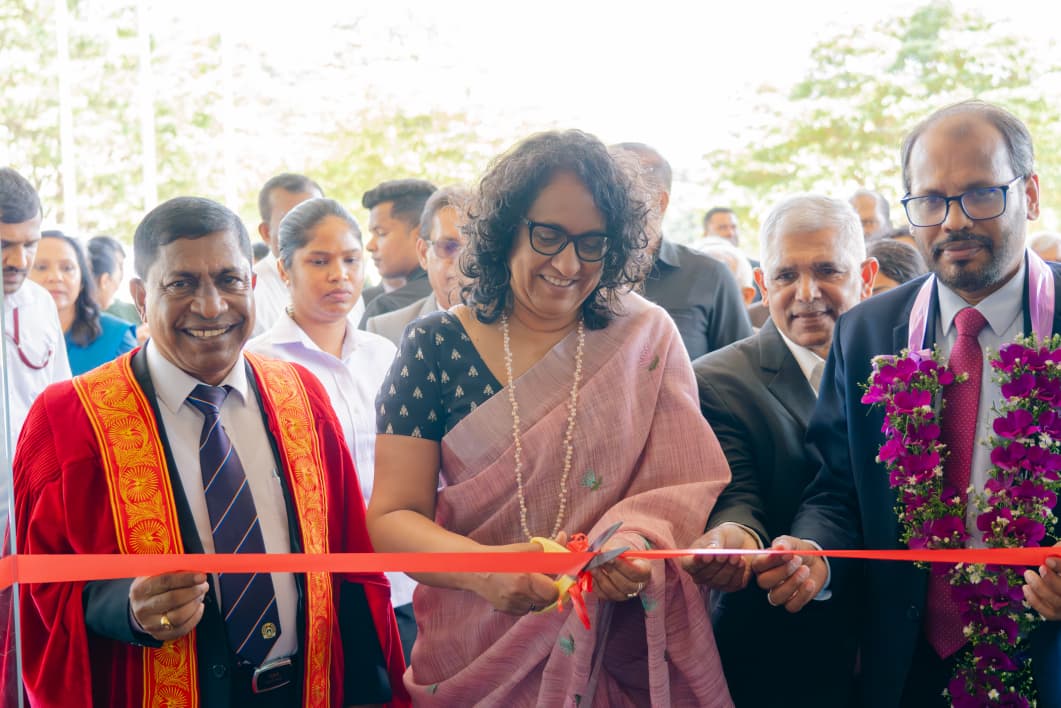
Prime Minister Dr. Harini Amarasuriya stated that promoting the local industrial sector is one of the key priorities of the Government.
The Prime Minister made these remarks while attending the official opening ceremony of the INCO 2026 Industrial Exhibition on 13 th of March, which is being held for the 20th consecutive year at the BMICH Exhibition Center.
The INCO 2026 Industrial Exhibition, organized by the Institution of Incorporated Engineers, Sri Lanka (IIESL), will be held from March 13 to 15.
Addressing at the event, Prime Minister stated:
“The engineering sector is a key driving force in addressing practical challenges faced by a country while enhancing efficiency and safety. In particular, the contribution extended by exhibitions of this nature encourages the student community to engage in innovation.
The Government has implemented several measures to accelerate the country’s industrial development. Notably, the National Industry Information System (NIIS) has established a centralized digital platform to collect data related to the country’s economic and industrial activities. The Government is also taking steps to provide necessary financial support to industrialists through Revolving Funds.
It is also noteworthy that this year’s exhibition has attracted international participation, creating opportunities for local entrepreneurs to explore new markets and gain exposure to international technologies. With the participation of engineers, students, and entrepreneurs, this exhibition marks an important step toward the country’s industrial future”.
The event was attended by the Chairman of the Export Development Board Mangala Wijesinghe, Chairman of the National Paper Company Limited Upali Rathnayake, President of the Institution of Incorporated Engineers, Sri Lanka Engineer Ananda Gunawardena, along with local and foreign investors, entrepreneurs, and industrialists.

(Prime Minister’s Media Division)

Chief Magistrate draws CB attention to massive drain in foreign exchange through cryptocurrency deals
Colombo Chief Magistrate Asanga S. Bodaragama yesterday observed that loopholes in actions carried out by State financial institutions, under the Foreign Exchange Act, had enabled funds in Sri Lanka to be transferred overseas, through cryptocurrency transactions.
The Magistrate said immediate steps should be taken to curb such activities and to educate the public, and directed that the matter be brought to the attention of the Central Bank of Sri Lanka.
He noted that cryptocurrency transactions carried out, using modern technology without approval from the Central Bank, had taken place without adequate public awareness, adding that incidents of the nature were increasingly being reported before courts.
The Magistrate observed that investigations into such incidents appeared to be confined to court proceedings alone and emphasised that the Central Bank, as the country’s principal financial regulator, together with other relevant institutions, should take appropriate measures and raise public awareness in the interest of the public and the country.
He also said the Criminal Investigation Department and the Central Bank should take steps to educate the public on such financial frauds and introduce a proper mechanism to address the issue.
The court further observed that many individuals had exploited loopholes in the Foreign Exchange Act and related procedures to commit financial fraud, and stressed that the Central Bank should take necessary action upon being apprised of such matters.
The Magistrate made these observations when a case relating to an alleged Rs. 290 million fraud at a well-known private bank was taken up before court yesterday. The suspects are alleged to have fraudulently obtained public funds through cryptocurrency transactions using accounts on Binance.
The Magistrate also directed the Criminal Investigation Department to expedite investigations into the disappearance of Rs. 290 million and report progress to court.Observing that the incident was not an ordinary case, the Magistrate instructed the CID to take prompt action to prevent similar frauds carried out through Binance platforms.
Making further observations, the Magistrate noted that the suspects had been produced before court, over the past three months, in connection with the incident, and stressed that investigations should be completed promptly by gathering all relevant information.
He earlier observed that the case did not involve a minor offence, such as ordinary theft, but a serious matter concerning the fraudulent misappropriation of public funds, through Binance accounts, and emphasised the need for swift action to prevent such crimes.
Nineteen suspects, connected to the incident, had earlier been remanded and subsequently released on bail.
The case was fixed to be called again on 15 May .

The Sri Lanka Computer Emergency Readiness Team (SLCERT) has issued a public advisory urging internet users to exercise caution when engaging with online advertisements in the run-up to the festive season.
Senior Information Security Engineer at SLCERT, Charuka Damunupola, said that several incidents of online scams had already been reported to the organisation during the first two months of this year.
He warned that with the approaching Sinhala and Tamil New Year, the risk of fraudulent advertisements and malicious links, appearing online, was likely to increase, often disguised as discount offers, cash prizes, or special promotional deals.
Damunupola noted that such links frequently redirect users to fraudulent websites designed to harvest personal information and other sensitive data.
He further cautioned that during the Vesak and Poson festive periods, scammers may attempt to collect user data through deceptive schemes promoted under various guises, including campaigns such as ‘Poson Maha Data Dansala.’
SLCERT has, therefore, urged the public to remain vigilant and exercise caution when clicking on unsolicited links or advertisements encountered online.

Agha calls for ‘sportsman spirit’ after controversial dismissal

US embassy in Baghdad hit by strike as Trump says military targets ‘obliterated’ on Iran’s key oil island

Showers or thundershowers will occur at several places in the Western, Sabaragamuwa, Central, North-western and Uva provinces and in Galle, Matara, Mannar and Anuradhapura districts after 2.00 pm.

Bahrain & Saudi Arabia Grands Prix to be cancelled

Pink Floyd guitar sold for record-breaking $14.6m

Promoting Local Industries is a key priority of the Government – PM

‘Dates have the highest sugar content to fight Coronavirus’

Sunday Island 27 December – Headlines

#SundayIsland 17th December – Headlines

Sunday Island – 28th March

Sunday Island Headlines – 21 March

Sunday Island – 21st February – Headlines
-

 News6 days ago
Repatriation of Iranian naval personnel Sri Lanka’s call: Washington
-

 Features6 days ago
Winds of Change:Geopolitics at the crossroads of South and Southeast Asia
-

 News5 days ago
Prof. Dunusinghe warns Lanka at serious risk due to ME war
-

 Sports4 days ago
Royal start favourites in historic Battle of the Blues
-

 Sports3 days ago
The 147th Royal–Thomian and 175 Years of the School by the Sea
-

 News3 days ago
Historic address by BASL President at the Supreme Court of India
-

 Business7 days ago
Seven decades of sartorial excellence: The legacy of Linton Master Tailors in Kandy
-

 News4 days ago
CEBEU warns of operational disruptions amid uncertainty over CEB restructuring