
2024-12-22





A tiny possum with one extra-long finger on each hand is one of two species thought to have been extinct that have been discovered in West Papua, in what’s been called an “exceptional” scientific discovery.
The other is a a ring-tailed glider with a tail that can grasp branches. Both have been found living in remote rainforests after they were thought to have disappeared 6,000 years ago.
Finding living examples of a lost species is rare, but discovering two is “remarkable,” say scientists who published their findings in the Records of the Australian Museum journal on Friday.
Such discoveries are known as “lazarus taxon”, a term inspired by a biblical figure who was raised from the dead.
“The discovery of one lazarus taxon… is an exceptional discovery,” said Prof Tim Flannery, a prominent Australian scientist best known for his 2005 The Weather Makers book about climate change.
“But the discovery of two species, thought to have been extinct for thousands of years, is remarkable.”
The first rediscovered species was the pygmy long-fingered possum, a striped marsupial weighing about 200g, which is understood to have vanished from Australia during the Ice Age.
A distinguishing feature is that on each hand, the possum’s fourth finger is twice the length of other digits, which scientists say help it dig out wood-boring insect larvae, it’s main source of food.
The second species is the ring-tailed glider, and just like its Australian cousin the greater glider, it lives in the hollows of tall trees.
The discoveries were made by piecing together parts of a puzzle with scientists combing through decades-old fossils, rare photos and old specimens to gather clues before making visits to remote New Guinea locations.

Flannery, along with another of the paper’s co-authors Prof Kris Helgen and researchers from the University of Papau, spoke to local elders from the Tambrauw and Maybrat clans – some of whom have only had contact with the modern world since the 1960s.
Identification of the species would not have been possible without their help, according to Rika Korain, a Maybrat woman and another co-author.
“They’re very traditional people,” Flannery added, and regard the glider as so sacred that “not only won’t they hunt it, they won’t mention its name”.
But the gliders habitat was increasingly coming under threat from logging in the area, Flannery said.
This, in part, has prompted efforts by scientists and wildlife groups to try secure native title for the forests to ensure logging cannot be carried out without consent from locals, he said.

(BBC)
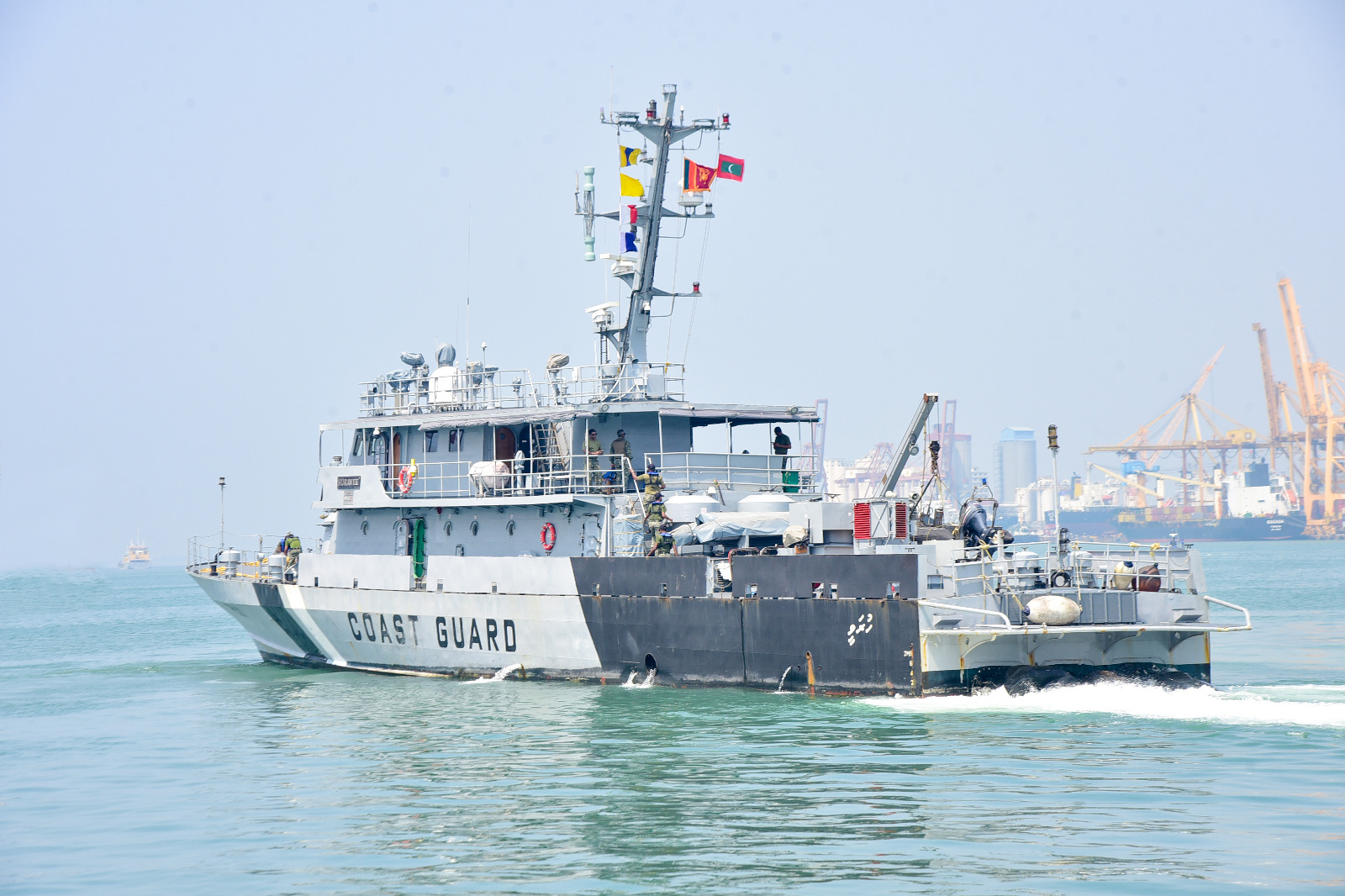
The Maldives Coast Guard Ship Huravee which arrived in Sri Lanka for replenishment purposes, departed the island on 04 Mar 26.
In accordance with naval tradition, the Sri Lanka Navy extended a customary farewell to the departing ship at the Port of Colombo

The United States-Israeli war on Iran is estimated to have cost Washington $3.7bn so far in its first 100 hours alone, or nearly $900m a day, driven largely by the huge expenditure of munitions, according to new research.
An analysis by Washington-based think tank the Center for Strategic and International Studies (CSIS) underlined the colossal cost of the war, which entered its seventh day on Friday, as the US attacks Iran with stealth bombers and advanced weapons systems.
Researchers Mark Cancian and Chris Park said only a small amount of the estimated $3.7bn cost of the war in the first 100 hours – or $891.4m each day – was already budgeted for, while most of the costs – $3.5bn – were not.
That meant the Pentagon would likely need to request more funding soon to cover the unbudgeted costs, they said, which was likely to prove a political challenge for the Trump administration and provide “a focal point for opposition to the war,” they said.
Domestic cost-of-living concerns, inflation, and now a knock-on effect of rising gas prices due to the conflict are likely to further diminish support among US citizens for the war. It is also dividing Trump’s “America First” base, which he had promised in his presidential campaigns to not enter “foreign wars”.
Noting that the US Department of Defense had released limited specifics on its operations, the researchers said their analysis drew on Congressional Budget Office (CBO) estimates of the operations and support costs for each unit, adjusting for inflation and unit size, and adding 10 percent for costs of “a higher operational tempo”.
Their analysis said the US had expended more than 2,000 munitions of various types in the first 100 hours of the war, and estimated it would cost $3.1bn to replenish the munitions inventory on a like-for-like basis, with the costs increasing by $758.1m a day.
(Aljazeera)

Tiny possum and glider thought extinct for 6,000 years found in remote West Papua

Maldives Coast Guard Ship Huravee departs island

Cost to US for war on Iran is $3.7bn in first 100 hours, says think tank

More than 120 killed in Israel’s Lebanon attacks as Beirut, south, east hit

Hungary confirms it is holding seven Ukrainian bank workers and $80m

US and Venezuela agree to resume diplomatic ties after Maduro capture

‘Dates have the highest sugar content to fight Coronavirus’

Sunday Island 27 December – Headlines

#SundayIsland 17th December – Headlines

Sunday Island – 28th March

Sunday Island Headlines – 21 March

Sunday Island – 21st February – Headlines
-

 Features5 days ago
Brilliant Navy officer no more
-

 Opinion5 days ago
Sri Lanka – world’s worst facilities for cricket fans
-

 Features5 days ago
A life in colour and song: Rajika Gamage’s new bird guide captures Sri Lanka’s avian soul
-

 Business2 days ago
Cabinet nod for the removal of Cess tax imposed on imported good
-

 Features6 days ago
Overseas visits to drum up foreign assistance for Sri Lanka
-

 Features6 days ago
Sri Lanka to Host First-Ever World Congress on Snakes in Landmark Scientific Milestone
-

 News2 days ago
Legal experts decry move to demolish STC dining hall
-
 Latest News2 days ago
Around 140 people missing after Iranian navy ship sinks off coast of Sri Lanka