Connect with us

Latest News

Can spluttering Sri Lanka get up to full speed at the World Cup Qualifier?

Published

on

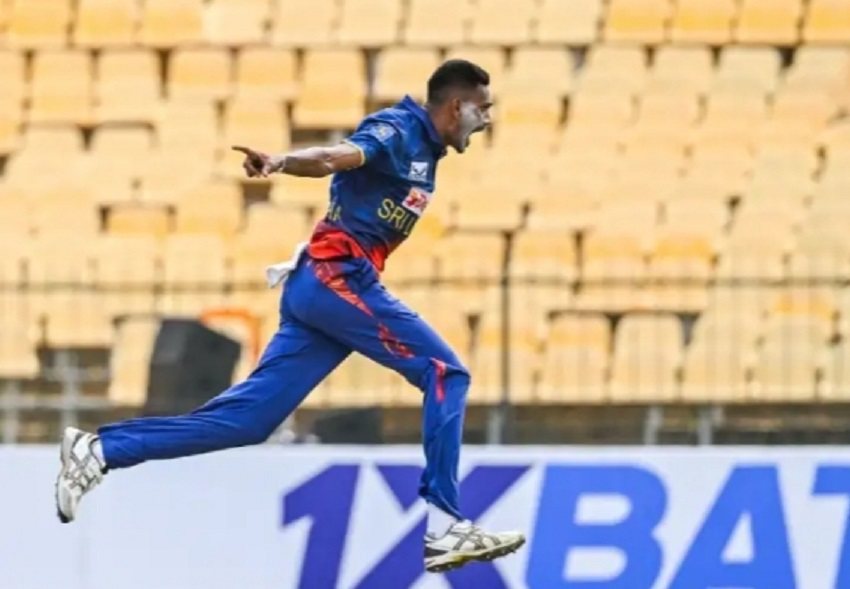
Dushmantha Chameera will be among Sri Lanka's key players at the World Cup Qualifier (pic Cricinfo)
Champions once, runners-up twice, a semi-final and quarter-final thrown in for good measure, and ever present in the tournament since making their first appearance in 1975. Safe to say, Sri Lanka’s World Cup record is far from shabby. But now, for the first time in their history, they are in genuine danger of missing out altogether.
Unthinkable? Perhaps. Impossible? Not so much. But how did it come to this? Well, to get the obvious answer out of the way, quite frankly, they haven’t been all that good.
Since the end of the 2019 World Cup, Sri Lanka have won just 18 of 42 ODIs,  out of which 23 were part of the World Cup Super League. Of those, they won seven.
Much of this dismal record is primarily down to their batting. In this period, Sri Lanka have crossed the 300-mark just nine times, and struggled in nearly every key batting metric. Dot-ball percentage in the last ten overs? 38.26%. Scoring rate in that phase? A mere 7.38, putting them ninth out of 12 Test-playing nations; only Zimbabwe, Ireland and Afghanistan have been worse – two of them they will likely be facing in the qualifiers. even in the  crucial middle-over period (11-40) they dwell near the bottom, eighth this time, striking at 5.02 per over with half (50.52%) of the balls they faced being dots.
But it must also be noted that Sri Lanka had a particularly rough set of fixtures for this World Cup Super League cycle. Four of the eight series they played were against India, South Africa, England and New Zealand – the last two away from home.
While they won just one of those, what really dented their chances were the away defeats to Bangladesh and West Indies. And yet, this is a side that has beaten both South Africa and Australia at home – the latter series, as luck would have it, was not part of the Super League – and most recently strung together some impressive displays against Afghanistan – also at home – a team that comfortably qualified for the World Cup.
This, in a nutshell, is the story of Sri Lankan cricket over the last few years. Stifling lows mixed with thrilling highs. Not quite good enough for automatic qualification for the World Cup, but certainly not bad enough to rule out entirely.
So, here they are, in Zimbabwe to play a bunch of qualifiers, in conditions that will not even remotely resemble what they are likely to face in India later this year – provided they qualify of course.
Covid-19 meant that, despite his best intentions and enthusiasm, former head coach Mickey Arthur was hamstrung from the get-go. Tasked with revitalising the side after an abysmal showing at the 2019 World Cup, attempts to build trust and camaraderie while simultaneously trying to improve results was an entirely new challenge with social distancing, bio-bubbles and lockdowns thrown into the mix.
It was around this time that Sri Lanka Cricket also sought to usher in a more youth-centric policy, which has continued under Arthur’s replacement Chris Silverwood.  The move, in fairness, paid dividends with Sri Lanka emerging as surprise Asia Cup winners last year, albeit in the T20 format. But in ODIs, there have only been glimpses of that same promise. A series whitewash at the hands of India at the start of the year, including a record 317 run defeat,  was a particularly demoralising nadir.
Injuries too have played their part, with in-form Kusal Perera and Avishka Fernando missing a large chunk of Super League games. But more than that, it has been the absence of Dushmantha Chameera that has hurt. In Chameera, Sri Lanka have on their hands one of the world’s premier seamers, one who is able to execute precise plans at an express pace. A fit Chameera – whose workload is being carefully managed – will be at the forefront of any Sri Lankan success in the coming weeks and months.
On the face of it, it should be straightforward. While this is not Sri Lanka’s first qualifying experience – they had to qualify for the T20 World Cup last year – it is the first time they have been required to do so in the 50-over format.
The first round is unlikely to provide much trouble with Ireland likely to be the toughest opponents in a group that also has Scotland, UAE and Oman. It’s in the next stage, though, that the potential banana skins may arise.
Barring any surprises, Sri Lanka’s likely opponents in the Super Six round will be West Indies, hosts Zimbabwe, and one of Netherlands, Nepal or USA. The first two should provide the biggest challenge but one that this Sri Lanka side should be able to overcome.
However, if the past few years have shown anything, it is that this is a team capable of beating the best but also holds within itself the capacity to capitulate suddenly and frantically. It is why Sri Lanka’s loyal fanbase goes into these games with a grizzled sense of trepidation. A well-oiled machine, they are not. Rather, one that’s spluttering up to full speed, duct tape at the ready, hoping the wheels don’t come off, as they seek to build up a head of steam to power them through.
(Cricinfo)


Latest News

Vanquished Australia eye winning end to dreadful World Cup campaign

Published

on

By

Steve Smith flew all the way to Sri Lanka as a replacement player, so he's likely to get a go [Cricbuzz]
In an alternate world, Australia would have been running final system checks in their last group game against Oman on February 20 before stepping into the world of Super Eights with a favourites tag in tow. But reality hasn’t matched the lofty pre-tournament expectation, and has them packing bags and bracing themselves for a damning introspection.

It’s jarring to see Australia being left behind in a white-ball World Cup – a blot in their enviable, unmatched heritage. But that said, they’ve failed to make the semis of five of the last six T20 World Cups – a complete reversal in fortunes from the 50-over tournament.

Amid accusations of not taking it too seriously, losing key players to injuries and retirement and a sharp assessment from Ricky Ponting,  a former World Cup winner from their shores, Mitchell Marsh & Co. have to drag themselves to the middle one last time before being homeward bound. You could argue there’s nothing riding on this game other than serving another reminder of Australia’s fallacies and you’d be right. But Australia will want to believe that a win as a final act brings some peace with it, and the consolation of finishing third – just outside of the two qualifiers.

Oman, meanwhile, got to Sri Lanka in search of a memorable evening at the very least where they could upset the apple-cart. They’ve gone 0 for 3 so far, but there will be murmurs in their camp of setting out in search of it again, against the vulnerable former champions.

There’s predicted thunderstorms one hour into the fixture. If rain stays away, there should be big runs on offer. The only other 7 pm start here saw Australia post 181 and Sri Lanka chase it down with two overs to spare.

Steve Smith flew all the way to Sri Lanka as a replacement player, so he’s likely to get a go in the final game of the tournament for the Aussies.

Oman made a couple of changes in the last two fixtures without success. Shakeel Ahmed went in and out of the side in the three games, but picked three wickets against Ireland and should keep his place. Jatinder might look at giving top-order batter Karan Sonavale another go.

Australia Probable XI: Mitchell Marsh (c), Steve Smith, Cameron Green, Tim David, Josh Inglis (wk), Marcus Stoinis, Matt Renshaw, Cooper Connolly, Xavier Bartlett, Nathan Ellis, Adam Zampa

Oman Probable XI: Aamir Kaleem, Jatinder Singh (c), Hammad Mirza, Ashish Odedara/Karan Sonavale, Mohammad Nadeem, Jiten Ramanandi, Vinayak Shukla (wk), Nadeem Khan, Sufyan Mehmood, Shah Faisal, Shakeel Ahmed

[Cricbuzz]

Continue Reading

Foreign News

Trump’s Board of Peace members pledge $7bn in Gaza relief

Published

on

By

The UN estimates the cost of damage in Gaza at $70bn [BBC]

Several countries which have signed up to Donald Trump’s Board of Peace have contributed more than $7bn (£5.2bn) towards a Gaza “relief package”, the US president has said.

Trump made the announcement during the first meeting of the organisation that many of US’s Western allies have refused to join, fearing the body originally meant to help end the war between Israel and Hamas may be intended to replace the UN.

The second phase of a US-brokered Gaza ceasefire plan includes the disarmament of Hamas and the reconstruction of Gaza.

It “looks like” Hamas would disarm, Trump told participants. However, there are few signs of the Palestinian group disarming. Gazans say it is extending its control over the Strip.

Speaking as the Board of Peace convened on Thursday, Israeli Prime Minister Benjamin Netanyahu said Israel had “agreed with our ally the US there will be no reconstruction of Gaza before the demilitarisation of Gaza”.

The war was triggered by the Hamas-led attack on southern Israel on 7 October 2023, in which about 1,200 people were killed and 251 others were taken hostage.

Israel responded to the attack by launching a military campaign in Gaza, during which more than 72,000 people have been killed, according to the territory’s Hamas-run health ministry.

The enclave’s economy is in ruins, with its buildings and infrastructure largely destroyed. The UN estimates the cost of damage at $70bn.

Countries including the UK, Canada, France and Germany have refused to join the Board of Peace that came into being last month.

In an effort to address concerns that the organisation was meant as a way of sidelining the UN, Trump told the board’s first meeting in Washington that “we’re going to be working with the United Nations very closely, we’re going to bring them back”.

Gaza, the US president said, was “no longer a hotbed of radicalism and terror”.

“And to end that, we have today, and I’m pleased to announce that Kazakhstan, Azerbaijan, UAE, Morocco, Bahrain, Qatar, Saudi Arabia, Uzbekistan, and Kuwait have all contributed more than $7bn toward the relief package”.

“Every dollar spent is an investment in stability,” he said, adding that the UN would contribute $2bn for humanitarian assistance, while football body Fifa would raise $75m for soccer-related projects in the Strip.

Nickolay Mladenov, a Bulgarian politician who has been given the title of high representative for Gaza as part of the board, said the process of recruiting a new transitional Palestinian police force had begun and “just in the first few hours we have 2,000 people who have applied”.

But both Israel and the US have insisted that the force is not drawn from the existing Hamas-controlled police without stringent vetting, nor do they want it simply made up of the security forces of the Palestinian Authority in the West Bank.

That means starting from scratch, and the task is daunting.

Mladenov has previously said the Palestinian police force must be the primary security agency in Gaza, assisted by the International Stabilisation Force (ISF), and not vice-versa.

According to the US plan, the ISF will work with Israel and Egypt, along with a newly trained and vetted Palestinian police force, to help secure border areas and ensure the process of permanently disarming non-state armed groups, including Hamas.

But Mladenov said there is little evidence such a force could yet oversee the disarmament of Hamas and other Palestinian factions.

Meanwhile, there was no indication at the meeting that Hamas was prepared to hand over its weapons, despite Trump’s combination of optimism and threat on this point.

So far, Hamas has publicly appeared to make handing over weapons contingent on – at least – Israeli withdrawal from Gaza.

Progress on this issue is critical because none of Trump’s proposals for reconstruction and governance can take place without a security force on the ground that has broad backing of the Palestinian population, given its role includes assuming a monopoly of force within Gaza.

The Washington meeting itself was characteristic of Trump’s approach to Israeli-Palestinian peace-making over his two terms – involving a future for Palestinians seen often through the lens of real-estate development and wealthy investor funding.

Meanwhile Israel’s leadership has been wary about some of Trump’s efforts, particularly the invitations to his board for Turkey and Qatar, whom Israel does not want to see take a prominent role in decisions on the future of Gaza.

Trump and his team have defended his unconventional approach saying it amounts to “new thinking” to try to solve the conflict.

However, Mladenov has warned that without rapid progress, Gaza will remain split into two territories, one under continuing Israeli occupation and the other under Hamas control – and also split from the West Bank, making a future independent state unviable and failing to secure either Palestinians or Israelis.

[BBC]

Continue Reading

Latest News

Trump says world has 10 days to see if Iran deal reached

Published

on

By

Trump told the Board of Peace, Trump said that talks with Iran have been 'very good' but historically difficult [BBC]

President Donald Trump says the world will find out “over the next, probably, 10 days” whether the US will reach a deal with Iran or take military action.

At the inaugural meeting of his Board of Peace in Washington DC, Trump said “we have some work to do” in coming to an agreement with the Islamic Republic about its nuclear programme, and that “we may have to take it a step further”.

In recent days, the US has surged military forces to the Middle East, while progress was also reported at talks between American and Iranian negotiators in Switzerland.

Democratic lawmakers, and  some Republicans, have voiced opposition to any potential military action in Iran without congressional approval.

In his remarks, Trump noted that Special Envoys Steve Witkoff and Jared Kushner, who is also Trump’s son-in-law, had “some very good meetings” with Iran.

“It’s proven to be, over the years, not easy to make a meaningful deal with Iran,” he said. “Otherwise bad things happen.”

One day earlier, White House press secretary Karoline Leavitt warned that Iran would be “very wise” to make a deal with the US, adding that Trump was still hoping for a diplomatic solution over Tehran’s nuclear programme.

When Trump first announced the Board of Peace, it was thought to be aimed at helping end the two-year war between Israel and Hamas in Gaza and oversee reconstruction.

But in the last month its mission has appeared to go beyond one conflict, with many wondering if the Trump-chaired board, made up of about two dozen countries, is meant to sideline the United Nations.

US missile and aircraft struck three Iranian nuclear facilities in June last year, and the White House was reportedly discussing new attack options this week.

American forces have been ramping up their presence in the region in recent weeks, including the deployment of the USS Abraham Lincoln aircraft carrier.

However, the BBC understands that the British government has not given permission for the US to use UK military bases to support any potential strikes on Iran.

In previous military operations in the Middle East, the US used RAF Fairford, in Gloucestershire, and the UK overseas territory of Diego Garcia, in the Indian Ocean.

Satellite images have also shown that Iran has reinforced military facilities, and the country’s Supreme Leader, Ayatollah Ali Khamanei, has posted messages to social media threatening US forces.

“The US President constantly says that the US has sent a warship toward Iran. Of course, a warship is a dangerous piece of military hardware,” one of Khamenei’s posts read.

“However, more dangerous than that warship is the weapon that can send that warship to the bottom of the sea.”

Several members of US Congress have expressed opposition to any military action against Iran.

California Democrat Ro Khanna and Kentucky Republican Thomas Massie have said they will try to force a vote on the matter next week, citing the 1973 War Powers Act.

The act grants Congress the ability to check the president’s power to commit the US to armed conflict.

“A war with Iran would be catastrophic,” Khanna posted on social media. “Iran is a complex society of 90 million people with significant air defences and military capabilities.”

He also said thousands of US troops in the region “could be at risk of retaliation”.

The chances of passage in both chambers of Congress are not strong.

In January, Senate Republicans blocked a similar war powers resolution that would have required the Trump administration to obtain congressional approval before launching further military operations in Venezuela following the capture of Nicolas Maduro.

[BBC]

Continue Reading

Trending