
Sports
Bringing cricket’s glory days back


Rev. Br. Nimal Gurusinghe FSC
After several setbacks in cricket in recent years, the national cricket team is looking to regain past glories. I must congratulate the national selection panel headed by former fast bowler Pramodaya Wickramasinghe for some of the bold decisions they have taken over the past two months.
In the Caribbean, the selectors handed the first Test cap to Pathum Nissanka, who made a hundred on debut and then last week in the second Test against Bangladesh, the selectors blooded in Praveen Jayawickrama, who took 11 wickets for 178, a Sri Lankan record for a debutant. It is also the tenth best figures by a player on debut in the history of Test cricket.
There is no doubt that we have talent in the country and bold moves such as these throwing the players into the deep end will bring us desired results.
I would like to see continuity in selections and for this to happen the current lot of selectors need to serve for a longer period of time. Our present system where we change selectors every year simply doesn’t help.
One of the things that I would like to see is resource personal like psychologists being brought in to assist our players. The modern day game has changed so much and a psychologist will be able to help players meet modern day demands. I see that teams like Australia, England and South Africa make use of psychologists. Although we too have done so, there is no continuity in this vital aspect.
One of the modern trends that I have seen in Sri Lankan cricket is our tail is too long. We do not have many tail-enders who are able to contribute towards the team’s total. We need to emphasize a lot on the tail getting exposure during training sessions and as a result they will be able to contribute towards the team’s total.
I am also glad to see that the selectors emphasizing a lot on fielding these days. At the same time, I would like to see them giving equal importance to fielding. This vital area has been neglected so long and that is one reason why we do not do well at present in one-day cricket. Sri Lankan teams of the past were on par with teams like Australia and South Africa when it came to fielding. But not anymore.
When we stress the importance on fielding in selections, if players are able to take half chances and create run outs that is going to be so crucial in crunch games.
Another aspect that I would like to see improve is running between the wickets. I can not recall when the last time a Sri Lankan pair completed three runs was. Physical fitness is so vital for this to happen.
Another thing that I would like to see happening is our players doing well not just at home but overseas as well. We are yet to win Test matches in Australia and England although we have been a Test playing nation for 40 years now.
I wish Pramodaya and his team good luck and look forward to see them transforming Sri Lankan cricket. Pramodaya is a member of the World Cup winning team and he knows what is required to become a champion team.


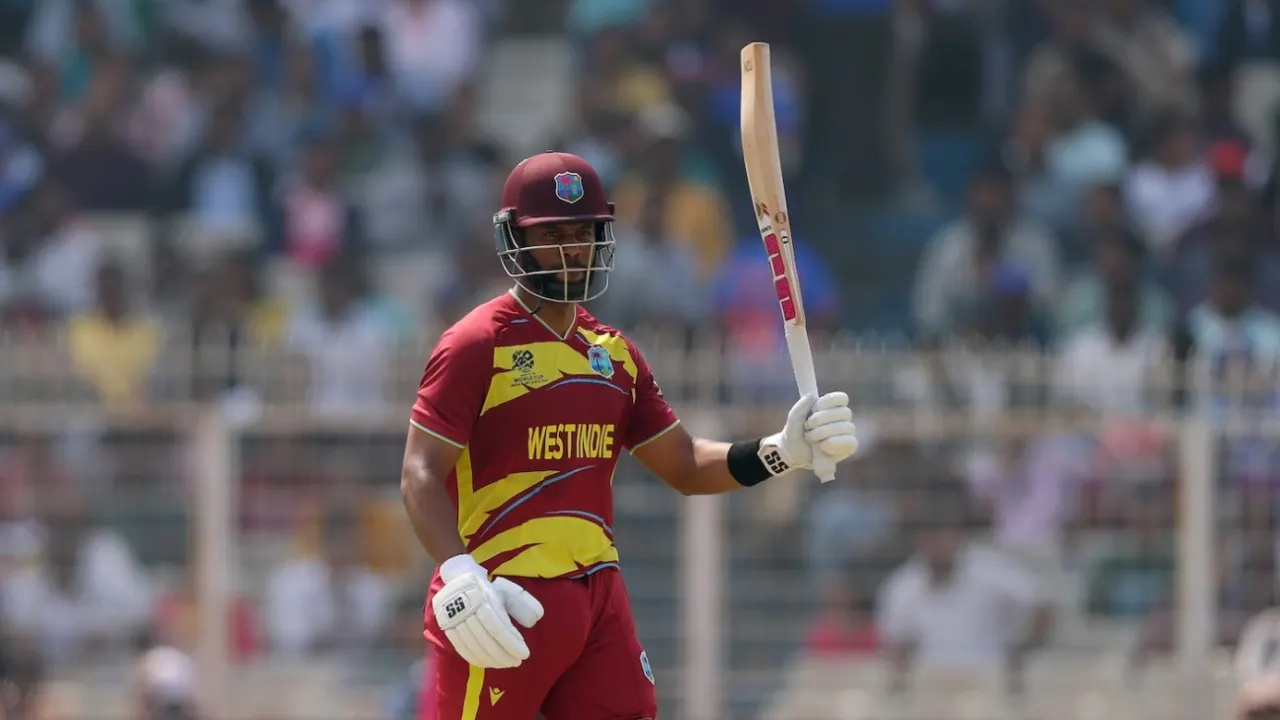
West Indies headed into the Super Eight of the T20 World Cup unbeaten after successfully defending 165 against Italy at Eden Gardens on Thursday. Spinners Chrishan Kalugamage and Ben Manenti impressed with the ball, and were backed up by some sharp fielding, but the batters couldn’t get the Italian job done.
While Italy exited their maiden World Cup with a win against Nepal and many memories to cherish, West Indies sealed their fourth successive win at the venue where they will face India in their final Super Eight fixture on March 1.
Italy may have sensed an opportunity for another win when they stifled West Indies’ power-packed middle order, but Marrhew Forde’s twin strikes in the powerplay decisively tilted the game in West Indies’ favour. Bowling three overs on the bounce, Forde dismissed both Justin Mosca and No. 3 Syed Naqvi, helping West Indies restrict Italy to 37 for 3 in six overs. Shamar Joseph then bagged four wickets to go with his four catches as Italy were bowled out for 123.
The win was set up by Shai Hope, who hit back-to-back half-centuries and dominated the early exchanges with an array of off-side drives. West Indies lost steam after Hope departed for 75 off 46 balls, but they regained it through their bowlers.
After West Indies were asked to bat first, they hit seven boundaries in the powerplay, and Hope was responsible for all of those. By the eighth over, the West Indies captain had zoomed to a 28-ball half-century. The first boundary by a West Indies player not named “Shai Hope” came in the tenth over when Roston Chase backed away and lifted left-arm spinner JJ Smuts over extra-cover.
Hope peppered the off side, scoring 46 of his 75 runs in that region. Anything that was remotely full and outside off was crashed in the arc between mid-off and point. When Italy dragged their lengths back, Hope was ready for it as well. Like when left-arm seamer Ali Hasan banged one into his upper body, Hope swatted him away over square leg for six in the fourth over. Hope was particularly severe on right-arm fast bowler Thomas Draca, taking him for 20 off nine balls.
Italy finally stopped him in the 16th over when legspinner Kalugagame bowled him with a tossed-up wrong’un.
Brief scores:
West Indies 165 for 6 in 20 overs (Shai Hope 75, Roston Chase 24, Sherfane Rutherford 24*, Matthew Forde 16*; Ali Hasan 1-24, Thomas Draca 1-22, Chrishan Kalugamage 2-25, Ben Manenti 2-37) beat Italy 123 in 18 overs (Anthony Mosca 19, JJ Smuts 24, Ben Manenti 26, Grant Stewart 12; Akeal Hosein 1-25, Shamar Joseph 4-30, Matthew Forde 3-19, Gudakesh Motie 2-24) by 42 runs
[Cricinfo]
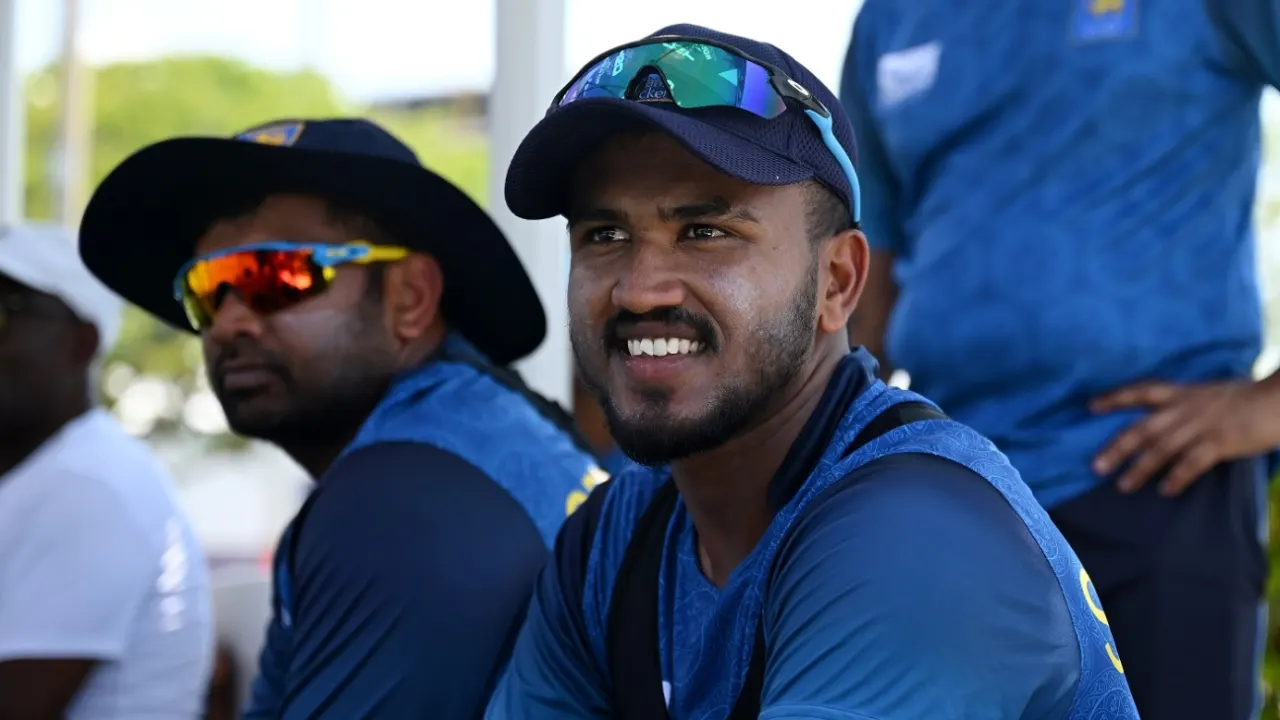
Sri Lanka won the toss at the party at Premadasa and decided to bat first. Both, the hosts and Zimbabwe, are through to the Super Eight already, but for Sri Lanka it was important to get in their injury replacements.
The big one, of course, was Matheesha Pathirana, whose tournament ended with a calf injury sustained during the match against Australia. His replacement in the squad, Dilshan Madushanka, came straight into the XI. Also given a look-in was Pramod Madushan, the fast bowler who was already in the squad. In order to organise this virtual bowl-off between Madushan and Madushanka, Sri Lanka rested their lead fast bowler Dushmantha Chameera.
Zimbabwe made no change to the XI that shocked Australia in this World Cup. They were looking to bowl first anyway because of the forecast for some drizzle later on, and hoping to bat in better batting conditions once the lights came on.
Sri Lanka: Pathum Nissanka, Kusal Perera, Kusal Mendis (wk), Pavan Rathnayake, Dasun Shanaka (capt), Kamindu Mendis, Dunith Wellalage, Dushan Hemantha, Maheesh Theekshana, Pramod Madushan, Dilshan Madushanka
Zimbabwe: Brian Bennett, Tadiwanashe Marumani (wk), Dion Myers, Sikandar Raza (capt), Ryan Burl, Tony Munyonga, Tashinga Musekiwa, Brad Evans, Wellington Masakadza, Graeme Cremer, Blessing Muzarabani
[Cricinfo]
[Cricbuzz]

Ex-UK Prince Andrew arrested on suspicion of misconduct in public office

Advisory for Severe Lightning issued to the Western and Sabaragamuwa provinces and Nuwara-Eliya, Galle and Matara districts

Navy and Coast Guard seize 04 Indian fishing vessels poaching in Sri Lankan waters

Hope’s 75, Forde and Joseph’s wickets help West Indies go into playoffs unconquered

Sri Lanka opt to bat against Zimbabwe, play Madushanka and Madushan

South Korea’s ex-president jailed for life for masterminding an insurrection

‘Dates have the highest sugar content to fight Coronavirus’

Sunday Island 27 December – Headlines

#SundayIsland 17th December – Headlines

Sunday Island – 28th March

Sunday Island Headlines – 21 March

Sunday Island – 21st February – Headlines
-
 Life style5 days ago
Marriot new GM Suranga
-

 Business4 days ago
Ministry of Brands to launch Sri Lanka’s first off-price retail destination
-
 Features5 days ago
Monks’ march, in America and Sri Lanka
-

 Features5 days ago
The Rise of Takaichi
-

 Features5 days ago
Wetlands of Sri Lanka:
-

 News4 days ago
Thailand to recruit 10,000 Lankans under new labour pact
-
 News4 days ago
Massive Sangha confab to address alleged injustices against monks
-
 News2 days ago
IMF MD here