
Life style
Believe the child says Dr Tush

By Zanita Careem
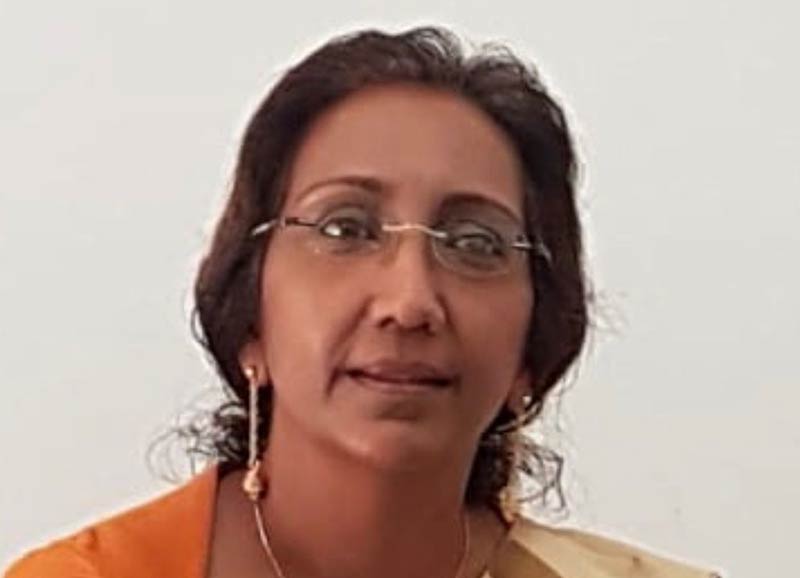
 Sri Lanka has become an unsafe environment for women and children said Dr. Tushara Wickramanayake, fondly known as Tush.A family physician and founder, Chairperson of Stop Child Cruelty Trus. An old girl of Visakha Vidyalaya, she has been an active voice against all
forms of injustice on children and women from an early age. A General Physician, practicing in UK and Sri Lanka. Tush has worked in child welfare since Tsunami 2004 and became a passionate child rights advocate turning adversity to advocacy after her own 11 year
old daughter was subjected to corporal punishment andmental abuse in an International school in 2018. Spearheading a national campaign to end violence against children in Sri Lanka,Tush’s self-learning experience of the crippled child protection mechanism, indefatigable efforts in advocacy work, compassion and empathy in raising awarenesshas resulted in global recognition and historical achievements in a short period of time. Can you tell us about your experience working with children who have been affected by abuse?
Child abuse can be broadly categorized into physical abuse, sexual abuse, mental abuse and neglect. Physical abuse, cruelty, corporal punishment are the most common form of abuse in Sri Lanka and globally affecting 1.3 billion children each year. The complaints received on cruelty by the National ChildProtection Authority (NCPA) have trebled in ten years with 2238 cases reported in 2023.Sexual abuse, especially on-line abuse isincreasing rapidly. Whilst there may beinjuries and scars visible immediately after physical and sexual abuse, all forms of abuse affects the child mentally. But mental scars may not be obvious and may require years before a formal clinical diagnosis is made.
Therefore, mental abuse is often overlooked, their true effects amplifying years later into adulthood and cascades to the society. Often, the impact of abuse depends on the child’s own internal resilience and external support systems.For example, a child who is forced to kneel down maybe immune to it because it is normalised in his/her environment whilst another child maybe traumatized because it is unfamiliar in his/her surroundings. Irrespective of our own upbringing and prejudices we must endorse zero tolerance of any form of abuse against children growing up in the 21st century.
How do you handle situations where you suspect abuse but don’t have concrete evidence?
The first and simple golden rule is BELIEVE the child. 90% of child abuse occurs within the home environment, perpetrated by people whom the child loves and trusts. Most of the time, the abuse occurs for years, maybe even known to some adults and ignored because they are afraid of the scandal this may reveal or crippled by the power hierarchy. If the child mentions anything untoward try not to dismiss the child or defend the alleged perpetrator in the intention of saving the family name, school name or reputation of the person. Children may show symptoms of abuse, which may be subtle – becoming quiet and withdrawn, spends more time in seclusion, avoids things they normally enjoy, refusal of school, spends more time on devices, eating/sleeping disturbances,
substance abuse, mood changes including anger and anti-social behaviour, risk taking behaviours like staying out too late or disappearing without informing parents, joining new clicks of friends, etc. The best way to ensure your child comes to you as the first port of call if they are in trouble is to have a healthy parent child communication without persecution or blame. If the child feels they can make mistakes without being penalized,they will be forthcoming and transparent. Encourage your child to follow the traffic light system from the age that they can walk and talk to Red – shout, Orange – run and Green – tell someone they trust. Introduce a security ring where the child identifies 2/3 adults whom they trust. It can be parents, teachers, grandparents, elderly siblings, etc.Always remember the first and last step is to BELIEVE the child.
What was most rewarding and what was most challenging about working with child victims of abuse?
The globally accepted term is “survivor” of child abuse because victimizing someone is disempowering them. The most rewarding is when the child is able to overcome the trauma and be able to function at the highest individual capacity they consider as being normal for them. This could even be as simple as waking up and getting to school consistently. The most challenging has been to deal with the bureaucratic lethargy in finding the care, support and justice in the State mechanisms. Once the child is removed from the immediate risk, we need to consider the safest and healthiest option.
This requires a multi-disciplinary approach with the family unit at the heart of the solution because research has shown that chances of a child thriving within a caring family are more than under institutionalised care. Aligned with this are relevant input form education, health, justice, rehabilitation, social and caregiver support. Caregiver support includes education, economic and mental support, which is often neglected whilst focusing on the child.
Can you describe a difficult case you have worked on and how you handled it?
The most recent was a case of two sisters, aged 17 and 14 years who were suspected of being sexually harassed by the father in a remote village. Although there was no conclusive evidence of actual sexual abuse the stories from the girls were convincing for me to take immediate action. The mother was a labourer on meagre allowance whilst the father was the main provider. The police were being influenced by the father and his connections, a not too unfamiliar scenario in maintaining law and order in Sri Lanka. We filed a case in court requesting restricted access to the father and full guardianship for the mother. I tried valiantly to get them to a government safe home but failed. The father followed them around and kept on physically harassing the family.
The next thing I did was to find a higher paying job that gave the mother some financial independence. She found a relative in the area who helped them to relocate. Even changing schools was an issue because the father objected for the old school to provide the leaving certificate as he had signed their admission forms. The school authorities were paralysed by his threats. I had to write to the Education authorities alerting them of acting in contrary to court orders and violating the basic education rights of the children; after months of exchanging correspondence, the girls were enrolled in the best school in the region where they are excelling now with counselling support. After one year, they still keep in touch with me, share their achievements and we hope to meet them personally when they come to Colombo soon.
What is your understanding of child protection?
Many are confused by these terms: Child Safeguarding – encompasses broader preventive measures within the organization. It refers to actions that address how business operations and work practices impact children’s welfare. The purpose is to prevent harm before it occurs. The key actions are implementing policies, training staff and promoting safe practices. It is applied continuously as a proactive approach and has collective responsibility. Example: Conducting risk assessment in the prospective service delivery points.
Child Protection – is an important part of safeguarding and refers to the actions an organization takes to address a specific concern that a particular child is at risk of significant harm due to her contact with staff, family, etc. The purpose is to intervene when children are at immediate risk and prevent further The key actions are investigating cases, providing support, reporting mechanisms and ensuring safety of vulnerable children. It is applied after harm occurred and shared by everyone much wider.
For example reporting cases and providing psychosocial support to a child who has been physically abused. Child Protection Programs – these are specific initiatives designed to address child protection issues to protect children through targeted interventions. Advocacy programs to lobby parliament to pass the Bill on abolishing corporal punishment. The safeguarding mechanisms are non-existent in Sri Lanka with no systematic Child Protection policies either. Hence, the child protection programs are inconsistent elevating child abuse as a top five grave crime according to the annual grave crimes report by Sri Lanka police of 2023.
What are the current child protection mechanisms in Sri Lanka and how does it compare to the rest of the world?
Sri Lanka ratified the UN Convention of the Rights of the Child (UNCRC) in 1991. There are 45 articles but even if we can’t remember them all, just remember Article 3, ‘in the best interest of the child’. Despite the cabinet approving the National Child Protection Policy in 2019, the NCPA has failed to implement it to date. Likewise, there are many laws and regulations that are not being implemented effectively, especially Ministry of Education Circular forbidding physical punishment of students in schools. It is ironic that although in 2017 Sri Lanka was honoured by being the only South Asian path-finding country focused ending violence against children,
the National Partnership to End Violence Against Children (NPEVAC) collapsed in 2018 and we have been lethargic to introduce legal reforms to end corporal punishment,
the most common form of child abuse. Due to absence of safeguarding policies and mechanisms there is a high incidence of abuse occurring within schools and care homes under Probation and Childcare Services. As none of the governments elected have even acknowledged child welfare as the core of the national political agenda, such abuse can be con For example in UK, a ten year old girl child was abused and murdered by her parents in August 2023.
The perpetrators were arrested, the criminal court case was concluded in December 2024 and the accused were given life imprisonment sentences. In contrast, in Sri Lanka, a 15/16 year old girl was allegedly sexually abused in a politician’s home and died after severe burn injuries in July 2022 but the investigations remain incomplete and no indictments have been filed to date. The Auditor General’s Report of 2022 concluded there are over 40,000 cases of child abuse backlogged at the NCPA and Attorney General’s Department. This is a national tragedy.
What are the three things that the government can implement immediately to improve the child protection crisis?
Appointment of a Presidential Task Force for children Provide additional budget allocation for education and child welfare Finalise the legislative process, particularly the Bill on Penal Code Reforms to Abolish Corporal Punishment, which was passed in Cabinet in September 2024. We hope the new government will present this Bill to parliament.

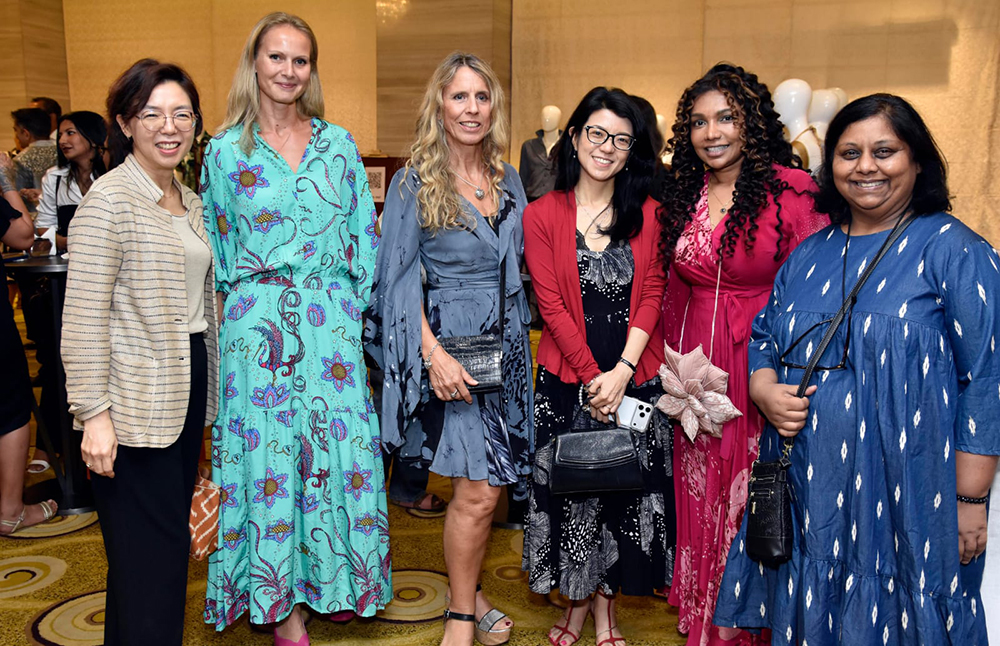
As the Colombo skyline softens into golden hour “Sundown with Buddhi Batiks “at Sheraton Colombo unfolded as a seamless blend of heritage and contemporary elegance – an experience that felt both intimate and visually striking.
The evening drew a crowd that reflected the very essence of the brand it celebrated refined, creative and deeply connected with flowing silhouettes, to cultural and the quiet hum of conversation over curated cocktails.
Buddhi Batiks with Darshi Keerthisena is a label celebrated for transforming Sri Lankan batik into modern, wearable art. Her story telling through fabric where each piece reflected craftsmanship, culture, and a contemporary design language. The collection leaned into effortless elegance, resort ready kaftans, structured yet fluid dresses and statement pieces that moved as beautifully as they look. The atmosphere was electrifying. Guest sipped on delicated curated cocktails as soft music hummed in the background, creating an ambience that felt both exclusive and deeply relaxed.
More than aesthetics, Buddhi Batiks tells stores. Each motif, each gradation of colour carried a sense of place and memory.
Buddhi Batiks is proof that fashion can honour heritage without compromising on glamour, with every brush stroke of wax and every hand dyed.
The event, aptly named Sundown, was an ode to the timeless elegance of Sri Lankan craftsmanship, seamless fabrics woven into contemporary silhouettes that speak to a global sensibility.
The collection by Buddhi Batiks drew inspiration from Sri Lanka’s natural landscape, from the shimmering coastlines to the lush inland jungle, translated into vivid patterns and textures on display.
-
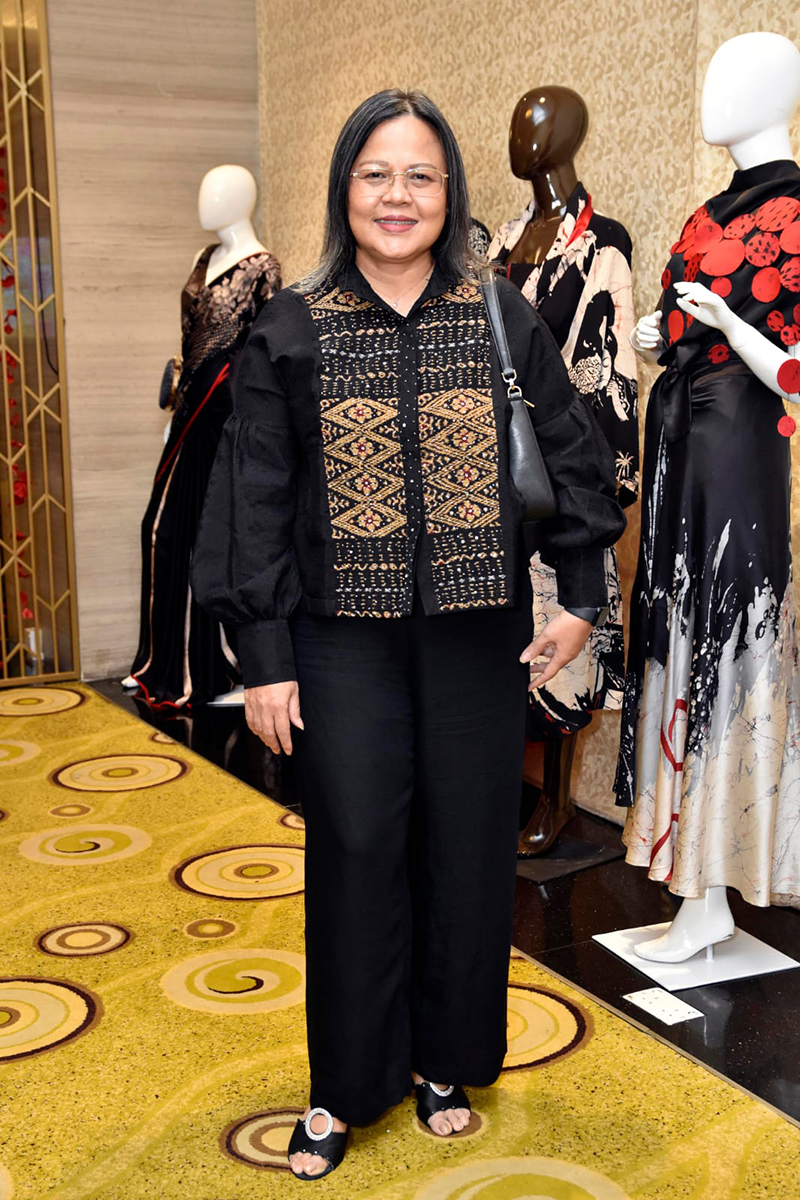
- High Commissioner of Indonesia in Sri Lanka- Dewi Gustina Tobing
-
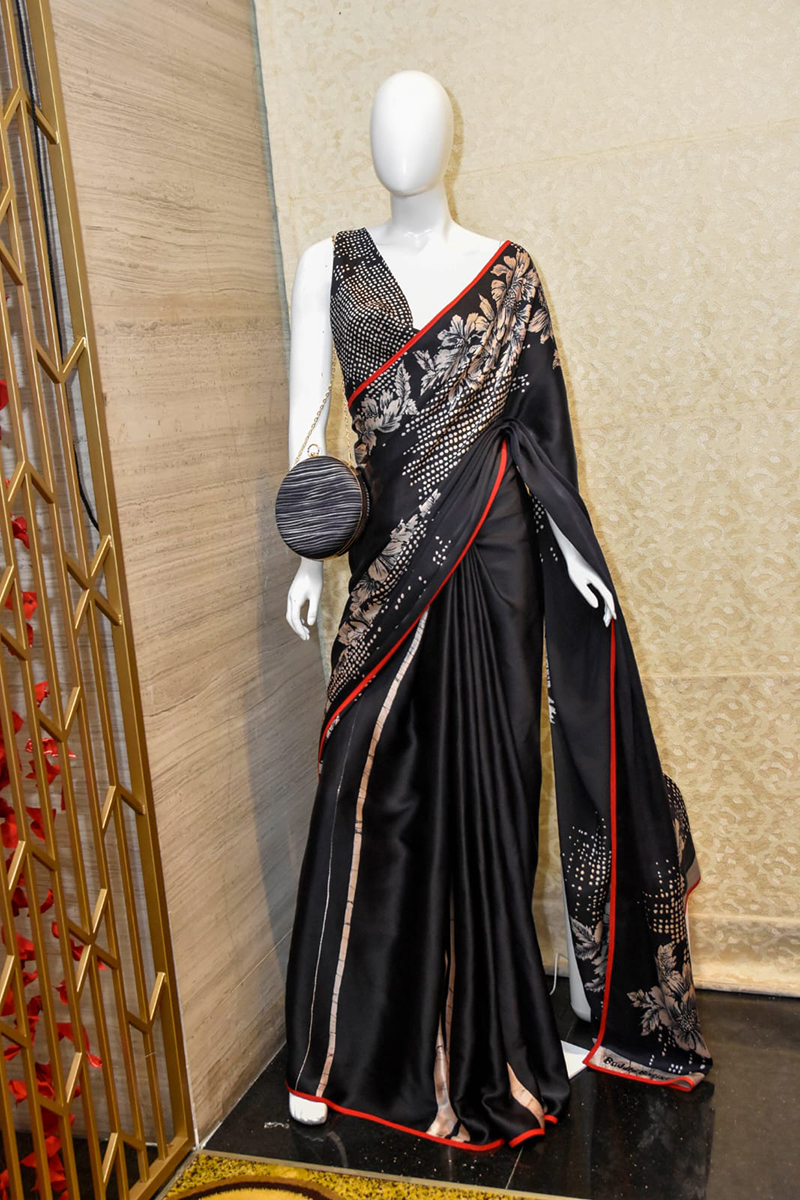
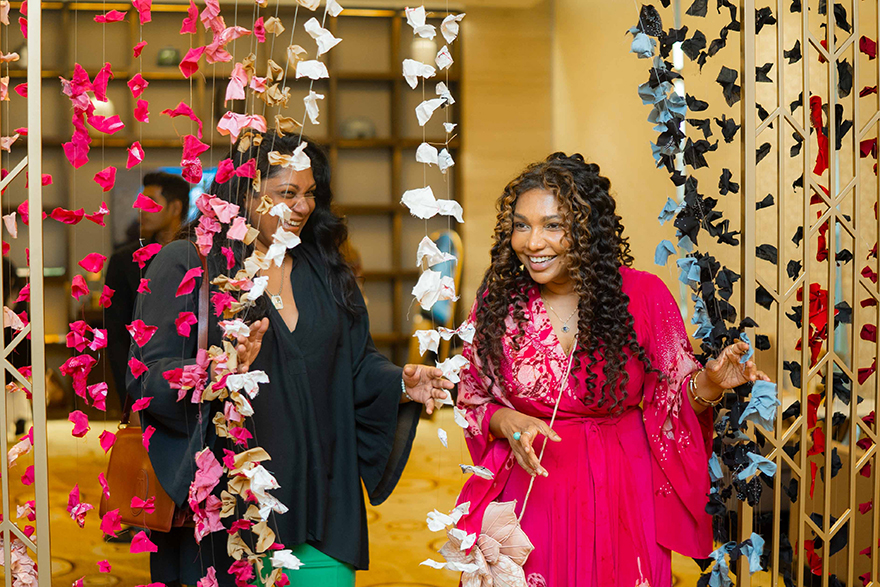
- Every fold tells a story
The brand celebrated Sri Lankan’s rich artistic legacy while embracing a global fashion vision.
There are designers who wear fashion and then there are designers who live fashion, Darshi Keerthisena, creative director and CEO of Buddhi Batiks, belongs to the latter. She hasn’t merely followed a family tradition. She has reimagined it, transforming Sri Lankan batiks from a cultural craft into a globally resonant fashion statement. Under Dharshi’s leadership, Buddhi Batiks has evolved far beyond traditional cotton saris. She has introduced silk, geogette and satin as canvasses for Batik, infusing pieces with contemporary silhouettes and subtle, sophisticated colour stories that appeal to international design sensibilities. Her innovations have taken batik onto global platforms.
Darshi’s innovation isn’t only stylistic, it is ethical. She has championed sustainable practises, such as digital printing on recycled textiles and eco friendly dyes, while keeping handmade batik at the heart of the brand.
Her career has been marked by accolades and awards Dharshi’s vision for batik is expansive. She sees it not just on runaway gowns or resort wear, but translated into interiors, accessories and everyday life, capable of transcending borders while keeping the soul of Sri Lankan artisan’s heritage alive.
Sheraton Colombo Sri Lanka’s most prestigious 5-star hotels with Paul Sun, General Manager and his dedicated team, [played a key role and the hotel’s assistance went beyond providing a venue, it was a seamless blend of hospitality, event management and creative support.
By Zanita Careem

Farzana Baduel stands as a powerful voice in global communication and a passionate advocate for women’s empowerment making her perspective especially relevant on International Women’s Day. As CEO of Curzon PR,in UK she has built a career defined by influence, resilience and purpose championing the advancement of women’s leadership.
 (Q) How would you describe the role of women in the UK today and how does it compare to women’s role in Sri Lanka?
(A) Women in the UK today hold positions of real influence across politics, business, media, academia and the creative industries. There are strong legal protections around equality and conversations about gender parity have become mainstream. But equality in law does not always translate to equality in lived experience, particularly when it comes to pay gaps, the weight of childcare, and who actually occupies the most senior positions.
Sri Lanka presents a genuinely fascinating paradox. It elected the world’s first female Prime Minister in 1960, yet many women still face structural and cultural constraints, especially outside urban centres. What strikes me about Sri Lankan women is their extraordinary resilience and entrepreneurial spirit, often demonstrated within more traditional frameworks. That combination of ambition and adaptability is something I find deeply impressive.
Both countries are progressing. But both still have considerable work to do.
(Q) Are there areas where UK women face challenges that Sri Lankan women may not, or vice versa?
(A) In the UK, one of the most persistent challenges is what I would describe as the double burden: professional ambition sitting alongside disproportionate domestic responsibility. There is also the very modern pressure of digital culture, the weight of image, comparison, online abuse and public scrutiny that affects women in ways men rarely experience to the same degree.
In Sri Lanka, the challenges tend to be more structural. Economic instability, limited access to opportunity in rural areas, and in some cases stronger social conservatism around gender roles all shape what is possible for women. And yet extended family networks in Sri Lanka can offer something many women in the UK genuinely lack: built in childcare, intergenerational support, a community that holds you.
The pressures differ. But the underlying theme is remarkably consistent. Women everywhere are negotiating expectations that men are simply not asked to meet.
(Q) How do you define what it means to be a woman today, and have there been moments where your gender shaped your opportunities or challenges?
(A) To me, being a woman today means navigating complexity with strength. It means holding ambition and empathy in the same space without apologising for either. It means being commercially sharp and emotionally intelligent. Above all, it means resilience.
There have certainly been moments in my career where being a woman changed the dynamic in a room, particularly in senior advisory spaces involving government or corporate leadership. Early on, I sometimes had to prove competence before being taken seriously. Over time I came to understand that credibility does not come from changing who you are. It comes from deep expertise and calm authority.
Gender shapes experience. But it does not have to define potential.
(Q) How can women lift each other up in workplaces, communities and society at large?
(A) By being genuinely generous with opportunity. Sponsorship matters far more than mentorship. It is powerful when senior women actively advocate for other women in rooms those women are not in. That kind of invisible advocacy changes careers.
By rejecting scarcity thinking. There is not only one seat at the table.
And by modelling integrity. When women support each other publicly and privately, it does not just help individuals. It changes workplace cultures entirely.
(Q) Do you believe women are getting enough representation in leadership roles? If not, what needs to change?
(A) Progress has been made. But representation at the very top, in boardrooms and in global political leadership, remains deeply uneven. And the solution is not simply about recruiting more women. It is about changing the systems they are recruited into: flexible leadership structures, normalised parental leave for both men and women, transparent promotion criteria, and zero tolerance for the kind of subtle bias that is so easy to dismiss but so corrosive over time.
Representation is not about optics. It is about influence. Those are not the same thing.
(Q) What societal expectations or stereotypes have you personally encountered as a woman?
(A) The most persistent one is the idea that women must choose between warmth and authority, that being decisive risks being labelled difficult. Men are rarely subjected to that framing. A decisive man is simply a leader.
There is also the expectation that women should balance everything effortlessly, as though the juggle should be invisible. The reality is that balance is dynamic, often imperfect, and occasionally held together by nothing more than determination and strong coffee.
(Q) What challenges do women face in accessing healthcare or support, and how can society improve this?
(A) Even in developed countries, women’s health is frequently under researched and under prioritised, particularly around reproductive health, menopause and mental health. This is not a niche issue. It affects half the population.
Improvement requires sustained investment in research, workplace policies that recognise women’s health realities, and a collective willingness to remove the stigma that still clings to these conversations. Health is not a private inconvenience. It is a public priority.
(Q) Do you feel women are encouraged enough to pursue their passions alongside family and work responsibilities?
(A) The encouragement exists in rhetoric. The practical support frequently does not. True encouragement requires structural foundation: affordable childcare, flexible working arrangements, and a cultural acceptance that ambition in women is not selfish. It is not something that requires justification.
Women should never feel they must apologise for aspiration.
(Q) How do media portrayals of women impact society’s perception of them?
(A) Media shapes norms in ways we often do not notice until we look back. When women are portrayed primarily through the lens of appearance, domestic roles or conflict narratives, it quietly narrows the public imagination about what leadership looks like.
When media platforms showcase women as thinkers, strategists, innovators and policymakers, something opens up, especially for young girls who are watching and deciding, consciously or not, what is possible for them. Representation shapes expectation. That is not a small thing.
(Q) What changes would you most like to see for women in the next decade?
(A) Economic parity, not just participation. Greater support for women entrepreneurs. More women shaping foreign policy and global governance. A healthier and kinder public discourse online.
But most importantly, I would like to see confidence. Young women growing up without internalised limits, without the quiet voice that tells them to take up less space. That, more than any policy change, is what transforms the next generation.
(Q) And finally, how do you define what it means to be a woman today?
(A) To be a woman today is to stand fully in your capability without shrinking for anyone’s comfort. It is to embrace both strength and compassion, not as opposites but as complements. It is to define yourself rather than accept the definitions others impose upon you.
And perhaps most importantly, it is to leave the path a little wider for the women who come after you.
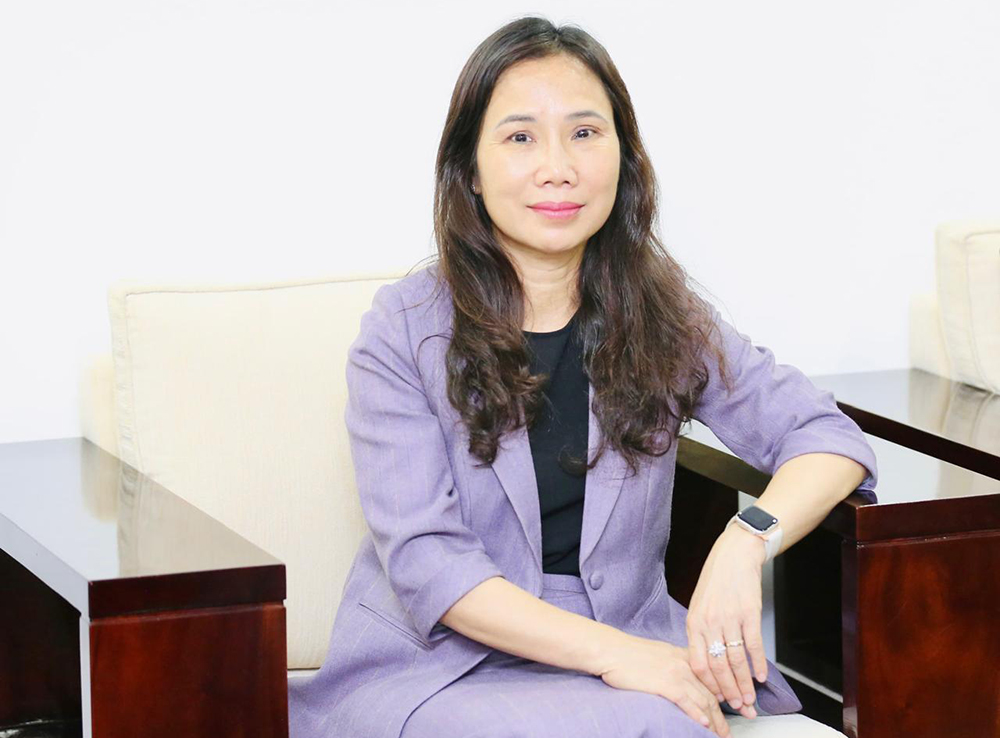
Grace, resilience and quiet determination define the women of both Vietnam and Sri Lanka, two nations bound not only by rich cultural heritage, but by the enduring strength of their women. As the world marked International Women’s Day, the interview with the Vietnamese Ambassador in Sri Lanka offers a compelling lens into how tradition and modernity intervine to shape the lives of women across these societies Women in Vietnam and Sri Lanka continue to redifine their roles, balancing family, career and ambition with remarkable pause. While their journeys were shaped by distinct histories and cultural naunces there is a shared narrative of perseverance, adaptability and progress. In this interview the envoy reflects on these parallels and contrasts, offering insight into the evolving status of women. The challenges, they face and the inspiring strides being made towards equality.
Q How would you describe the role of women in Vietnam compared to Sri Lankan women?
A Women in Vietnam and Sri Lanka share many important similarities. In both societies, women are known for their diligence, resilience, and strong sense of responsibility toward family and community. Having experienced periods of war, conflict, and economic hardship, women in both countries deeply understand the values of sacrifice, solidarity, and perseverance. They often carry multiple roles at the same time—caregivers, income earners, and community supporters. In both countries, there has been an increasingly active participation of women in the workforce, including trade, manufacturing, SMEs, as well as in the leadership. It is meaningful to recognize these shared qualities that quietly but steadily contribute to social stability and national development.
Q From your personal experience, what defines a modern woman in your country?
A From my personal experience, a modern woman is someone who strives for balance rather than choosing between roles. She values education, independence, and self-development, while remaining deeply committed to her family and social responsibilities. She is confident, adaptable, and increasingly comfortable using technology and global networks. At the same time, she respects cultural values and traditions, selecting what is meaningful rather than rejecting them entirely. Modern women today are not defined only by career success, but by their ability to manage multiple responsibilities with empathy, resilience, and purpose.
Q Have you seen a significant change in women’s roles over the past decade?
A Yes, there have been noticeable and positive changes over the past decade. More women are pursuing higher education, entering diverse professional fields, and participating actively in economic and social life. Attitudes toward women’s leadership and decision-making roles have gradually improved, especially among younger generations. At the same time, women continue to shoulder major responsibilities within the family. This dual role has become more visible and more openly discussed. While challenges remain, the growing recognition of women’s contributions—both at work and at home—reflects a meaningful shift toward a more inclusive understanding of development.
Q Women in Vietnam are often visible in trade and entrepreneurship. How does this compare with Sri Lanka?
A Women in both Vietnam and Sri Lanka demonstrate a strong entrepreneurial spirit, particularly in trade, services, and family-based businesses. Many women engage in economic activities not only for personal ambition, but also to support their families and contribute to their communities. In both countries, women entrepreneurs are known for their adaptability, hard work, and practical approach to business. While the scale and sectors may differ, the underlying motivation and resilience are remarkably similar. With better access to finance, markets, and mentoring, women in both societies have great potential to further expand their entrepreneurial impact.
Q Do you think society equally values women’s economic contributions in both countries?
A Societal recognition of women’s economic contributions has improved, but full equality has not yet been achieved in either country. Women’s income is increasingly important for household stability, yet their unpaid care work often remains invisible. Professional success is respected, but women are still expected to prioritize family responsibilities. This creates pressure to constantly balance multiple roles. It is important to acknowledge that true equality means valuing both paid and unpaid work, and creating supportive environments that allow women to contribute economically without compromising their well-being or family life.
Q Vietnam has relatively strong female participation in governance. What drives this? Why is female representation still low in Sri Lanka?
A Both Vietnam and Sri Lanka recognize the importance of women’s participation in governance, and both have many capable women leaders. Differences in representation are largely shaped by institutional structures and political culture rather than women’s ability or commitment. Where supportive frameworks, mentoring, and clear pathways exist, women are more likely to enter public leadership.
In Sri Lanka, many talented women also serve their communities in different ways, though public roles can be more demanding to combine with family responsibilities. Creating more supportive and flexible pathways can help more women step forward and share their perspectives, enriching decision-making and social cohesion.
Q What are the most pressing issues women still face today?
A One of the most pressing challenges women face today is achieving a healthy balance between work, family responsibilities, and personal life. Women continue to carry a disproportionate share of caregiving and household duties, even when they are fully engaged in professional work. Gender inequality in wages, leadership opportunities, and decision-making persists. Social expectations often require women to excel in all areas simultaneously, creating emotional and physical strain. Addressing these issues requires not only policy support—such as childcare and flexible work—but also cultural change that encourages shared responsibility and mutual respect.
Q Do globalization and social media help accelerate gender equality?
A Globalization and social media can play a positive role in accelerating gender equality by expanding access to information, markets, and role models. They allow women to connect, learn, and express their voices beyond traditional boundaries. Many women entrepreneurs and professionals have benefited from digital platforms. However, these tools also bring challenges, including online harassment and unrealistic social pressures. Their impact depends on how responsibly they are used and supported. When combined with education, digital literacy, and safeguards, globalization and social media can become powerful tools for women’s empowerment.
Q How do you see the future of women evolving in the next 10 years?
A Over the next decade, I expect women to play an even more visible role in leadership, entrepreneurship, and innovation. Flexible work models and digital technologies will help more women participate in the economy while managing family responsibilities. Younger generations are already embracing more balanced views on gender roles and shared caregiving. While challenges will remain, especially in achieving true equality, the overall direction is positive. With sustained support from institutions, families, and society, women’s contributions will continue to shape more inclusive and resilient communities.
Q What can Sri Lanka learn from Vietnam in terms of empowering women economically?
A Sri Lanka can draw useful lessons from Vietnam’s emphasis on integrating women into value chains, supporting small businesses, and linking skills training with market access. Practical support—such as simplified procedures, access to finance, and business networks—helps women move from informal activities to sustainable enterprises. Equally important is recognizing women’s economic roles publicly and socially. Empowerment is most effective when economic opportunity is combined with family support and social respect. These shared principles are especially meaningful and highlight when celebrated International Women’s Day on 8 March.
By Zanita Careem

Australia grants asylum to 2 more members of Iranian women’s football team

Showers are likely in the Northern, Eastern, Sabaragamuwa, Southern and Uva provinces and in Kandy and Nuwara-Eliya districts

CEBEU warns of operational disruptions amid uncertainty over CEB restructuring

Remittances up compared to last year before outbreak of war, but the economic picture is not rosy

The Netherlands alleges Russian Embassy interfering in World Press Photo Exhibition

Switzerland appreciates GoSL’s stand on ME situation

‘Dates have the highest sugar content to fight Coronavirus’

Sunday Island 27 December – Headlines

#SundayIsland 17th December – Headlines

Sunday Island – 28th March

Sunday Island Headlines – 21 March

Sunday Island – 21st February – Headlines
-
 News5 days ago
University of Wolverhampton confirms Ranil was officially invited
-

 News6 days ago
Legal experts decry move to demolish STC dining hall
-

 News5 days ago
Female lawyer given 12 years RI for preparing forged deeds for Borella land
-

 News4 days ago
Peradeniya Uni issues alert over leopards in its premises
-

 News2 days ago
Repatriation of Iranian naval personnel Sri Lanka’s call: Washington
-

 Business7 days ago
Cabinet nod for the removal of Cess tax imposed on imported good
-

 News5 days ago
Library crisis hits Pera university
-

 News4 days ago
Wife raises alarm over Sallay’s detention under PTA