
Business
Beira Lake restoration, ‘a crucial urban environmental intervention’

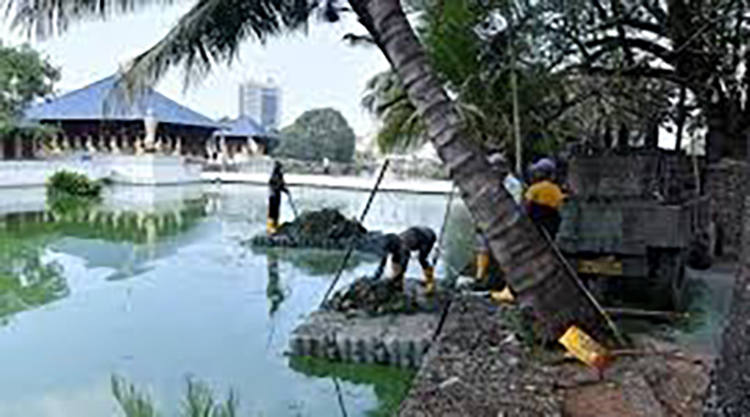
Sri Lanka’s decision to invest Rs. 2.5 billion in restoring the heavily polluted Beira Lake marks one of the most significant urban environmental interventions in recent years, underscoring a growing recognition that ecological rehabilitation is also an economic imperative.
The multi-pronged project—covering the closure of illegal sewage discharge points, large-scale dredging, and the installation of aeration systems—is expected to not only revive aquatic life but also unlock commercial, tourism and real estate value in the heart of Colombo.
Officials say the initiative is designed to transform Beira Lake from a long-neglected liability into a productive urban asset.
A senior official from the Ministry of Environment told The Island Financial Review that untreated wastewater and illegal sewer connections had been the primary contributors to the lake’s degradation for decades. “Closing these illegal sewage points is the most critical intervention. Without that, any dredging or aeration would only offer temporary relief, the official said, adding that enforcement will be carried out in coordination with the Colombo Municipal Council (CMC) and other regulatory agencies.
From a business perspective, the clean-up is being viewed as a catalyst for urban regeneration. Urban Development Authority (UDA) sources noted that a healthier Beira Lake would significantly enhance the attractiveness of surrounding commercial developments, hospitality projects and public spaces. “Environmental remediation directly impacts land values and investor confidence. A clean, living lake changes the entire economic profile of the area, an UDA official said.
The dredging component of the project is aimed at removing decades of accumulated sludge, which has reduced water depth and contributed to foul odours and fish die-offs. According to officials involved in project planning, the dredged material will be disposed of following environmental guidelines to avoid secondary pollution risks—an issue that has undermined similar efforts in the past.
Meanwhile, the installation of modern aerators is expected to improve dissolved oxygen levels, a key requirement for sustaining fish and other aquatic organisms. “Restoring aquatic life is not just about biodiversity; it is about creating a water body that can safely support recreational activities and public engagement, a senior CMC engineer explained.
Economists point out that the Rs. 2.5 billion allocation, while substantial, should be seen against the long-term cost savings and revenue potential. Reduced public health risks, lower water treatment costs downstream, increased tourism activity and higher commercial footfall could deliver returns that far exceed the initial outlay.
By Ifham Nizam



Nestlé Lanka Limited this year marks 120 years of operations in Sri Lanka, highlighting a century-long presence that has extended beyond food manufacturing to supporting farmers, communities, youth employment and environmental sustainability.
Established in 1906, the company has grown into one of Sri Lanka’s leading food and beverage manufacturers, today producing more than 90% of the products it sells locally. Over the decades, Nestlé Lanka has built a strong domestic footprint through local sourcing, long-term farmer partnerships and continued investment in manufacturing.
Through widely recognised brands such as Nestomalt, Milo and Maggi, the company has become a familiar presence in Sri Lankan households, offering products designed to meet local nutritional needs. Many of its products are fortified with micronutrients aimed at improving dietary intake, while brands such as Milo and Nestomalt have also supported youth sports and active lifestyles in the country.
Nestlé Lanka’s engagement with local agriculture has also played a role in strengthening rural livelihoods. The company works closely with dairy and coconut farmers, providing technical assistance, skills development and reliable market access as part of its responsible sourcing efforts.
The company has also expanded programmes aimed at improving youth employability. Through the “Nestlé Needs YOUth” initiative, young Sri Lankans are provided with access to training, learning and career opportunities. Partnerships with organisations such as BConnected have also helped promote inclusive employment opportunities for people with disabilities.
Sustainability has become an increasingly central focus of the company’s operations. Nestlé Lanka’s manufacturing facility in Kurunegala operates on 100% renewable electricity, while a biomass boiler commissioned in 2024 has helped reduce carbon emissions from manufacturing. The company aims to achieve net-zero carbon emissions by 2050.
Efforts to reduce environmental impact have also extended to packaging. Nestlé Lanka pioneered the shift from plastic to paper straws in aseptic beverage cartons in 2019 and supported the establishment of Sri Lanka’s first recycling plant for such cartons. The company aims to become fully plastic neutral by 2026.
Chairman and Managing Director Bernie Stefan said the milestone reflects the long-standing trust Sri Lankan consumers have placed in the company and the partnerships it has built across the country over generations.
By Sanath Nanayakkare
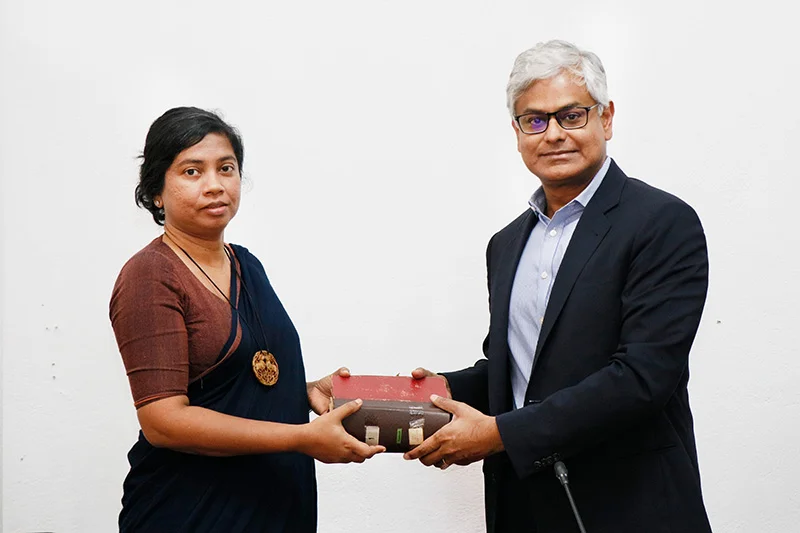
The Ceylon Chamber of Commerce has formally handed over its historical records to the National Archives Department of Sri Lanka, placing over a century of the nation’s commercial history into the care of the country’s official custodians of heritage.
The historical archive being handed over spans from the Chamber’s founding in 1839 to 1973, and includes correspondence, meeting minutes, reports, ledgers, and publications that chronicle the development of trade, enterprise, and industry in Sri Lanka. Together, these records provide a rare and detailed account of how the island’s economy evolved and how its business community helped shape national progress.
The Ceylon Chamber of Commerce was established on 25 March 1839 on the principle that the interests of commerce and trade are best advanced when merchants unite and cooperate in matters affecting the common good. At the time, Ceylon was among the earliest regions in Asia to establish a chamber of commerce, alongside counterparts in Bengal, Bombay, Madras, Canton, Penang, and Singapore.
From its earliest years, the Chamber played a central role in organising and guiding trade. It played a central role in establishing and growing the export economy built on commodities such as coffee, cinnamon, coconut oil, tea, and rubber, and hosted the island’s renowned tea and rubber auctions. It also developed rules and standards for trading practices, helping create an environment of trust and reliability that enabled Sri Lanka’s commerce to thrive.
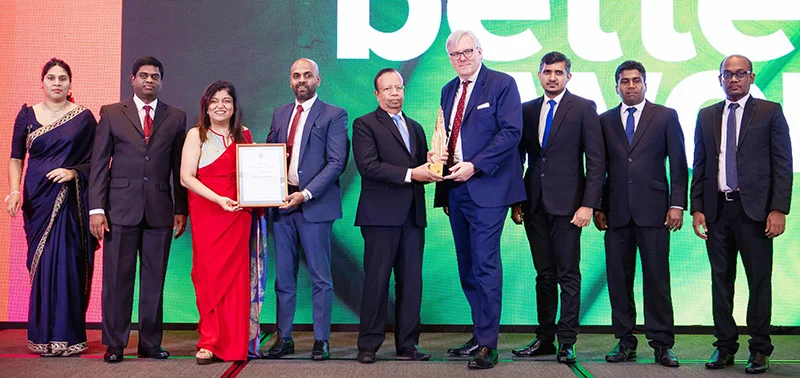
Ceylinco Life has secured two prestigious accolades for its 2024 Annual Report, reaffirming the Company’s leadership in transparent, accountable and sustainability-driven corporate reporting.
At the Association of Chartered Certified Accountants (ACCA) Sri Lanka Sustainability Reporting Awards, Ceylinco Life emerged winner in the ‘Other Financial Services’ category for the second time. Organised by the ACCA, one of the world’s most respected professional accounting bodies, the awards are assessed against globally accepted sustainability and reporting standards rather than local benchmarks, lending them strong international credibility. The recognition underscores Ceylinco Life’s sustained commitment to setting new benchmarks in sustainability reporting within Sri Lanka’s corporate sector.
The Company’s reporting excellence was also recognised at the TAGS Awards 2025 presented by the Institute of Chartered Accountants of Sri Lanka (CA Sri Lanka). Ceylinco Life was ranked among the Top 10 Integrated Reports in Sri Lanka and received the Silver Award in the Insurance Companies category for entities with Gross Premium above Rs. 10 billion. The TAGS Awards evaluate annual reports on the pillars of Transparency, Accountability, Governance and Sustainability, and are widely regarded as Sri Lanka’s benchmark for corporate reporting excellence.
Commenting on the significance of the recognitions, Ceylinco Life Senior Executive Director/ Chief Financial Officer Mr Palitha Jayawardena said these awards validate the Company’s disciplined approach to transparency, governance and sustainability. “Our integrated reporting journey is not only about compliance; it is about clearly demonstrating how we create and protect value over the long term. Being recognised both by the ACCA and by CA Sri Lanka affirms that our reporting standards meet the highest expectations and reflect the depth of our commitment to responsible and sustainable business practices,” he said.

Heat Index at ‘Caution level’ at some places in the Western, Sabaragamuwa, Southern and North-western provinces and in Monaragala and Mannar districts

Showers or thundershowers will occur at several places in the Western and Sabaragamuwa provinces and in Galle, Matara, Kandy and Nuwara-Eliya districts after 2.00 pm.

Power sector reforms jolted by 40% pay hike demand

UN scientific research ship here amidst ban on such vessels

Prez assures energy supplies for the time being

Historic address by BASL President at the Supreme Court of India

‘Dates have the highest sugar content to fight Coronavirus’

Sunday Island 27 December – Headlines

#SundayIsland 17th December – Headlines

Sunday Island – 28th March

Sunday Island Headlines – 21 March

Sunday Island – 21st February – Headlines
-

 News6 days ago
University of Wolverhampton confirms Ranil was officially invited
-

 News5 days ago
Peradeniya Uni issues alert over leopards in its premises
-

 News6 days ago
Female lawyer given 12 years RI for preparing forged deeds for Borella land
-

 News3 days ago
Repatriation of Iranian naval personnel Sri Lanka’s call: Washington
-

 News6 days ago
Library crisis hits Pera university
-

 News5 days ago
Wife raises alarm over Sallay’s detention under PTA
-

 News6 days ago
‘IRIS Dena was Indian Navy guest, hit without warning’, Iran warns US of bitter regret
-

 Latest News6 days ago
Sri Lanka evacuates crew of second Iranian vessel after US sunk IRIS Dena