
Features
Being blooded into the Ceylon Army in 1971


Gotabaya R was in that officer intake
By Maj Gen (Rtd) Nanda Mallawaarachchi VSV
History bears evidence that the consolidation of a security arm of any country has its origins in a crisis.
In Sri Lanka, formerly known as Ceylon, it fell on the world’s first woman Prime Minister, Mrs. Sirima Bandaranaike, to face an insurrection by the Janatha Vimukthi Peramuna better idenfified as the JVP. Through attacks on Police Stations that began on April 5, 1971, their abortive attempt to overthrow a lawfully elected government began with an attempt to seize weapons.
Using shotguns, locally turned-out Gal Kattas and other improvised weapons they attacked the Wellawaya Police Station pre-dawn. Whether this launch was the result of mixed up communications or not, it did alert both the Police and the Armed Forces
Whether this group received wrong information regarding the date of the attack is arguable. Whatever the case, the JVP’s overall strategy and tactics utilized failed to overthrow the government. Unlike the present day, the Armed Forces of the 70s were miniscule in comparison. The Police Force was the main bastion of the state. To overcome future eventualities, Mrs. Bandaranaike took the crucial decision to expand the then Ceylon Army. As a result, 30 officer cadets, the largest contingent since the inception of the Ceylon Army, were recruited on April 26, 1971. It was to be Officer Cadet Intake 4. Nandasena Gotabaya Rajapaksa was among them.
 I was fortunate to join 29 other school leavers to embark on an epic journey. Having reported to the Army Recruiting Officer at Army Head Quarters on Lower Lake Road (later Baladasksha Mawatha), we went through the enlistment procedure. We were now officially Officer Cadets with Cadet number C/51183 assigned to me including a princely monthly salary of SLR 430.00.
After being accommodated in a billet at the Headquarter Company of the Army HQ, we were served dinner. On the following day all of us were bundled into a rickety old Army bus for the journey to the Army Training Centre (ATC) in Diyatalawa. We were escorted all the way to the ATC by a dashing young Captain. We never saw him again until we passed out as officers and joined our respective regiments. (Later we recognised this dashing Captain as the “Aide-de Camp” to the then Army Commander, Major General Sepala Attygalle.
The bus ride to Diyatalawa was of course the time for dreams. A smart jungle green uniform with umpteen pips on the shoulders, sitting rigidly in an Army jeep being driven around was a favourite scene for all of us. Talk about pies in the sky! Instead of jeeps, we were carted around in a WW II era 4T transporter in which the tailgate was never lowered. Getting in and out of this vehicle was therefore a challenge. Cursing and swearing during this high risk manoeuvre was a regular norm for us in addition to being ingrained with the military term “debussing”!
Diyatalawa was a different kettle of fish to what we were used to where the weather was concerned. If it was shock tactics we were supposed to be subjected to, then it worked perfectly. It was freezing cold during nights. The blankets, probably of World War I vintage, did little to keep us warm. The next day after the attendance being noted, we were issued with the Universal Army Kit Bag, better know as the “Ali Kakula” and the AFQ-1 items issued to a recruit. These consisted of basic items such as an aluminium plate, a mug, a mess tin etc. Various types of uniforms were also issued including berets, cap badges, collar badges and the likes.
Once the “kit issue” parade was concluded and the newly acquired items packed inside the “Ali Kakula“, it weighed at least 20 kg. The fun had just begun! We were then taken on a “camp visit” with strict orders for the “Ali Kakula” to be held over our heads. It was however not a walk in the park but a camp tour “on the double”, a medium paced jogging speed. The “Ali Kakula” was not allowed to be kept on the ground at any time during the “Observation tour”. What a spectacle we would have made; dressed formally in shirt, formal trousers and neck-tie carrying the Universal Kit Bag over our heads.
Ten minutes were allocated for us thereafter to change into out PT kits and report. There we were, punctually, in white shorts, white T shirt, white socks and white canvas PT shoes for the next round of manoeuvres. Frog-jumps, Forward rolls and the likes were thereafter executed under the hawk eyes of the Under Officer from Intake 3. The initial briefing in the Cadets’ Café by the Chief Instructor, Major SP De Silva of the CLI, still echoes in the writer’s mind. “Gentlemen, welcome to the Ceylon Army” he said. “We will break you and re-make you in such a manner that nobody, repeat nobody, will be able to break you ever again!”
For three long months thereafter it was being “ground into the ground”. Gruelling lessons, drill, parades and the deadly billet and uniform inspections. We spent most nights in a foxhole (two-man trench) defending the camp with rain and freezing cold as team members. It was a miracle that nobody lost teeth due to the constant chattering. There was no respite in the mornings thereafter. Roll call was once again at 0530h. The camp buglers ensured that we were up prior to the rooster’s call.
 PT, ablutions and breakfast thereafter was the routine. Half a loaf of bread, pol sambol and gravy with a banana thrown in; was the gourmet breakfast menu, day in day out. We ate fast as the small amount of gravy in the plate might otherwise have evaporated. All movements during this time within the camp were “on the double”. The entire batch of officer cadets would be moving “on the double” from the billet to the mess hall, from the mess hall to the training area, from the training area to the lecture hall etc. Dozing off during lectures was a norm for some due to physical fatigue. The Spartans from the days of yore would have been proud of our training regime.
By the third week of this “breaking us” (prior to remaking us), we had hit an extreme situation where morale was concerned. “Decamping” was a common topic of discussion amongst us. One cadet threw in the towel during the first week; he could not take it anymore. The initial financial bond which we all had to sign at “A” Branch of Army HQ, compelling us to pay a proportionate amount to the Army in the event we resigned, might have been psychological balm that motivated some cadets to carry on. By and by, we gradually got used to the training whereas rules allowed us to “march” instead of moving “on the double” between venues after the first month.
Teachers form an integral part of anything taught. A teacher could make the training interesting and absorbing or make it lacklustre for the student not to learn at all. We had a batch of disciplined instructors of sterling quality who ensured that we learnt all that was supposed to be learnt. Discipline in parallel was ingrained into us from day one. The Commandant of the then Army Training Centre (ATC), was none other than Lt. Col. Denis Perera (later the Army Commander), a stickler for discipline. No slack was tolerated at any time. He would occasionally visit us during our theory classes held at that time in the Cadets’ Café. You could hear a pin drop during the silence that followed.
The military lecturer, after obtaining permission, would carry on with the lecture. Any cadet dozing off, would suddenly be jolted back to life when his name was fired after a question was posed by the Commandant himself. He was omniprescent, his rough and commanding voice unmistakable. He would drive around the cantonment in his personal vehicle. The Mercedes Benz with its registration number 5 Sri 111, is still etched in this writer’s mind.
We learnt tactics, fieldcraft, map reading and current affairs. Leadership studies of course overarched all courses. Military tactics such as defilading, enfilading and reverse slope manoeuvres began to haunt us thereafter in our dreams. WO 2 Peris of the Armoured Corps, as the “Cadet Wing” Se argent Major, equipped with the pace stick, taught us drill. Corporal Dassanayake of the Signal Corps was the specialist teacher on signals theory and practices. Corporal Cyril the PT Instructor made us physically fit and robust. Gymnastics, “horse work” and rope climbing were to become a norm during this time. Corporal Cyril also took us on walks and runs up to the Diyatalawa City Marker in the direction of Haputale. Corporal Wreeves, the explosives expert from the Engineers taught us the use of minor explosive devices. He also had the dubious honour of checking us inside the foxholes at night and meting out punishment to whoever was caught sleeping.
Corporal Thusiman, the perpetual disciplinarian, was ever ready to mete out extra punishments. Corporal Boyagoda was the compassionate one checking on our wellbeing at all times. While we were busy during military drill at the Parade Square, our billets were inspected by the Under Officer or Course Commander for orderliness and cleanliness. Anything “out of line, balance and sheen” was rewarded with “pack-drill” during afternoons and night.
Weapon training was another adventure. We were issued the 22 during the first term and trained to shoot at indoor targets at 50y meters. Later we used the legendary Short Magazine Lee Enfield rifle (known as the “Smellie” during WW II), better known as the 303, with five rounds in the magazine. Natural sense prevailed when adjusting the sights. It was “click-up” or “click-down” for elevation during sighting. We developed a healthy respect for the weapon. Woe betide anybody having a space between the rifle butt and “anterior deltoid” during prone firing exercises. The 303’s recoil was so powerful that a mule kick, in comparison, could have been considered a pleasant experience.
It was a miracle there were no broken shoulder blades. The bayonet and the 303 were also a deadly combination. We were mighty careful during rifle drill, especially during “slope arms” with the bayonet fitted. The bayonet would have pierced the right cheek had we not been careful. We used the 303 even as officers in the various units till the advent of the “self-loading rifle” era. The 303 was used for Inter Unit Firing Competitions where we had to hit the “bull” on a 10’ x 10’ target at 1000 yards. The “click-up” and “click-down” adjustments came in handy during these extreme distances.
We were allowed to leave the camp for a day out after our first term of training. Terms and conditions still applied. We could only go out in pairs. We had to keep step when walking and walk abreast. Polished shoes, smart trousers, pressed long sleeved shirt, neck tie and blazer were a must. The writer remembers getting “Seiyathu” the tailor, to sew his blazer. It was a matter of undertaking a couple of fittings before the blazer was ready. The day out was of course memorable. We would make a dash to Bandarawela by bus; a one way ticket cost 30 cents. The Chinese Restaurant operated by Mr. Lee was one of our favourite haunts. A bottle of beer was Rs 6.00 whereas a sumptuous meal was Rs. 9.00. The Hidaya Bakery was another restaurant we used to frequent. We would walk the entire length of the Main Road from the Bus stand, past the Market building down to Cyril Studio and back to get on the bus for the return to the Camp.
We were taken to Lahugala for a thirty-three day “Jungle Training” during our final term of training. Captain Wijaya Wimalaratne (posthumously promoted to Major General in 1992) who had returned from Malaysia after having followed the Malayan Jungle Course was to be our instructor. The then Malayan Army having fought a long drawn jungle warfare campaign had managed to defeat communist insurgents. This experience had been condensed into a few jungle warfare books and pamphlets and published. These publications would initially serve as basic theory for us.
Captain Wimalaratne was to conduct the practical training for us. He had designed and built a “Jungle Base” consisting of a billet for thirty officer cadets, accommodation for the officer instructors, other rank Instructors and cook house etc. The base was located adjacent to the ‘Heda Oya’, thereby ensuring a regular supply of clean water.
The cadets divided into three sections were taken into elephant infested jungle, progressively penetrating deeper and deeper into the dense foliage where the jungle canopy did not even allow the sun to penetrate and where advancing even a metre required the use of machetes. Ambushing the enemy, counter ambushing drills, Immediate Action drills (IA Drills) etc. were the norms during this time. It was 33 days of hell. The conditions were exacerbated due to real life scenarios. There was no possibility of bathing for up to five days. Drinking water was limited and carried in our water canteens. The only food allowed was “meal ready to eat” (MRE), where the quantities consisted of no more than two to three tablespoons.
The Jungle Warfare Training started during the Intake 4 era, morphed from the initial embryo stage into a fully functional streamlined, professional training in later years. The credit for organizing and streamlining this training goes to the late Major General Wijaya Wimalaratne, who was known as “Jungle Wimale” amongst our batch mates.
We started rehearsals for the “Passing out Parade” (POP) exactly two months prior to the event. This was to be the hightpoint of our training and subsequent graduation. We were eager to become commissioned officers. All rehearsals included the sword and the scabbard. The sword of course symbolised “the commission” presented by the Governor General of Ceylon. Full dress rehearsals were held two to three weeks prior to the event again so that we were fully versed with the process and utilization of full regalia. The Hon. Lakshman Jayakody (Deputy Minister of Defence) was the Chief Guest at the POP. Nineteen cadets passed out in 1972 as Second Lieutenants. We were officers of the Ceylon Army. Our pride knew no bounds! The commissioning dinner was thereafter held at the Ceylinco House (opposite the Central Bank) in Colombo which at that time was the tallest building in the country.
As new commissioned officers, we had the option of joining a unit of our choice. This of course was based on the number of vacancies in that particular unit and our aptitude for the unit’s speciality. Most got their chosen unit whereas some did not. However all batchmates settled in where they were posted to develop a professional military career. The writer was posted to the Ceylon Light Infantry (CLI), an ambition fulfilled. This would be the start once again of other specialised training for us, the freshly baked Second Lieutenants. The training in Diyatalawa was a foundation at the beginning of a career. It broke us in a way and remoulded us to fit a specific role. We were taught never to give up and to find options and solutions. Now, light years away from the gruelling training we can look back at those days with nostalgia.
Us batchmates, were many and we definitely were different. Some were physically strong, some mentally. Each had his own strengths and weaknesses. We managed to amalgamate into a strong group and exploit our strengths, which were to prove crucial in later years. We managed to provide moral strength to each other. Whatever was thrown at us, good or bad, was accepted with courage and purpose. We never looked down on our colleagues until unless it was, literally, to give them a helping hand.
Our batch accepted all challenges that came our way in life. Some of us rose to the highest ranks in the military. We served our country and proved ourselves in combat with heads held high. Let us also bow our heads for a moment in silence to remember the batchmates not with us today. Some of us upon retirement from our “employer” went on to accept other challenges. “The batch” produced Secretaries of various Ministries, Directors-General of Departments and Ambassadors who represented the country. Intake 4 should also be the proudest batch of Officer Cadets.
Officer Cadet C/51185, our batchmate of Intake 4, Gotabaya Rajapaksa, went on to become the nation’s Defence Secretary and subsequently the incumbent Executive President! Allow me, on behalf of the entire Intake 4, to wish His Excellency, the best in fulfilling his duties. Thus a saga undertaken in 1971 has continued to this day. Strong foundations laid 50 years back have enabled us to build even stronger structures throughout our journeys in life.

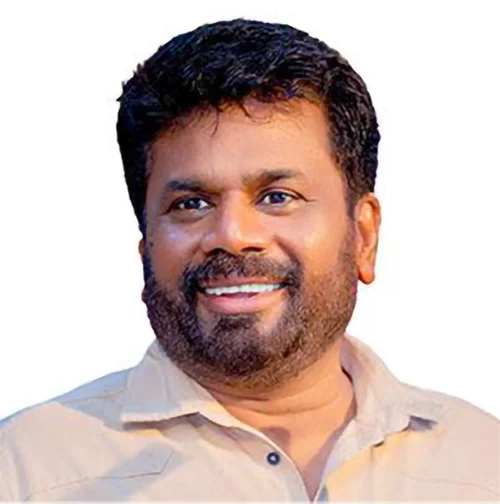
President Anura Kumara Dissanayake has been investing his political capital in going to the public to explain some of the most politically sensitive and controversial issues. At a time when easier political choices are available, the president is choosing the harder path of confronting ethnic suspicion and communal fears. There are three issues in particular on which the president’s words have generated strong reactions. These are first with regard to Buddhist pilgrims going to the north of the country with nationalist motivations. Second is the controversy relating to the expansion of the Tissa Raja Maha Viharaya, a recently constructed Buddhist temple in Kankesanturai which has become a flashpoint between local Tamil residents and Sinhala nationalist groups. Third is the decision not to give the war victory a central place in the Independence Day celebrations.
Even in the opposition, when his party held only three seats in parliament, Anura Kumara Dissanayake took his role as a public educator seriously. He used to deliver lengthy, well researched and easily digestible speeches in parliament. He continues this practice as president. It can be seen that his statements are primarily meant to elevate the thinking of the people and not to win votes the easy way. The easy way to win votes whether in Sri Lanka or elsewhere in the world is to rouse nationalist and racist sentiments and ride that wave. Sri Lanka’s post independence political history shows that narrow ethnic mobilisation has often produced short term electoral gains but long term national damage.
Sections of the opposition and segments of the general public have been critical of the president for taking these positions. They have claimed that the president is taking these positions in order to obtain more Tamil votes or to appease minority communities. The same may be said in reverse of those others who take contrary positions that they seek the Sinhala votes. These political actors who thrive on nationalist mobilisation have attempted to portray the president’s statements as an abandonment of the majority community. The president’s actions need to be understood within the larger framework of national reconciliation and long term national stability.
Reconciler’s Duty
When the president referred to Buddhist pilgrims from the south going to the north, he was not speaking about pilgrims visiting long established Buddhist heritage sites such as Nagadeepa or Kandarodai. His remarks were directed at a specific and highly contentious development, the recently built Buddhist temple in Kankesanturai and those built elsewhere in the recent past in the north and east. The temple in Kankesanturai did not emerge from the religious needs of a local Buddhist community as there is none in that area. It has been constructed on land that was formerly owned and used by Tamil civilians and which came under military occupation as a high security zone. What has made the issue of the temple particularly controversial is that it was established with the support of the security forces.
The controversy has deepened because the temple authorities have sought to expand the site from approximately one acre to nearly fourteen acres on the basis that there was a historic Buddhist temple in that area up to the colonial period. However, the Tamil residents of the area fear that expansion would further displace surrounding residents and consolidate a permanent Buddhist religious presence in the present period in an area where the local population is overwhelmingly Hindu. For many Tamils in Kankesanturai, the issue is not Buddhism as a religion but the use of religion as a vehicle for territorial assertion and demographic changes in a region that bore the brunt of the war. Likewise, there are other parts of the north and east where other temples or places of worship have been established by the military personnel in their camps during their war-time occupation and questions arise regarding the future when these camps are finally closed.
There are those who have actively organised large scale pilgrimages from the south to make the Tissa temple another important religious site. These pilgrimages are framed publicly as acts of devotion but are widely perceived locally as demonstrations of dominance. Each such visit heightens tension, provokes protest by Tamil residents, and risks confrontation. For communities that experienced mass displacement, military occupation and land loss, the symbolism of a state backed religious structure on contested land with the backing of the security forces is impossible to separate from memories of war and destruction. A president committed to reconciliation cannot remain silent in the face of such provocations, however uncomfortable it may be to challenge sections of the majority community.
High-minded leadership
The controversy regarding the president’s Independence Day speech has also generated strong debate. In that speech the president did not refer to the military victory over the LTTE and also did not use the term “war heroes” to describe soldiers. For many Sinhala nationalist groups, the absence of these references was seen as an attempt to diminish the sacrifices of the armed forces. The reality is that Independence Day means very different things to different communities. In the north and east the same day is marked by protest events and mourning and as a “Black Day”, symbolising the consolidation of a state they continue to experience as excluding them and not empathizing with the full extent of their losses.
By way of contrast, the president’s objective was to ensure that Independence Day could be observed as a day that belonged to all communities in the country. It is not correct to assume that the president takes these positions in order to appease minorities or secure electoral advantage. The president is only one year into his term and does not need to take politically risky positions for short term electoral gains. Indeed, the positions he has taken involve confronting powerful nationalist political forces that can mobilise significant opposition. He risks losing majority support for his statements. This itself indicates that the motivation is not electoral calculation.
President Dissanayake has recognized that Sri Lanka’s long term political stability and economic recovery depend on building trust among communities that once peacefully coexisted and then lived through decades of war. Political leadership is ultimately tested by the willingness to say what is necessary rather than what is politically expedient. The president’s recent interventions demonstrate rare national leadership and constitute an attempt to shift public discourse away from ethnic triumphalism and toward a more inclusive conception of nationhood. Reconciliation cannot take root if national ceremonies reinforce the perception of victory for one community and defeat for another especially in an internal conflict.
BY Jehan Perera
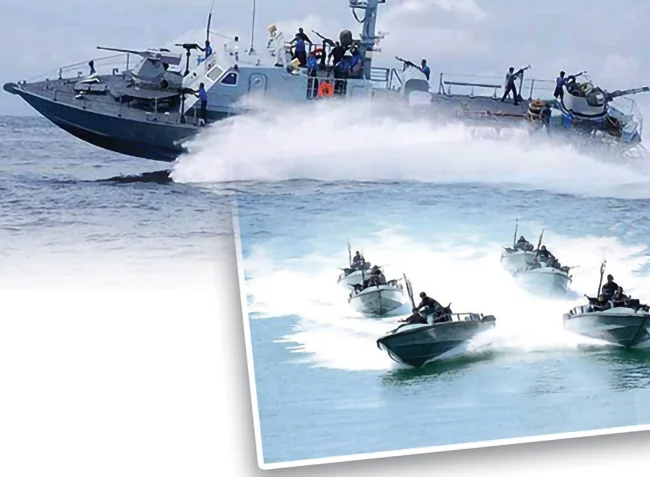
I have read a newspaper report that the Special Task Force of Sri Lanka Police, with help of Military Intelligence, recovered three buried yet well-preserved 84mm Carl Gustaf recoilless rocket launchers used by the LTTE, in the Kudumbimalai area, Batticaloa.
These deadly weapons were used by the LTTE SEA TIGER WING to attack the Sri Lanka Navy ships and craft in 1990s. The first incident was in February 1997, off Iranativu island, in the Gulf of Mannar.
Admiral Cecil Tissera took over as Commander of the Navy on 27 January, 1997, from Admiral Mohan Samarasekara.
The fight against the LTTE was intensified from 1996 and the SLN was using her Vanguard of the Navy, Fast Attack Craft Squadron, to destroy the LTTE’s littoral fighting capabilities. Frequent confrontations against the LTTE Sea Tiger boats were reported off Mullaitivu, Point Pedro and Velvetiturai areas, where SLN units became victorious in most of these sea battles, except in a few incidents where the SLN lost Fast Attack Craft.
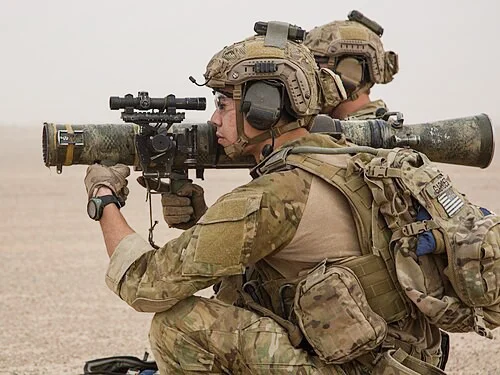
Carl Gustaf recoilless rocket launchers
The intelligence reports confirmed that the LTTE Sea Tigers was using new recoilless rocket launchers against aluminium-hull FACs, and they were deadly at close quarter sea battles, but the exact type of this weapon was not disclosed.
The following incident, which occurred in February 1997, helped confirm the weapon was Carl Gustaf 84 mm Recoilless gun!
DATE: 09TH FEBRUARY, 1997, morning 0600 hrs.
LOCATION: OFF IRANATHIVE.
FACs: P 460 ISRAEL BUILT, COMMANDED BY CDR MANOJ JAYESOORIYA
P 452 CDL BUILT, COMMANDED BY LCDR PM WICKRAMASINGHE (ON TEMPORARY COMMAND. PROPER OIC LCDR N HEENATIGALA)
OPERATED FROM KKS.
CONFRONTED WITH LTTE ATTACK CRAFT POWERED WITH FOUR 250 HP OUT BOARD MOTORS.
TARGET WAS DESTROYED AND ONE LTTE MEMBER WAS CAPTURED.
LEADING MARINE ENGINEERING MECHANIC OF THE FAC CAME UP TO THE BRIDGE CARRYING A PROJECTILE WHICH WAS FIRED BY THE LTTE BOAT, DURING CONFRONTATION, WHICH PENETRATED THROUGH THE FAC’s HULL, AND ENTERED THE OICs CABIN (BETWEEN THE TWO BUNKS) AND HIT THE AUXILIARY ENGINE ROOM DOOR AND HAD FALLEN DOWN WITHOUT EXPLODING. THE ENGINE ROOM DOOR WAS HEAVILY DAMAGED LOOSING THE WATER TIGHT INTEGRITY OF THE FAC.
THE PROJECTILE WAS LATER HANDED OVER TO THE NAVAL WEAPONS EXPERTS WHEN THE FACs RETURNED TO KKS. INVESTIGATIONS REVEALED THE WEAPON USED BY THE ENEMY WAS 84 mm CARL GUSTAF SHOULDER-FIRED RECOILLESS GUN AND THIS PROJECTILE WAS AN ILLUMINATER BOMB OF ONE MILLION CANDLE POWER. BUT THE ATTACKERS HAS FAILED TO REMOVE THE SAFETY PIN, THEREFORE THE BOMB WAS NOT ACTIVATED.
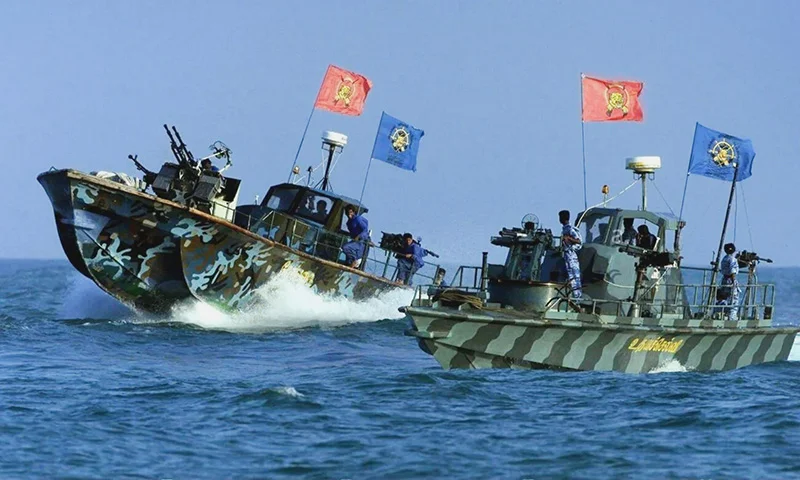
Sea Tigers
Carl Gustaf 84 mm recoilless gun was named after Carl Gustaf Stads Gevärsfaktori, which, initially, produced it. Sweden later developed the 84mm shoulder-fired recoilless gun by the Royal Swedish Army Materiel Administration during the second half of 1940s as a crew served man- portable infantry support gun for close range multi-role anti-armour, anti-personnel, battle field illumination, smoke screening and marking fire.
It is confirmed in Wikipedia that Carl Gustaf Recoilless shoulder-fired guns were used by the only non-state actor in the world – the LTTE – during the final Eelam War.
It is extremely important to check the batch numbers of the recently recovered three launchers to find out where they were produced and other details like how they ended up in Batticaloa, Sri Lanka?
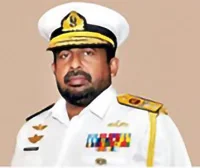 By Admiral Ravindra C. Wijegunaratne
WV, RWP and Bar, RSP, VSV, USP, NI (M) (Pakistan), ndc, psn, Bsc (Hons) (War Studies) (Karachi) MPhil (Madras)
Former Navy Commander and Former Chief of Defence Staff
Former Chairman, Trincomalee Petroleum Terminals Ltd
Former Managing Director Ceylon Petroleum Corporation
Former High Commissioner to Pakistan
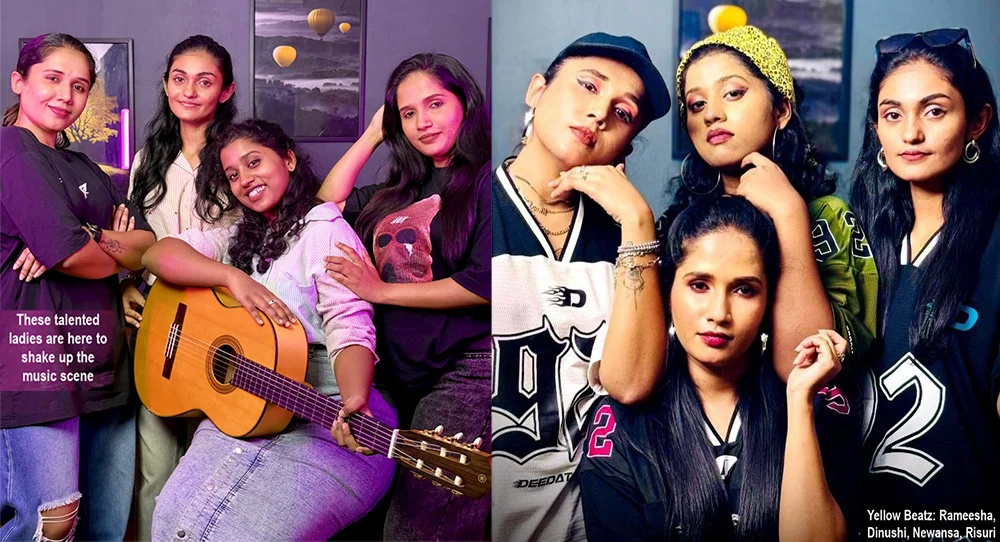
 Yes, get ready to vibe with Yellow Beatz, Sri Lanka’s awesome girl group, keen to take Sri Lankan music to the world with a style similar to K-pop!
With high-energy beats and infectious hooks, these talented ladies are here to shake up the music scene.
Think bold moves, catchy hooks, and, of course, spicy versions of old Sinhala hits, and Yellow Beatz is the package you won’t want to miss!
According to a spokesman for the group, Yellow Beatz became a reality during the Covid period … when everyone was stuck at home, in lockdown.
“First we interviewed girls, online, and selected a team that blended well, as four voices, and then started rehearsals. One of the cover songs we recorded, during those early rehearsals, unexpectedly went viral on Facebook. From that moment onward, we continued doing cover songs, and we received a huge response. Through that, we were able to bring back some beautiful Sri Lankan musical creations that were being forgotten, and introduce them to the new generation.”
The team members, I am told, have strong musical skills and with proper training their goal is to become a vocal group recognised around the world.
Believe me, their goal, they say, is not only to take Sri Lanka’s name forward, in the music scene, but to bring home a Grammy Award, as well.
“We truly believe we can achieve this with the love and support of everyone in Sri Lanka.”
The year 2026 is very special for Yellow Beatz as they have received an exceptional opportunity to represent Sri Lanka at the World Championships of Performing Arts in the USA.
Under the guidance of Chris Raththara, the Director for Sri Lanka, and with the blessings of all Sri Lankans, the girls have a great hope that they can win this milestone.
“We believe this will be a moment of great value for us as Yellow Beatz, and also for all Sri Lankans, and it will be an important inspiration for the future of our country.”
Along with all the preparation for the event in the USA, they went on to say they also need to manage their performances, original song recordings, and everything related.
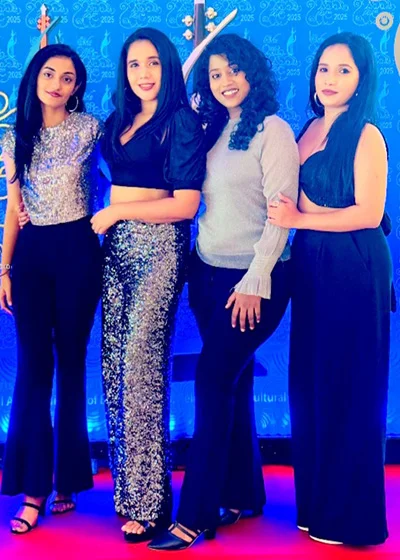
The year 2026 is very special for Yellow Beatz
“We have strong confidence in ourselves and in our sincere intentions, because we are a team that studies music deeply, researches within the field, and works to take the uniqueness of Sri Lankan identity to the world.”
At present, they gather at the Voices Lab Academy, twice a week, for new creations and concert rehearsals.
This project was created by Buddhika Dayarathne who is currently working as a Pop Vocal lecturer at SLTC Campus. Voice Lab Academy is also his own private music academy and Yellow Beatz was formed through that platform.
Buddhika is keen to take Sri Lankan music to the world with a style similar to K-Pop and Yellow Beatz began as a result of that vision. With that same aim, we all work together as one team.
“Although it was a little challenging for the four of us girls to work together at first, we have united for our goal and continue to work very flexibly and with dedication. Our parents and families also give their continuous blessings and support for this project,” Rameesha, Dinushi, Newansa and Risuri said.
Last year, Yellow Beatz released their first original song, ‘Ihirila’ , and with everything happening this year, they are also preparing for their first album.
All-round de Leede leads Netherlands to thumping win over Namibia

Wanindu Hasaranga ruled out of T20 World Cup with injury

Royal Navy of Oman Vessel “SADH” arrives at Port of Colombo

Spirited USA seek Pakistan scalp after opening day heartbreak

New Zealand brace for unfamiliar opponents UAE

Namibia begin campaign in crucial game against Netherlands

‘Dates have the highest sugar content to fight Coronavirus’

Sunday Island 27 December – Headlines

#SundayIsland 17th December – Headlines

Sunday Island – 28th March

Sunday Island Headlines – 21 March

Sunday Island – 21st February – Headlines
-
 Features3 days ago
My experience in turning around the Merchant Bank of Sri Lanka (MBSL) – Episode 3
-
 Business4 days ago
Zone24x7 enters 2026 with strong momentum, reinforcing its role as an enterprise AI and automation partner
-
 Business3 days ago
Remotely conducted Business Forum in Paris attracts reputed French companies
-
 Business3 days ago
Four runs, a thousand dreams: How a small-town school bowled its way into the record books
-
 Business3 days ago
ComBank and Hayleys Mobility redefine sustainable mobility with flexible leasing solutions
-
 Business4 days ago
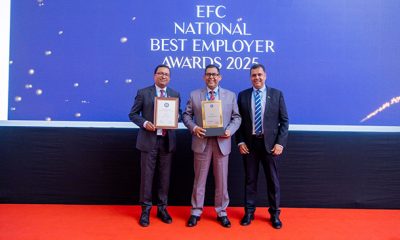
HNB recognized among Top 10 Best Employers of 2025 at the EFC National Best Employer Awards
-

 Business4 days ago
GREAT 2025–2030: Sri Lanka’s Green ambition meets a grid reality check
-

 Editorial6 days ago
All’s not well that ends well?