
Editorial
Basil’s Budget


Monday 15th November, 2021
Finance Minister Basil Rajapaksa has spoken, and the people are trying to figure out what he has said, one may say with apologies to Bill Clinton. Ordinary Sri Lankans, at whose expense governments raise revenue by way of indirect taxes, expect various benefits such as salary increases, tax cuts, subsidies, etc., when budgets are presented. So, Budget 2022 may have gladdened the hearts of only government teachers and principals. Rs. 30 bn has been allocated for the revision of their salaries. One can only hope that there will not be a spate of copycat strikes, as it were, by other state workers, demanding better salaries. The Sri Lanka Government Officers’ Trade Union Association has already threatened to launch a strike unless public workers are given a pay hike immediately.
What matters more than anything else at this juncture is how the government proposes to straighten up the battered economy, shore up dwindling foreign reserves, stabilise the rupee, service debt, improve the country’s creditworthiness, and overcome the balance of payment woes while raising funds to bridge the budget deficit.
Debt servicing is one of the biggest problems the country is beset with. Finance Minister Rajapaksa, presenting the Budget, on Friday, did not forget to take a swipe at the yahapalana government, which, he said, had raised debt to the tune of USD 6.9 billion during a 15-month period between April 2018 and July 2019 alone, and the debt the present government had to repay included that amount. Governments borrow heavily, leaving repayment to their successors. The Finance Minister, did not say that the yahapalana government had repaid the loans the previous Rajapaksa government had drawn, and the country’s debt burden could have been lessened significantly if borrowed dollars had not been spent on projects such as the Lotus Tower, the Mattala Airport, the Suriyawewa cricket stadium, the Hambantota port, etc.
Minister Rajapaksa said something sensible about debt repayment. “We cannot solve this problem only by obtaining international loans. Therefore, we must adopt a special programme to encourage exports to earn foreign exchange.” This, no doubt, is the way out. But will the government care to do so? Another way of overcoming the country’s forex woes is to attract foreign direct investment. But foreign investors are wary of parking their money here owing to corruption. Who wants to invest in a country where many palms have to be greased to get anything done? How does the government propose to eliminate corruption and improve the country’s ease-of-doing-business ranking to attract foreign investment?
The need for tax increases and surcharges would not have arisen if the government had not opted for tax cuts to win the last general election. That politically-motivated measure the SLPP adopted after winning the 2019 presidential election was one of the main reasons for the widening of the budget deficit, the other factors being lockdowns, pandemic relief and the cost of vaccination drive. Tax cuts caused a drastic drop in the state tax revenue from 12.6% in 2019 to 9.2% in 2020, according to analysts.
The government decision to curtail expenditure related to the state service and carry out public sector recruitment only to fill vacancies is welcome. Curiously, it was only last month that Leader of the House, Education Minister Dinesh Gunawardena said the government had decided to recruit more graduates to strengthen the public sector by increasing its workforce!
The budget proposal for reviewing the eligibility of Samurdhi beneficiaries is also welcome. Relief programmes in this country are characterised by poor targeting, which has benefited various racketeers, and led to an increase in the economic burden on the ordinary public, who pays indirect taxes. The Finance Minister ought to ensure that his directive is carried out.
Minister Rajapaksa said there were about 300 state-owned enterprises, and the government had invested over Rs. 670 billion therein and spent as much as Rs. 75 billion to maintain them, but most of them did not yield returns. What does the government propose to do with the loss-incurring ones? Is it planning to divest them or run them as Public Private Partnerships? Most of these state institutions in debt could be turned around if properly managed without political interference.
The Finance Minister has proposed that Rs. 8.5 billion, which Perpetual Treasuries Ltd., has earned through the bond scams, be transferred to the state coffers. Similarly, will probes be conducted into the sugar tax racket and other such frauds which have benefited the SLPP financiers, and action taken to confiscate the illegally raised funds?
Meanwhile, the Budget 2022 will not yield the intended results unless the government gets its act together on the health front. It may be recalled that the economy began to recover and the country recorded an economic growth of 8% during the first half of 2021 owing to the successful vaccine rollout. But thanks to the government’s refusal to impose travel restrictions in April to prevent an explosive spread of Covid-19, and resultant lockdowns, the economic growth rate is expected to drop to 5% or even 4% for the current year. The pandemic is spreading fast, and if the country happens to be locked down again, as feared by health experts, the economy will be in a far worse situation.



Friday 13th February, 2026
Justice has caught up with those who killed SLPP MP Amarakeerthi Athukorale and his security officer. The Gampaha High Court has sentenced 12 convicts to death for the double murder they committed during the 2022 uprising, popularly known as Aragalaya. This judgement has evoked the dreadful memories of the crimes committed in the name of a people’s protest movement about four years ago.
Aragalaya began as an outpouring of public resentment fuelled by the 2022 economic crisis and the resultant shortages of essentials. It developed into what may be described as a carnival of protests at Galle Face, where a motley crowd of activists championing various causes gathered under the ‘Gota Go Home’ banner. It was subsequently hijacked by some ultra-radical political forces with sinister agendas following an SLPP goon attack on the Galle Face protesters in May 2022. Retaliatory attacks carried out by organised groups among protesters turned Aragalaya into a firenado of violence that swept through many parts of the country. It was during that violent phase of Aragalaya that mobs killed MP Athukorale and his security officer and torched scores of houses belonging to SLPP politicians and their cronies. All SLPP MPs would have suffered the same fate as Athukorale if they had not gone into hiding. The destructive forces responsible for committing crimes in the name of Aragalaya must be brought to justice.
The genuine Aragalaya activists who acted as a pressure group, calling for an end to the Rajapaksa rule, wanted to call off their protest campaign following the resignation of President Gotabaya Rajapaksa; their goal was to see the back of Gotabaya as evident from the catchy hashtag, “GotaGoHome”. But some opportunistic political forces, particularly the JVP, sought to use Aragalaya to capture Parliament. Minister K. D. Lalkantha himself has admitted that the JVP strove to lead the Aragalaya activists to Parliament, but without success. JVP leaders are seen in social media videos urging the people to rush to Colombo and march on Parliament and deliver a coup de grace to a teetering system. If the military had not made a decisive intervention at the eleventh hour, using force, aggressive mobs that surged forward menacingly, pulling down barricades, would have captured Parliament and perhaps set it on fire, plunging the country into anarchy. One may recall that a grenade attack on a UNP parliamentary group meeting chaired by President J. R. Jayewardene, with Prime Minister R. Premadasa seated next to him in 1987 almost made the country descend into anarchy. That bomb attack, which left a minister and a public official dead and 16 others injured, was blamed on the JVP.
A former senior Indian police officer discusses grey-zone warfare in an article we have reproduced today from The Statesman, an Asia News Network member. This doctrine of hybrid conflict has gained currency in diplomatic, defence and intelligence circles the world over. What we witnessed during the final phase of Aragalaya (2022) can be dubbed ‘grey-zone terrorism’. Arson attacks on the houses of prominent SLPP politicians and others were well organised; they could not have been carried out by flash mobs consisting of non-violent protesters. Unfortunately, those crimes have not been probed properly. The then SLPP-UNP government was wary of investigating those serious transgressions; instead, it generously awarded compensation to the victims of arson attacks far in excess of their losses. The incumbent administration has rightly instituted legal action against some of the culprits who helped themselves to public funds by playing the victim card and inflating estimates, but most of the arsonists and the masterminds behind the arson attacks have got off scot-free. They must be traced and made to face the full force of the law.
The welcome judgement in the Athukorale murder case offers a lesson that should not go unlearnt. Those who join mobs and commit crimes must remember that they run the risk of being tried and thrown behind bars. On seeing the instigators of violence during Aragalaya savouring power and going places, the killers of Athukorale and his body guard must be ruing the day they committed that crime.

Thursday 12th February, 2026
President Anura Kumara Dissanayake once spoke of a ‘shadow state’ run by powerful crime syndicates and vowed to dismantle it. The general consensus is that such an unseen, parallel power structure really exists and must be eliminated as a national priority. However, criminals are not alone in running ‘parallel governments’. Extremely powerful business cartels also challenge the writ of the state and exploit the public, with impunity.
Transport Minister Bimal Rathnayake has evinced a keen interest in bringing order out of chaos in the passenger transport sector. He deserves praise and public support for his efforts. He has taken upon himself the onerous task of safeguarding the interests of commuters and ensuring road safety. His attempts to bring the private industry to heel have run into stiff resistance, with the bus mudalalis issuing warnings and even threats.
Minister Rathnayake has warned that the tough measures under consideration to make roads safer include the cancellation of the route permits of the buses whose drivers and conductors are addicted to narcotics. Desperate situations are said to call for desperate measures. In 2021, the then State Minister of Transport Dilum Amunugama made a chilling revelation: about 80% of private bus drivers in Colombo and its suburbs were addicted to drugs. The situation must be more or less the same in other parts of the country as well. A survey conducted by the Lanka Private Bus Owners’ Association (LPBOA) has revealed that 45% of private bus drivers are addicted to narcotics. Their addiction to relatively new drugs such as ICE (crystal methamphetamine) is on the rise, according to the police, who disclosed in 2023 that out of 1,781 drivers subjected to drug tests in the Western Province about 100 had been found to be under the influence of dangerous drugs; most of them were ICE addicts. LPBOA President Gemunu Wijeratne himself has said that about 50% of bus workers are addicted to narcotics.
The severity of drug addiction among bus drivers and conductors may have compelled Minister Rathnayake to consider deterrent measures, such as the cancellation of route permits, as a way out. Private bus owners’ associations have condemned the proposed move and threatened to stage a countrywide strike.
Wijeratne did not mince his words when he tore into the government, at a media briefing, the other day. Insisting that bus owners must not be penalised for what their workers did, he said they had no way of finding out whether drivers and conductors were under the influence of drugs. “Would Minister Rathnayake resign if his driver was found to be using illicit drugs?” Wijeratne rhetorically asked, accusing the government of selectively implementing the law. He cited several instances where NPP politicians and their cronies had got away with serious transgressions.
Wijeratne’s arguments are not without merit. The legal process was blatantly subverted to let former Speaker Asoka Ranwala off the hook following a road accident he caused two months ago, as Wijeratne said. Ranwala was not made to undergo a blood-alcohol test for more than 12 hours, and the police audaciously claimed that they had run out of breathalyser test kits. No legal action has been taken against the questionable release of as many as 323 high-risk containers, without Customs inspection, from the Colombo Port. A mega coal scam has gone uninvestigated. When a cannabis plantation on a plot of land belonging to an NPP MP’s relative was raided, it was the police officers responsible for the raid who had to face disciplinary and legal action. The JVP supporters who parked buses on the Southern Expressway in violation of traffic laws last year have got off scot-free. So, Wijeratne may have struck a responsive chord with the public when he highlighted how the government itself was undermining the rule of law. However, the fact that the incumbent administration shields transgressors within its ranks is no reason why the private bus operators should be allowed to enjoy the freedom of the wild ass. Wijeratne seems to think two wrongs make a right.
The government should not make hasty decisions when handling sensitive issues. It ought to respect the fundamental legal maxim, audi alteram partem, and listen to what the bus operators have to say. However, the imperious private bus associations must not be allowed to intimidate a democratically elected government. Wijeratne has warned that the government’s efforts to cancel the route permits of buses driven by drug addicts will be its undoing, for the bus operators will launch a countrywide strike. He has asked the government not to rouse ‘sleeping tigers’. In saying so, he has made an unintentional allusion to the Liberation Tigers of Tamil Eelam militarily neutralised by a previous government. It remains to be seen whether the incumbent administration with a supermajority is equal to the task of taming the ‘sleeping tigers’, safeguarding the interests of the public and ensuring road safety while redressing the legitimate grievances of the bus operators.
Wednesday 11th February, 2026
Today’s front-page photo in this newspaper shows former President Mahinda Rajapaksa and Foreign Minister and JVP stalwart Vijitha Herath in conversation at a Chinese New Year reception in Colombo on Monday. This picture speaks volumes. Its significance and irony may not have escaped astute political observers familiar with Sri Lanka’s political marriages of convenience during the past several decades.
The JVP made a public show of its antipathy towards the Rajapaksas to win elections in 2024. It vowed to throw them behind bars immediately after forming a government. Some Opposition bigwigs have claimed that it was to settle political scores with Mahinda that the JVP-led NPP government made former Presidents leave their official residences. The JVP leaders continue to inveigh against Mahinda and other members of the Rajapaksa family, much to the glee of their cadres. They pretend that they have had nothing to do with the former ruling family. But the truth is otherwise.
The aforesaid photo may remind political observers of the pivotal role played by Herath and other JVP seniors, including Anura Kumara Dissanayake, in enabling Mahinda to achieve his presidential dream in 2005. The SLFP, which fielded Mahinda as its presidential candidate, did not throw its weight behind him in the presidential race; in fact, the then President Chandrika Kumaratunga did her best to queer the pitch for him, without success. The JVP campaigned extremely hard for him and ensured his victory.
The present-day JVP leaders are seen in some videos of Mahinda’s 2005 presidential election campaign, waving the Mahinda Chinthanaya policy framework at campaign rallies and portraying it as a silver bullet capable of helping Sri Lanka solve all its problems and achieve progress. Herath was among the key speakers at Mahinda’s election rallies. Perhaps, it would have been the end of the road for the Rajapaksas in national politics had Mahinda lost the 2005 presidential election. Thus, it may be seen that the blame for what the JVP accuses Mahinda, his family members and his cronies of having done since 2005 should be apportioned to the JVP leaders who made his elevation to the presidency possible.
The JVP fell out with President Rajapaksa as he did not fulfil some of his key promises, especially his pledge to abolish the executive presidency. It joined forces with the UNP, etc., thereafter and strove to defeat Mahinda in the 2010 presidential election, but in vain. However, it realised that goal by helping Maithripala Sirisena, who promised to scrap the executive presidency, win the 2015 presidential election. He reneged on his pledge.
Ironically, the Rajapaksas created conditions for the JVP’s meteoric rise to power, albeit unwittingly. After their return to power, they indulged in corruption, suppressed the rule of law, and, above all, bankrupted the economy in 2022, when the JVP had only three MPs and its national vote share had shrunk to a meagre 3%. The JVP effectively harnessed public anger over economic hardships to regain lost ground and win elections. It also promised to do away with the executive presidency. This pledge appears on page 109 of the NPP’s policy programme, A Thriving Nation: A Beautiful Life.
Today, the JVP is in a position to do what it pressured Mahinda and Sirisena to do in 2005 and 2015 respectively—abolishing the executive presidency. The NPP government led by the JVP has a two-thirds majority, and the Opposition is also demanding that the executive presidency be scrapped forthwith. So, the question is why the JVP is dragging its feet on its pledge to do so.

Kishan, Hardik, spinners hand India record win

Showers expected in the Central, North-central , Uva, Eastern, Southern and Northern provinces and in Kaluthara district

GL: Proposed anti-terror laws will sound death knell for democracy

SJB complains to bribery commission about alleged bid to interfere with evidence

Substandard Ondansetron: CIABOC launches probe

Shanaka fireworks helps Sri Lanka thrash Oman

‘Dates have the highest sugar content to fight Coronavirus’

Sunday Island 27 December – Headlines

#SundayIsland 17th December – Headlines

Sunday Island – 28th March

Sunday Island Headlines – 21 March

Sunday Island – 21st February – Headlines
-
 Features5 days ago
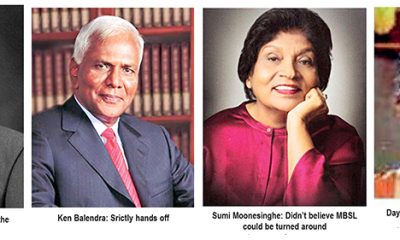
My experience in turning around the Merchant Bank of Sri Lanka (MBSL) – Episode 3
-

 Business6 days ago
Zone24x7 enters 2026 with strong momentum, reinforcing its role as an enterprise AI and automation partner
-

 Business5 days ago
Remotely conducted Business Forum in Paris attracts reputed French companies
-
 Business5 days ago
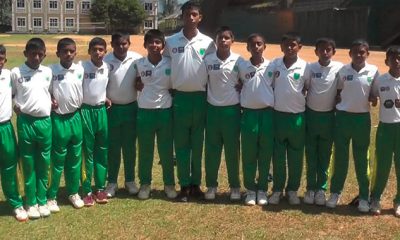
Four runs, a thousand dreams: How a small-town school bowled its way into the record books
-
 Business5 days ago
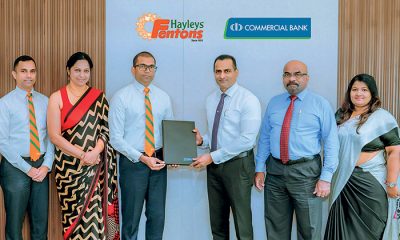
ComBank and Hayleys Mobility redefine sustainable mobility with flexible leasing solutions
-

 Business2 days ago
Autodoc 360 relocates to reinforce commitment to premium auto care
-
 Business6 days ago
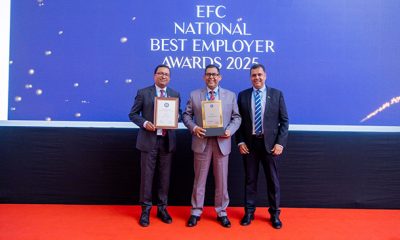
HNB recognized among Top 10 Best Employers of 2025 at the EFC National Best Employer Awards
-

 Midweek Review2 days ago
A question of national pride