
Sports
Bashir, Root, Brook give West Indies a 241-run hammering

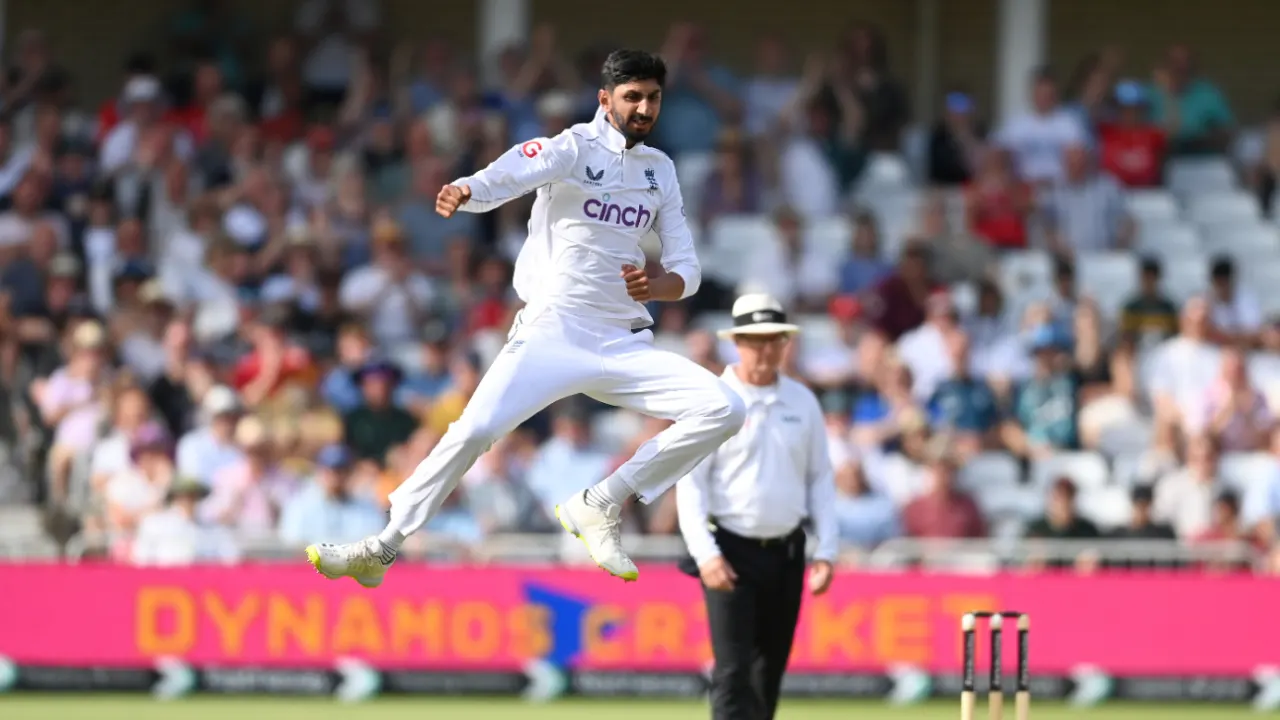
Shoib Basheer’s first five-wicket haul on English soil sealed victory inside four days for the hosts, after Joe Root and Harry Brook had set England up against West Indies in the second Test at Trent Bridge.
Root and Brook each scored centuries before the hosts were bowled out for 425 in their second innings – the first time in England’s history that they had scored 400 in both innings of a Test – setting West Indies a target of 385.
Then, at 20 years and 282 days, off-spinner Bashir became the youngest England bowler to take a five-wicket haul in a men’s Test at home, beating the previous record of just-retired seamer James Anderson. His 5 for 41 gave England the win, by 241 runs, and an unassailable 2-0 lead in the series being played for the Richards-Botham Trophy.
On a flat batting track and with a monumental run-chase at Headingley nearly seven years ago still in the recesses of some memories – certainly captain Kraigg Brathwaite’s – the task was still steep, not to mention in light of an innings defeat at Lord’s in the first Test of this series, even if Brathwaite and Mikyle Louis made a bright start by taking West Indies to 61 without loss.
But Chris Woakes and Bashir put it out of reach as West Indies lost 5 for 21 in the space of 35 balls and Bashir finished things, West Indies losing 10 for 82 in all as they were bowled out for 143.
Woakes struck with the first ball after the evening drinks break, a length ball outside off stump that lured a faint edge behind from Louis. Moments later, Kirk McKenzie fluffed an attempted drive off a Bashir short ball and fell to a sharp catch by Jamie Smith behind the stumps.
Brathwaite, on 47, edged Woakes to the keeper and Bashir drew another edge to Root at slip off Alick Athanaze with one that dipped and turned appreciably. In between, Bashir had pinned first-innings centurion Kavem Hodge lbw, and after three overs, Bashir had 3 for 8.
Mark Wood, who had bowled with jaw-dropping speed in West Indies first innings, produced venom of a different kind to remove Kevin Sinclair, his short ball spitting up higher than the batter expected and, as Sinclair put his hands in front of his face, it rapped the wristband of his glove and was taken at second slip.
Joshua Da Silva, who had scored an unbeaten 82 in the first innings, started playing some shots, pulling Gus Atkinson through midwicket for four and crunching Bashir over the fence at wide long-on. But Atkinson responded in his next over with one that moved back in from outside off to strike Da Silva on the back pad in line with middle stump and, two balls later, he put England on the brink of victory by bowling Alzarri Joseph.
No sooner had Jason Holder taken him for six and four to move to 37, and Bashir rattled off stump with a gem that turned in and beat the edge as Holder pressed forward, leaving West Indies nine down.
Bashir then bowled Shamar Joseph with a fuller ball on middle stump to the absolute delight of his captain, Ben Stokes, who grinned broadly as his young charge took a third five-wicket haul in just his fifth Test.
Earlier, Root was serene in posting 122, his 32nd Test century having moved to eighth on the all-time Test run-scorers’ list with 11,940 during the course of his innings.
Brook had reached 109 in similarly unruffled style, the pair putting on 198 runs for the fourth wicket. That was after Ollie Pope and Ben Duckett had fallen in quick succession on the third day, themselves having each passed fifty and put on 119 runs together.
Seales broke through with a double-strike on the fourth morning and another wicket on the last ball before lunch to Sinclair lifted West Indies from a position where the match looked to be slipping beyond their reach as Root and Brook settled into their stand. They added 100 runs to England’s overnight score but the hosts lost three wickets for 19 runs in 7.2 overs.
Brook brought up his fifth Test ton – and first on home soil – nudging Alzarri Joseph for a single to mid-on and, two balls later, Root clipped one to the leg side to bring up his fifty, and the 150 partnership.
But, after a near-flawless innings, he fell wafting at a Seales delivery that moved away slightly off the seam, found the edge and sailed through to Da Silva behind the stumps.
Seales struck again when he removed Stokes cheaply, turning a short ball straight to Alzarri Joseph at backward square leg.
That brought Jamie Smith to the crease and he managed only 6 before Sinclair drew a faint edge with a delivery on off stump and Da Silva collected.
Moments after Woakes edged a rising Shamar Joseph delivery towards second slip, where the towering Holder took a strong catch moving to his left with arms stretched above his head, Root raised his century with a thumping drive through deep point for four off Alzarri Joesph.
Holder returned to the attack with great effect, Root smashing a full, wide delivery straight to Kirk McKenzie at cover. Root departed to hearty applause from the crowd and handshakes from his opponents.
Seales saw two slips catches put down off Wood in successive balls, but made no mistake with the third when he bowled Wood for a duck with the next, a fuller ball just outside off which seamed in and clattered into the top of off stump. Seales’ fourth wicket ended England’s innings, Bashir the last man out, bowled by a yorker.
Brief scores:
England 416 (Ollie Pope 121, Ben Duckett 71, Ben Stokes 69; Alzarri Joseph 3-98) and 425 (Joe Root 122, Harry Brook 109, Ben Duckett 76, Ollie Pope 51; Jayden Seales 4-97) beat West Indies 457 (Kaveem Hodge 120, Joshua Da Silva 82*, Allick Athanaze 82; Chris Woakes 4-84) and 143 (Craig Brathwaite 47; Shoaib Bashir 5-41) by 241 runs
[Cricinfo]



Sri Lanka speedster Matheesha Pathirana has passed his fitness tests with Sri Lanka Cricket and linked up with Kolkata Knight Riders, ready to steam in again after a frustrating spell on the sidelines.
The Knight Riders are propping up the table without a win, their campaign already wobbling placed last. Injuries and indifferent form have left their bowling attack looking toothless and Pathirana’s return could be just the spark they need to stop the rot.
The slinger will undergo further assessment by the franchise’s medical staff, but is tipped to be in the mix for Sunday’s clash against Rajasthan Royals at Eden Gardens.
“It’s been a challenging few months for me following an unfortunate injury, but I’m grateful for the support throughout this period,” Pathirana said. “I’m now focused on regaining my confidence during the ongoing IPL, contributing to Kolkata Knight Riders and performing to the best of my abilities. I’m looking forward to making a strong comeback and earning my place back in the national team.”
Pathirana, who fetched close to USD 2 million at the auction after being released by CSK, had his progress stalled by a calf injury picked up during Sri Lanka’s T20 World Cup campaign, a tournament where the co-hosts were forced to juggle their resources as injuries ripped through their bowling ranks.
Sri Lanka Cricket, tightening the screws on player fitness, made it mandatory for players to pass tests before being granted No Objection Certificates. While the likes of Wanindu Hasaranga and Nuwan Thushara failed to clear the bar, Pathirana ticked all the boxes and got the green light to join the IPL.
Still only 23, the fast bowler with the slingy, Lasith Malinga-esque action has been a handful for batters worldwide, firing in yorkers at will when on song. But his career has been a stop-start affair, with niggles halting his run just when he seemed to be hitting top gear.
KKR, meanwhile, are in desperate need of a breakthrough. Their bowling unit has struggled with Akash Deep and Harshit Rana ruled out with injuries, while seasoned campaigner Mustafizur Rahman had to pull out before the tournament. To make matters worse, mystery spinner Varun Chakravarthy, the world’s number two-ranked bowler, has struggled to find his rhythm.
If Pathirana can hit his straps early, KKR might just find a way to drag themselves back into the contest. For now, though, they are staring down the barrel and hoping the new arrival can deliver a match-winning spell.
Telecom Asia Sport

Rwanda will host the inaugural Women’s Challenge Trophy, which starts on April 18 in Kigali with Rwanda taking on Italy, in the first game and Nepal facing USA in the second game later in the day. The tournament, which will run till May 1, also features Vanuatu, and has a total of 20 games over ten match days.
The tournament is a new one in the ICC’s calendar, organised to provide match exposure to the second rung of Associate women’s teams. The eight-team Emerging Nations Trophy, introduced last year, featured the highest-placed teams from the ICC’s five regions, and this one pits the next-highest-placed teams. The teams were confirmed based on their positions at the regional T20 World Cup qualifiers last year.
“A double round-robin format assures maximum match exposure for teams, so that participants are better prepared to play stronger opposition in the years to come,” the ICC said in a statement. “This falls in line with the ICC’s commitment to deliver competitive cricket with context for all its members as it moves to continuously grow the women’s game.”
The matches will be played at Gahanga Cricket Stadium, a facility that has two adjoining grounds which host international cricket – Gahanga Cricket Stadium Main Oval and Gahanga Cricket Stadium Oval B.
“This tournament is a testament to the growth of Rwandan cricket and would not be possible without the unwavering support of our stakeholders, partners, and the ministry of sports,” president of Rwanda Cricket Association Stephen Musaale said. “To our incredible fans: we call on you to fill the stands at Gahanga with your energy and passion. Let us show the world the warmth of Rwandan hospitality as we cheer on our team in this historic chapter of our sporting journey.”
Schedule of matches
April 18: Rwanda vs Italy and Nepal vs USA
April 19: Rwanda vs Vanuatu and Italy vs Nepal
April 21: Rwanda vs USA and Vanuatu vs Italy
April 22: Rwanda vs Nepal and USA vs Vanuatu
April 24: Nepal vs Vanuatu and Italy vs USA
April 26: Rwanda vs Vanuatu and USA vs Nepal
April 27: Rwanda vs Italy and USA vs Vanuatu
April 28: Rwanda vs Nepal and Italy vs Vanuatu
April 30: Italy vs USA and Nepal vs Vanuatu
May 1: Rwanda vs USA and Italy vs Nepal
(The first matches will start at 9am local time and the second at 1pm local time)
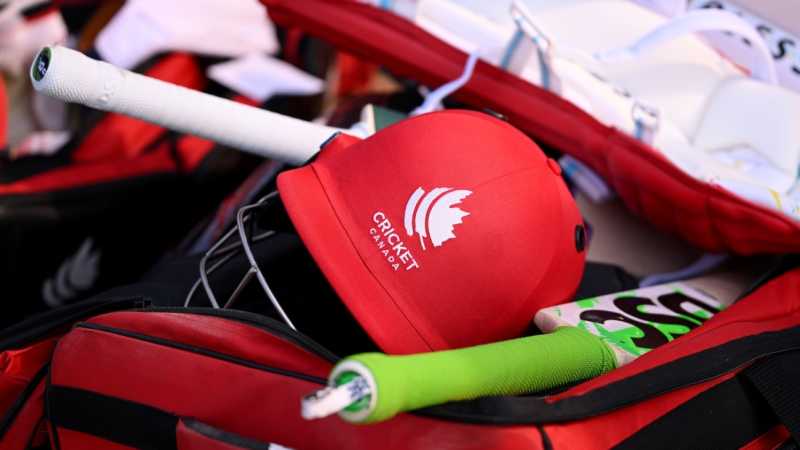
The ICC’s Anti-Corruption Unit (ACU) is investigating allegations of corruption involving Cricket Canada, one of which focuses on a game involving Canada from the recent men’s T20 World Cup in India and Sri Lanka.
ESPNcricinfo understands the ACU has two active investigations that span elements of Cricket Canada and allegations of breaches of the ICC’s anti-corruption code at international and domestic level as well. The existence of the allegations emerged in a documentary ‘Corruption, Crime and Cricket’, produced by the fifth estate, a Canadian investigative documentary programme. The 43-minute film, aired by the public broadcaster CBC (Canadian Broadcasting Corporation) on Friday, makes wide-ranging accusations of corruption and governance at Canada Cricket.
According to the documentary the claim of corruption at the World Cup comes from Canada’s game against New Zealand. Under scrutiny is the fifth over of New Zealand’s chase when the captain Dilpreet Bajwa came on to bowl. Bajwa, then 22, was appoi ted captain three weeks before the tournament began.
Primarily a batting allrounder who bowls offspin, Bajwa took the ball with New Zealand 35 for 2. Canada had opened the bowling with pace in Jaskaran Singh and Dilon Heyliger, but in a poor start they conceded 15 and 14 runs respectively. They switched to spin as early as the third over, when Saad bin Zafar came on and bowled a wicket maiden. Heyliger took a wicket in the next over – the fourth – and then Bajwa came on. He began the over with a no-ball, bowled a wide down the leg side and ended up conceding 15 off the over.
The other investigation stems from a recording of a telephone call involving then Canada coach Khurram Chohan, in which he claims that senior (now former) Cricket Canada board members put pressure on him to select certain players to the national side. The audio was leaked last year and has been under ACU investigation since. The recording also contains claims of attempts to fix in matches, though those involve challenges in corroborating with actionable evidence.
“The ACU is aware of the programme broadcast by CBC,” Andrew Ephgrave, interim General Manager of the ICC’s Integrity Unit, said in a statement to ESPNcricinfo. “Consistent with its established operating procedures, the ACU is not in a position to comment on the substance of any allegations contained within it.
“Governance matters in relation to ICC Members are considered by the ICC, where they fall under its jurisdiction, in accordance with the ICC’s standard constitutional processes.
“The ICC’s Anti-Corruption Unit operates across three core functions: intelligence, prevention and education, and investigation. These functions operate concurrently and are applied wherever there is a credible basis to believe the integrity of the sport may be at risk.”
The documentary also interviews another former coach, Pubudu Dassanayake, who makes a similar claim on undue influence being applied on him in squad selections, in his case for the 2024 T20 World Cup. The fifth estate said the board tried “to force” Dassanayake to select certain players and when he didn’t, he was told his contract would be terminated. Dassanayake is suing Cricket Canada for wrongful dismissal.
Canada’s players faced delayed payment of prize money due to them from the 2024 T20 World Cup and the documentary claims that national players were uncontracted from July 2025 and then put on small retainers for four months leading up to this year’s T20 World Cup.
The documentary also explores the links of organised crime after a former player claimed he was threatened. That investigation, Ephgrave told the fifth estate is beyond the ACU’s remit. “I am aware of some allegations. That very much is a domestic matter for whenever that is taking place. And very much a law enforcement responsibility,” Ephgrave said in the documentary.
(Cricinfo)

Ex-lawmakers group calls for IPU’s intervention to check “irregularities” in Parliament

Power and Energy Minister, Ministry Secy resign over coal probe

President appoints Commission to probe irregularities in coal imports from inception of Norochcholai

Heroin haul transported on 50-million-rupee contract

Kongahage and another released on bail

SriLankan ex-CEO refused bail

‘Dates have the highest sugar content to fight Coronavirus’

Sunday Island 27 December – Headlines

#SundayIsland 17th December – Headlines

Sunday Island – 28th March

Sunday Island Headlines – 21 March

Sunday Island – 21st February – Headlines
-

 News6 days ago
CEB orders temporary shutdown of large rooftop solar systems
-
 Features6 days ago
From Royal College Platoon to National Cadet Corps: 145 years of discipline, leadership, and modern challenges
-

 Latest News5 days ago
PNS TAIMUR & ASLAT arrive in Colombo
-

 Features6 days ago
CIA’s hidden weapon in Iran
-
 Latest News5 days ago
Prasidh, Buttler set up comfortable win for Gujarat Titans
-

 News2 days ago
PNS TAIMUR & ASLAT set sail from Colombo
-

 Features6 days ago
A Fragile Ceasefire: Pakistan’s Glory and Israel’s Sabotage
-

 Latest News6 days ago
Heat index likely to increase up to ‘Caution level’ at some places in the Northern, North-central, North-western, Western, Sabaragamuwa, Southern and Eastern provinces and Monaragala district