
Sports
Australia’s system produces good captains, but you can’t say the same


by Ian Chappell
The subject of captaincy has provoked some vociferous discussion lately, with the daring deeds of England captain Ben Stokes, and manoeuvring in Australia following the announcement that Aaron Finch had retired from ODIs.
Finch’s retirement was lamented in many circles. This is understandable because he is a good white-ball captain. However, his replacement ought also to be an experienced player with strong leadership qualities. The Australian system for producing leaders, while diluted, is still the best of an increasingly cluttered set.
Finch’s retirement needs careful handling, otherwise it could be construed that no other Australian captain would have performed as well. That is an incorrect assumption; there were a number of viable options.
Then there’s the much publicised episode of David Warner requesting the case for his leadership be reassessed by a different management group at Cricket Australia. That raises the obvious question: why, following the original ball-tampering incident at Newlands in 2018 did Warner receive a more stringent punishment in respect to captaincy than the captain at the time, Steve Smith?
They both committed a serious crime at Newlands, but Smith’s as a captain in saying “I don’t want to know” was a greater infraction than Warner’s. If Warner had been alone in hatching the plot – which is not proven – then it was Smith’s job as captain to know about it and put an end to it. Either way they should have received an identical suspension and the fact that they didn’t raises serious questions about whether there was prejudice towards Warner. And surely, no one believes that only three players – the banned trio of Smith, Warner and Cameron Bancroft – were the only ones involved in the plot?
While Warner has created an intriguing situation with his assertive request, he shouldn’t be appointed captain of an Australia side. The captaincy should always be awarded to a player who still has some prime years remaining. A captain must have in his armoury the ability to regularly lead by example on the field. Warner, with his aggressive approach, would have been a good on-field leader but sadly his best now only appears occasionally and it’s time to appoint a younger captain.
In the case of Stokes, the job was his if he desired a leadership role. While Joe Root is a top-class batter, he was no captain, and in hindsight, should not have been appointed. If Root was the best choice at the time of his elevation – there was a list of potential captains – then the English system is not producing enough true international leaders.
Now England have the right captain in place, it becomes a matter of choosing the best combination to win in the prevailing conditions. It’s not surprising that their results have greatly improved following their disastrous tour of Australia. Their recent games have been in the more comfortable environment of home, and they replaced Root’s dubious leadership with the enterprising captaincy of charismatic allrounder Stokes.
England were certainly unlucky in Australia because they were deprived of some first-choice fast bowlers through injury. However, it’s patently clear that selecting the ageing Jimmy Anderson and Stuart Broad in the same team anywhere but in England is a mistake. It’s acceptable, but not ideal, to select a right-arm seam attack in England because it can suit the pitch and surrounding conditions. However, that doesn’t work on Australia’s bouncy pitches, where you need variety and the genuine pace of a Jofra Archer and a Mark Wood to have a chance of victory.
Spin bowling is another major headache for England. Jack Leach or Moeen Ali aren’t the right bowlers to succeed against teams like Australia. England tend to choose a holding spinner, whereas what they really need is a potential wicket-taking one. Ideally they need a spin bowler like Graeme Swann, who could handle either role because he was a top-class operator.Apart from Stokes, Test captaincy in England is currently a lottery because of the lack of candidates. However, the Australian system still generally produces acceptable leaders, with Pat Cummins being the prime exhibit in the case of outstanding captains.
(cricinfo)







After three low scores, three tosses lost and three heavy defeats, Sri Lanka gave hosts India more of a fight in the fourth T20I on Sunday when they finally got to chase a target instead of setting one. They got somewhat close thanks to contribution from batters apart from Chamari Athapaththu. With their confidence running a little higher, they would want to sign off fromthis five match tour with one win as the preparations for the T20 World Cup, which is less than six months away, heat up.
India have been clinical all through the series – with their share of luck, having won the first three tosses – in restricting Sri Lanka to totals under 130 and getting home with at least five overs and seven wickets in hand. That presents Sri Lanka the opportunity to test India’s middle and lower order on Tuesday, but with the gargantuan task of going past the duo of Smriti Mandhana and Shafali Verma, who put up India’s biggest partnership for any wicket to set up the hosts’ highest T20I total. India have had to use only five batters in this series so far.
Whether they set a total or chase one, Sri Lanka would draw inspiration from Hasini Perera’s start on Sunday, in which she took down Renuka Singh and Arundhati Reddy in the opening overs before Nilakshika Silva finally got some runs in the lower order.
Sri Lanka would also want to cash in on any lives their batters are offered as India have been sloppy this series – putting down five catches in the opener and two in the fourth game – which could help the visitors narrow the gap between the two sides.
There are always expectations from Athapaththu when Sri Lanka bat, and it was refreshing to see Hasini Perera take the lead in the opening partnership with her captain on Sunday. It was Perera’s penchant for boundaries that charged Sri Lanka to 52 for 0 in the first four overs. Hasini has played nearly 90 T20Is and the last game of the series will be the perfect chance for her to score her maiden T20I half-century that will only increase the faith in her abilities in the lead up to the T20 World Cup.
She has been dismissed just twice this series and Shafali Verma is reaching scary heights in the T20 format with 236 runs already at a strike rate of 185.82 this series. The next best strike rate this series (minimum 50 runs) is Jemimah Rodrigues’ 140.54. Shafali has taken down every possible bowling combination Sri Lanka have thrown at her at the start and with three half-centuries in a row, a continuation of her boundary barrage could be another spectacular show from the India opener.
Rodrigues missed the fourth T20I while recovering from a mild fever and India brought in Harleen Deol for her first game of the series but she didn’t get a chance to bat. Already leading 4-0, India may also want to hand a debut to 17-year-old wicketkeeper-batter G Kamalini, the only player in the squad who hasn’t played this series.
India (possible): Smriti Mandhana, Shafali Verma, Jemimah Rodrigues/Harleen Deol, Harmanpreet Kaur (capt), Richa Ghosh/G Kamalini (wk), Deepti Sharma, Amanjot Kaur, Renuka Singh/Arundhati Reddy, Kranti Gaud, Vaishnavi Sharma, Shree Charani
Sri Lanka have been making changes through the series too, and even though they have used up all their players from the squad of 15, don’t rule out any more changes on Tuesday.
Sri Lanka (possible): Chamari Athapaththu (capt), Hasini Perera, Harshitha Samarawickrama, Imesha Dulani, Nilakshika Silva, Kaushini Nuthyangana (wk), Kavisha Dilhari, Kawya Kavindi/Malki Madara, Inoka Ranaweera, Malsha Shehani, Nimasha Meepage
[Cricinfo]


Under 19 Cricket
A century by Bihan Gamage and and a six wicket haul by Mevindu Kumarasiri were the individual highlights on day one of the Under 19 Division I Tier ‘A’ and ‘B’ matches on Monday.
While Gamage’s century was the backbone of DS Senanayake’s challenging total of 365 runs against Nalanda, Mevindu Kumarasiri’s six wicket haul helped Sri Sumangala restrict Isipatana to 136 runs.
Later Sri Sumangala reached 158 for two wickets at stumps thanks to an unbroken third wicket stand of 140 runs between Sandeep Wijerathna (61n.o.) and Neksha Iddamalgoda (81n.o.).
That was not the only notable partnership of the day as the ninth wicket pair of Kaveesha Githmal (43) and Kavindu Nimsara (66) put on 99 runs for Mahinda to post 284 runs against Lumbini in their match.
At DSS ground
Scores
DSS 365 all out in 79 overs (Savain Kalansooriya 54, Bihan Gamage 102, Janindu Ranasinghe 50, Shevan Welgama 73; Osanda Pamuditha 2/69, Dunitha Anusara 4/66, Sahas Godage 3/76)
Nalanda 28 for 1 in 10 overs
At Galle
Scores
Mahinda 284 all out in 72.2 overs (Dulsith Darshana 63, Randula Mabarana 28, Manitha Rajapaksha 23, Kaveesha Githmal 43, Kavindu Nimsara 66; Yashod Kavindu 5/100, Dinal Sewmina 2/32)
Lumbini 76 for 4 in 20 overs (Kisandu Dulneth 33, Yashod Kavindu 26; Sadev Nethmina 2/27)
At Panadura
Scores
Isipatana 136 all out in 47.2 overs (Yuveen Keshan 21, Dasith Senal 31; Mevindu Kumarasiri 6/54)
Sri Sumangala 158 for 2 in 45 overs
(Sandeep Wijerathna 61n.o., Neksha Iddamalgoda 81n.o.) (RF)

After three one-sided, low-scoring encounters, the fourth T20I between India and Sri Lanka exploded into a run-fest in Thiruvananthapuram, with both sides posting their highest totals in women’s T20Is. India’s big score of 221 for 2 proved too much for Sri Lanka, who fell short by 30 runs, handing the hosts a 4-0 series lead with one match remaining. India missed two catching opportunities and a stumping chance, while Sri Lanka gave away three, but the batting dominance was decisive.
Smriti Mandhana and Shafali Verma set the tone with blistering half-centuries to power India’s innings, while Chamari Athapaththu kept Sri Lanka in the chase with a fighting 52. Despite a few late cameo efforts, the visitors couldn’t overcome India’s dominant batting display.
Shafali and Mandhana delivered a masterclass in aggressive opening batting, putting together 162 runs off just 92 balls – the highest opening partnership for India in women’s T20Is. Shafali continued her purple patch with a third successive T20I half-century, while Mandhana, who had managed only 40 runs in the first three matches, roared back to form. The innings also saw Mandhana climb to the top of the charts for most runs (1,703) in women’s internationals in a calendar year, underlining her dominance.
India’s openers were relentless from the outset, racing to 61 without loss in the powerplay with 12 boundaries. Shafali’s innings was built on control and placement – her first six came only after her fifty, a loft over long-off in the 11th over – and she finished with 12 fours and a six.
Mandhana, meanwhile, struck 11 fours and three sixes, though her innings briefly dipped in tempo. After racing to 24 off 14 balls, she moved to 28 off 24 during a short lull before accelerating sharply to reach her half-century off 35 deliveries. From there, she cut loose, using the feet to loft the spinners and driving straight with authority.
The contest decisively tilted in overs 11 to 13, when India tore into the attack. The 11th over went for 15 runs, followed by a 20-run 12th and an 18-run 13th, each featuring two fours and a six. Any hopes Sri Lanka had of restricting the damage vanished as India surged from 85 for no loss to 120 in just two overs.
India brought up 150 in only 14.2 overs, making light of the Sri Lanka captain’s assessment at the toss that 140 would be a competitive total.
Sri Lanka had to wait 92 balls for their first breakthrough and struck again in the following over, the 17th, but any momentum was swiftly snuffed out by Richa Ghosh. With Harleen Deol replacing Jemimah Rodrigues, who was recovering from a mild fever, India promoted Ghosh to No. 3 for the death overs – a move that paid rich dividends. Having faced just one delivery in the series before this match, Ghosh made an impact, blasting 40 off 16 balls and adding an unbroken 53-run stand with Harmanpreet Kaur.
Ghosh announced herself by heaving her second ball over Nimasha Meepage’s head for four. After a relatively quiet 17th over, she found her range against the same bowler, striking two more boundaries. The onslaught peaked against Kavisha Dilhari, one of Sri Lanka’s more experienced bowlers, as Ghosh went into overdrive. She smoked three sixes and a four to plunder 23 runs from the 19th over, punishing anything in her hitting arc and underlining India’s ruthless finish.
Sri Lanka began their chase aggressively, with Hasini Perera taking charge. She tore into Renuka Singh’s first over, hitting three boundaries, while Arundhati Reddy, making a comeback in place of the rested Kranti Gaud, conceded 17 off the second over. By the end of four, Sri Lanka had raced to 52 for 0, with the opening stand between Perera and Athapaththu putting on 59 runs off 34 balls.
Athapaththu struck the chase’s first six, charging down the track and clearing long-off off Deepti Sharma in the third over. Both left-handers punished anything too full or short, though Perera fell in the sixth over, holing out to Harmanpreet at mid-off off Reddy’s offcutter.
Athapaththu kept the momentum going, adding 57 runs off 46 balls with Imesha Dulani for the second wicket. Athapaththu moved from 20 off 15 balls to fifty in the next 19 deliveries, hitting three sixes and as many fours. However, her innings ended when she mistimed a charge over the off side, gifting a catch to Mandhana at long-off off Vaishnavi Sharma. At that stage, Sri Lanka needed 106 runs from 42 balls. Despite a few late cameos, the chase fell short.
On a night dominated by big scores, Vaishnavi emerged as the standout bowler, picking up two crucial wickets for just 24 runs. Introduced into the attack after the powerplay, she began by floating the ball outside off stump to entice the batters before gradually attacking the stumps and testing the left-handers with clever variations.
After dismissing Athapaththu in the 13th over, she also removed Harshitha Samarawickrama for a 13-ball 20 in the 17th, when the batter looked threatening. Her disciplined lines and sharp changes of pace helped India keep Sri Lanka’s scoring in check.
Brief scores:
India Women 221 for 2 in 20 overs (Smriti Mandhana 80, Shafali Verma 79, Richa Ghosh 40*, Harmanpreet Kaur16*; Malsha Shehani 1-32, Nimasha Meepage 1-40) beat Sri Lanka Women 191 for 6 in 20 overs (Chamari Athapaththu 52, Hasini Perera 33, Imesha Dulani 29, Harshitha Samarawickrama 20, Kavisha Dilhari 13, Nilakshika de Silva 23*; Arundhati Reddy 2-42, Vaishnavi Sharma 2-24, Shree Charani 1-46) by 30 runs
(Cricinfo)

Cabinet approves liquidation of Sahasya Investment Company

India look to cap off successful year with clean sweep over Sri Lanka

Nepal to scrap ‘failed’ Mount Everest waste deposit scheme

Trump hopes to reach phase two of Gaza ceasefire ‘very quickly’

Bangladesh’s first female prime minister Khaleda Zia dies aged 80

Ukraine denies drone attack on Putin’s residence

‘Dates have the highest sugar content to fight Coronavirus’

Sunday Island 27 December – Headlines

#SundayIsland 17th December – Headlines

Sunday Island – 28th March

Sunday Island Headlines – 21 March

Sunday Island – 21st February – Headlines
-

 News5 days ago
British MP calls on Foreign Secretary to expand sanction package against ‘Sri Lankan war criminals’
-
 News4 days ago
Street vendors banned from Kandy City
-
 Sports5 days ago
Chief selector’s remarks disappointing says Mickey Arthur
-

 Opinion5 days ago
Disasters do not destroy nations; the refusal to change does
-

 News6 days ago
Sri Lanka’s coastline faces unfolding catastrophe: Expert
-

 News4 days ago
Lankan aircrew fly daring UN Medevac in hostile conditions in Africa
-
 Midweek Review6 days ago
Year ends with the NPP govt. on the back foot
-
 Sports6 days ago
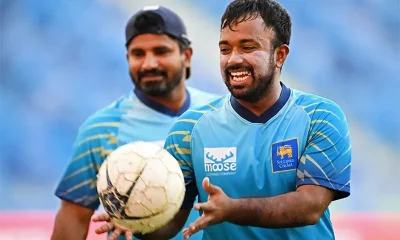
Life after the armband for Asalanka