
Sports
Australia win ICC Women’s Cricket World Cup 2022 with special victory over England

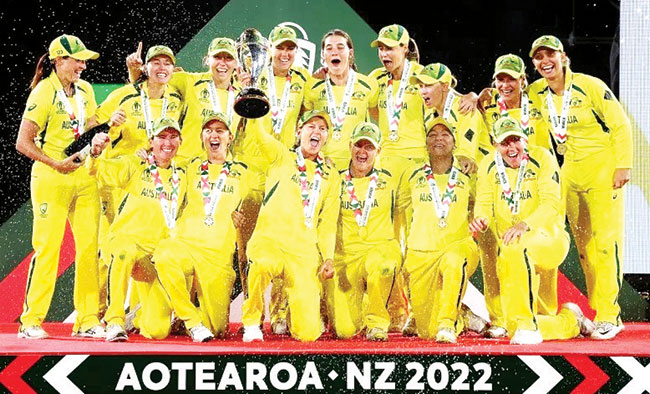
Australia won their seventh ICC Women’s Cricket World Cup with a 71-run victory over England in Christchurch.
Alyssa Healy’s staggering innings of 170 saw Australia put on 356 for five as England’s bowlers had no answer to a batting masterclass, Anya Shrubsole’s three for 46 the only highlight for the defending champions.
Nat Sciver once again steered England’s reply by battling to her highest score in international cricket with 148 not out, but it proved in vain after Shrubsole was dismissed to hand Australia the trophy once more.
Having been put in to bat in the bright Hagley Oval sunshine, Australia were measured in the powerplay, taking 37 off the seam attack of Katherine Brunt, Shrubsole and Nat Sciver.
But the introduction of spin in the form of Charlie Dean proved Healy and Rachael Haynes’ cue to start finding the boundary regularly.
England’s fielding errors – that had started in their opening group game against the same opponent -re-emerged as Haynes was dropped on 47 before Healy was put down on 41 in the same Kate Cross over.
As against the West Indies in the semi-final, Haynes’ half-century came first – off 69 balls – before Healy’s was brought up off 62 as they eased their way to the highest opening partnership in a World Cup final.
Even as Dean continued to be targeted, spin made the breakthrough as Sophie Ecclestone took her 21st and final wicket of the tournament to dismiss Haynes for 68, Tammy Beaumont holding on to a mistimed shot as Haynes ended the World Cup on 497 runs.
The partnership had ended on 160 runs, but Healy built a new one with Beth Mooney who was promoted up the order from five.
But first Healy became only the second woman to score a hundred in a World Cup final, going at a run a ball as she became the only player to score two centuries in the knockout stage of a World Cup.
And she then surpassed the highest score in a Women’s World Cup final as she moved to 111 with a four off Cross.
More records came when Australia reached 260 for one to rack up the highest score in a World Cup final – with eight overs still to go.
Amy Jones twice sent the umpire upstairs to review stumpings before she finally grabbed her wicket, stumping Healy who ended on a spectacular 170 from 138 balls – the highest individual score in a Men’s or Women’s World Cup final – with over 100 runs coming in boundaries.
A packed Hagley Oval rose to applaud as Healy departed with Australia on 316 for two before another wicket came in Shrubsole’s over as Ashleigh Gardner was run out for one.
Meg Lanning, making her 100th ODI appearance, did not last too much longer as she departed for 10 before Mooney was out off the very next ball following a sparkling 62 from 47.
New batter Tahlia McGrath negotiated the Shrubsole hat-trick ball as she and Ellyse Perry added 25 off the final 13 balls to see Australia post 356 for five.
In reply, England’s opening partnership failed to fire once again as Danni Wyatt was bowled by Megan Schutt for just four.
Australia’s young seamer Darcie Brown was the target of England’s aggression, with Beaumont leading the charge until she was dismissed LBW by Schutt for 27 from 26 balls.
Sciver was again called upon to deliver against Australia, having made 109 not out in the group game, and this time her presence at the crease gave England faint hope.
She saw an LBW overturned off the bowling of Alana King before partner and captain Heather Knight was given out the same way two balls later for 26.
Jones fell for 20 to end a promising partnership as England slipped to 129 for four before Sophia Dunkley was again part of an England rebuild.
But she was bowled by King two balls after the fifty partnership was brought up, the leg-spinner extracting turn to bowl her round her legs for 23.
Brunt then went for one as Healy got a stumping of her own before Ecclestone departed for three, out LBW to McGrath.
Jess Jonassen grabbed another caught and bowled against England as Cross went for only two to leave Knight’s side needing an unlikely 144 with only two wickets remaining.
Sciver was joined by Dean in time for her to bring up another brilliant century, coming off 90 balls with 10 fours and one six.
The pair built a partnership of 65 before Dean holed out to Jonassen at third man attempting a reverse sweep.
Shrubsole, the hero in 2017 as England beat India in the final, was once again involved in the closing action as she was the final wicket to go, Gardner taking the winning catch as England fell 71 runs short with Sciver stranded on 148 not out.

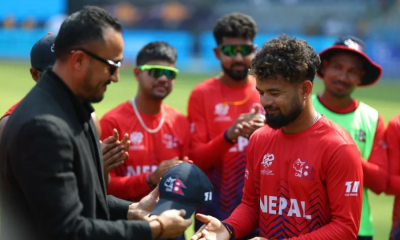




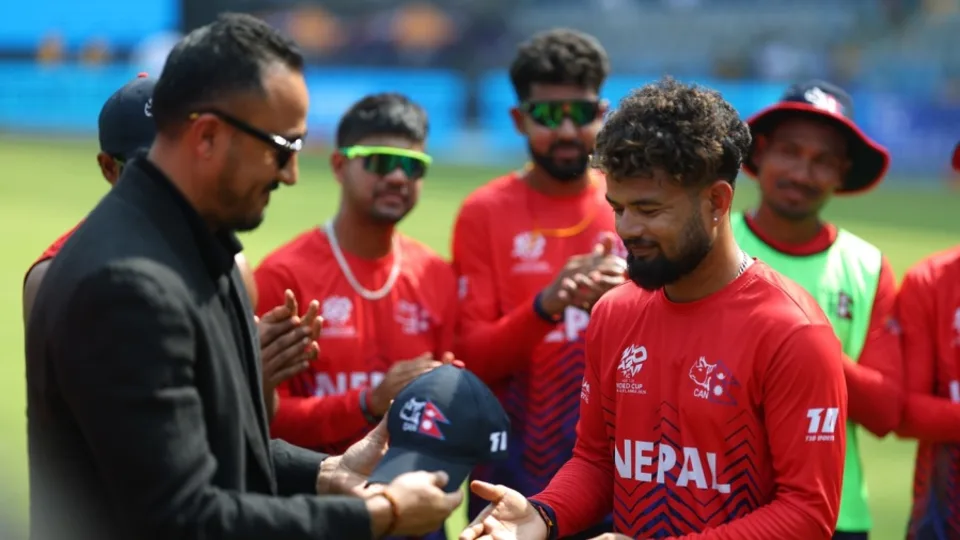
Rohit Paudel warned Harry Brook that a used pitch at Wankhede Stadium could play into his team’s hands as Nepal were asked to bowl first in their first-ever international match against England.
Sunday afternoon’s game will be played on the same strip where India’s powerhouse batting line-up eked out 161 for 9 against United States on Saturday night. Brook won the toss and chose to bat first with conditions in mind, but Paudel said that Nepal’s players “love slow tracks” and that they hoped the surface would suit them.
“We love slow tracks, and it’s a used wicket so I think it will spin a little bit,” Paudel said. “I think, if that happens, it will help our team… To be honest, we would have bowled first. Looking at the conditions, I think chasing is a good option.”
Young spinner Sher Malla made his T20I debut for Nepal, while Lokesh Bam was preferred to the veteran Sompal Kami in the middle order.
Nepal play all four of their group games at the Wankhede and will be cheered on by thousands of their fans in Mumbai. “Playing all the games here will always be an advantage to the team playing all four games here,” Paudel said. “As a team, playing in Asian conditions always helps Nepal.”
Brook predicted that the pitch would get worse as the game wore on. “We feel like the pitch is going to be in the best shape for the first innings, and then hopefully we can bowl well and defend our score in the second innings… It looked like there was a little bit of spin in it, and a little bit of bounce, so hopefully we can utilise that in the second innings.”
England named their team on the eve of the match, with Luke Wood preferred to Jamie Overton. “We wanted to go with two out-and-out seamers up top with the new ball to see if we can get it to swing and get a few early wickets in the powerplay,” Brook said. “Pretty much everything else was already settled.”
England’s build-up to the tournament has been overshadowed by Brook’s now-infamous night out in Wellington last October, but he has tried to draw a line under the incident. “I’m feeling good,” he said. “I’m feeling good with the bat, and hopefully I can make some good decisions as captain as well – on and off the field.”
England: Phil Salt, Jos Buttler (wk), Jacob Bethell, Tom Banton, Harry Brook (capt), Sam Curran, Will Jacks, Liam Dawson, Jofra Archer, Adil Rashid, Luke Wood.
Nepal: Aasif Sheikh (wk), Kushal Bhurtel, Rohit Paudel (capt), Dipendra Airee, Aarif Sheikh, Lokesh Bam, Gulsan Jha, Karan KC, Sher Malla, Nandan Yadav, Sandeep Lamichhane.
[Cricinfo]
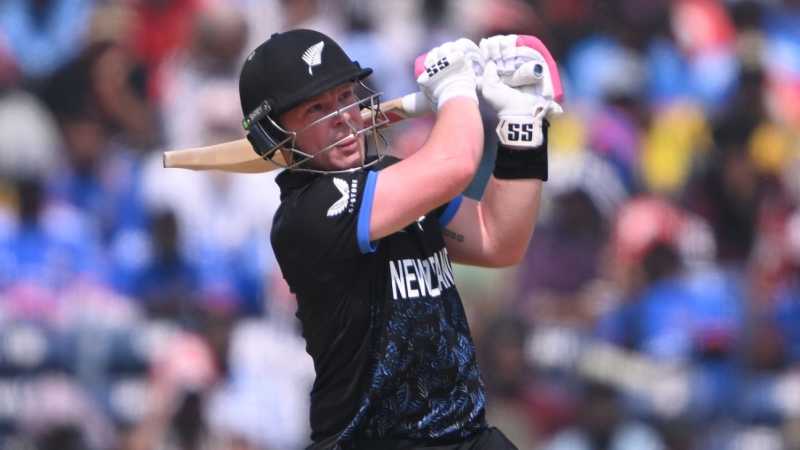
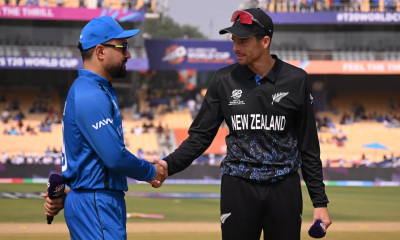
New Zealand may have felt a sense of deja vu after Gulbadin Naib’s half-century andMujeeb Ur Rahman’s double-strike in their opening game of the 2026 T20 World Cup in Chennai. But Tim Seifert’s own half-century and a punchy knock from Glenn Phillips offset the early damage caused by Afghanistan and set New Zealand on the path to victory in the group of death, which also includes fellow title-contenders South Africa.
After Afghanistan opted to bat in a day game, they posted 182 for 6, on the back of Naib’s 35-ball 63, which looked like an above-par total on a challenging Chepauk surface, which offered substantial bounce, especially in the early exchanges, and some grip to the slower bowlers.
That total looked a whole lot bigger once Mujeeb blasted out Finn Allen and Rachin Ravindra in the second over of the chase off back-to-back balls.
Phillips, however, kept out the hat-trick ball and combined aggressively with Seifert to loosen Afghanistan’s grip on the game. They snatched it from Afghanistan’s hands when they cracked Rashid Khan for 14 in his first over. Rashid – and Afghanistan – never really recovered from that as New Zealand wrapped up the chase with five wickets and nearly two overs to spare.
Brief scores:
New Zealand 183 for 5 in 17.5 overs (Tim Seifert 65, Glenn Phillips 42, Mark Chapman 28, Daryl Mitchell 25*, Mitchell Santner 17; Mujeeb Ur Rahman 2-31, Azmatullah Omarzai 1-40, Rashid Khan 1-36, Mohammad Nabi 1-18) beat Afghanistan182 for 6 in 20 overs (Rahmanullah Gurbaz 27, Ibrahim Zadran 10, Gulbadin Naib 63, Sediqullah Atal 29, Daevish Rasooli 20, Azmatullah Omarzai 14, Mohammad Nabi 10*; Matt Henry 1-27, Jacob Duffy 1-30, Lockie Ferguson 2-40, Rachin Ravindra 1-14) by five wickets
[Cricinfo]
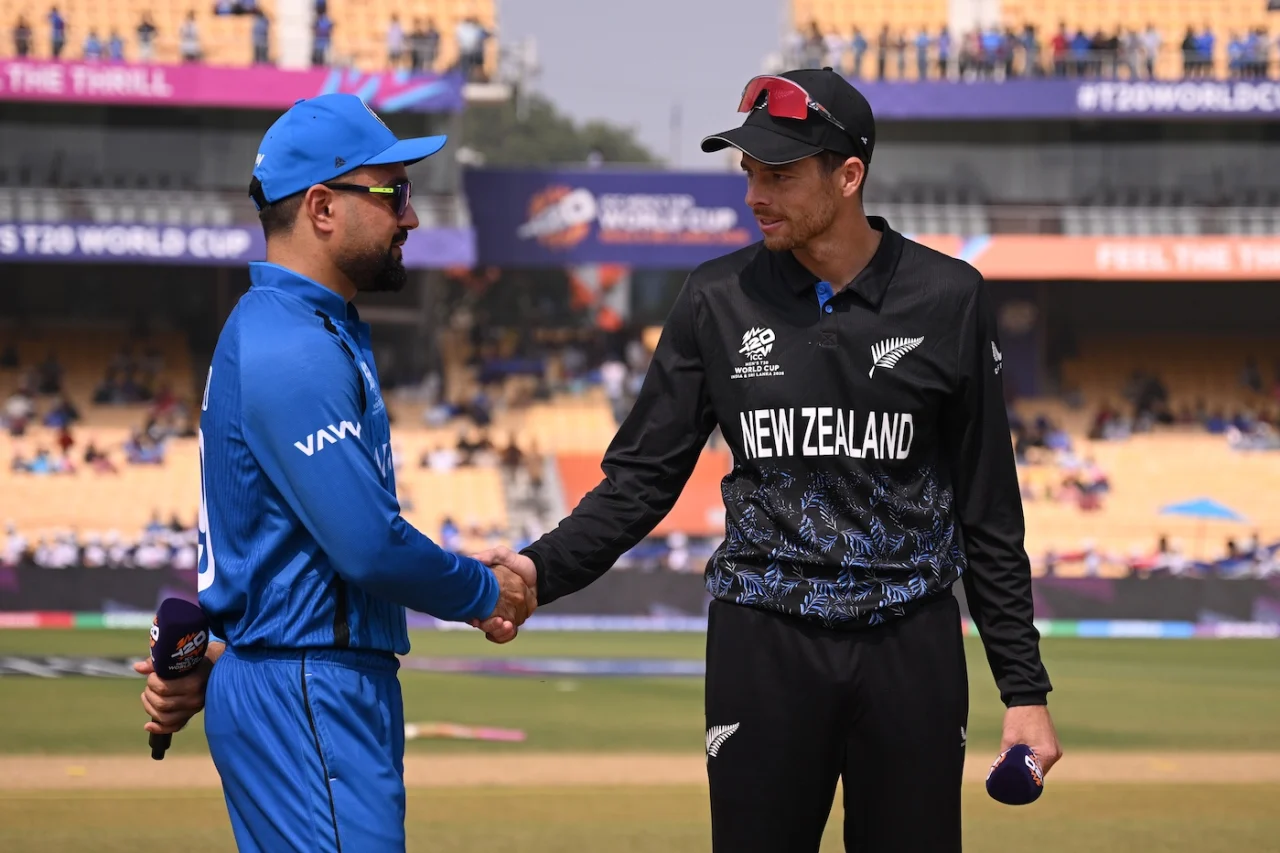
Afghanistan won the toss and elected to bat first in the 2026 T20 World Cup Group D encounter against New Zealand..
New Zealand XI Finn Allen, Tim Seifert (wk), Rachin Ravindra, Glenn Phillips, Mark Chapman, Daryl Mitchell, Mitchell Santner (capt), James Neesham, Matt Henry, Lockie Ferguson, Jacob Duffy
Afghanistan XI Rahmanullah Gurbaz (wk), Ibrahim Zadran, Sediqullah Atal, Darwish Rasooli, Azmatullah Omarzai, Gulbadin Naib, Mohammad Nabi, Rashid Khan (capt), Fazalhaq Farooqi, Ziaur Rahman, Mujeeb Ur Rahman

England bat; Nepal hand debut to Sher Malla

Seifert and Phillips conquer Afghanistan spin to script convincing New Zealand win

Thailand votes as reformists, conservatives vie for power

Afghanistan to bat first against New Zealand

‘I’d like to play on flat tracks’ – Shanaka links Sri Lanka’s batting woes to spin-friendly pitches at home

Washington Post chief executive steps down after mass lay-offs

‘Dates have the highest sugar content to fight Coronavirus’

Sunday Island 27 December – Headlines

#SundayIsland 17th December – Headlines

Sunday Island – 28th March

Sunday Island Headlines – 21 March

Sunday Island – 21st February – Headlines
-

 Business2 days ago
Zone24x7 enters 2026 with strong momentum, reinforcing its role as an enterprise AI and automation partner
-

 Business6 days ago
SLIM-Kantar People’s Awards 2026 to recognise Sri Lanka’s most trusted brands and personalities
-

 Business7 days ago
All set for Global Synergy Awards 2026 at Waters Edge
-

 Business6 days ago
API-first card issuing and processing platform for Pan Asia Bank
-

 Business2 days ago
HNB recognized among Top 10 Best Employers of 2025 at the EFC National Best Employer Awards
-

 Business2 days ago
GREAT 2025–2030: Sri Lanka’s Green ambition meets a grid reality check
-

 Editorial4 days ago
All’s not well that ends well?
-

 Features4 days ago
Phew! The heat …