
News
As micro, small and medium enterprises bear brunt of COVID and economic crisis more than million workers go abroad

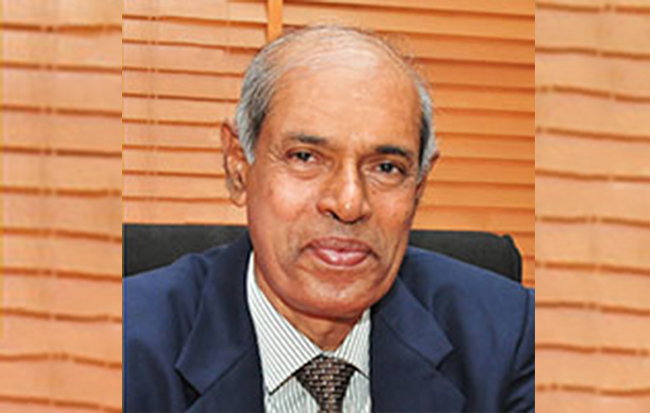
The unofficial number of Lankan workers migrating for jobs abroad may by now be more than a million, Prof. Sunil Chandrasiri, senior professor of economics at the University of Colombo and one of the authors of International Labour Organization’s report on ”Impact of multiple economic crises on Sri Lanka’s micro, small and medium enterprises” which was published recently.
“The Government estimates that roughly 73,000 jobs were lost. But the actual loss of jobs is likely several times higher. A total of 311,000 Sri Lankans left the country for foreign employment in 2022, according to official figures registered with the Foreign Employment Bureau. Moreover, 874,955 passports were issued that year suggesting that the unofficial number of workers migrating out of the country may by now be more than a million. The crises exacerbated long-felt skills deficits while doubling the poverty rate; and a quarter of all Sri Lankans are likely to remain poor over the next few years,” he said.
The COVID-19 pandemic severely or very severely impacted the business operations of nearly 80 percent of Sri Lankan micro, small and medium enterprises (MSMEs), while the economic crisis of 2022 impacted 89 percent of them, he said.
According to Prof. Chandrasiri his study looked at 521 MSMEs that had survived the twin crises and 50 MSMEs that did not survive them. The surveys and interviews were conducted between January and March 2023 in 10 districts, he said.
He added that micro, small and medium scale enterprises employ about 75 percent of the country’s workers.
“About 21 percent employed in micro scale enterprises have lost their jobs in the last few years due to the economic crisis and Covid. 23 percent and 22 percent of employees of small and medium scale enterprises have lost their jobs respectively,” he said.
Skilled workers, unskilled workers as well as those at executive levels, too, have lost jobs, Prof. Chandrasiri said.
Nearly half of all the surviving firms found it difficult to retain or hire people because they could not pay enough to cover the rising living costs. “Most entrepreneurs claim that they are not able to pay a salary that matches the cost of living. A lot of people have migrated,” he said.
There is also migration within the country, he said. A large number of workers from the villages, working in towns, have returned home voluntarily because they can’t sustain themselves in the towns. The cost of living is lower in the villages and these workers try to find work near their homes, he said.
“On the other hand small and medium entrepreneurs claim that electricity and water bills, as well as loan repayments, are about 80 percent of their expenditure. They are also troubled by taxes that have increased the cost of their products. The end user can’t afford the prices of goods and services and thus have dramatically reduced consumption,” he said.
By subsector, the impact of the multiple crises was severe on MSMEs in the tourism, manufacturing, construction, transport and storage, wholesale and retail trade and other services. At the national level, these sub sectors account for more than 55 percent of GDP.
Continuing low employee morale and low productivity are likely to hamper recovery. The crises left in their wake high levels of indebtedness, which will impede the continued survival and growth of MSMEs. About 42 percent of the surviving MSME proprietors reported that they were at risk of failure within a year, he said.
Given below are highlights from the study: “The surviving MSMEs displayed more adaptive behaviours, such as using digital technologies for business operations (38 percent), sourcing from new suppliers (38 percent), introducing flexible work practices (39 percent), adjusting the product or service mix to the labour that was available (39 percent), using online sales and social media to market products (32 percent) and rescheduling bank loans (36 percent).
“In contrast, proprietors of MSMEs that had closed reported more passive behaviours, such as laying off workers (39 percent), reducing working hours (38 percent), borrowing money from other sources (43 percent) and liquidating assets (46 percent). Relatively more non-surviving firms reduced workers’ salaries (at 30 percent of enterprises) than the surviving MSMEs (at 20 percent).
“In terms of dynamic capabilities, the surviving MSMEs responded proactively to the uncertain and changing business environment in the country. For example, 83 percent of them cut costs and eliminated waste; 71 percent improved customer services; 60 percent identified new customers; and 58 percent improved employee safety and welfare facilities.
“Many surviving MSMEs resorted to digitalization in their adaptive behaviour, but the digital strategies they adopted were at the low end of the digitalization scale, such as using social media platforms mainly for information search.
“Resilience emerged as an entrepreneurial skill that enabled enterprises to adapt and grow stronger in the face of challenges.
“The study identified entrepreneurial orientation, technological adaptation, factor substitution, minimizing waste and searching for new markets as the primary resilience factors. Different actors in the MSME ecosystem should include these topics in training programmes for training providers, policymakers and private and nongovernmental organizations.
“The overwhelming majority of MSMEs did not receive any support from institutions dedicated to supporting MSME development and instead struggled or closed on their own.
“Although the COVID-19 stimulus packages offered by the Sri Lankan Government to affected individuals and MSMEs was much smaller than what was offered in other countries in the region, these, too, seemed to have bypassed most of the MSMEs. Political affiliation and influence appear to have had a hand in who was able to access the support.
Financial institutions also dedicated to supporting MSMEs seemed to have offered little financial support to them by restructuring loans, etc. during the economic crisis, even though they posted substantial profits while the economy contracted.”





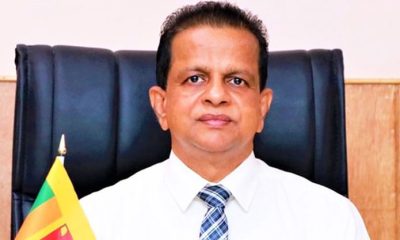


The newly appointed Cabinet Committee tasked with ensuring the uninterrupted functioning of Sri Lanka’s public service held its inaugural meeting on Thursday (19) at the Presidential Secretariat under the patronage of Prime Minister Dr Harini Amarasuriya.
The Committee convened to discuss strategies to maintain seamless government operations in the face of potential disruptions caused by the ongoing conflict situation in the Middle East, with particular focus on energy resource management.
According to officials, the discussions emphasised sustaining essential government services, ensuring continued service delivery to the public, and addressing the operational challenges faced by public sector employees during the current circumstances. The Committee also examined measures to mitigate any disruptions that could affect day-to-day administrative and service functions across ministries and departments.
Key attendees at the meeting included the Minister of Public Administration, Provincial Councils and Local Government A. H. M. M. H. Abayaratne; Secretary to the President Dr Nandika Sanath Kumanayake; Secretary to the
Prime Minister Pradeep Saputhanthri; Chief of Staff to the President Prabath Chandrakeerthi; and senior secretaries from key ministries including Health and Mass Media, Transport, Highways and Urban Development, Energy, and Digital Economy.
Representatives from state institutions such as the Ceylon Petroleum Corporation were also present, highlighting the government’s focus on energy security as a central priority. The Committee’s deliberations underscored a coordinated approach to balancing uninterrupted public service delivery with effective management of limited energy resources amid the ongoing geopolitical uncertainties.
Observers note that the formation of this Cabinet Committee reflects the government’s proactive stance in safeguarding national administrative functions and ensuring that critical public services remain resilient during times of external pressures.The Committee is expected to meet regularly to monitor developments, evaluate emerging risks, and implement practical measures to maintain operational continuity across the public sector.
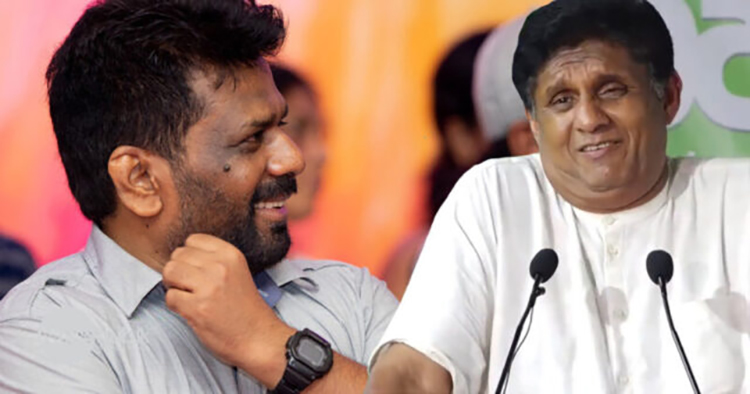
Opposition Leader Sajith Premadasa on Friday lashed out at President Anura Kumara Dissanayake in Parliament, accusing him of failing to uphold international law during wartime.
Premadasa said the President’s claim of neutrality ignored breaches of the UN Charter—including Articles 2.4 and 2.7—and other global conventions. “A neutral stance requires openly acknowledging violations,” he argued, criticizing the absence of ethical mechanisms to safeguard international law.
He also questioned the President’s handling of maritime issues, particularly whether Sri Lanka had been informed of the alleged attack on the Iranian vessel IRIS Dena, stressing that the Exclusive Economic Zone (EEZ) permits only peaceful activity.
On the economic front, Premadasa condemned the government for missing a chance to buy Russian oil during a 30-day U.S. sanctions suspension.
He said attempts to advise the Foreign Ministry, including a meeting with the Russian Ambassador, yielded no progress.
Premadasa further ridiculed the government’s earlier dismissal of the QR code fuel system, noting that officials are now adapting to it.
Turning to broader economic concerns, he called for immediate negotiations with the IMF to secure a new agreement, warning that the current primary balance of 2.3 is unsustainable. He stressed the urgent need for a poverty-reduction program, highlighting that one-third of Sri Lankans live in poverty.
He also demanded that surplus Treasury funds be used to support relief packages, arguing billions in reserves could aid households struggling with income shortfalls.Concluding his address, Premadasa criticized the government for failing to prepare for foreseeable crises, leaving the country vulnerable.

Former Minister Johnston Fernando, his two sons, and three others were remanded by the Wattala Magistrate’s Court yesterday (20) until April 2, the court confirmed.
The suspects, including Fernando’s elder son Johan, younger son Jerome, and a former transport manager of Lanka Sathosa, are under investigation by the Police Financial Crimes Investigation Division (FCID).
Authorities allege the Lanka Sathosa lorry was misused for operations linked to an ethanol company reportedly owned by Fernando, causing an estimated Rs. 2.5 million loss to the state.

Trump says US will ‘obliterate’ Iran’s power plants if Strait of Hormuz not open before 48-hour deadline

Showers may occur at several places in the Western, Sabaragamuwa and Southern provinces and in Nuwara-Eliya district after 1.00 pm.

PM Harini leads panel to protect public services

Sajith slams President over war conduct and economic missteps

Johnston Fernando, sons held in Lanka Sathosa lorry misuse case

Gura: The unsung hero

‘Dates have the highest sugar content to fight Coronavirus’

Sunday Island 27 December – Headlines

#SundayIsland 17th December – Headlines

Sunday Island – 28th March

Sunday Island Headlines – 21 March

Sunday Island – 21st February – Headlines
-

 Business7 days ago
Browns EV launches fast-charging BAW E7 Pro at Rs. 5.8 million
-

 News5 days ago
CIABOC questions Ex-President GR on house for CJ’s maid
-

 News6 days ago
Sri Lankan marine scientist Asha de Vos honoured at UNGA opening
-

 Features7 days ago
Achievements of the Hunduwa!
-

 News6 days ago
Australian HC debunks misleading travel risk claims for Sri Lanka
-

 News4 days ago
Bailey Bridge inaugurated at Chilaw
-

 Latest News6 days ago
Wednesdays declared a government holiday with effect from 18th March
-

 News4 days ago
Pay hike demand: CEB workers climb down from 40 % to 15–20%