
Sports
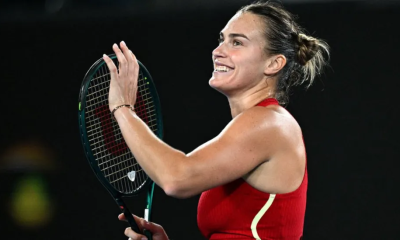
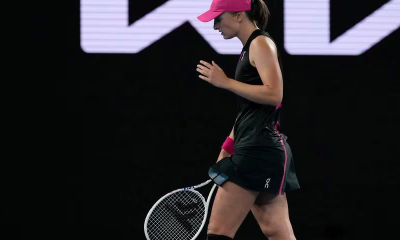
Aryna Sabalenka beats Coco Gauff and faces Zheng Qinwen

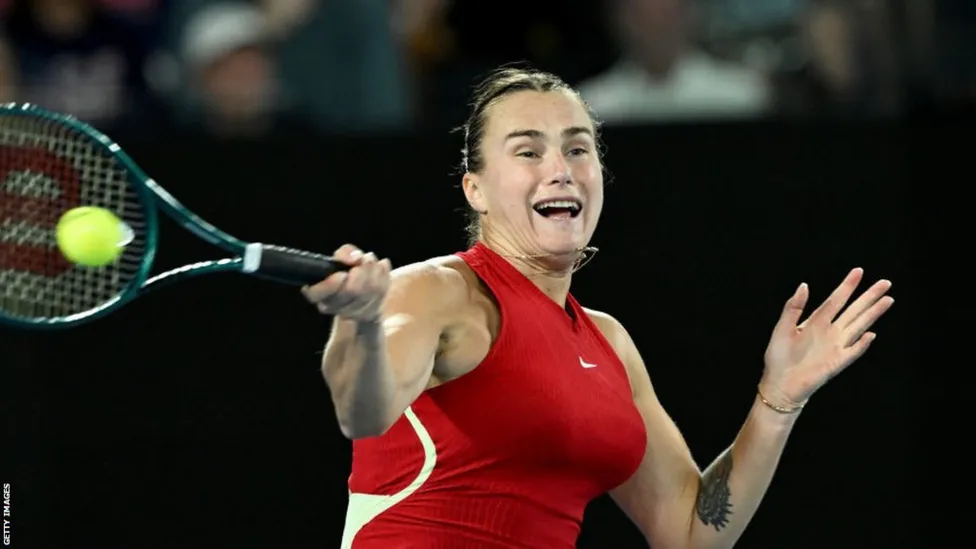
Aryna Sabalenka remains on track to defend her Australian Open crown after reaching the Melbourne final by avenging her loss to Coco Gauff in last year’s US Open showpiece.
Belarusian second seed Sabalenka won 7-6 (7-2) 6-4 against American fourth seed Gauff in a tense semi-final. Both were edgy in an error-strewn first set with six breaks before Sabalenka pounced decisively late in the second.
Sabalenka will face Chinese 12th seed Zheng Qinwen in Saturday’s final.
Zheng, 21, reached her first Grand Slam showpiece by ending Ukrainian qualifier Dayana Yastremska’s incredible run with a 6-4 6-4 win in Thursday’s second semi-final. Zheng is aiming to become the second Chinese woman to win the Australian Open singles title – on the 10th anniversary of Li Na’s famous victory. “It feels unbelievable,” Zheng said. “I’m super excited to have such a great performance and arrive in the final
Anticipation for the contest between Sabalenka and Gauff at the opening Grand Slam of the season was high.
Both players had been impressive as they worked their way through the draw, setting up a rematch of their thrilling US Open final which 19-year-old Gauff edged in September to claim her first major title. It took place under the roof on Rod Laver Arena – as did the second semi-final – because of persistent rain in Melbourne.
Sabalenka had been particularly dominant and, after showing resilience to recover from sticky spells against Gauff, still has not dropped a set over the past fortnight.
The 25-year-old Belarusian unleashed her explosive game on Gauff from the start, cracking 33 winners and attacking her opponent’s second serve in a high-octane demonstration of her power.
While Sabalenka’s style still often leads to errors, she seems more at ease at Melbourne Park this fortnight having the experience of lifting her first major title here.
Now, after keeping her composure to serve out victory, she is the first woman to reach back-to-back finals since Serena Williams in 2017.
“I think I was able to focus on myself and I was prepared for her moving really good and putting every ball back,” said Sabalenka, who has reached at least the semi-finals of the past six majors. “I had to be ready to make an extra shot and I was ready for tonight.”

Gauff fulfilled what had long seemed her destiny by winning in New York, when she fought back from a set down to beat Sabalenka. This time she was unable to repeat the feat as Sabalenka ended her unbeaten start to the 2024 season.
Gauff came to Melbourne on the back of winning a WTA title in Auckland and did not drop a set in her opening four matches.
But, after scraping past Ukraine’s Marta Kostyuk in what she called a “bad” quarter-final, she looked extremely nervy in the early stages of the semi-final. Gauff’s tension was illustrated by six double faults in the first set, although she also showed her ability to mentally reset as she twice recovered from being a break down.
After soaking up so much pressure, Gauff broke for 6-5 but blew the chance to serve out the set from 30-0 and was punished as Sabalenka dominated the tie-break. Gauff had to fight off more break points in the first and sixth games of the second set, with the pressure telling when loose errors from the baseline allowed Sabalenka to break for 5-4.
This time, Sabalenka did not allow the opportunity to slip from her grasp and earned the “revenge” she wanted to exact on Gauff for her Flushing Meadows defeat. “It was a tough match for me,” said Gauff, who looked close to tears while she left Rod Laver Arena. “Overall it was a positive tournament. I had chances in both sets, but she played better. I think it just came down to a couple of points and that’s tennis.”

Unlike Sabalenka and Gauff, neither Zheng nor Yastremska had ever played a Grand Slam semi-final match – and both were looking to emulate notable major triumphs of the recent past. Zheng – an aggressive baseliner with a hefty serve – was aiming to follow in the footsteps of Chinese trailblazer Li.
Yastremska, meanwhile, was the first qualifier to reach the last four of a major since Britain’s Emma Raducanu at the 2021 US Open.
It was Zheng who continued her journey to the delight of a vocal Chinese backing in a city where there is a large population with links to the Asian country.
After dropping her opening service game, Zheng instantly broke Yastremska and took the 23-year-old Ukrainian’s serve once more to seal the opener.
Yastremska, who said it was her “mission” to ensure people remember about her nation’s fight against Russia’s ongoing invasion, needed treatment for what appeared to be an abdominal injury.
But, as promised before the match, the world number 93 continued to show the same fight she had displayed to come through qualifying to make the last four.
Losing serve for 2-1, Yastremska stopped Zheng consolidating the break by taking her fourth break-point opportunity in the next game.
However, a double fault set the tone for a poor seventh game where Zheng pounced again and the Chinese player used her dominant serve to see out victory.
(BBC)









All eyes will be on two outstanding batsmen — Rehan Peiris and Reshon Soloman — when arch rivals Royal College Colombo and S. Thomas’ College Mount Lavinia clash in the historic Battle of the Blues which begins at the Sinhalese Sports Club Ground today.
Royal will be out all guns blazing in a determined bid to regain the shield they lost to their traditional rivals last year. The Reid Avenue boys enter the contest with confidence that their batting unit, led by skipper Rehan Peiris, can provide them with a strong foundation.
 Rehan was the standout performer for Royal in the previous encounter, scoring a memorable century to spearhead their batting effort. In that match Royal boldly declared in the second innings to set their opponents a realistic target, adding further excitement to the contest.
This season too Rehan has been in exceptional form, amassing more than 900 runs at an average close to 50 — one of the most impressive batting tallies in the ongoing school cricket season. He will receive solid support from Sri Lanka Under-19 captain Vimath Dinsara and the promising Ramiru Perera as Royal look to dominate with the bat.
Royal have also strengthened their bowling attack by recruiting spinner Himaru Deshan from Holy Cross College Kalutara, adding variety and depth to their bowling resources.
Meanwhile, the Thomians will largely depend on the batting prowess of Reshon Soloman. He made a strong impression in the last edition of the big match and carries even greater responsibility this year.

Reshon Soloman
Reshon has been among the most consistent performers this season, scoring close to 800 runs which include centuries against St. Anthony’s College Katugastota and Mahinda College Galle. Interestingly, not many speak about his earlier move from St. Peter’s College Colombo, but his performances have certainly made him one of the key players to watch in this encounter.
With two prolific run-scorers set to take centre stage, an absorbing contest is on the cards as Royal and S. Thomas’ renew one of Sri Lanka’s most celebrated school cricket rivalries.

There can be no auspicious moment to celebrate life, foster humanity and work towards peace or prosperity. Sadly, we live in times where the energies of violence unleashed have sent tremors of anxiety and foreboding to all corners of the world even as they maim, kill and destroy.
One can only hope that sanity will soon prevail and that there will be a cessation of hostilities before more innocent lives are lost. In moments such as this the world would do well to remember that the preservation of human life needs to be the foremost objective. Sri Lanka itself recently reminded the world of this simple but powerful truth when lives were saved during the incidents involving Iranian vessels off our shores. One hopes that the global community will learn from such acts of humanity and choose compassion over conflict.
Such against-the-grain acts are sadly little more than a drop in an enormous ocean of discontent. We applaud and then slip into despair. At such times, in particular, we take refuge in what might have been and indeed what has transpired — those happy carefree moments where the only weapons sanctioned was friendly if caustic banter between friendly rivals. That’s what the Royal-Thomian cricket encounter is all about.
Royal College, Colombo, and S. Thomas’ College, Mount Lavinia will do battle for three days, from the 12th to the 14th of March, for the 147th consecutive year. And every year something quite remarkable happens to thousands of otherwise sensible men. They begin discussing school cricket with the seriousness normally reserved for matters of state, diplomacy and occasionally national elections. This year’s encounter is extra special for the present and past students of S. Thomas’ College, that inimitable ‘School by the Sea,’ because it coincides with the institution’s 175th anniversary.
Royalists would be quick to raise objections, but it is abundantly clear to me that S. Thomas’ is the more distinguished and refined of the two schools. It is my conviction that many honest Royalists quietly accept this incontrovertible truth, although they may do so only after the second drink at the Royal Thomian!
A good example of the deep respect Royalists have for S. Thomas’ can be seen in our good friend Rajind Ranatunga, an Old Royalist, who wisely sent both his sons to Mount Lavinia. One of them went on to become Head Prefect of S. Thomas’, which is no small achievement for the Ranatunga family. It demonstrates, if nothing else, that Royalists recognise quality when they see it. Indeed, I have long harboured the suspicion that former president, Ranil Wickremesinghe, who now wears the colours of Royal College, blue and gold, quite proudly, would have preferred to attend S. Thomas’ if it were up to him. His parents decided otherwise and so he had to settle for a school whose main claim to glory was playing a cricket match against S. Thomas’!
But jokes aside, the Royal–Thomian is one of the greatest events in our social calendar. It is not merely a cricket match. It is a reunion, a carnival, a festival of friendship and nostalgia. A spectacle unmatched.
The camaraderie of the Royal–Thomian is something difficult to explain to outsiders. It is something that must be experienced. Over the years I have spoken about this match so often that several of my foreign friends have eventually decided they must come and see what this mysterious event is all about. Some have travelled all the way from overseas simply to witness the spectacle of thousands of otherwise respectable adults behaving like carefree, unruly and even crude schoolboys again. This year two close Malaysian friends will join me; I am sure they will return home slightly puzzled but thoroughly entertained.
For three days the match becomes a carnival. Families gather, friendships are renewed, stories are told for the hundredth time and still raise loud guffaws. Royalists and Thomians sit side by side, arguing passionately about cricket while secretly enjoying each other’s company.
For me personally, the Royal–Thomian also carries memories of dear friends who are no longer with us. I will once again miss my friends Johann Wijesinghe and Suresh Gunasekera who enjoyed the Royal–Thomian like few others could or have and with whom I attended the match many times. These are the friendships that make the Royal–Thomian special.
Some people enjoy the Royal–Thomian with extraordinary enthusiasm, particularly the third-generation Thomians who approach the match with the seriousness of military strategists and the enthusiasm of schoolboys who have just discovered freedom. But this year there is another reason for reflection. Yes, S. Thomas’ College celebrates its 175th year.
Now the Royal Thomian has all kinds of tents for spectators. There are the ‘boys’ tents’ for school boys. The ‘Mustangs’ is the oldest of the tents and is essentially for the older of the old boys. An exclusive club, one might say. At some point some younger and yet ‘old’ old boys formed the ‘Colts.’ Then came the Stallions. Now it’s full of horses: Thoroughbreds, Broncos, Warmbloods etc., and there’s even ‘The Stables!’ I am now a member of the Mustangs. When I joined my good friend Varuna Botejue told me, “Now this is your last tent: the next tent you can get membership for will be the Borella Kanatte Tent.’ That’s the biggest cemetery in Colombo! That’s the Royal-Thomian for you: we can even laugh at impending death! I found it absolutely amusing but it also gave me flashbacks about how much we used to enjoy the Royal Thomian from school days and how time has passed in a remarkable way. It refreshed my mind about how excited we were and how one of the finest friendships developed.
For those of us who were fortunate enough to attend the school by the sea, the lessons we learned there have remained with us throughout our lives. S. Thomas’ did not simply teach us mathematics, history or cricket. It taught us something far more important. It taught us friendship, loyalty and the courage to stand by what is right, even when doing so is not easy and even when it may be unpopular. Those lessons have helped many of us face some rather difficult moments in life.
Looking back now, the times we spent at Mount Lavinia were among the finest of our lives. Friendships birthed and nurtured in school have a special quality. School friends know you at your best and occasionally at your worst. They know your strengths, your weaknesses and most importantly your stories. Of course, life also brings other friendships, wonderful friendships formed later in life that become part of our journey. But school friendships have a foundation that is difficult to replicate elsewhere.
And that, perhaps, is what the Royal–Thomian ultimately celebrates. Not just cricket. Not just rivalry. But friendship. After 147 years, the Royal–Thomian remains one of the most remarkable traditions in Sri Lankan life; a celebration of youth, camaraderie and the enduring bond between Royalists and Thomians. In fact, in my experience, it’s only Royalists and Thomians who virtually beat each other up to settle bills. ‘Friendly rivalry’ just doesn’t do justice to the bonds between the schools and those who walk through the respective portals. Ours exude grandeur, theirs do not, but we don’t hold the fact against any Royalist.
And as for the result of the match this year, we Thomians remain cautiously optimistic. After all, we are a generous school. We occasionally allow Royal to win, simply to keep the rivalry interesting.
By Krishantha Prasad Cooray

CIC Holdings, Regnis Appliances, Hayleys Group and IFS R&D International win on Sunday
CIC Holdings, Regnis Appliances, Hayleys Group and IFS R&D International registered wins in the league stage games of the 15th Stafford Motors – MCA G division T20 cricket tournament played at Dharmapala College and De Mazenod College grounds last Sunday.
At Pannipitiya half tons by N Dhanushan [83] and Eranga Madushan [56] and three wicket hauls by R M Aravinda [3-27] and Asela Priyadarshana [3-41] helped CIC Holdings overcome AIA by 46 runs while an allround performance by Pasindu Adithya [64 not out and 3-19] helped the Hayleys Group ‘C’ team defeat Sysco Labs by 32 runs in the afternoon game at the same venue.
At Kandana, MAS Active Kreeda thumped Regnis Appliances by seven wickets in the morning to register their second win of the tournament while in a group D match played in the afternoon IFS R&D International overcame Singer Sri Lanka by 45 runs.
At Dharmapala College ground:
CIC Holdings won by 46 runs
CIC HOLDINGS 212/4 IN 20 OVERS[N Danushan 83, Eranga Madushan 56, Achala Jayalath 38; Avindu Fernando 1-41, Sasanka Kularathna 1-41]
AIA 168/8 IN 20 OVERS [ Sasanka Kularathna 38, Madhura de Silva 71, Nuwan de Silva 12, Malindu Kalishka 15, Sujith Siriwardena 14; Suranga Jayasuriya 2-24, R M Aravinda 3-27, Asela Priyadarshana 3-41]
Hayleys Group won by 32 runs
HAYLEYS GROUP ‘C’ 170/5 IN 20 OVERS [Mahela Senevirathna 21, Gihan Gunathilaka 10, Pasindu Adithya 64*, Dilan Suraweera 35, Mahesh Deepal 15; Chathura Henanayake 1-11, Dasith Samarasinghe 1-22, Bhagya Disanayake 1-30, Milroy Fernando 1-15]
SYSCO LABS 138/9 IN 20 OVERS [Bhagya Disanayake 28, Akash Harishanth 16, Lasan Rashmika 33, Sithira Abhayawardena 16, Isuru Mohottala 10; Yohan Jayaweera 1-30, Mahesh Deepal 1-22, Gihan Gunathilake 2-34, Pasindu Adithya 3-19]
At De Mazenod College grounds:
MAS Active Kreeda won by 7 wickets
REGNIS APPLIANCES 103/9 IN 20 OVERS [Nimesh Madushanka 17, Yasiru Sandaruwan 27, Tharanga Dammika 22; Pasindu Wijesinghe 1-08, Anju Amaradasa 1-24, Chamath Sumiththrarachchi 2-25, Kamesh Piratheepan 3-12]
MAS Active Kreeda 107/3 IN 13.1 OVERS [Adeesha Miyusara 14, Suventhiran Subikaran 20, Pasindu Wijesinghe 49*, Anju Amaradasa 12*; Tharanga Dammmika 2-18, Asela Sanjeewa 1-18]
IFS R&D International by 45 runs
IFS R&D INTERNATIONAL PVT LTD 173/9 IN 20 OVERS [Thilanka Wijerathna 34, Isuru Thilina 36, Kalana Harendra 31, Harsha Rupasinghe 11, Suresh Wickremesinghe 13 *; Roshan Derling 2-38, Mithun Jayawickrema 1-29, Ahamed Rifad 1-31, Sajith Sanjeewa 3-21]
SINGER SRI LANKA ‘B’ 128/8 IN 20 OVERS [Sheyal Imesh 15, Roshan Derling 20, Mithun Jayawickrema 35, Akila Samarakoon 12, Kushmika Raminda 20*, Prabath Kumara 11*; Heshana Weerasuriya 2-30, Thilanka Wijerathna 1-25, Suresh Wickremesinghe 2-21, Isuru Thilina 2-26, Heshan Sandaruwan 1-15]

Heat Index at ‘Caution level’ at some places in the Western, Sabaragamuwa, Southern and North-western provinces and in Monaragala and Mannar districts

Showers or thundershowers will occur at several places in the Western and Sabaragamuwa provinces and in Galle, Matara, Kandy and Nuwara-Eliya districts after 2.00 pm.

Power sector reforms jolted by 40% pay hike demand

UN scientific research ship here amidst ban on such vessels

Prez assures energy supplies for the time being

Historic address by BASL President at the Supreme Court of India

‘Dates have the highest sugar content to fight Coronavirus’

Sunday Island 27 December – Headlines

#SundayIsland 17th December – Headlines

Sunday Island – 28th March

Sunday Island Headlines – 21 March

Sunday Island – 21st February – Headlines
-

 News6 days ago
University of Wolverhampton confirms Ranil was officially invited
-

 News5 days ago
Peradeniya Uni issues alert over leopards in its premises
-

 News6 days ago
Female lawyer given 12 years RI for preparing forged deeds for Borella land
-

 News3 days ago
Repatriation of Iranian naval personnel Sri Lanka’s call: Washington
-
 News6 days ago
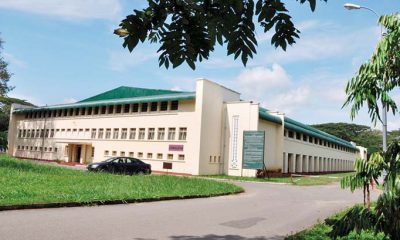
Library crisis hits Pera university
-

 News5 days ago
Wife raises alarm over Sallay’s detention under PTA
-

 News6 days ago
‘IRIS Dena was Indian Navy guest, hit without warning’, Iran warns US of bitter regret
-
 Latest News6 days ago
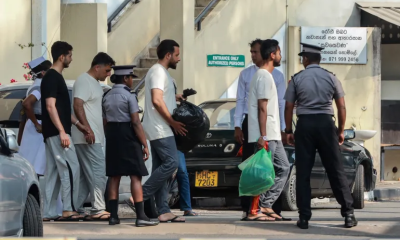
Sri Lanka evacuates crew of second Iranian vessel after US sunk IRIS Dena