
Business
An overview of new Securities and Exchange Commission Act


By Viraj Dayaratne PC
Chairman Securities and
Exchange Commission of Sri Lanka
Continued from yesterday
Prosecutorial Discretion of the Commission
Criminal proceedings
Consequent to the completion of investigations by the Commission, if the Commission is of the view that sufficient evidence exists to establish the commission of an offence under Part V, steps will be taken to institute criminal proceedings. Since criminal proceedings are to be instituted in the High Court and charges are filed in the form of an ‘indictment’ which can be presented only by the Attorney General as stated in the Code of Criminal Procedure Act (with the exception indicated in the Bribery Act), the Commission will refer the matter to the Attorney General for the filing of indictment and the prosecution will be conducted by the Attorney General. Even when charges were to be filed in the Magistrate’s Court in respect of all offences under the previous Act, the preparation of the charges and the conduct of the prosecution was by the Attorney General.
The offences other than what is contained in Part V are triable in the Magistrate’s Court.
Civil Proceedings
A new feature that has been introduced by the Act is the discretion conferred on the Commission to institute civil proceedings in the High Court exercising civil jurisdiction which is commonly referred to as the Commercial High Court in order to recover damages and to seek the imposition of a civil penalty. The Act has specifically conferred this jurisdiction on the Commercial High Court. Such proceedings can be instituted against a person who has committed a contravention under Part V. The decision of the Commission to institute such proceedings will depend on the ‘nature and manner of the contravention, the impact it has on the market and the extent of the loss caused to any investor’. The amount recoverable by the Commission will be three times the gross amount of the pecuniary gain made or loss avoided and the penalty the court can impose will not be less than ten million and not more than one hundred million rupees depending on the severity or gravity of the contravention. How damages so recovered will be distributed has also been stated.
The Commission has also been vested with the discretion to enter in to an agreement with any person with or without the admission of liability to pay an amount equivalent to three times the gross amount of the pecuniary gain made or loss avoided in respect of contraventions under Part V. Offences other than those enumerated under Part V can be compunded for a sum not exceeding one half of the maximum fine that can be imposed for such offence.
Administrative Sanctions
Another important feature that has been introduced is the ability of the Commission to impose ‘Administrative Sanctions’ on wrongdoers. Previously, the Commission was not expressly empowered to impose penalties or other administrative sanctions although all contraventions were considered as offences.
However, depending on ‘the nature and manner of the contravention, non compliance or breach and its impact’ this new provision leaves the Commission with the discretion (except in respect of offences under Part V) of imposing a variety of administrative sanctions such as a reprimand, penalty, restitution, imposing a moratorium on or prohibiting trading etc.
Steps to protect assets of investors and right to seek certain orders from court
Some of the other new features are the ability of the Commission to take certain steps to protect assets of investors, issue directives during the course of conducting investigations or inquiry known as ‘freezing orders’ (which are valid only for a period of seven days and thereafter to be confirmed by the Commercial High Court), power to apply to the Commercial High Court in situations of violations or imminent violations seeking certain orders such as a declaration that a securities transaction is void, directing a person to dispose of any securities etc.
Development of the Capital market
There are several provisions in the Act that will contribute towards the development of the market. The use of state of the art infrastructure such as the much needed Central Counterparty (CCP) has been recognized which will greatly minimize central counterparty risk and also enable the introduction of new products. The new law spells out the requisites for investing in derivatives (such as futures and options irrespective of the nature of the underlying asset), stock borrowing and lending, regulated short selling etc. This will enhance the liquidity levels in the market and take away the one sided potential that is presently available and help create a vibrant market. Long term investors will benefit from these opportunities.
The trading of unlisted securities is facilitated through a platform operated by a recognized market operator thus providing an additional trading platform. The ability for ‘market makers’ to operate as a market intermediary will ensure continued and efficient exchange of securities between buyers and sellers. This will provide depth to the market and also encourage the setting up of funds such as exchange traded funds.
Furthermore, the new law has redefined ‘securities’ to include an array of securities in keeping with new developments across the world. Similarly, there is also provision for ‘Collective Investment Schemes’ which go beyond Unit Trusts. As to what would come under this umbrella has been defined. These will provide new investment opportunities.
In line with expanding the product range that is currently available in the market, a category of persons have been recognized as ‘accredited investors’. Not only will this result in the protection of non-sophisticated investors, but will facilitate the issue of high risk instruments to the market which could be utilized by those who are in a position to take higher risks.
Provisions for the protection of whistleblowers have been included with the expectation that it will facilitate the curbing of market malpractices. Whilst it is important to ensure that this protection is not abused by making frivolous claims, the benefits such a system can bring forth should not be discounted.
Checks and Balances on powers and discretion of the Commission
The Commission has been vested with wider powers and discretion under the Act in order to ensure that it can perform its functions as a regulator in a more meaningful and effective manner. However it must be borne in mind that the Commission does not enjoy immunity and like any other public authority that has been vested with power and discretion, has to exercise such power and discretion according to law and will have to in all instances follow the rules of natural justice. It is relevant to note that the power and discretion vested in the Commission is circumscribed by several checks and balances that will ensure that the Commission will be held accountable and will not under any circumstance exceed its authority.
They take the form of provisions which mandates the commission to hear a party before it takes a decision against such party, affords a party a right of appeal, requires the Commission to give reasons for certain decisions as well as those that require the Commission to obtain orders from court and where the court is expected to afford a hearing to the affected party before making an order.
Further, the common law remedy of being able to challenge a decision of the Commission by way of a writ application in the Court of Appeal has been re-iterated in the Act thus statutorily fortifying the rights of an aggrieved party.
Conclusion
It is expected that the progressive provisions of the Act will make sure that all market participants have the confidence and the necessary environment to engage in their activities which is the ultimate goal of a capital market. The Commission as the regulator of the market at all times will be aware of the perils of over regulation and therefore be committed to striking the right balance. At the same time it must be emphasized that if all market participants practice self-regulation and act within the confines of the law, there will be no necessity for most of the provisions contained in the law to be made use of.
Concluded


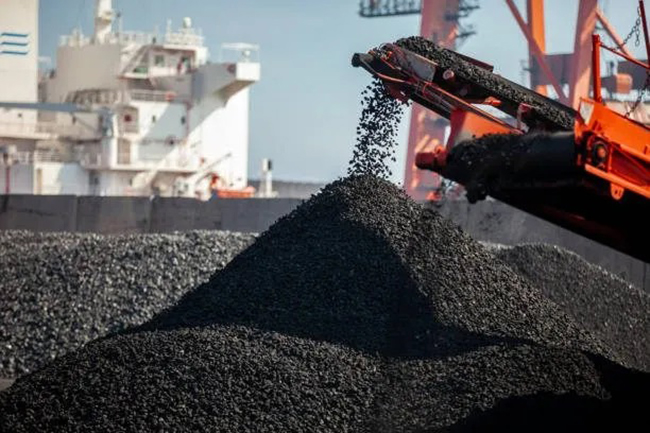
Operations at Sri Lanka’s main coal-fired power facility, the Lakvijaya coal power plant, suffered a significant disruption soon after a new shipment of coal was introduced, raising concerns over generation stability and environmental emissions.
Energy analyst Dr. Vidura Ralapanawa said in a social media post that the plant began using coal from “Ship 11” on Wednesday, following confirmation from officials of the Ceylon Electricity Board (CEB).
However, almost immediately after the new batch of coal was fed into the system, the plant’s generation capacity began to decline due to the poor quality of the fuel.
According to Dr. Ralapanawa, the plant’s output dropped by about 82 megawatts overall. Unit 1 recorded a drop of 45 MW, Unit 2 fell by 15 MW, and Unit 3 declined by 22 MW shortly after the coal was introduced.
The situation worsened later in the night when two coal mills in Unit 3 reportedly became clogged around 11 p.m., causing a rapid fall in generation capacity. Unit 3, which normally operates at a higher output level, was said to be running at around 170 MW following the malfunction.
Coal mills are a crucial component in coal-fired power generation. They grind raw coal into a fine powder before it is fed into the boiler for combustion. Each generating unit at the Norochcholai facility is equipped with five coal mills, and any obstruction in these systems can severely affect plant operations.
When mills become clogged, plant operators often have to rely on diesel-fired burner guns to stabilise the flame inside the boiler. While this helps maintain combustion, it significantly increases operating costs because of the high price of diesel.
The heavy use of diesel has another consequence. According to Dr. Ralapanawa’s post, when diesel firing increases, the plant’s Electro-Static Precipitators (ESPs) must be shut down. ESPs are designed to capture and remove particulate matter such as fly ash before emissions are released through the chimney.
With the ESPs switched off, large amounts of fly ash may be released into the atmosphere, potentially affecting surrounding communities.
Dr. Ralapanawa further noted that the coal shipment appears to have low calorific value, low volatile matter, and high ash content, all of which reduce combustion efficiency. In addition, the coal reportedly has a low grindability index, making it harder to pulverise and increasing the likelihood of mill blockages.
He added that while the immediate clogging of the mills may be cleared within a day, the underlying quality issues with the coal could make the problem persistent.
The development comes amid earlier assurances from officials of the Ceylon Electricity Board that the Norochcholai plant could be operated effectively even with lower-quality coal supplies.
The Norochcholai facility, with an installed capacity of 900 MW, is the largest power station in Sri Lanka and a critical component of the national grid. Any disruption to its operations can have wider implications for the country’s electricity supply, potentially forcing the system to rely on more expensive oil-based power generation.
Engineers are currently working to address the clogged mills and stabilise generation, but energy analysts warn that unless the fuel quality improves, similar operational issues could recur.
By Ifham Nizam

CSE trading yesterday was positive overall on account of local economic growth prospects but concerns deriving from West Asian tensions lingered.
The market is still recovering from previous days’ uncertainties, market analysts said.
The All Share Price Index went up by 256 points, while the S and P SL20 rose by 63.8 points. Turnover stood at Rs 5.68 billion with nine crossings.
Seven crossings were reported in HNB Finance where 130 million shares crossed to the tune of Rs 1.1 billion; its shares traded at Rs 8.50, LMF four million shares crossed for Rs 348 million; its shares traded at Rs 87, Commercial Bank 661,000 shares crossed for Rs 142 million; its shares traded at Rs 215, Seylan Bank (Non-Voting) 750,000 shares crossed for Rs 49 million; its shares sold at Rs 75.50, ACL Cables 500,000 shares crossed for Rs 49 million; its shares traded at Rs 98, HNB 100,000 shares crossed for Rs 43.2 million; its shares sold at Rs 432 and Access Engineering 500,000 shares crossed for Rs 38.5 million and its shares fetched at Rs 77.
In the retail market companies that mainly contributed to the turnover were; HNB Finance Rs 331 million (34.8 million shares traded), Lanka Credit and Business Finance Rs 184 million (21.6 million shares traded), LOLC Holdings Rs 180 million (320,000 shares traded), Commercial Bank Rs 167 million (774,000 shares traded), Softlogic Capital Rs 138 million (twelve million shares traded), Sampath Bank Rs 124 million (789,000 shares traded) and ACL Cables Rs 123 million (1.26 million shares traded). During the day 330 million share volumes changed hands in 36639 transactions.
It is said that the banking and financial sectors performed well. HNB Finance was active in the financial sector, while Commercial Bank and HNB were active in the banking counters.
Further, National Development Bank has received Colombo Stock Exchange approval in principle to list Rs 16 billion of 11.50, 11.04 and 11.85 percent debentures, it said in a CSE filing.
NDB will issue 120 million Tier 2, listed, rated, unsecured, subordinated, redeemable Basel III compliant GSS+ bonds with a non-viability conversion, at Rs 100 each.
Yesterday the rupee was quoted at Rs 310.70/85 to the US dollar in the spot market, weaker from Rs 310.30/60 the previous day, dealers said, while bond yields were broadly steady.
By Hiran H Senewiratne

A new crisis looms with a second Iranian vessel at the doorstep
Sri Lanka’s parliament became a secondary battleground yesterday as the sinking of the Iranian frigate IRIS Dena ignited a fierce debate over national sovereignty, regional maritime priciples, and the government’s perceived ‘strategic paralysis.’
While the Navy’s rescue of 32 sailors was initially painted in shades of heroism, Opposition MPs have now unfurled a narrative of missed warnings and geopolitical betrayal.
In a scathing address, Opposition firebrand Chamara Sampath Dissanayake challenged the circumstances of the vessel’s arrival in Sri Lankan waters. The IRIS Dena had been a guest of the Indian Navy during the MILAN-2026 exercises just days prior. Dissanayake alleged that at the conclusion of the fleet review, the vessel was effectively ‘put out’ of India, leaving the crew with no choice but to steer toward Sri Lanka.
“This was a deliberate attempt by the host to put a guest in harm’s way,” Dissanayake charged, stopping just short of naming India directly while making the implication undeniable. He argued that Sri Lanka had been ‘set up’ to deal with the fallout of a targeted strike that occurred only 11 nautical miles from Galle.
The debate took a darker turn when SJB MP Mujibur Rahman dropped a bombshell regarding the timing of the attack. Rahman alleged that the IRIS Dena had signalled for permission to enter Sri Lankan waters 11 hours before it was struck by U.S. torpedoes.
“Why did the authorities keep silent?” Rahman demanded. He blasted the government for failing to act on humanitarian grounds, suggesting that Colombo’s hesitation provided the necessary window for what U.S. Defense Secretary Pete Hegseth termed a ‘Quiet Death.’ Rahman’s critique painted a picture of a government ensnared in superpower machinations, unable to uphold the principles of the Indian Ocean as a ‘Zone of Peace.’
Responding to the barrage of questions, Cabinet Spokesman Dr. Nalinda Jayatissa confirmed a chilling new development: a second Iranian vessel is currently positioned in the Exclusive Economic Zone (EEZ) off Colombo.
While Jayatissa assured the House that the President and the Security Council are ‘fully aware’ and making ‘necessary interventions’ to protect those on board, the lack of specific details fueled further anxiety. Political analysts suggest that the government’s failure to announce a clear, proactive neutral policy has left it in a state of ‘vacillation,’ unable to decide whether to grant refuge to the second ship or risk another tragedy on its doorstep.
The parliamentary clash was punctuated by the visit of former president Ranil Wickremesinghe to the Iranian Embassy yesterday to offer condolences for the passing of Supreme Leader Ayatollah Ali Khamenei. Wickremesinghe had warned on March 2 – just 48 hours before the sinking – that the current ‘leadership eviction’ methodology in the Middle East could destabilise the Indian Ocean.
As the death toll from the IRIS Dena stands at 87 with 60 still missing, the ‘can of worms’ opened in parliament reveals a nation at a crossroads. The government’s silence during the Dena’s final hours and its current ‘intervention’ with the second vessel will likely define Sri Lanka’s standing in a rapidly fragmenting global order.
As the House adjourned, one question remained hanging in the air: In the face of a superpower conflict, does Sri Lanka have the ‘backbone’ to be truly neutral, or is it merely a spectator to its own maritime destiny?
by Sanath Nanayakkare

Tiny possum and glider thought extinct for 6,000 years found in remote West Papua

Maldives Coast Guard Ship Huravee departs island

Cost to US for war on Iran is $3.7bn in first 100 hours, says think tank

More than 120 killed in Israel’s Lebanon attacks as Beirut, south, east hit

Hungary confirms it is holding seven Ukrainian bank workers and $80m

US and Venezuela agree to resume diplomatic ties after Maduro capture

‘Dates have the highest sugar content to fight Coronavirus’

Sunday Island 27 December – Headlines

#SundayIsland 17th December – Headlines

Sunday Island – 28th March

Sunday Island Headlines – 21 March

Sunday Island – 21st February – Headlines
-
 Features5 days ago
Brilliant Navy officer no more
-

 Opinion5 days ago
Sri Lanka – world’s worst facilities for cricket fans
-

 Features5 days ago
A life in colour and song: Rajika Gamage’s new bird guide captures Sri Lanka’s avian soul
-

 Business2 days ago
Cabinet nod for the removal of Cess tax imposed on imported good
-

 Features6 days ago
Overseas visits to drum up foreign assistance for Sri Lanka
-

 Features6 days ago
Sri Lanka to Host First-Ever World Congress on Snakes in Landmark Scientific Milestone
-

 News2 days ago
Legal experts decry move to demolish STC dining hall
-
 Latest News2 days ago
Around 140 people missing after Iranian navy ship sinks off coast of Sri Lanka