
Editorial
Ailing democracy, Yunus and Yapa


Tuesday 27th May, 2025
A functional democracy is a fragile ecosystem with a delicate balance, which is best left undisturbed. History is replete with instances where disruptions to democratic systems yielded disastrous consequences and plunged some countries into crises of unimaginable magnitude.
The interim head of Bangladesh, Muhammad Yunus, is reported to have threatened to quit, claiming that he cannot function properly in view of the ongoing political stalemate and pressure from various factions. He is reportedly under pressure to announce a timeline for elections. The Bangladesh military is also pushing for elections, according to reports.
Yunus was appointed the interim leader after Prime Minister Sheikh Hasina’s ouster in August 2024 to bring order out of chaos and engineer a reset of democracy. But the interim administration is in an imbroglio, with no signs of an early resolution of the political deadlock. It is also facing criticism, both locally and internationally, for suppressing democratic dissent. The controversial ban on the former ruling party, Awami League, will make it even more difficult to achieve reconciliation and adopt a consensual approach to steering the trouble-torn nation out of the present political mire.
While Bangladesh is struggling to come out of a deepening crisis, which shows no signs of going away any time soon, it has been reported that more than 3,000 persons are facing the prospect of prosecution in connection with alleged transgressions during the 2022 Aragalaya in Sri Lanka. This was revealed when a group of lawyers representing those named as suspects, and some social activists met Deputy Minister of Public Security and Parliamentary Affairs Sunil Watagala the other day, according to media reports.
Sri Lanka would have faced the same fate as Bangladesh and languished in a protracted crisis if the military had not foiled an attempt by a mob to march on Parliament in July 2022. A wall of khaki-clad men formed an impregnable bulwark, shielding the parliamentary complex and stemming a tidal wave of anarchy. Minister K. D. Lal Kantha has said the JVP sought to lead protesters to Parliament at the height of Aragalaya, but in vain.
All breaches of the law during the Aragalaya, or any other protest campaign, must be probed and the culprits brought to justice. The perpetrators of arson attacks during that period must not be allowed to get scot-free. Equally, legal action is called for against the then ruling party politicians who inflated the estimates of damages to their properties and secured disproportionate compensation. More importantly, a high-level probe must be launched into a very serious allegation the then Speaker Mahinda Yapa Abeywardena made in Parliament.
On 21 March 2024, Speaker Abeywardena told Parliament that he had been pressured by some foreign powers to take over the executive presidency in violation of the Constitution, following President Gotabaya Rajapaksa’s resignation in 2022. Their intention had been to create, in this country, a situation similar to that in Libya or Afghanistan, Abeywardena said, claiming that they had even intimidated him when he refused to do their bidding. Some religious leaders were also among those who had exerted pressure on him to violate the Constitution, he said. That damning revelation should have prompted the SLPP government to order a thorough investigation.
Interestingly, Hasina has also alleged that there was a foreign hand in organising the protests that led to her ouster. If Yapa had given in to foreign pressure and grabbed the presidency in violation of the Constitution, he would have been in a far worse predicament than Yunus.
The JVP-led NPP government has chosen to ignore Abeywardena’s aforesaid statement in Parliament. The Opposition, which protests against even trivial matters, has also remained silent on this serious issue, as we have pointed out in a previous comment. Will it move a resolution in Parliament, calling for a probe into Abeywardena’s revelation? That is the least the self-proclaimed patriots in the Opposition could do to deter the unnamed foreign powers from meddling with Sri Lanka’s internal affairs again to the extent of undermining its Constitution.



Friday 30th January, 2026
Time was when governments inveighed against the JVP for instigating strikes in vital sectors to further its political interests. Today, a JVP-led government is accusing its political rivals of manipulating trade unions to advance their political agendas on the pretext of championing workers’ rights. Following the 2024 regime change, it was widely thought that the country would at last be free from strikes as the JVP, the main instigator of strikes, had gained state power. During the initial phase of the JVP-NPP rule, all was quiet on the trade union front, but labour disputes began to manifest themselves thereafter.
Development Officers (DOs), attached to the state-run schools, have been protesting near the Presidential Secretariat, Colombo, for four days, demanding that they be absorbed into the teacher service without being made to sit a competitive examination. Some of them were on a hunger strike at the time of writing, claiming that the government had denied them an opportunity to be heard.
The NPP administration is thought to be in a straitjacket where state sector recruitment is concerned. It has to curtail government expenditure in keeping with the IMF bailout conditions. But pressure is mounting on it to fulfil its pledges to the unemployed graduates and the DOs, who campaigned hard for the JVP/NPP in the 2024 presidential and parliamentary elections. In 2024, a few weeks after forming a government, the NPP had a DOs’ protest near the Education Ministry in Battaramulla dispersed by the police!
The state service, bursting at the seams, has become a main source of employment for ruling party supporters over the past several decades. Sri Lanka currently has about 1.5 million public sector employees, with the workforce having doubled over the past one and a half decades. Although there is one public official for every 14 citizens, the efficiency of the state service remains extremely low. Only the UNP-led UNF government (2001-2004) sought to address this issue and curtailed state sector recruitments. But the then President Chandrika Bandaranaike Kumaratunga sacked that government, and the SLFP-led UPFA, which came to power by winning the 2004 general election, upended the UNF’s recruitment policy and resumed making political appointments in the state sector.
By some quirk of fate, the JVP, which pressured all previous governments to employ graduates in the state sector, is now under fire for not recruiting some graduates as teachers.
Opinion may be divided on the protesting DOs’ demand at issue. But it defies comprehension why the government wants them to sit a competitive examination, for they have worked as teachers for years. They have had hands-on experience in schools, and the question is why they are not appointed as teachers straightaway.
The government, which claims to espouse Marxism, ought to talk to protesters and strikers instead of trying to intimidate them into submission. Let it be repeated that in the past, the JVP was behind almost all strikes, demanding solutions to workers’ problems. Unfortunately, it is now riding roughshod over trade unions and workers. It is playing a game of chicken with the Government Medical Officers’ Association (GMOA), and the protesting doctors have given Minister of Health Dr. Nalinda Jayatissa 48 hours to address their problems or face the consequences. It is hoped that he will invite the doctors on the warpath to the negotiating table and try to avert a health sector strike.
There is no way hospitals can function during a doctors’ strike, and it will be a mistake for the government to wait, expecting the GMOA to blink first. It must get protesters, including doctors and the DOs around the table, and have a serious discussion on the unresolved issues that have driven them to resort to trade union action.
Thursday 29th January, 2026
Four Mahanayake Theras have made an intervention, albeit with delay, to reorient government policy towards commonsense and good governance. They have raised concerns about the prolonged delay in appointing the Auditor General. In a letter to President Anura Kumara Dissanayake, they have warned that the continued absence of an Auditor General has created space for various groups to question the state’s financial oversight and fuel debate over public financial management.
Noting that selecting an external officer for a post so central to public audit and oversight could detract from the integrity of the office, the Prelates have voiced support for Dharmapala Gammanpila, a senior official with extensive experience in the National Audit Office, as the most suitable candidate for the post of Auditor General.
The post of Auditor General has remained vacant since the retirement of the former incumbent in April 2025, and three nominations submitted by the President were rejected by the Constitutional Council (CC)––and rightly so. The government is trying to parachute an outsider into the Auditor General’s post to safeguard its interests.
Supermajorities make governments impervious to reason and blind them to reality. Feeding politicians’ autocratic tendencies that are a threat to democracy, steamroller majorities drive governments to embark on risky missions and launch mega projects to boost their leaders’ egos. An SLFP-led government weakened the economy with a disastrous experiment with autarky in the 1970s. A UNP government, elected in 1977, went to the other extreme, ruining profitable state enterprises and institutionalising election malpractices, political violence and corruption. Another SLFP-led government launched a grandiose infrastructure development drive and spent borrowed money on some Ozymandian projects, which have become white elephants. An SLPP administration introduced an ill-planned organic farming drive. The incumbent government has undertaken to reform the education system hastily.
The Dissanayake government is bent on reducing every vital state institution to a mere appendage of the JVP in a bid to perpetuate its hold on power. The Police Department has already become a pliable tool of the JVP. The CID is now a part of the JVP in all but name; it is doing political work for the government. It arrests, harasses and casts aspersions on the political rivals of the government in the name of investigations. Whenever the government paints itself into a corner, the CID makes some high-profile arrests to divert attention. The ruling party propagandists have launched a vilification campaign against the Attorney General, with the JVP/NPP supporters holding protests and calling for his ouster, as part of a government strategy to render the state prosecutor malleable so that the JVP/NPP can have its rivals arrested and prosecuted according to its whims and fancies.
The powerful message in the Mahanayake Theras’ letter to President Dissanayake has resonated with the public, who cherish democracy and good governance. It is being argued in some quarters that going by what Cabinet Spokesman and Minister Dr. Nalinda Jayatissa said about the prelates’ letter, at this week’s post-Cabinet media briefing, the government is likely to go ahead with its plan to appoint an outsider as Auditor General, paying no heed to the Mahanayake Theras’ concerns.
The JVP/NPP is not alone in ignoring the Mahanayake Theras’ concerns and advice. In December 2011, the Mahanayake Theras of the Asgiriya and Malwatte Chapters of Siam Nikaya, the Ramanna Nikaya and the Amarapura Nikaya, intervened to resolve a dispute in the UNP. They wrote to UNP leader Ranil Wickremesinghe, urging him to appoint Karu Jayasuriya as UNP leader, and thereby help strengthen the Opposition. Their letter went unheeded. One of the allegations the JVP and other Opposition parties levelled against President Mahinda Rajapaksa in 2014 was that his sons had held a car race in Kandy, ignoring the Mahanayake Thera’s concerns and protests.
It will be interesting to see whether President Dissanayake considers the prelates’ wise counsel seriously and abandons his efforts to politicise the National Audit Office.
Wednesday 28th Junuary, 2026
The SJB-led Opposition made a public display of collecting signatures for a no-confidence motion (NCM) against Prime Minister and Education Minister Dr. Harini Amarasuriya over the government’s flawed educational reforms, but it has since got cold feet. Not all Opposition parties have endorsed the NCM in question. Some bigwigs of the JVP/NPP government with a two-thirds majority are now daring the Opposition to go ahead with the NCM. Dr. Amarasuriya herself has taunted the Opposition, in Parliament, asking why it has baulked at moving the NCM against her.
The government is humiliating trade unions as well. Deputy Health Minister Dr. Hansaka Wijemuni has scoffed at the strength of the Government Medical Officers Association, which is currently on the warpath. He has claimed that the doctors did their utmost to win their demands by holding patients to ransom, but in vain, and warned that the government will not hesitate to take stern action to keep the state-run hospitals free from disruptions. This warning smacks of a veiled threat.
The JVP/NPP high-ups are sounding just like their predecessors, especially the members of the UNP regime led by President J. R. Jayewardene. The incumbent government’s dire warning to the protesting doctors reminds us of how the JRJ government suppressed trade union struggles in the 1980s. Having crushed the July 1980 general strike by terminating tens of thousands of workers who took part in it, the Jayewardene government bragged that ‘the elephant’ (meaning the UNP) had only shaken its trunk.
As for the Opposition’s NCM on hold, it is hoped that the JVP/NPP government will not follow a very bad precedent set by the Jayewardene regime. In 1980, the Opposition sought to postpone the debate on an NCM it moved against the then Speaker Bakeer Markar for backing President Jayewardene’s efforts to retain Abeyratne Pilapitiya as a UNP MP by nominating him to the Kalawana electorate despite a Supreme Court ruling that his election was void. Speaker Markar echoed President Jayewardene’s assertion that the Kalawana seat had not fallen vacant, and therefore a by-election was not warranted. The NCM against the Speaker was scheduled to be debated on 23 December, 1980, but the Opposition wanted it postponed in view of possible legal implications of the by-election the UNP was trying to avoid. But claiming that the NCM, moved by the Opposition, was of utmost national importance and therefore had to be debated urgently, the UNP government took it up, put it to the vote and defeated it! All UNP MPs, including the proposer and the seconder, voted against the NCM! The Opposition boycotted the NCM debate.
When the JVP-NPP government dares the Opposition to move the NCM against Prime Minister Amarasuriya, it sounds like its immediate predecessor, the SLPP-UNP administration, which was led by Jayewardene’s nephew, President Ranil Wickremesinghe. One may recall that when the Opposition, including the JVP, demanded action against the then Health Minister Keheliya Rambukwella over a racket involving the procurement of a fake cancer drug, President Wickremesinghe audaciously challenged it to move an NCM against Rambukwella. The Opposition did so, but the SLPP and the UNP defeated the NCM comfortably. Wickremesinghe apparently thought the matter would end there, but he was mistaken.
A government may defeat an NCM and boast of victory, but allegations against its members do not go away. The SLPP-UNP government could not go on defending Rambukwella, who was eventually thrown to the wolves. A parliamentary majority does not necessarily translate into a government’s ability to win elections. The crumbling SLPP-UNP regime, which defeated the NCM against Rambukwella, faced ignominious defeats in the presidential and parliamentary elections in 2024. The Yahapalana government (2015-2019) also had a parliamentary majority despite the UPFA’s pull-out from it in October 2018; the then Prime Minister Ranil Wickremesinghe retained his hold on power with the help of the JVP, the TNA, etc., but his party, the UNP, was reduced to a single National List seat in the 2020 general election. The JVP, which threw its weight behind Wickremesinghe, could secure only three seats.
Governments with supermajorities, too, have suffered crushing electoral defeats in Sri Lanka. The SLFP-led United Front government, which had a two-thirds majority, suffered a Humpty Dumpty-like fall in 1977. President Mahinda Rajapaksa’s government secured a two-thirds majority but collapsed like a house of cards in 2015. So did the Gotabaya Rajapaksa administration, which also had a two-thirds majority. The JVP-NPP government is ruining things for itself so much so that it is wary of holding the Provincial Council elections. Powerful governments in this country apparently tend to dig their own political graves.

Jofra Archer back as England and Sri Lanka begin World Cup countdown

Showers will occur at times in the Eastern, Northern, North-Central and Uva provinces and in Matale and Nuwara-Eliya districts

DevPro and WCIC come together to accelerate women’s economic empowerment in Sri Lanka

Tobacco and alcohol claim 22,000 lives annually

Development Officers hunger strike drags on for fourth day

IMF urges Lanka to diversify trade amidst global tariff risks

‘Dates have the highest sugar content to fight Coronavirus’

Sunday Island 27 December – Headlines

#SundayIsland 17th December – Headlines

Sunday Island – 28th March

Sunday Island Headlines – 21 March

Sunday Island – 21st February – Headlines
-
 Business5 days ago
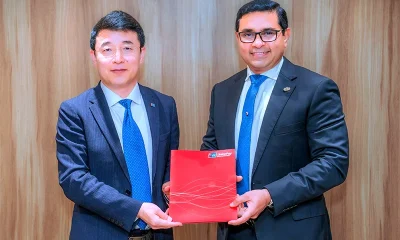
ComBank, UnionPay launch SplendorPlus Card for travelers to China
-
 Business6 days ago
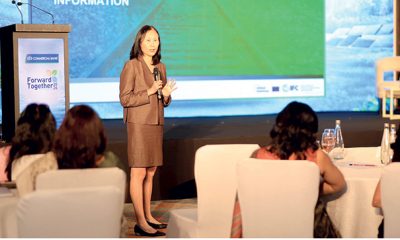
ComBank advances ForwardTogether agenda with event on sustainable business transformation
-
 Opinion6 days ago
Conference “Microfinance and Credit Regulatory Authority Bill: Neither Here, Nor There”
-
 Business2 days ago
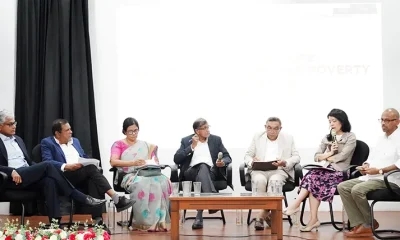
Climate risks, poverty, and recovery financing in focus at CEPA policy panel
-
 Opinion5 days ago
Luck knocks at your door every day
-

 Business7 days ago
Dialog Brings the ICC Men’s T20 Cricket World Cup 2026 Closer to Sri Lankans
-
 News6 days ago
Rising climate risks and poverty in focus at CEPA policy panel tomorrow at Open University
-

 Business2 days ago
Bourse positively impacted by CBSL policy rate stance