
News
AI asks SL to rescind emergency, shooting orders immediately


Sri Lankan authorities must immediately rescind the emergency regulations and shooting orders that provide excessive powers to the police and military, and take immediate steps to respect, protect and fulfil the human rights of peaceful protestors, Amnesty International said yesterday.
Amnesty said that the authorities must also refrain from using the state of emergency as a pretext to curb the rights to peaceful assembly and freedom of expression, including at the protest sites such as “Gotagogama” in the country.
Following the President’s proclamation of a State of Emergency on 6 May along with a country-wide curfew from 9-12 May, backdated emergency regulations were published overnight on 9 May, the organization said.
The regulations give sweeping powers to the police and the armed forces to search and make arrests of “suspects” without due process safeguards, Amnesty said.
On 9 May, protesters peacefully demonstrating in front of the Presidential Secretariat for over a month were violently attacked by pro-government supporters after being allegedly incited to violence by top party leaders at Temple Trees, the Prime Minister’s official residence in Colombo.
The Human Rights organization said that the police stood largely as bystanders to the violence, doing little to effectively protect the peaceful protesters and their protest site, despite having used tear gas and water cannon to disperse the protestors just days before on 6 May,”
“Authorities in Sri Lanka should carry out a prompt, thorough, impartial, independent, effective and transparent investigation into the reports of violent attacks on peaceful protesters. Authorities should bring to justice those suspected to be responsible and ensure access to justice and effective remedies for victims,” said Yamini Mishra, South Asia Regional Director at Amnesty International.
Given below are excerpts of the AI statement: “The attacks look like a deliberate decision by the Police to allow pro-government groups to physically assault peaceful protesters, destroy structures and wreak havoc at the ‘Gotagogama’ protest site. The authorities have an obligation to provide an enabling environment for the protesters to peacefully exercise their human rights, and to end the violent attacks on protesters,” added Yamini Mishra.
“Elements of anti-government groups retaliated to the attack on 9 May by beating up pro-government supporters and destroying buses believed to have transported them. This escalated into targeting of parliamentarians with damage to their vehicles and arson against their homes, businesses, and party offices. According to authorities, nine people have died and over 220 people have been injured in the violence that erupted. Additionally, 41 vehicles had been set on fire, 61 vehicles were damaged, and 136 incidents of property damage were recorded.
“Justice and accountability from the Sri Lankan authorities is the need of the hour. An effective and transparent inquiry is necessary to bring those responsible for the violence to justice. The country is headed towards a deepening crisis while accountability and solutions for the economic crisis – key calls by the protesters – go completely unaddressed. Right now, Sri Lanka is a tinderbox, and any move to impermissibly restrict human rights through sweeping emergency powers granted to law enforcement agencies, including the armed forces, – will lead to further repression,” said Yamini Mishra.
“The Emergency Regulations lack due process safeguards, such as the right to be informed of the reason for arrest, and the issuance of an arrest receipt at the time of arrest informing family where they would be detained. Access to legal counsel is subject to conditions. The offences are broad and can be used to bar trade union strike actions, give powers to the President to shut down public processions, restrict access to public spaces, restrict the right to freedom of expression including the right to information, freedom of movement and peaceful assembly.
“Further, the Regulations provide powers to use armed force against anyone who does not comply with orders. The Regulations come with hefty penalties including life imprisonment for ordinary penal offences. There is also no access to bail for offences under the Regulations, except under “exceptional circumstances.” Persons authorised by the commanders of the armed forces are empowered by the Regulations to remove suspects from detention for a period of seven days at a time. Sri Lankan authorities are accused of multiple instances of custodial torture in the past, making these provisions dangerous and raising the possibility of misuse of these powers.
“On 10 May, the Defence Ministry issued a notice saying the Armed forces have been ordered to open fire at anyone looting public property or causing harm to others- a move that has been called “illegal” by some parliamentarians. The cabinet remains dissolved following the PM’s resignation on 9 May.
“The shooting orders provide a license to kill. Violent mobs should be contained, however lethal force must not be the first resort. Any restrictions on human rights during times of emergency must be necessary and proportionate to the exigencies of the situation and must not be used as a tool against freedom of expression, peaceful assembly, right to personal security, liberty and freedom from arbitrary detention. Further, any derogations from human rights guarantees under the International Covenant on Civil and Political Rights, to which Sri Lanka is a state party, should be formally communicated with a clear explanation of the reasons for them to other State parties,” said Yamini Mishra.
Sri Lanka has a history of human rights violations implicating the Military, including custodial torture under consecutive emergency situations in the past. This pattern of violations of human rights must end.”


The Ceylon Electricity Board Engineers’ Union (CEBEU) yesterday warned that uncertainty surrounding the ongoing restructuring of the Ceylon Electricity Board (CEB) had forced many employees to refrain from performing their regular duties, raising concerns about potential disruptions to electricity sector operations.
The engineers’ union said the current situation had arisen due to what it described as either deliberate actions or extreme negligence in implementing the restructuring process, which has created significant confusion among staff who previously served under the CEB.
According to the union, although the state power utility has been formally restructured and new companies established, a large majority of former CEB employees have yet to receive official appointment letters, confirming their positions in the newly formed entities.
“The reality is that the institution, previously known as the Ceylon Electricity Board, no longer exists in its earlier form, yet most employees, who served under it, have not been issued proper appointment letters, or related documentation, assigning them to the newly established companies,” the CEBEU said.
The union said that while some workers had been issued “assignation letters”, those documents merely indicate the institution to which an employee has been attached and do not clearly define employment conditions, responsibilities, authority, or reporting structures.
“As a result, employees currently lack the necessary legal framework confirming their employment status, their duties, the authority under which they operate, and who they are accountable to within the new institutions,” the CEBEU said.
The engineers’ union emphasised that the current crisis was not created by employees but was the direct result of, what it called, shortsighted and questionable actions taken by those responsible for implementing the reforms.
It also expressed concern that the relevant Minister, appointed through the National List, had failed to hold meaningful discussions with employees, despite having previously advocated strongly for workers’ rights.
The union said trade union action had been launched only after months of unsuccessful attempts to resolve the issues through verbal requests and written communication with the authorities.
“Despite repeated appeals made over several months, there has been no satisfactory response. Decisions appear to have been taken under the assumption that a government with a strong mandate can proceed without proper consultation,” the union said.
However, the CEBEU stressed that employees engaged in essential operations—including power generation, transmission, and distribution—continue to work in order to ensure electricity supply to the public.
“These staff members are continuing their duties under considerable risk to prevent major disruptions to the electricity supply,” the union noted.
Nevertheless, the union warned that the prevailing uncertainty could affect certain operational activities, and restoration work following breakdowns may take longer than usual.
The CEBEU appealed to the public to understand the situation and expressed regret for any inconvenience that may arise.
“We request the public to understand the situation and cooperate with us during this difficult period. We sincerely regret any inconvenience that may be caused,” the union added.
By Ifham Nizam
News
Remittances up compared to last year before outbreak of war, but the economic picture is not rosy

Sri Lanka Bureau of Foreign Employment (SLBFE) yesterday said that foreign remittances, during January and February this year, had been 32% higher than the corresponding period in the previous year.
According to a press release issued by the SLBFE, Sri Lanka received Rs 1,480.1 mn during January and February this year, whereas in 2025 the country received Rs1,121 mn during the corresponding period. During the first two months of this year, 47,819 Sri Lankans had left the country for employment abroad.
However, Prof. Priyanga Dunusinghe has warned that Sri Lanka could face a catastrophic situation due to a rapid and sharp drop in revenue caused by the escalating Gulf war. Fighting erupted on February 28 following a joint US-Israel attacks on Iran.
Appearing on Derana ‘Big Focus’ on Monday, the Professor in Economics in the Department of Economics, and Head – Department of Information Technology, University of Colombo, Dunusinghe said that that the drop in remittances from the Middle East, as well as exports, should be examined against the backdrop of runaway oil prices.
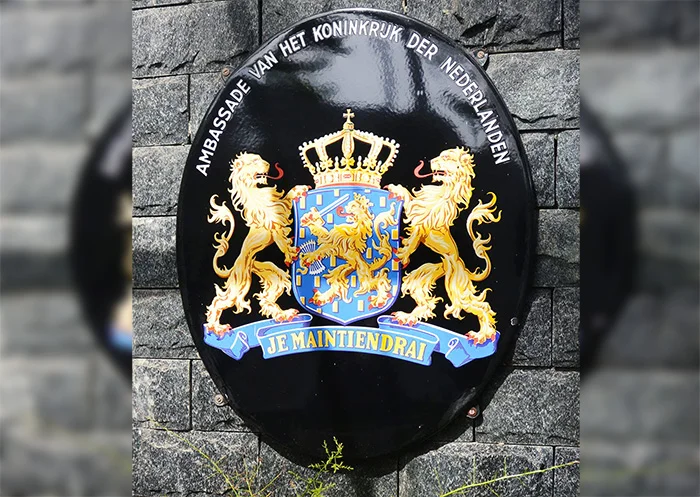
The Netherlands Embassy in Colombo has accused the Russian Embassy of trying to limit freedom of expression and right to know in Sri Lanka. The Embassy yesterday issued the following statement: “The Embassy of the Kingdom of the Netherlands’ attention has been drawn to the attempts by the Russian Embassy in Colombo to deny the people of Sri Lanka’s right to information and freedom of expression by demanding photos related to “Russia’s war of aggression” on Ukraine be removed from the World Press Photo exhibition, currently on display in Sri Lanka.
The 2025 edition of the World Press Photo Exhibition was officially opened by Dr Kaushalya Ariyaratne, Deputy Minister of Mass Media, and Wiebe de Boer, Ambassador of the Kingdom of the Netherlands on February 27, 2026, at One Galle Face. The same exhibition will be held in Kandy from 13 to 17 March 2026 at Sahas Uyana.
The Ambassador of the Russian Federation to Sri Lanka visited the exhibition during the weekend of March 7 and 8 and demanded the photographs, related to “Russia’s war of aggression on Ukraine,” be removed from the exhibition, and threatened to stage a protest if the organisers failed to do so.
The exhibition is jointly organised by the Netherlands Embassy, along with the Sri Lanka Press Institute, and the World Press Photo Foundation in the Netherlands.
Continuing the same demand, the Russian Embassy has now approached the Sri Lankan Ministry of Foreign Affairs to remove the said photos from the exhibition in Kandy. The same exhibition is currently underway in the USA and Germany and is showing all around the world in dozens of countries with freedom of expression.
The photos, including the photos that the Russian Embassy in Colombo wanted to hide from the Sri Lankan citizens, are also available online on the World Press Photo website for free for anyone to access them.
The Embassy of the Kingdom of the Netherlands deplores the attempts by any party to compromise people’s right to know and right to freedom of expression. It also amounts to a violation of the host country’s sovereignty if an Embassy attempts to decide what and which content its citizens should see and not. While we, as the Embassy of the Kingdom of the Netherlands, assure the Sri Lankan public that as our commitment to protect press freedom and respect for editorial integrity, we will continue the exhibition in Kandy with its full content without censoring any photos of the exhibition.
The exhibition is open to the public, free of charge, from 10.30am on Friday, March 13, till March 17, at Sahas Uyana in Kandy.”

Australia grants asylum to 2 more members of Iranian women’s football team

Showers are likely in the Northern, Eastern, Sabaragamuwa, Southern and Uva provinces and in Kandy and Nuwara-Eliya districts

CEBEU warns of operational disruptions amid uncertainty over CEB restructuring

Remittances up compared to last year before outbreak of war, but the economic picture is not rosy

The Netherlands alleges Russian Embassy interfering in World Press Photo Exhibition

Switzerland appreciates GoSL’s stand on ME situation

‘Dates have the highest sugar content to fight Coronavirus’

Sunday Island 27 December – Headlines

#SundayIsland 17th December – Headlines

Sunday Island – 28th March

Sunday Island Headlines – 21 March

Sunday Island – 21st February – Headlines
-
 News5 days ago
University of Wolverhampton confirms Ranil was officially invited
-

 News6 days ago
Legal experts decry move to demolish STC dining hall
-

 News5 days ago
Female lawyer given 12 years RI for preparing forged deeds for Borella land
-

 News4 days ago
Peradeniya Uni issues alert over leopards in its premises
-

 News2 days ago
Repatriation of Iranian naval personnel Sri Lanka’s call: Washington
-

 Business7 days ago
Cabinet nod for the removal of Cess tax imposed on imported good
-
 News5 days ago
Library crisis hits Pera university
-

 News4 days ago
Wife raises alarm over Sallay’s detention under PTA