
Opinion
A wake-up call for action


Poachers take an aggressive stand:
At a time when the bilateral relationship is growing on a firm foundation of friendship and cooperation, the political leadership in the two countries should not continue to allow the ‘fisheries dispute’ to fester, realising that political opponents could use such developments to destabilise the relationship. This is all the more valid apprehension when Sri Lanka expects a series of countrywide elections starting in the last quarter of the year.
Over the past several decades, many have perished due to the ongoing fisheries dispute between Tamil Nadu fishermen and their local counterparts within the Sri Lankan territorial waters. Hitherto, victims were fishermen from Tamil Nadu and the Northern Province of Sri Lanka. However, in a serious escalation on June 25, a sailor from the Special Boat Squadron (SBS) was killed due to aggressive manoeuvrings by the crew members of their trawler, northeast of Point Pedro during a special operation against illegal fishing in Sri Lankan waters.
Aggressive manoeuvrings by Indian trawlers against Navy vessels and local fishing boats have been a regular feature in the past. Such action has served the marauding Indian trawlers well. When these trawlers, in their hundreds, cross the IMBL three times a week and carry out bottom trawling in Sri Lankan waters, both of which are illegal acts, northern fishermen are forced to remain on shore for fear of being physically attacked and their boats and nets damaged by much larger and heavily crewed Indian vessels.
There is nothing much for the Indian poachers to worry about. Their larger vessels with bigger horsepower engines can out-manoeuvre Sri Lankan Navy patrol boats. If their resistance fails and the offenders get arrested, they can quickly access Indian consular services. If they plead guilty, they will be released forthwith after being fined. According to local regulations, such court cases must be concluded within 30 days. No such reciprocity is granted to Sri Lankan fishermen who get picked up by Indian naval authorities. They languish in jail for many months until the legal processes are completed.
Indian poachers are entitled to other facilities as well. One example is the instructions given to the Navy and Coast Guard personnel not to use weapons against Indian fishermen operating illegally in Sri Lankan waters. Consequently, an Indian trawler could deliberately disregard instructions to stop for inspection or resort to aggressive manoeuvrings to intimidate Sri Lankan naval boats and evade arrest. Such self-imposed restrictions by the Sri Lankan side encourage poachers to be bold, take the law into their own hands, and carry out their illegal activities without fear of arrest.
The Tamil Nadu politicians seem ready to write letters of protest to the Union Minister demanding the immediate release of those arrested. Their concerns appear to be the “loss of livelihoods” and alleged harassment of Tamil Nadu fishermen. Not a word of sympathy or concern is expressed about the economic hardships faced by the Sri Lankan Tamil fishermen, whose livelihoods are denied by hordes of Tamil Nadu vessels descending on the Sri Lankan waters three times a week. The fact their fishermen engage in destructive and illegal bottom trawling in foreign waters seems to escape their minds.
 In this process, Indian acceptance of Sri Lanka’s claim over the island of Kachchativu half a century ago has been made into an issue, as if Indian transgressions occur solely around that island. In contrast, Indian fishing vessels operate near Delft Island, which is 22 k. m. east of Kachchativu Island, Kalpitiya in the Gulf of Mannar and Mullaitivu in the east. On July 1, less than one week after the killing, four fishing vessels and 25 fishermen were detained off Delft Island.
At fault, as far as the Indian politicians are concerned, are the two agreements reached in 1974 and 1976 on the international maritime border after years of complex negotiations. To claim that the Indian side erred during the drawing of the maritime border by yielding the Kachchativu island to Sri Lanka is an irony. Half a century after deciding on the international maritime border line (IMBL), Indian fishermen must accept that their fishing rights end on the Indian side of the IMBL. What if Sri Lankans were to claim the same historical rights, enter the Wadge Bank south of Kanya Kumari or the northern part of the Pedro Bank north of Jaffna, which Sri Lanka gave up with the signing of the two international agreements demarcating the maritime border, and commence trawling?
India acknowledged that the number of trawlers and other mechanised fishing vessels in the Palk Bay area is far beyond the Bay’s holding capacity. Due to that recognition, in 2017, the Union Government and the State of Tamil Nadu proposed to remove 2000 mechanised vessels from the Bay area within three years (i.e. by 2020) and direct those fishermen to undertake deep-sea fishing. However, all that the Tamil Nadu authorities could achieve up to now was to refit around 60 vessels. When that plan misfired, the Union and State authorities should have considered alternatives to reduce the fishing fleet in the Palk Bay area. Instead of undertaking that responsibility, questioning how and why Sri Lanka’s claim to Kachchativu was recognised, requesting the two fishing communities to negotiate the matter or delegating the matter to a Joint Working Group are attempts to irresponsibly kick the can down the road, which has been the case for past several decades.
Road rage resulting in police officers getting mowed down by errant drivers is common in both countries. When such criminal acts happen, culprits will be charged with murder. In this particular instance, it is hoped that the law will take its course and the offenders will be prosecuted and punished. If Sri Lanka were to release the offenders without due criminal proceedings, poachers would be invited to take the law into their own hands.
It was reported that Sri Lanka has gone through the process of making representations over the killing to the Indian side. It is well and good. But will the matter end there? The unfortunate death should be an eye-opener for New Delhi and Colombo to recognise that there is a decades-long unresolved problem that needs to be addressed now, not later. The so-called ‘dispute’ is driven by the unsatiable craving for profit of Tamil Nadu businessmen who operate trawlers in foreign waters and engage in bottom trawling, which is illegal. Perhaps a steady stepping up of detentions and confiscation of fishing vessels and gear will send an unmistakable message that they will lose valuable assets if they continue their illegal practices.
At a high political level, India and Sri Lanka have prioritised improving physical connectivity between the two countries. High-level discussions are underway to provide road, rail grid and pipeline connectivity to boost the economy.
Among the several policies launched by the Indian government is the “Neighbourhood First Policy”, which has been in practice for a decade. Two years ago, India generously provided nearly four billion US dollars to pull Sri Lanka out of the economic morass.
At a time when the bilateral relationship is growing on a firm foundation of friendship and cooperation, the political leadership in the two countries should not continue to allow the ‘fisheries dispute’ to fester, realising that political opponents could use such developments to destabilise the relationship. This is all the more valid apprehension when Sri Lanka expects a series of countrywide elections starting in the last quarter of the year.
Pathfinder Foundation has been actively engaged in the subject since 2012, has published numerous papers, and has organised seminars, workshops, etc., in New Delhi, Bangalore, Chennai, and Colombo over the years. Last month’s development is a wake-up call for India and Sri Lanka on the need for urgent measures to address the situation before things shift from bad to worse and adversely affect the plans of the two countries to work in close collaboration. To expect the problem to go away on its own, hoping the passage of time would resolve it, would be a monumental folly.
The Pathfinder Foundation published the View Point articles, which can be read online at https://pathfinderfoundation.org/ , your comments are welcome at : pm@pathfinderfoundation.org

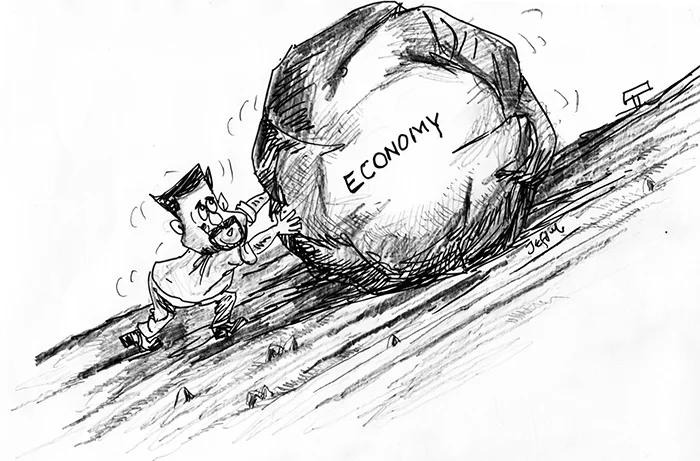
The Central Bank Governor’s recent remarks projecting 4–5 percent growth in 2026 and highlighting improving reserves, lower inflation, and financial stability have been widely welcomed. After the trauma of Sri Lanka’s economic crisis, any sign of normalcy is understandably reassuring. Yet, this optimism needs to be read carefully. What is being presented is largely a story of stabilisation and recovery, framed in the familiar IMF language of macroeconomic management. That is necessary, but it is not the same as a pathway to durable growth.
The first issue is the nature of the projected growth itself. A 4–5 percent expansion can occur for many reasons, not all of which strengthen an economy in the long run. In this case, a significant part of the momentum is expected to come from post-cyclone reconstruction and public investment. This will boost activity in construction and related services and create jobs in the short term. But such growth is typically demand-led and temporary. It raises GDP without necessarily expanding the country’s productive capacity, technological capability, or export competitiveness. Once the reconstruction cycle fades, so may the growth.
This points to a crucial distinction that often gets blurred in public debate: economic recovery and durable growth are not the same thing. Recovery means returning to a more normal macro environment—lower inflation, a more stable exchange rate, some rebuilding of reserves, and a functioning financial system. Durable growth, by contrast, requires rising productivity, structural change, and a stronger export base. Sri Lanka can achieve the first without securing the second. Indeed, that is precisely what happened in earlier post-crisis episodes, where short-lived recoveries were followed by renewed external stress.
The Central Governor’s narrative is best understood as an IMF-style stabilisation narrative. Its centre of gravity is macro control: inflation targets, policy rates, reserves, debt service, and financial-sector resilience. These are the right tools for preventing another crisis. But they are not a strategy for accelerating development. IMF programmes are designed primarily to restore confidence, manage risk, and stabilise the macroeconomy. They are not designed to answer the core development questions: What will Sri Lanka produce? What will it export? How will productivity rise? Which sectors will drive long-term growth?
Seen in this light, a projected 4–5 per cent growth rate is best described as moderate recovery growth. It may be entirely plausible—especially if driven by reconstruction and public spending—but it is not the kind of growth that closes income gaps, absorbs underemployment at scale, creates sustained fiscal space, or materially reduces debt burdens. Countries that have successfully caught up in Asia typically sustained 7–8 per cent (or higher) growth for long periods, powered by export expansion, industrial upgrading, and continuous learning.
If the current government’s development agenda is genuinely ambitious, then there is a clear mismatch between the growth implied by that ambition and the growth described in the Central Bank’s outlook. A strategy that settles for 4–5 per cent risks normalising mediocrity rather than mobilising the economy for take-off. Reconstruction-led and consumption-led expansions can lift GDP in the short run, but they do not, by themselves, deliver the productivity and export breakthroughs needed for sustained 7–8 per cent growth.
There is also a risk that reconstruction-driven growth will recreate old external vulnerabilities. Large-scale rebuilding increases demand for cement, steel, fuel, machinery, and transport services—many of which are import-intensive in Sri Lanka. This means higher growth can go hand in hand with a widening trade deficit, renewed pressure on foreign exchange, and imported inflation. The Governor has rightly warned about inflationary and external pressures, but the deeper issue is structural: without a parallel expansion of export capacity and domestic production of tradables, stimulus-driven growth can quickly collide with the same constraints that caused past crises.
The improvement in reserves and the claim that debt service is “manageable” are positive developments. But they should be treated as buffers, not proof of long-term security. Sri Lanka’s recent history shows how quickly reserves can be run down when imports surge, exports disappoint, or global conditions tighten. Reserves buy time. They do not, by themselves, change the underlying growth model.
Similarly, the focus on bringing inflation back towards target and maintaining steady policy rates reflects sound central banking. Price stability and financial-sector resilience are public goods. But an inflation target is not a growth strategy. Durable growth comes from investment in productive capacity, from learning and technological upgrading, from moving into higher-value activities, and from building competitive export sectors. Without these, macro stability becomes an exercise in maintenance rather than transformation.
The repeated reference to “structural reforms” also needs to be treated with care. In policy practice, this often means reforms to pricing, state-owned enterprises, taxation, and public finance management. These may improve efficiency and governance, and they matter. But in development economics, structural transformation means something more demanding: a change in what the country produces, how it produces, and what it sells to the world. It means shifting resources into higher-productivity, more technologically advanced, and more export-oriented activities. Without that shift, an economy can be well-managed and still remain fragile.
What is striking in the Governor’s statement is not that it is wrong, but that it is incomplete. We hear a great deal about stability, recovery, and resilience. We hear much less about the growth strategy itself. Which sectors are expected to lead the next phase of growth beyond construction and consumption? How will exports be diversified and upgraded? What is the plan for skills, technology, and productivity? How will private investment be steered toward tradable, foreign-exchange-earning activities?
These are not academic questions. They go to the heart of whether Sri Lanka is merely staging another rebound or beginning a genuine breakthrough. The country’s repeated crises have shown that returning to “normal” is not enough if the underlying growth model remains unchanged.
In sum, the Central Bank Governor’s optimism should be understood for what it is: a stabilisation narrative, not yet a development strategy. It tells us that the economy is becoming calmer, more predictable, and less crisis-prone—and that is a real and necessary achievement. But it does not yet tell us how Sri Lanka will grow fast enough, long enough, and differently enough to escape its long-standing cycle of weak exports, external vulnerability, and stop–go growth.
A recovery built on reconstruction, consumption, and macro control can deliver 4–5 per cent growth. But the government’s own ambitions—and Sri Lanka’s development needs—require 7–8 per cent sustained growth driven by productivity, exports, and structural transformation. That kind of growth does not emerge automatically from stability. It must be designed, coordinated, and pursued through a clear strategy for production, learning, and upgrading.
Stability is essential. Without it, nothing else is possible. But stability is not a development strategy. It is the foundation on which a strategy must be built. The real test for policymakers now is not whether they can keep the economy stable, but whether they can articulate and implement a credible growth strategy that turns stability into momentum and recovery into transformation. Until that strategy is clearly on the table, Sri Lanka’s current optimism—welcome as it is—should be read with caution, not complacency.
by Prof. Ranjith Bandara

Quiet flows another don. The aging fraternity of Peradeniya Engineering alumni has lost another one of its beloved teachers. V. Shanmuganayagam, an exceptionally affable and popular lecturer for nearly two decades at the Peradeniya Engineering Faculty, passed away on 15 January 2026, in Markham, Toronto, Canada. Shan, as he was universally known, graduated with First Class Honours in Civil Engineering, in 1962, when the Faculty was located in Colombo. He taught at Peradeniya from 1967 to 1984, and later at the Nanyang Technological University in Singapore, before retiring to live in Canada.
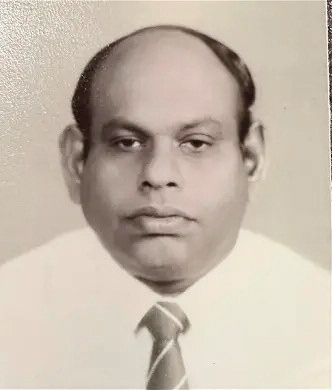
V. Shanmuganayagam
In October last year, one of our colleagues, Engineer P. Balasundram, organized a lunch in Toronto to felicitate Shan. It was very well attended and Shan was in good spirits. At 85 he was looking as young as any of us, except for using a wheelchair to facilitate his movement. The gathering was remarkable for the outpouring of warmth and gratitude by nearly 40 or 50 Engineers, who had graduated in the early 1970s and now in their own seventies. One by one every one who was there spoke and thanked Shan for making a difference in their lives as a teacher and a mentor, not only in their professional lives but by extension in their personal lives as well.
As we were leaving the luncheon gathering there were suggestions to have more such events and to have Shan with us for more reminiscing. That was not to be. Within three months, a sudden turn for the worse in his condition proved to be irreversible. He passed away peacefully, far away across the world from the little corner of little Sri Lanka where he was born and raised, and raised in a manner to make a mark in his life and to make a difference in the lives of others who were his family, friends and several hundreds of engineering professionals whom he taught.
V. Shanmuganayagam was born on May 30, 1940, in Point Pedro, to Culanthavel and Sellam Venayagampillai. His family touchingly noted in the obituary that he was raised in humble beginnings, but more consequentially his values were cast in the finest of moulds. He studied at Hartley College, Point Pedro, and was one of the four outstanding Hartleyites to study engineering, get their first class and join the academia. Shan was preceded by Prof. A. Thurairajah, easily Sri Lanka’s most gifted academic engineering mind, and was followed by David Guanaratnam and A.S. Rajendra. All of them did Civil Engineering, and years later Hartley would send a new pair of outstanding students, M. Sritharan and K. Ramathas who would go on to become highly accomplished Electrical Engineers.
Shan graduated in 1962 with First Class Honours and may have been one of a very few if not the only first class that year. Shan worked for a short while at the Ceylon Electricity Board before proceeding to Cambridge for postgraduate studies specializing in Structures. His dissertation on the Ultimate Strength of Encased Beams is listed in the publications of the Cambridge Structures Group. He returned to his job at CEB and then joined the Faculty in 1967. At that time, Shan may have been one of the more senior lecturers in Structures after Milton Amaratunga who too passed away late last year in Southampton, England.
When we were students in the early 1970s, there was an academic debate at the Faculty as to whether a university or specific faculties should give greater priority to teaching or research. Shan was on the side of teaching and he was quite open about it in his classes. He would supplement his lectures with cyclostyled sheets of notes and the students naturally loved it. It was also a time when Shan and many of his colleagues were young bachelors at Peradeniya, and their lives as academic bachelors have been delightfully recounted in a number of online circulations.
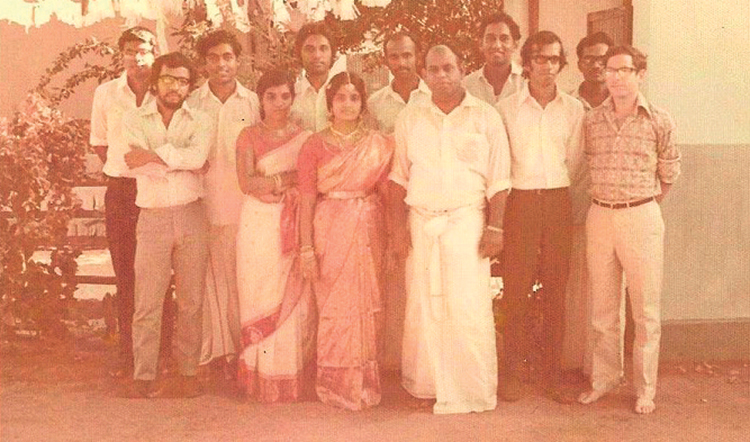
The cross-sectional camaraderie at the Faculty in those days is well captured in one of the photographs taken at Shan’s wedding at Point Pedro, in 1974, which too has been doing the rounds and which I have inserted above. Flanking Shan and his bride Kalamathy, from Left to Right are, M. Dhanendran, Nandana Rambukwella, K. Jeyapalan, Wickrama Bahu Karunaratne, A.S. Rajendra, Lal Tennekoon, Tusit Weerasooria, and R. Srikantha. Sadly, Rambukwella, Karunaratne (Bahu), Tennekoon and now Shan himself, are no longer with us.
Like other faculty members, Shan kept contact with his former students turned practising engineers and they would reach out to him to solicit his expertise in their projects. In the early 1980s, when I was working as Resident Project Manager with my Peradeniya contemporaries, JM Samoon and K. Balasundram, at the Hanthana Housing Scheme undertaken by the National Development Housing Authority (NHDA), Shan was one of the project consultants helping us with concrete technology involving mix design and in situ strength testing using the testing facilities at the Faculty.
The Hanthana Team Looking back, the Hanthana housing scheme construction was the engineering externalization of the architectural imaginings of Tanya Iousova and Suren Wickremesinghe, for building houses on hill slopes without flattening the hills. The project involved the construction of hundreds of housing units with supporting infrastructure comprising roads and drainage, water supply and sanitary, and electricity distribution using underground cables. Tanya & Suren Wickremasinghe were the Architects with an Italian construction company as contractors.
To their credit, Tanya and Suren assembled quite a team of Consulting Engineers that was a cross-section of E’Fac alumni, viz., Siripala Kodikkara and Siripala Jayasinghe (Contract Administration); Prof. Thurairajah (Foundations & Soil Mechanics); S.A. Karunaratne (Structures); V. Shanmuganyagam (Concrete Technology); Neville Kottagama and DLO Mendis (Roads & Drainage); K. Suntharalingam (Water Supply & Sanitary); and Chris Ratnayake (Electrical).
As esoteric gossip goes, DLO Mendis had an informal periodization of engineering graduates, identifying them as either Before-Thurai or After-Thurai, centered on 1957 – the year Prof. Thurairajah graduated with supreme distinction and went on to do groundbreaking theoretical research in Soil Mechanics at Cambridge. Of the Hanthana consultant team, Neville Kottagama and DLO Mendis were before Thurai by six years, Shan was five years after, and all the others came later. Sadly though, only Tanya and Chris are with us today from the 1980s group named above.
After Hanthana came 1983 when all hell broke loose and hundreds of professionals and their families were forced to leave Sri Lanka. Shan left Peradeniya and joined Nanyang Technological University in Singapore, encouraged by his Cambridge contemporaries from Singapore. He taught at Nanyang for twelve years (1984-1996) before moving to Canada with his wife and three sons who were by then ready for university education.
All three children have done exceptionally well in their studies and professional careers. The oldest, Dhanansayan, is a Medical Doctor and a Professor at the University of Wisconsin School of Medicine and Public Health, in Madison, United States. That was where India’s Jayaprakash Narayan and Sri Lanka’s Philip Gunawardena had their university education a hundred years ago.
The younger two sons took to Engineering. The second son, Kalaichelvan, is Program Manager at Creation Technologies, an award-winning global electronics manufacturing service provider. And the youngest, Dhaksayan, is the Chief Information Officer (CIO) at the Toronto Transit Commission (TTC), which is North America’s third-largest urban transit system.
All three have done their parents proud and Shan would have been gratified to see them achieve exemplary success in their chosen fields. A first class Engineer and a first class teacher, Shan was also a great father and a loving grandfather. As we remember Professor Shanmuganyagam, we extend our thoughts and sympathies to his beloved wife Kalamathy, his sons and their young families
by Rajan Philips
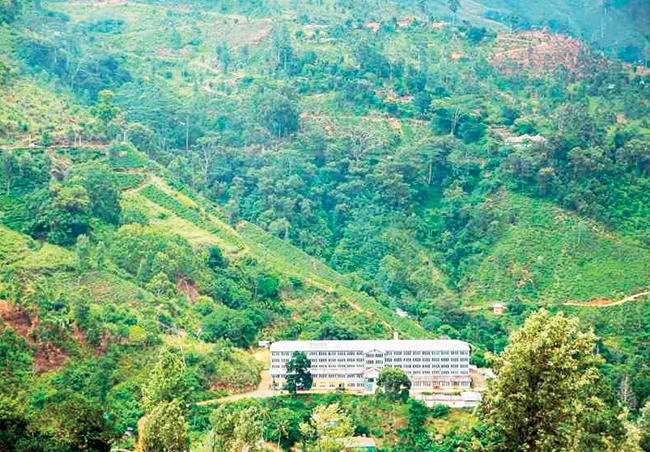
Established in 1880, Cannavarella Estate stands among the most historically significant plantations in Sri Lanka, carrying a legacy that intertwines agricultural heritage, colonial transitions and modern development. Its story begins with the cultivation of cinchona, a medicinal bark used to produce quinine, which is a vital treatment for malaria at the time, introduced when coffee estates across the island were failing.
Under the ownership of Messrs Macfarlane, Cannavarella rapidly gained a reputation for producing cinchona at ideal elevations between 4,000 and 5,000 feet above sea level. At that time, the estate spanned around 750 acres and played a pivotal role in the island’s shift from coffee to alternative plantation crops during the late 19th century.
A transformative chapter began when Christopher B. Smith purchased the property and unified several surrounding estates- Moussagolla, Cannavarella, East Gowerakelle, and Naminacooly- into what became known as the Cannavarella Group. This amalgamation created a vast holding of approximately 1,800 acres. By 1915, nearly 1,512 acres of this extent were cultivated in tea, marking the estate’s full transition from cinchona to the crop that would define its identity for generations.
The Group was managed by the Eastern Produce and Estates Company from 1915 until 1964, after which stewardship passed successively to Walker & Sons Company Ltd, and then to George Steuart Company Ltd by 1969.
A defining moment in the estate’s history arrived in 1971 when Sir Oliver Goonetilleke, former Governor General of Ceylon, acquired the estate. Under his ownership, it came under the London-based company Ceyover Ltd., a name derived from “Cey” for Ceylon and “Over” for Oliver.
The estate remained under private ownership until the nationalization wave of 1975, during which Cannavarella was brought under the Janatha Estates Development Board (JEDB). For nearly two decades it was managed under government purview until the plantation sector was re-privatised in 1992.
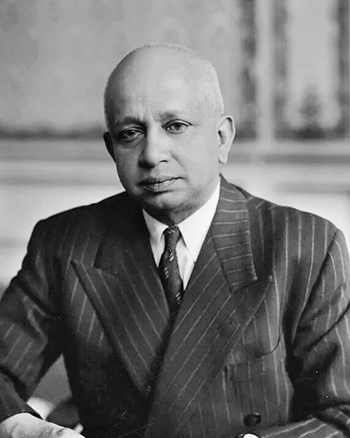
Sir Oliver Goonetilleke
Thereafter, Cannavarella Estate moved under the management of Namunukula Plantations Limited, first through BC Plantation Services, then under John Keells Holdings’ Keells Plantation Management Services and eventually under the ownership of Richard Pieris & Company PLC, where it continues today as part of the Arpico Plantations portfolio.
Blending heritage, landscape and community
Situated along the northeastern slopes of the scenic Kabralla-Moussagolla range and bordering the Namunukula mountain range, Cannavarella Estate spans a total extent of 800 hectares. Its six divisions rise across elevations from 910 to 1,320 metres above sea level, creating a landscape ideal for cultivating premium high-grown tea. Of the total land area, 351 hectares are dedicated to mature tea, while 54 hectares consist of VP tea, representing 16 % of the estate.
Among its most remarkable features are fields containing seedling tea bushes more than a century old, living symbols of Sri Lanka’s plantation legacy that continue to thrive across the slopes. The estate is also home to the origin of the Menik River, which begins its journey in the Moussagolla Division, adding an ecological richness to Cannavarella’s natural environment.
Cannavarella’s history of leadership reflects broader transformations within the plantation industry. The last English superintendent, Mr. Charles Edwards, oversaw the estate during the final phase of British management. In 1972, he was succeeded by Franklin Jacob, who became the first Sri Lankan superintendent of the Cannavarella Group, marking a shift toward local leadership and expertise in plantation management.
Development within Cannavarella Estate has never been confined to agriculture alone. Over the past decade, the estate has strengthened its emphasis on community care, diversification and improving living conditions for its workers. In 2022, coffee planting was initiated in Fields 7 and 8 of the NKU Division, covering 2.5 hectares as part of a broader effort to introduce alternative revenue streams while complementing tea cultivation.
The estate’s commitment to early childhood development is reflected in the initiation of a morning meal programme across all Child Development Centres from 2025, ensuring that children receive nutritious meals each day. A newly constructed Child Development Centre in the EGK Division, completed in 2020, now offers modern facilities including a play area, study room and kitchen, symbolizing the estate’s dedication to nurturing the next generation. In 2015, a housing scheme consisting of 23 new homes was completed and handed over to workers in the CVE Division, significantly improving quality of life and providing families with safer, more stable living environments.
A future built on stability and renewal
Cannavarella Estate is preparing to undertake one of its most important social development initiatives. A major housing programme has been proposed to relocate 69 families currently residing in landslide-prone areas of the Moussagolla Division. Supported by the Indian Housing Programme, this effort aims to provide secure, sustainable housing in safer terrain, ensuring long-term stability for vulnerable families and reducing disaster risk in the region.
Across its history, Cannavarella Estate has remained a landscape shaped both by the land and the people who call it home. Cannavarella continues to honour its roots while building a modern legacy that uplifts both the estate and its people. (Planters Association news release)

Namibia begin campaign in crucial game against Netherlands

Markram, Ngidi help South Africa ease past dogged Canada

Pakistan withdraw boycott of India match at T20 World Cup

Mainly dry weather will prevail in the most parts of the island.

NPP: Speaker won’t step down, CIABOC can investigate him

Trinco Buddha statue case: All suspects, including 4 monks re-remanded till 11 Feb.

‘Dates have the highest sugar content to fight Coronavirus’

Sunday Island 27 December – Headlines

#SundayIsland 17th December – Headlines

Sunday Island – 28th March

Sunday Island Headlines – 21 March

Sunday Island – 21st February – Headlines
-
 Features2 days ago
My experience in turning around the Merchant Bank of Sri Lanka (MBSL) – Episode 3
-

 Business3 days ago
Zone24x7 enters 2026 with strong momentum, reinforcing its role as an enterprise AI and automation partner
-
 Business2 days ago
Remotely conducted Business Forum in Paris attracts reputed French companies
-

 Business2 days ago
Four runs, a thousand dreams: How a small-town school bowled its way into the record books
-

 Business2 days ago
ComBank and Hayleys Mobility redefine sustainable mobility with flexible leasing solutions
-
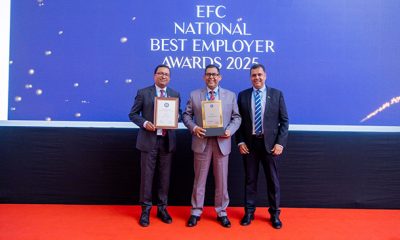
 Business3 days ago
HNB recognized among Top 10 Best Employers of 2025 at the EFC National Best Employer Awards
-

 Business3 days ago
GREAT 2025–2030: Sri Lanka’s Green ambition meets a grid reality check
-

 Editorial5 days ago
All’s not well that ends well?