
Business
A new vision to help Sri Lankan apparel rise to the challenges of 2022

By A. Sukumaran – Chairman, Joint Apparel Association Forum
Despite having faced down another tumultuous year, the Sri Lankan apparel industry has shown remarkable resilience in 2021, and we believe the advances we have made over the past year have put the entire sector in a much stronger position to weather the escalating challenges of 2022. A review of the data from 2021 and the measures that firms in the industry have taken indicate how the industry is poised.
Following in the wake of unprecedented economic disruptions for Sri Lanka – and the rest of the world – caused by the second and third waves of the Covid-19 pandemic we now see some persistent uncertainty around prospects for 2022. Driving this volatility so far is the emergence of Omicron which is reportedly the most highly transmissible variant of Covid-19, and in the backdrop of rising geopolitical tensions between the US, and China and Russia. If any one of these factors is exacerbated, further disruptions to global trade are inevitable.
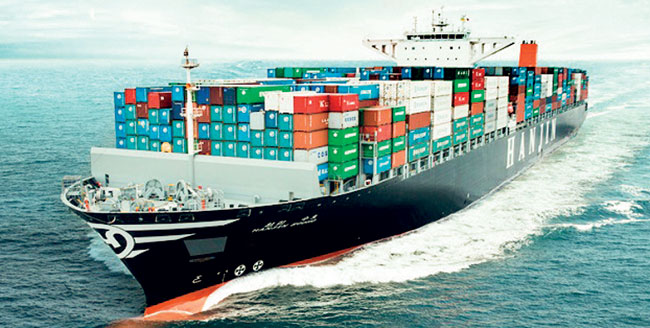
Consider exports. In pre-pandemic 2019, apparel exports amounted to $5.2 billion1, almost 48 per cent of all merchandise exports (which makes it a crucial contributor to trade and external finances). In 2020, the pandemic’s spread led to a steep decline in trade and travel, and ultimately global GDP; no country was spared.
Sri Lanka’s garment exports also declined sharply in 2020; nationally enforced lockdowns hit production, and order cancellations were high. Exports fell by almost a quarter (more than 24 per cent) to $3.93 billion. In 2021, garment exports jumped back up by 21.5 per cent at September-end to $3.54 billion2. They will fall just short of the targeted $5,1 billion.
The remarkable progress was made possible by an accelerated vaccination programme with the support of the government and the logistical capability of our military. The Joint Apparel Associations Forum of Sri Lanka (JAAFSL), an apex body of apparel industry associations, played a crucial coordinating role.
For business owners, worker safety is a high priority. Factories and places also put safety protocols, redesigned shop floors to enable social distancing, strictly monitored masking, personal protection, and employee behaviour. Compliance was strictly implemented with surprise checks by officials from the Ministries of Labour and Health.
Yet, during the course of the pandemic in 2020 and 2021, business owners were faced with false accusations that workers were not being paid and were instead being laid them off by the thousands. But as events later demonstrated, these accusations was totally unfounded, and ran contrary to the actual situation on the ground.
First, in cooperation with the government and represented by JAAFSL, workers who could not come to work because they were sick were paid LKR 14,500 a month whether they came to work or not. That is 45 per cent more than the minimum wage mandated by law, even when they were not working.
Second, as noted previously, an accelerated vaccination programme was implemented and acted upon. Worker safety was ensured with strictly enforced mandated safety protocols. The enforcement of the protocols were extended even to non-direct apparel workers such as canteen workers and other suppliers and vendors.
One number helps make the point. One important study on the impact of Covid-19 on the apparel industry estimated the pre-pandemic workforce at roughly 350,0003. The strength of the workforce at the end of 2021? Contrary to reports of layoffs and resignations made publicly by some parties during the pandemic, the workforce is now back at 350,000.
That’s not all. During the course of the pandemic, both large companies and smaller firms adopted and adapted technology to develop solutions to new problems. Consider samples. Fashion changes are fairly frequent, so buyers require samples that they test and then approve for manufacture. As transport was disrupted and flights restricted, some firms used 3D technologies that could be created at the buyers’ end and approved.
That was just one instance where technology was used innovatively to overcome logistical challenges. Many others are aligned with the vision of making Sri Lanka a global hub for innovative apparel making. There are many others, aligned with the vision of making Sri Lanka a global hub for innovative apparel making. And the same spirit of innovation is pervasive in the apparel industry’s sustainability agenda that sets a global benchmark for ethical, environmentally responsible manufacturing.

Business
Sri Lanka’s apparel sector records 5.42% growth for January-November 2025: November slight dip


Sri Lanka’s apparel industry delivered a robust performance during the first eleven months of 2025, with cumulative exports reaching US$4,571.99 million marking a 5.42% increase over the same period last year, according to data released today by the Joint Apparel Association Forum (JAAF).
Sri Lanka’s total apparel exports for November 2025 reached US$367.60 million, representing a slight decrease of 1.96% compared to US$374.94 million in November 2024.
The monthly performance showed mixed results across key markets: United States: US$152.32 million (up 5.79% from US$143.98 million), European Union (excluding UK): US$119.61 million (up 3.35% from US$115.73 million), United Kingdom: US$43.63 million (down 13.83% from US$50.63 million), Other Markets: US$52.04 million (down 19.44% from US$64.60 million)
Strong cumulative performance: January-November 2025
Despite the November softness, cumulative apparel exports for the eleven-month period from January to November 2025 demonstrate solid growth, reaching US$4,571.99 million—a 5.42% increase over the corresponding period in 2024 (US$4,336.84 million).
Year-to-Date Performance by Market:
European Union (excluding UK): US$1,435.39 million (up 13.07%)
Other Markets: US$742.98 million (up 5.75%)
United States: US$1,769.08 million (up 1.73%)
United Kingdom: US$624.54 million (down 0.22%)
Commenting on the export data, JAAF stated “The 5.42% growth in our cumulative exports for the first eleven months of 2025 reflects the resilience and adaptability of Sri Lanka’s apparel sector in navigating a challenging global environment. While we experienced a modest 1.96% decline in November, this should be viewed within the broader context of our strong year-to-date performance.
“Particularly encouraging is our 13.07% growth in the European Union market, which demonstrates the success of our strategic focus on strengthening relationships with EU buyers and meeting their increasingly stringent sustainability and compliance requirements. Similarly, our continued growth in the US market, despite tighter margins, shows that Sri Lankan manufacturers remain competitive on quality, delivery, and ethical manufacturing standards”.
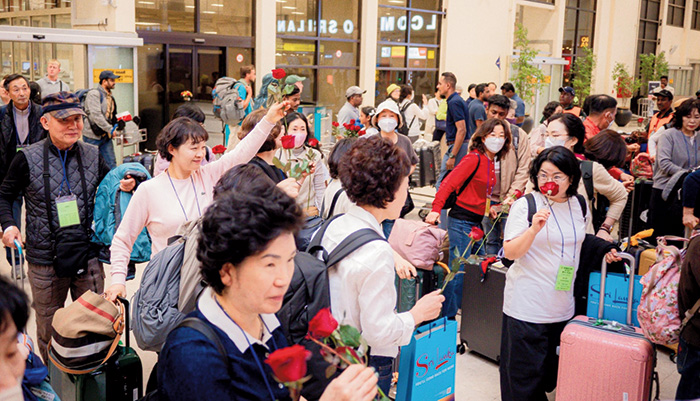
Sri Lanka Tourism, in collaboration with the Embassy of Sri Lanka to the Republic of Korea, is providing support for the two VVIP South Korean Buddhist delegations visiting the country, demonstrating solidarity and strengthening cultural and religious ties with Sri Lanka.
The first delegation included Anunayake thero of Jogye order , South Korean chief Buddhist monks and devotees arrived in Sri Lanka consisting of 120 , on 01st December 2025, with the intention of undertaking a pilgrimage tour and highlighting Sri Lanka’s importance as a major Buddhist attraction for Buddhists around the world.
As same as the first delegation, the second VVIP Buddhist delegation which arrived on the 10th of December, 2025, was also given warm and a colorful welcome at the Bandaranaike International Airport, complete with a Cultural Dance troupe and a group of Sri Lankan children to greet them upon their arrival, making them feel at home and happy to see such a sensational sight. Ms . Thanuja Muniweera , Deputy Director and also the officer in charge of the Korean Market , was there to welcome the much revered guests . The delegation consisted of 150 visitors including both priests and devotees.
Led by Ven . Hyeil, , Chief priest of Haeinsa Temple , the main purpose of this visit is to show Sri Lanka as a welcoming and culturally vibrant destination. This will be a great opportunity to show the importance of the Korean Market as an emerging market and also promote Buddhist and Pilgrimage Tourism. South Koreans are known to be travelling in large numbers, including December 2025. The South Korean Buddhist delegation is one such example.

Diversified conglomerate Sunshine Holdings PLC (CSE: SUN) has been included in the S&P Sri Lanka 20 Index, following the 2025 year-end index rebalance announced by the Colombo Stock Exchange (CSE) and S&P Dow Jones Indices. The inclusion takes effect from 22 December 2025, after market closing on 19 December 2025.
The S&P Sri Lanka 20 Index represents the 20 largest and most liquid companies listed on the CSE, selected based on stringent criteria including market capitalisation, liquidity, financial viability and sustained profitability. Constituents are weighted by float-adjusted market capitalisation, with a single-stock caps to ensure balanced representation.
Commenting on the milestone, Sunshine Holdings Group Chief Executive Officer, Shyam Sathasivam, said, “Our inclusion in the S&P Sri Lanka 20 is the result of more than five decades of collective effort and perseverance by our people, past and present, who have built Sunshine Holdings into the institution it is today. This recognition reflects the strength of our foundations, the discipline with which we have grown, and the consistency of our performance across business cycles. As we move forward, we remain focused on building resilient businesses, upholding strong governance standards and delivering sustainable long-term value to all stakeholders.”
The S&P Sri Lanka 20 Index is constructed in line with global index methodologies and international best practices, with all constituents classified under the Global Industry Classification Standard (GICS®). Eligibility requires a minimum float-adjusted market capitalisation of Rs. 500 million, a six-month median daily value traded of Rs. 250,000, and positive net income over the twelve months preceding the rebalancing reference date.
Sunshine Holdings’ inclusion in the S&P Sri Lanka 20 reflects the Group’s long-term capital markets journey, evolving from a closely held family enterprise into a widely held blue-chip listed company. Over the years, the Group has focused on building institutional credibility, strengthening governance standards and expanding its shareholder base, resulting in a current market capitalisation of approximately LKR 70 billion, underscoring its scale and relevance within the Colombo Stock Exchange.

Two people killed in magnitude 6.5 earthquake in Mexico

President Trump says the US has ‘captured’ Venezuelan President Nicolas Maduro and his wife and flown them out of the country

Navy seize an Indian fishing boat poaching in northern waters

US Coast Guard suspends search for survivors of Pacific boat strike

Venezuela’s capital hit by explosions, Caracas blames the US

Tri-Forces donate LKR. 372 million, a day’s pay of all ranks to ‘Rebuilding Sri Lanka’ Fund

‘Dates have the highest sugar content to fight Coronavirus’

Sunday Island 27 December – Headlines

#SundayIsland 17th December – Headlines

Sunday Island – 28th March

Sunday Island Headlines – 21 March

Sunday Island – 21st February – Headlines
-

 Sports6 days ago
Gurusinha’s Boxing Day hundred celebrated in Melbourne
-

 News4 days ago
Leading the Nation’s Connectivity Recovery Amid Unprecedented Challenges
-

 Sports7 days ago
Time to close the Dickwella chapter
-

 Features5 days ago
It’s all over for Maxi Rozairo
-

 News7 days ago
Environmentalists warn Sri Lanka’s ecological safeguards are failing
-

 News5 days ago
Dr. Bellana: “I was removed as NHSL Deputy Director for exposing Rs. 900 mn fraud”
-

 Opinion3 days ago
Remembering Douglas Devananda on New Year’s Day 2026
-
 News4 days ago
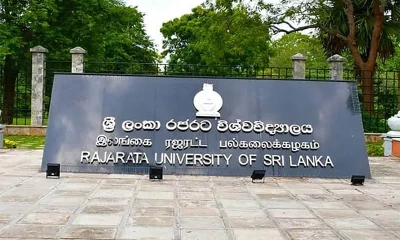
Dons on warpath over alleged undue interference in university governance