
News
A farewell for UN Ambassador Kshenuka Senewiratne


Ambassador Kshenuka Senewiratne was presented with a plaque by the President of the Sri Lanka Association in New York (SLANY) Sanjeev Silva and his wife.
The Sri Lankan expatriate community in New York, New Jersey and Connecticut, hosted an outdoor farewell luncheon last week to honour Sri Lanka’s outgoing Permanent Representative to the UN Ambassador Kshenuka Senewiratne and her husband Suren Senewiratne.
Conforming to rigid health regulations against the coronavirus pandemic, over 75 Sri Lankan expatriates, most of them masked, braved the spreading virus and turned up for the lunch at Medwick Park, Carteret, New Jersey.
Ambassador Senewiratne and her husband arrived in the company of a Police escort vehicle as befits diplomatic protocol.
The expats at the lunch included alumni of Royal, St Thomas’ and Ananda Colleges, and representatives of the Sri Lanka Association of New York (SLANY), the Sri Lanka Medical Association of North America (SLMANA) and The Association of Sri Lankan Muslims in North America (TASMINA).
Attending the farewell were Congressman Frank Pallone of New Jersey who is serving his 16th Full Term in the US House of Representatives representing the sixth Congressional District and former Franklin Councilman Rajiv Prasad – both strong political supporters of Sri Lanka.
Congressman Pallone was instrumental in establishing the first Congressional Caucus on Sri Lanka in October 1998, served as Co-chair for ten consecutive years, and currently serves as an important and most knowledgeable member within the Sri Lanka Caucus in the US Congress.
Both Pallone and Prasad praised Kshenuka for her accomplishments, including being the first SL woman ambassador to the UN.
Dr Wije Kottahachchi, one of the organisers of the farewell and a former president of SLMANA, singled out the Ambassador’s “brilliant diplomatic career and her service to the Sri Lankan community in the tri-state area of New York, New Jersey and Connecticut.”
Among her significant contributions to the Sri Lankan community, he said, was the pandemic response where she set up two hotlines manned by mission staff to assist community needs with four Sri Lankan doctors volunteering their services to the community and facilitated by Ambassador Senewiratne.
In his vote of thanks on behalf of the organizing committee, Vajira Gunawardana, a former President of Royal College Old Boys’ Association East Coast Foundation, thanked the ambassador for her exceptional service to the country, the United Nations, and the Sri Lankan community.
As the first female Sri Lankan ambassador to the UN, he said, “you introduced a new level of sophistication to the office of ambassador. This coupled with your demeanor, humility, and social engagement with the whole spectrum of the community, has brought new respect to the office of the ambassador.”
With the current campaign of gender empowerment at the UN, he said., Ksenuka’s superlative credentials should be an asset when women activists search for the right candidate to be elected the first woman UN Secretary-General next year.

* New Auditor General should not have been sworn in before Speaker – Opp.
* Suspended House Dy. Sec. Gen. Chaminda Kularatne takes his case to CA today
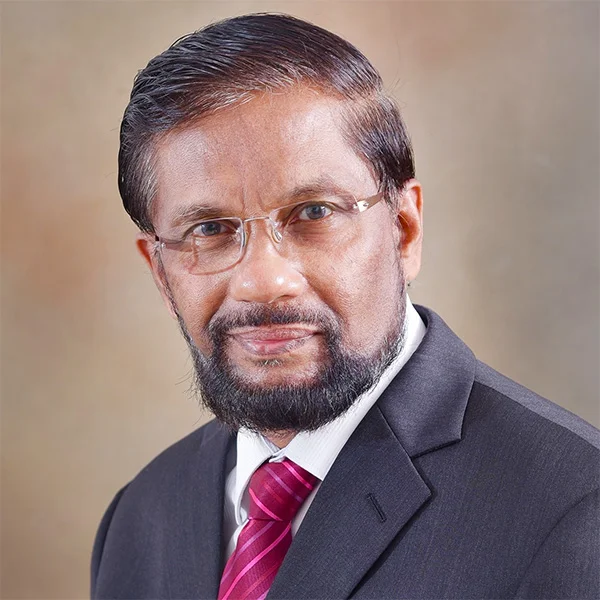
General Secretary of the National People’s Power (NPP) Dr. Nihal Abeysinghe yesterday said that there was no need for Speaker Dr. Jagath Wickramaratne to step down in view of the complaint lodged against him with the CIABOC (Commission to Investigate Allegations of Bribery or Corruption).
NPP General Secretary said so in response to The Island query whether the parliamentary group of the ruling party discussed the growing Opposition calls for the Speaker, who is also the Chairman of the Constitutional Council, to step down to facilitate the investigation.
The NPP parliamentary group consists of 159 MPs, including 18 National List (NL) members.
NL member Dr. Abeysinghe asked whether any other person, who had been investigated by the CIABOC, stepped down from his or her position to facilitate the inquiry.
The top official emphasised that the CIABOC could go ahead with its investigation without any hindrance.

Chamindra and Dr. Jagath
Opposition sources said that there hadn’t been a similar situation before and the CIABOC investigation into Speaker Dr. Wickramaratne is unprecedented as he heads the 10-member CC responsible and directly involved in all key appointments, including that of members to the CIABOC.
Sources pointed out that the newly appointed Auditor General, Ms. Samudrika Jayaratne, took the oath of secrecy before the Speaker on 5 February in Parliament after suspended Deputy General Secretary of Parliament Chaminda Kularatne complained to CIABOC.
In accordance with Section 9 of the National Audit Act, No. 19 of 2018, Jayaratne took the oath of secrecy in her capacity as the Auditor General of the National Audit Office and Chairperson of the Audit Service Commission.
Sources said that Kularatne would move the Court of Appeal today (10) against his removal at the behest of the Staff Advisory Committee, headed by the Speaker.
By Shamindra Ferdinando

The Trincomalee Magistrate’s Court yesterday (09) further remanded 10 persons, including four Buddhist monks, arrested on 19 January, 2026, for allegedly placing a Buddha statue in the coastal reservation, on 16 January.
The Buddhist monks, including Ven. Balangoda Kassapa Thera, and six other individuals, were further remanded until 11 February.
They have been accused of violating the Coast Conservation Act by placing a Buddha statue on a block of land belonging to the Trincomalee Bodhiraja Temple.
Of the four monks, Ven Balangoda Kassapa Thera and Ven Trincomalee Kalyanawansa Tissa Thera moved the Court of Appeal against the Magistrate’s Court decision. The case was heard on 22 January before a Bench comprising the President of the Court of Appeal, Justice Rohantha Abeysuriya, and Justice K. Priyantha Fernando.
Manohara de Silva, PC, and President’s Counsel Uditha Igalahewa, PC, appearing for the petitioners, urged the Court to take up the matter urgently, describing it as a case of exceptional importance.
However, the Court of Appeal on 3 February dismissed the petitions against the remanding of Ven Balangoda Kassapa Thera and Ven Trincomalee Kalyanawansa Tissa Thera.
The order was issued by the Court of Appeal bench consisting of the President of the Court of Appeal, Justice Rohantha Abesuriya and Justice Priyantha Fernando.
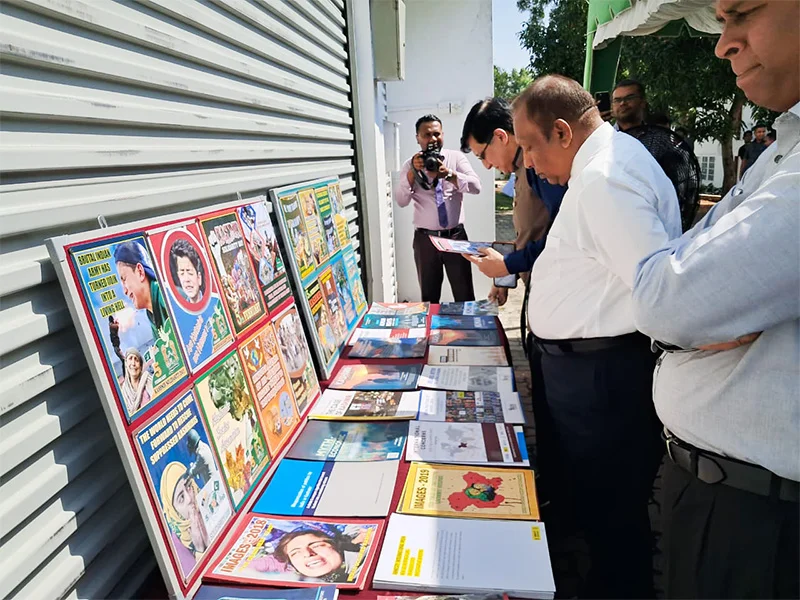
The Pakistan High Commission in Colombo recently organised a seminar and photo exhibition at the HC premises to commemorate Kashmir Solidarity Day. The following is the text of the statement issued by the PHC: “The event highlighted Pakistan’s continued support for the Kashmiri people and emphasised the importance of a peaceful and just resolution of the Jammu and Kashmir dispute. Members of the Pakistani community, friends of Kashmir, and local journalists attended the event.
The seminar concluded with remarks by the High Commissioner of the Islamic Republic of Pakistan, Major General (R) Faheem-ul-Aziz, HI (M). He reaffirmed Pakistan’s principled stance on the Jammu & Kashmir issue and underscored the need for sustained international engagement. He noted that the situation in Indian Illegally Occupied Jammu & Kashmir (IIOJK) has remained a matter of concern for decades and called upon the international community, particularly the United Nations, to play its role in promoting peace, stability, and respect for human rights.
The High Commissioner emphasised that the Jammu and Kashmir dispute should be resolved in accordance with international law and relevant UN Security Council resolutions, cautioning that prolonged tensions could have broader implications for regional peace and security.
The event featured keynote addresses by Shiraz Yunus and Ms. Suriya Rizvi, who highlighted the importance of dialogue, interfaith harmony, and peaceful coexistence. They also drew attention to humanitarian concerns and stressed the need for safeguarding fundamental rights in the region.
Earlier, messages from the President and the Prime Minister of Pakistan, issued on the occasion of Kashmir Solidarity Day, were read out by the Press Attaché and the Trade & Investment Attaché, respectively.
As part of the Photo Exhibition, photographs and digital presentations, depicting the humanitarian situation in IIOJK, were displayed during the seminar.”

NPP: Speaker won’t step down, CIABOC can investigate him

Trinco Buddha statue case: All suspects, including 4 monks re-remanded till 11 Feb.

Pakistan HC commemorates Kashmir Solidarity Day

Celebrity Millennium brings in over 2,000 Thai cruise passengers, signals a new growth market

SC upholds prison sentence of ex-DIG Hector Dharmasiri

Misinterpreting President Dissanayake on National Reconciliation

‘Dates have the highest sugar content to fight Coronavirus’

Sunday Island 27 December – Headlines

#SundayIsland 17th December – Headlines

Sunday Island – 28th March

Sunday Island Headlines – 21 March

Sunday Island – 21st February – Headlines
-
 Features2 days ago
My experience in turning around the Merchant Bank of Sri Lanka (MBSL) – Episode 3
-

 Business3 days ago
Zone24x7 enters 2026 with strong momentum, reinforcing its role as an enterprise AI and automation partner
-
 Business2 days ago
Remotely conducted Business Forum in Paris attracts reputed French companies
-
 Business2 days ago
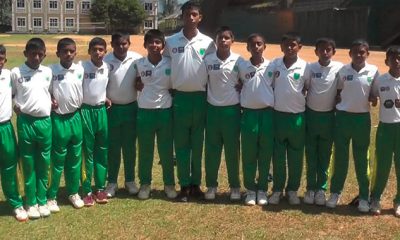
Four runs, a thousand dreams: How a small-town school bowled its way into the record books
-

 Business2 days ago
ComBank and Hayleys Mobility redefine sustainable mobility with flexible leasing solutions
-
 Business3 days ago
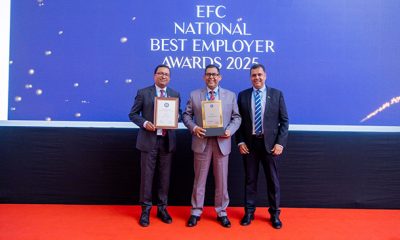
HNB recognized among Top 10 Best Employers of 2025 at the EFC National Best Employer Awards
-

 Business3 days ago
GREAT 2025–2030: Sri Lanka’s Green ambition meets a grid reality check
-

 Editorial5 days ago
All’s not well that ends well?