
Sports
“A Doyen of Sri Lanka Hockey”

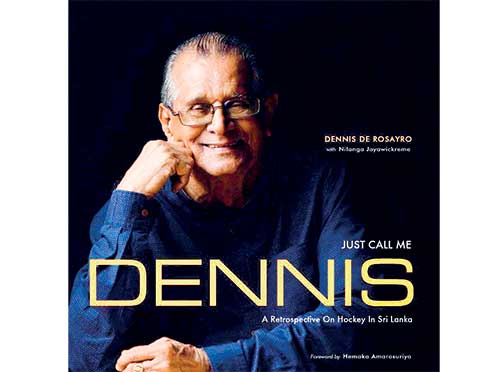
“Just call me DENNIS” a retrospective on Hockey in Sri Lanka will be launched on the 13 of February.
On Saturday the 13th of February the Book – “Just call me DENNIS” a retrospective on Hockey in Sri Lanka will be launched at the BRC, Havelock Park, Colombo 05, organized by the Mercantile Hockey Association.
Dennis a doyen of hockey in Sri Lanka has served the sport at it its best and leaves a legacy to inspire a generation of future hockirites.
Double International Chandra Schaffter in his message, mentions “There is nobody connected with the game of hockey as I have known it over the past 60 years who contributed more towards this than my friend Dennis De Rosayro. Dennis rose high in the ranks of club hockey players and is one to be respected.”
The book captures the interesting feats of hockey greats and wizards of the sticks in a pictorial story having played against immortal legends like Dhyan Chand, Balbir Singh and Leslie Claudias. Records on Sri Lanka games with Olympic teams and the Asian circuit. The inaugural Hockey Nationals and its history to date is useful material for the future custodians of the game in the country.
HE represented Sri Lanka in the Corera Cup, which was virtually an annual tournament between Sri Lanka, Tamil Nadu and Bangalore states. This was the level of Sri Lanka hockey then.
After having retired as Shipping Manager after a 40 year stint with Heath & Company, Dennis also served with the Janashakthi Group and into full retirement from Idac (Pvt)Ltd.
83-year-old Dennis, a doyen of the sport was the President of the Mercantile HA from 1978 to 2007 and still going strong, was the first captain of hockey at St. Benedict’s College in 1954. He played for BRC from 1954 to 1978 and All-Ceylon as a schoolboy against the Indian Olympic team in 1960 and against Pakistan in 1961, having represented Ceylon before in 1955. He was also a member of the Colombo Malay Cricket Club hockey team that toured South India, the first overseas hockey tour by a club in 1971 which comprised of some hockey greats. Serves currently as the Patron of the Burgher Recreation Club and an Honorary Life Member of the Mercantile Hockey Association.
His involvement with the game did not end when he retired as a competitive player, instead he continued to coach and or manage the BRC, MHA, CHA and Sri Lanka teams. Dennis goal was to give back to the sport he so loved so much. Numerous students have attested that Dennis has shaped their work ethic. His life and work were an example to the youngsters, many of whom would go on to achieve great things.
The book relates interesting anecdotes of his career. One of the highlights of his college career came about when he led the college team that played a hockey match against the prestigious Burgher Recreation Club(BRC) team in 1954. The BRC team had seven players who had international experience, including Asia’s Best Goalie, Freddy White, as well as Hugh Aldons and Ivan De Krester, all of whom captained Sri Lanka in later years. The accomplish team was unable to beat the school team and the match ended in a 4-all draw. Young Dennis surpassed all expectations netting the ball three times against this star team that day.
Captaining and coaching the Colombo Hockey Association(CHA) team in their tours to participate in the All-India invitation tournaments in late 60’s and early 70’s, he recalls the “Father of Hockey” the late Mr. Walter Jayasuriya who Managed the team.
Former Sri Lanka Hockey Captain Subash Fernando of Old Bens fame quotes – ” I know Stanley(Fernando) was trying his best to emulate you and I followed him. You were one of the greatest and stylish players I have ever seen. Unfortunately, we played on opposite sides. But you will not know how much we adored you as a hockey player and most importantly as s good citizen. If we had not seen you play, I do not think we would have reached half the standards we did. “
A legend by no means in the field of hockey in Sri Lanka, has dedicated a life time to the sport he so cherished. A strong believer of performance with integrity. During Sri Lanka’s historical tour between December 1959 and February 1960 to South and North India, ‘Dhayan Chand’, famously known as the ‘best ever player’, and his equally famed younger brother ‘Roop Singh’, came out of retirement to play for Jhanshi District Hockey Association. Their match against Ceylon drew over 10,000 fans. The Ceylon Captain Mylvaganam magnanimously asked Dennis to toss the coin and play center half in the match, which ended in a nil-all draw. After the match Dhayan ranked Ceylon about No. 05, in the world after India. Pakistan, East Germany and Holland, along with England and Malaysia and some continental countries.
The first book of its kind of Sri Lanka Hockey compiled provides readers with some in depth history of hockey in Sri Lanka, twisted with some hockey anecdotes to indulge in interesting reading. The book about Dennis and his adventourous journey in parallel captures periods the time the game was held in high esteem in the country and its formal administration to its current status. Sri Lanka having once enjoyed the position of third challenger in the Asian region to India and Pakistan was highly respected hockey playing nation then. Of course, the course of the game has changed with time, however India and Pakistan continue their challenging positions in the world. The game is continued to be played widely in the country.
Say’s Dennis; ” I wish to a leave a legacy for the nation on which future building blocks could be explicitly planned to bring back the glory of the game once enjoyed as a nation and slot Sri Lanka back as a challenger once more”.
Dennis has contributed his skill and talent for the benefit of the nation, a true son of Sri Lanka. The Book ‘Just call me Dennis” is a chronicle of this episode.




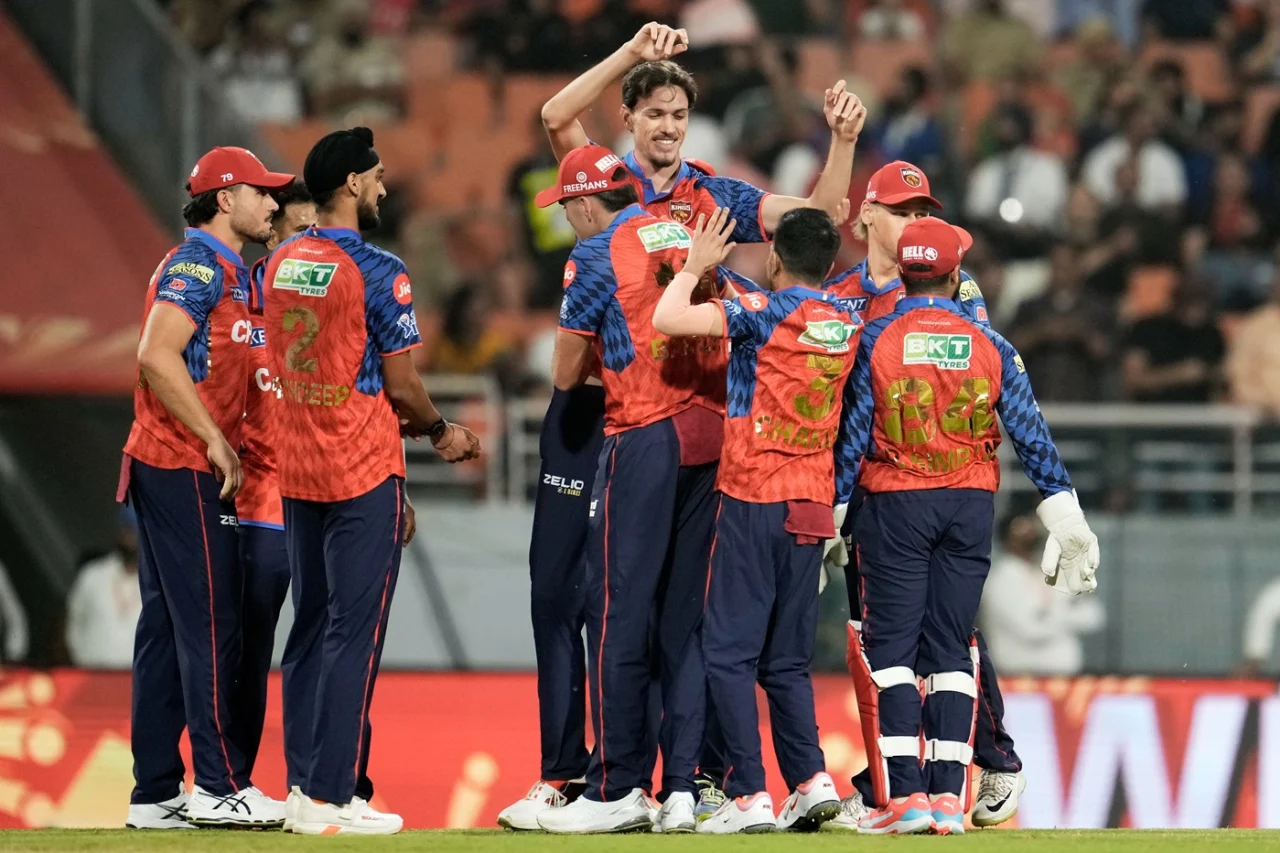
Shreyas Iyer has been fined for Punjab Kings’ slow over-rate against Gujarat Titans on Tuesday. This being PBKS’ first such offence of the season, Iyer was fined INR 12 lakh.
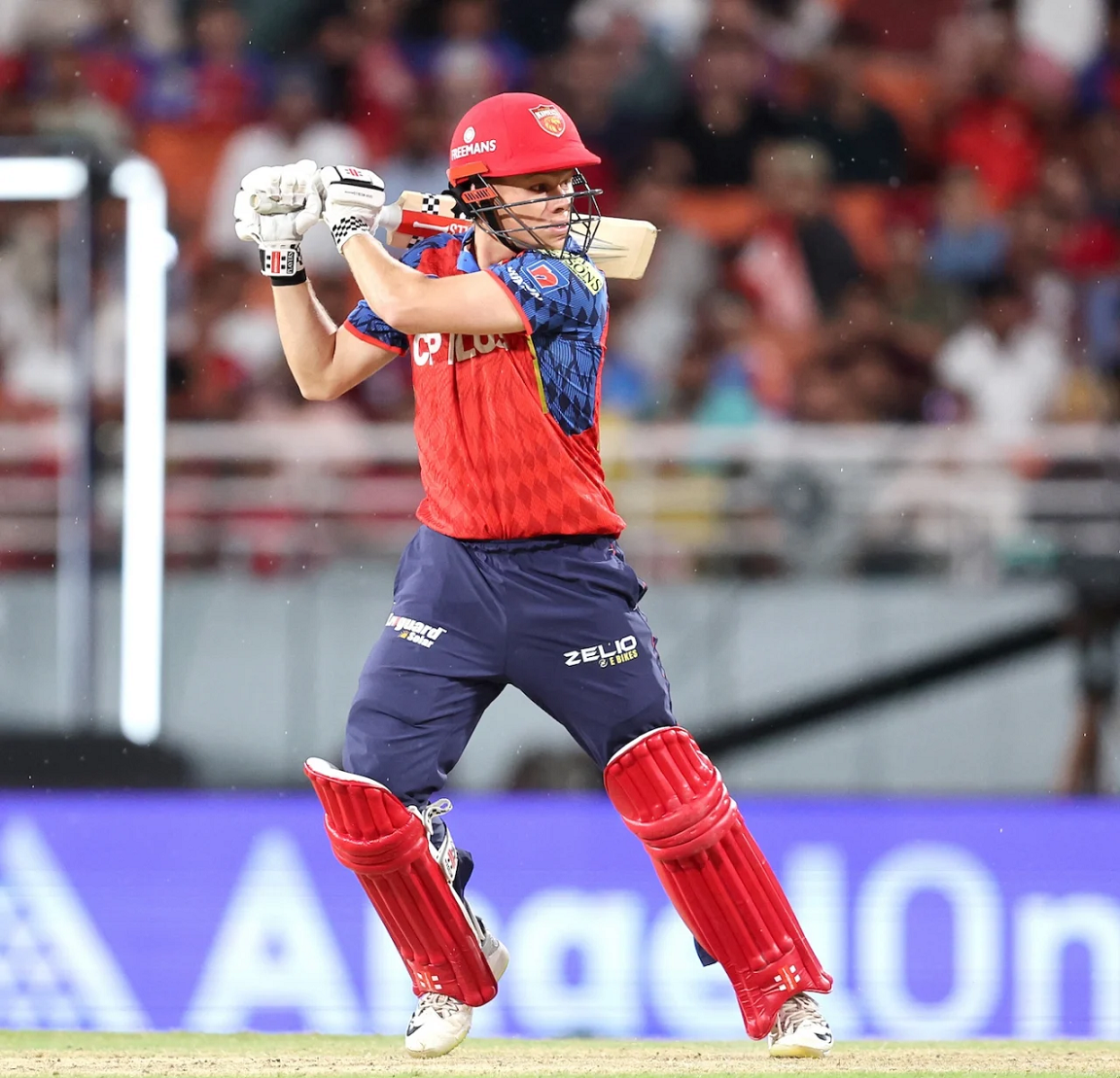
Punjab Kings 165 for 7 in 19.1 overs (Cooper Connolly 72*, Prabhsimran Singh 37, Shreyas Iyer 18, Xavier Bartlett 11*; Kagsio Rabada 1-13, Ashok Sharma 1-31, Rashid Khan 1-29, Washington Sundar 1-27, Prasidh Krishna 3-29) beat Gujarat Titans 162 for 6 in 20 overs (Sai Sudarshan 13, Shubman Gill 39, Joss Buttler 38, Glenn Phillips 25, Washington Sundar 18, Rahul Tewatia 11*; Marco Jansen 1-20, Vijayakumar Vyshak 3-34, Yuzvendra Chahal 2-28) by three wickets
Gujarat Titans (GT) stopped Punjab Kings (PBKS) in their tracks but could not stop them from going over the finish line in New Chandigarh. Cooper Connolly steered the hosts home in a chase that began authoritatively before taking nervy turns.
Prabhsimran Singh led the initial charge alongside Connolly before Prasidh Krishna initiated a collapse that derailed the chase. But with help from Marco Jansen and Xavier Bartlett, Connolly took PBKS home with five balls to spare.
GT had a sub-par outing with the bat, with three of their top four getting off to good starts but none of them capitalising. Yuzvendra Chahal was back to his best, taking out Shubman Gill and Jos Buttler, who top-scored with 39 and 38 respectively.
PBKS’ bowlers conceded 14 extras, 11 of which were wides, four of them coming in the final over by Arshdeep Singh. Perhaps the more relevant stat separating the teams was that GT hit three sixes in their innings and PBKS as many as 14.
Chahal came on with GT well set on 65 for 1 off 7 overs. He bowled slow, and varied his lines against Gill to dismiss him fourth time in the IPL. This time, it was a slog sweep that carried to deep midwicket.
There were a couple of near-chances in the 11th over, one a caught-and-bowled chance off Buttler and then one off Glenn Phillips, who hit an airy four that went just wide of Shreyas Iyer at cover. Chahal returned in the 16th, after a three-over break, with Buttler batting on 38 off 30 and itching for runs. Two dots later, Buttler looked to clear long-on but Bartlett used his height and reach to take an excellent high catch.
Vijaykumar Vyshak bowled across phases and found success later in the innings. Buttler and Gill took him on initially, hitting two fours and a six in his first two overs, the sixth and eighth of the GT innings. He came back and got Glenn Phillips to hole out to long-off in the 14th.
He saved the best for the death, bowling slower balls, either into the pitch or pitched right up. The first variant got Washington Sundar caught, cutting to deep point, and the latter had Shahrukh Khan slogging to deep square leg.
The pitch seemed flat early on as Gill, Sai Sudharsan and Buttler started with a flurry of fours. Nine in the first six overs, in fact. There were drives, pulls and flicks, and a gorgeous back-foot punch by Buttler off Vyshak.
The slowdown came in the middle overs, which saw GT make 77 for 3. Buttler faced 14 dots in his 33-ball 38, Gill, having rocketed to 27 off 15, made just 12 off his last 12 balls.
Phillips got off to a promising start on GT debut, hitting Chahal for a six and a four within his first eight balls at the crease. He missed out on a couple of boundaries because of Marco Jansen’s fielding at long-off. In the end, three of the top-four batters got to 25 but none went past 39.
After Kagiso Rabada dismissed Priyansh Arya cheaply, Connolly and Prabhsimran took him on: they hit three sixes in the fourth over, the same as GT’s innings tally.
Connolly then used Ashok Sharma’s pace to carve a length ball over cover point. He then hit two sixes off successive Rashid overs while Prabhsimran did the same off Washington Sundar.
However, Prabhsimran couldn’t get going against Rashid. He faced eight balls and scored just two before charging the legspinner and finding Prasidh at long-on. PBKS were 83 for 1 in the tenth over.
The momentum didn’t flag with that wicket, as Shreyas hit sixes off back-to-back short balls from Ashok. But out of nowhere, Prasidh dismissed the PBKS captain, who chipped a half-volley straight to deep midwicket.
This brought about a burst of T20-style wickets where the field mattered more than the quality of the ball. Nehal Wadhera cut a shortish slower ball straight to cover. Shashank Singh, looking to run the ball to deep third, nicked to the keeper off Prasidh. Marcus Stoinis, off Prasidh again, carved a shortish ball to deep third. PBKS had lost four wickets in the space of 16 balls for eight runs.
At 121 for 6, with PBKS needing 42 off 30, the game was flipping. But Connolly was ice-cool against Rabada. He punished two short balls to bookend the 16th over, the first cut over backward point for four to bring up his fifty and the last one pulled over square leg for six.
The pressure was eased at the other end as Jansen and Bartlett pulled Prasidh for sixes in the 17th and 19th overs respectively. That was where PBKS effectively sealed the game.
Brief scores:
Punjab Kings 165 for 7 in 19.1 overs (Cooper Connolly 72*, Prabhsimran Singh 37, Shreyas Iyer 18, Xavier Bartlett 11*; Kagsio Rabada 1-13, Ashok Sharma 1-31, Rashid Khan 1-29, Washington Sundar 1-27, Prasidh Krishna 3-29) beat Gujarat Titans 162 for 6 in 20 overs (Sai Sudarshan 13, Shubman Gill 39, Joss Buttler 38, Glenn Phillips 25, Washington Sundar 18, Rahul Tewatia 11*; Marco Jansen 1-20, Vijayakumar Vyshak 3-34, Yuzvendra Chahal 2-28) by three wickets
[Cricinfo]
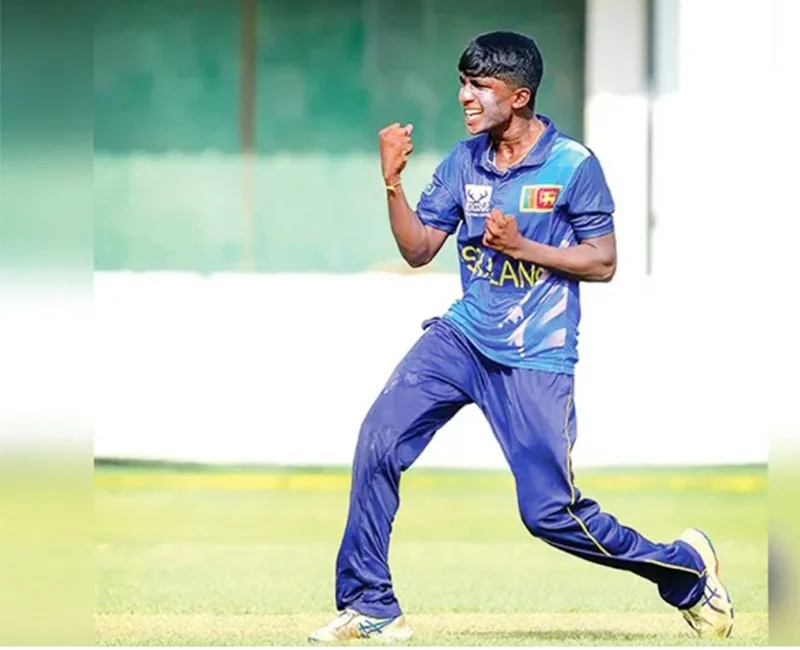
St. Joseph’s College produced a thrilling performance to defeat their arch rivals St. Peter’s College by three wickets in the Under 19 Division I Tier ‘A’ cricket quarter-final at Kuruvita on Tuesday.
The victory was built around a superb bowling display by Sri Lanka Under-19 spinner Vigneswaran Akash, who ripped through the Peterite batting line-up with a sensational eight-wicket haul in the second innings. The Josephians took the bowling honours in the keenly contested encounter where Akash was joined by Vishwa Peiris, who finished with a match bag of eight wickets, to trouble Petes.
Chasing a modest target of 97 runs for victory, St. Joseph’s began the final day in trouble at two wickets for three runs. Batting on a difficult surface, wickets continued to fall at regular intervals, putting the favourites under pressure.
However, two aggressive knocks turned the tide in favour of the Josephians. Aveesha Samash launched a brisk counter-attack, smashing five fours and a six in a rapid 32 off just 18 balls, while Senuja Wakunegoda added a valuable 24 at better than a run-a-ball pace. Their contributions ensured St. Joseph’s reached the target within 15 overs during the morning session.
For St. Peter’s, Janith Panditharathna and Sadeesha Silva shared all seven wickets to fall.
Earlier in the match, St. Peter’s posted 204 in their first innings. St. Joseph’s replied with 187, conceding a slender 17-run first-innings lead.
But the match turned dramatically when Akash spun a web around the Peterites in their second innings. The Jaffna-born spinner produced a devastating spell to bowl them out for just 79 runs, returning outstanding figures of 8 for 21 in 9.1 overs and finishing with a remarkable match haul of 11 wickets.
Peiris, who claimed six wickets in the first innings, added two more in the second to complete an impressive match return of eight wickets.
The victory sends St. Joseph’s into the semi-finals after overcoming a spirited challenge from their traditional rivals in a match dominated by spin bowling. (RF)

Punjab Kings fined for slow over-rate

Ice-cool Connolly leads nervy Punjab Kings home on IPL debut

Showers expected in the Western, Sabaragamuwa and Southern provinces in the evening or night

Heat Index at Caution Level in the Western, Sabaragamuwa, Southern, Eastern, North-western, Northern and North-central provinces and in Monaragala district

Urea shortage threatens Yala harvest: Experts

2025 property grab: Court orders JVP to hand back Yakkala office to FSP

‘Dates have the highest sugar content to fight Coronavirus’

Sunday Island 27 December – Headlines

#SundayIsland 17th December – Headlines

Sunday Island – 28th March

Sunday Island Headlines – 21 March

Sunday Island – 21st February – Headlines
-

 Features4 days ago
A World Order in Crisis: War, Power, and Resistance
-

 News5 days ago
Energy Minister indicted on corruption charges ahead of no-faith motion against him
-

 News6 days ago
US dodges question on AKD’s claim SL denied permission for military aircraft to land
-

 Business6 days ago
Dialog Unveils Dialog Play Mini with Netflix and Apple TV
-

 Sports5 days ago
SLC to hold EGM in April
-

 Latest News6 days ago
A strong Technical and Vocational Education and Training (TVET) system equips individuals with practical, relevant, and future-oriented skills helping to innovate responsibly towards a greener and sustainable future – PM
-

 Opinion5 days ago
When elephants fight, it is the grass that suffers
-
 Features5 days ago
Lest we forget