
Business
A Brick at a Time: How RYTHM Foundation is supporting low-income, conflict-affected Sri Lankans


RYTHM Foundation, the social impact arm of the global QI Group, embarked on a Sustainable Community Project (SCP) in Sri Lanka in 2019 to rebuild the lives of 500 low-income families in one of the country’s poorest districts post the Sri Lankan Civil War.
A legacy of the project is a brick manufacturing facility that has contributed to gradually rebuilding the lives of residents in Mullaitivu district, where more than 70% of households live below the poverty line.
The project is a collaboration between RYTHM, LEADS Sri Lanka, and Habitat for Humanity Sri Lanka. The NGOs LEADS and Habitat are actively involved in transforming lives and building homes for low-income families across Sri Lanka.
The facility is far from a conventional brick factory. Instead, the plant produces compressed stabilised earth bricks (CSEB) – an eco-friendly alternative to cement blocks. Raw materials used in the production of CSEBs are responsibly sourced. In addition, the bricks are cured naturally with solar power instead of wood-fired furnaces that contribute to deforestation and air pollution.
The plant has changed innumerable lives in the district – and naturally for the better.
Although he was rehabilitated and reintegrated into society after the 26-year confrontation ended, Thevathason faced extreme difficulty landing a job – until he was employed as a labourer in the factory. As a result, he is finally earning a decent wage to sustain his family.
Another inspiring narrative involves Radeesh, a young man who struggled to repay his debts as he desperately tried to rebuild his family home after the conflict. Today, he is employed as a driver in the factory and hopes to save enough money to provide a decent life for his family and provide a permanent roof over their heads.
Sivakumari is another beneficiary of the community sustainability project. She has the manufacturer to thank for her project office job and a stable income after being displaced by the war and abandoned by her husband.
Yet another poignant story is that of Paraman and his family. They lived in numerous camps during the war before returning home with a sick child. Again, the factory played a significant role in helping the family reconstruct their property.
RYTHM has supported several initiatives that encourage and empower communities throughout Sri Lanka. The country is especially close to the heart of its Founder, Umayal Eswaran, who was born and raised in Colombo.
Nonetheless, Umayal is as passionate about uplifting vulnerable communities elsewhere in the world.
“Projects that encourage livelihood generation and self-sustenance are needed among all affected communities no matter where they are,” Umayal says. “RYTHM Foundation believes in contributing towards making such efforts a reality.”
RYTHM’s SCP initiatives help transform economically affected populations worldwide into self-sufficient communities in the long term. The programme has helped innumerable beneficiaries – from children to women, urban poor to rural communities, to social and micro-enterprises.
Local partners are provided grants to establish and facilitate programmes that promote and strengthen the Foundation’s three primary focus areas: Education, Gender Equality, and Sustainable Human Development. The initiative also embraces a fundamental RYTHM goal: empowering lives and transforming communities.

Business
“RDB Drives Unprecedented Growth with Record Profits Fueling Expansion and Development Impact”

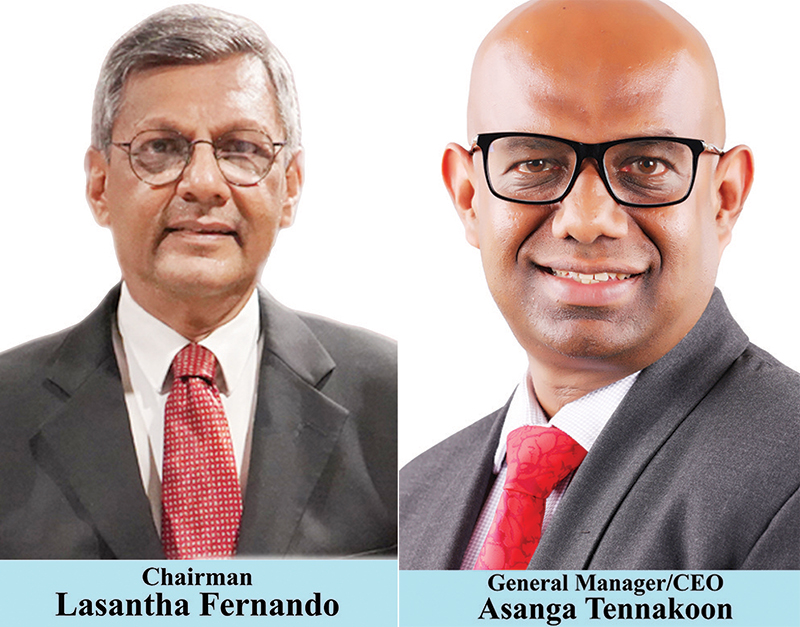
The Regional Development Bank (RDB) delivered an exceptional financial performance for the year ended 31 December 2025, recording an 86% year-on-year increase in Profit After Tax to LKR 2.37 billion. The Bank’s total income reached LKR 42.81 billion, driven by a 23.89% growth in Net Interest Income to LKR 24.23 billion, complemented by steady contributions from both interest and fee-based income streams. This performance highlights the Bank’s ability to optimise its asset base while sustaining a well-diversified and resilient revenue profile.
Marking its 40th anniversary in 2025, the Bank’s exemplary performance underscores the strength of its resilient operating model, disciplined execution, and its growing role as a catalyst for inclusive economic progress in Sri Lanka. Profitability metrics strengthened notably, with Return on Assets (ROA) improving to 1.70% and Return on Equity (ROE) increasing to 11.77%, demonstrating enhanced efficiency in capital deployment and earnings generation.
Commenting on the Bank’s performance, Chairman Lasantha Fernando stated,
“Our performance in 2025 reflects the strength of a purpose-driven banking model that successfully balances financial sustainability with national development priorities. As Sri Lanka progresses on its path to recovery, our commitment to enabling inclusive growth remains unwavering.”
The Bank continued to expand its development-focused lending portfolio, with loans and receivables growing by 23.59% to LKR 302.54 billion. This growth supported priority sectors including agriculture, SMEs, manufacturing, housing, and rural enterprises representing segments critical to national economic revitalisation. Importantly, this expansion was achieved alongside improved asset quality, with the Stage 3 impaired loans ratio declining to 4.06% from 6.25%, demonstrating robust credit risk management and effective recovery strategies.
Customer confidence remained strong, with deposits increasing by 11.85% to LKR 283.72 billion, driven by growth in both savings and fixed deposits. The Bank also maintained liquidity ratios well above regulatory thresholds, reinforcing its financial stability and resilience
Asanga Tennakoon General Manager/Chief Executive Officer, highlighted” last year’s results underscore the impact of disciplined execution, prudent risk management, and a strong customer-centric approach. Looking ahead, we will continue to expand our reach, strengthen digital capabilities, and deepen financial inclusion to create sustainable value for all stakeholders.”
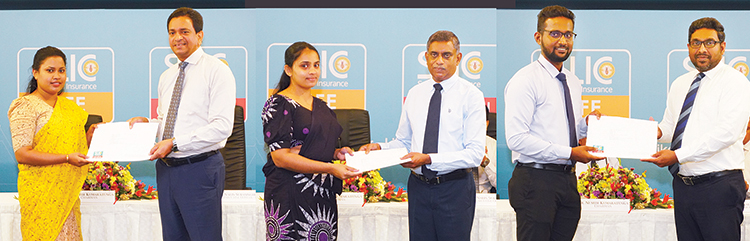
Sri Lanka Insurance Life Ltd (SLICLL) and Sri Lanka Insurance General Ltd (SLICGL) together appointed 112 Trainee Insurance Assistants, marking one of the largest recruitments across both companies in recent years.
Of the total intake, 87 candidates joined SLICGL while 25 candidates were appointed to SLICLL. This recruitment reflects the continued efforts of both companies to strengthen their workforce while contributing to employment opportunities.
The recruitment process was conducted through a structured and independent evaluation framework to ensure transparency and merit-based selection. Applications were invited from eligible candidates island-wide, followed by a written examination. Candidates who met the required benchmarks were shortlisted for interviews conducted by an independent panel, reinforcing fairness and credibility throughout the process.
The newly appointed Trainee Insurance Assistants represent a diverse and capable talent pool. Approximately 30% of the recruits are graduates, while all candidates possess the required academic qualifications, including G.C.E. Ordinary Level and Advanced Level certifications, or equivalent diplomas and higher qualifications.
This intake is aligned with the long-term focus of SLICLL and SLICGL on developing human capital and nurturing future-ready professionals within the insurance industry. The new recruits will have access to structured career growth opportunities, enabling them to build sustainable careers within the organisations. Efforts have also been made to assign employees to locations closest to their places of residence, subject to operational requirements, ensuring both efficiency and employee convenience.
Commenting on the appointments, Nusith Kumaratunga, Chairman of Sri Lanka Insurance stated, “The onboarding of this new group of Trainee Insurance Assistants reflected our continued focus on building strong and capable teams across both SLICLL and SLICGL. By maintaining a transparent and merit-based selection process, we remained committed to creating opportunities for talented individuals while strengthening the foundations for long-term organisational growth. This initiative also aligned with our broader role in supporting employment generation and contributing to the country’s economic progress.”
The official appointment ceremony was held on 7th April 2026 at the SLIC Head Office, in the presence of the Chairman and the Corporate Management of SLICLL and SLICGL, marking an important milestone in the organisations’ ongoing people development journey.
Business
99x Wins Five Awards at Best Management Practices Awards ‘26, Showcasing AI-led Transformation
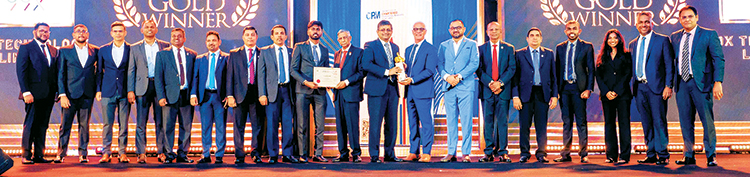
99x, a leading global product engineering company, has secured five major accolades at the CPM Best Management Practices Awards 2026, including an Overall Gold Award, positioning the company among Sri Lanka’s top-performing organisations in management excellence. The company was also recognised as the Sector Winner for IT, Software & BPO Services, named among the Forty Outstanding Companies, and received the Best Management Practices Excellence Award. In addition, Hasith Yaggahavita, CEO of 99x, was honoured with the Leadership Excellence Award, acknowledging his role in driving the organisation’s AI-led transformation.
The recognition was awarded for 99x’s submission titled ‘Embracing AI: Rethinking Talent, Products & Services,’ which addressed one of the most pressing shifts facing the global technology services industry today. As AI continues to redefine how software is built and delivered, traditional outsourcing models are being challenged from reduced reliance on large engineering teams to a growing shift toward outcome-based delivery and faster go-to-market expectations.
Chatura De Silva, Chief AI Officer at 99x, stated, “Winning five awards at one stage is a proud moment for us as a team. While AI is driving change across the industry, what made this possible is how we chose to adapt to it. We recognised that AI is not just a layer on top of what we do, but that it changes the foundation of how value is created. This transformation was about connecting both our talent and delivery, while embedding AI across everything we do”.
Selected from over 150 award submissions, 99x was also among the top 10 organisations invited to present its journey at the CPM Management Insights Summit 2026, placing its transformation on a national stage among the country’s most forward-thinking enterprises. Chatura De Silva, Kalana Wijesekara, Chief Developer Experience Officer and Chrishan de Mel, Chief Marketing and Corporate Affairs Officer, presented 99x’s story.
Commenting on the significance of this year’s awards, Dilshan Arsakularathna, CEO of The Institute of Chartered Professional Managers of Sri Lanka, stated, “99x securing the Overall Gold Award among organisations across multiple industries reflects the level at which Sri Lanka’s IT sector is progressing today. It demonstrates how companies are building real capability and driving innovation that can confidently stand on a global stage. Notably, 99x has now become the first organisation to secure the Overall Gold Award twice across the five editions of the BMPC Awards. This remarkable achievement reflects their strong commitment to sustaining excellence and continuously embedding best management practices within their operations. What stood out with 99x was how they have adapted to change in a practical and forward-thinking manner, reshaping how they operate and deliver value, while setting a compelling benchmark for modern management practices.”

Sanju Samson and Jamie Overton deliver first points for Chennai Super Kings

Arya, Prabhsimran and Shreyas help Punjab Kings ace another 200-plus chase

Beauty of Sri Lanka in focus: Global showcase blends art, diplomacy and conservation

Showers expected in the Western, Sabaragamuwa, Central, Southern, North-western and Uva provinces and in Ampara, Batticaloa and Polonnaruwa districts after 1.00 p.m.

Heat index likely to increase up to ‘Caution level’ at some places in the Northern, North-central, North-western, Western, Sabaragamuwa, Southern and Eastern provinces and Monaragala district

Sun directly overhead Cheddikulam, Kebithigollewa, Gomarankadawala and Nilaveli about 12:11 noon. today [12]

‘Dates have the highest sugar content to fight Coronavirus’

Sunday Island 27 December – Headlines

#SundayIsland 17th December – Headlines

Sunday Island – 28th March

Sunday Island Headlines – 21 March

Sunday Island – 21st February – Headlines
-

 News6 days ago
Lankan-origin actress Subashini found dead in India
-

 News4 days ago
AG: Coal procurement full of irregularities
-

 Business3 days ago
Israeli attack on Lebanon triggers local stock market volatility
-

 Business4 days ago
Hayleys Mobility introduces Premium OMODA C9 PHEV
-

 Business3 days ago
HNB Assurance marks 25 years with strategic transformation to ‘HNB Life’
-

 Sports4 days ago
DS to face St. Anthony’s in ‘Bridges of Brotherhood’ cricket encounter
-

 News14 hours ago
CEB orders temporary shutdown of large rooftop solar systems
-

 News6 days ago
UN Regional Director launches SL’s first Country Gender Equality Profile during official visit