
Editorial
A baby step in right direction


Wednesday 31st March, 2021
There has been a mixed reaction to the Election Commission (EC) decision to stop registering political parties with names associated with ethnicity or religion. The EC has said its move is aimed at facilitating national reconciliation. This is a baby step in the right direction, and much more remains to be done to usher in the reconciliation.
Sri Lanka and her political parties are like a poor mother with a large, malnourished brood. Most of these outfits are mere name-boards that only cause the elongation of ballot papers. The political parties worthy of the name can be counted on the fingers of one hand. But there is hardly anything the EC, or any other institution for that matter, can do about this. Many a nuisance has to be tolerated in the name of democracy.
However welcome the EC decision may be, one should not lose sight of the factors that have led to the emergence and growth of political parties catering exclusively to particular ethnic and religious communities. One main reason cited in justification of the formation of these political organisations, the vast majority of which represent ethnic and religious minorities, is that the interests of their communities are not looked after by the main political parties. This argument holds water to a considerable extent although one can argue that they make their leaders’ political ambitions out to be the interests of their communities. They are similar, in many respects, to the political parties formed by some Buddhist monks, who entered Parliament, vowing to save Buddhism but ended up being bracketed with power-hungry politicians. A group of monks who contested the last general election purportedly to protect Buddhism and secured one National List seat, fought an epic battle among themselves to grab the single slot, reminding us of the legendary conflict between Chulodara and Mahodara over a jewel-encrusted throne.
Nothing could be further from the truth than the claim that the leaders of ethno-religious political parties representing minorities are driven solely by a genuine desire to serve the interests of their communities. They could be as self-serving as their majority counterparts. There are instances where they give the lie to their claims of grievances and injustices. How the TNA and the SLMC behaved following the conclusion of the war, and the anti-Muslim riots in Aluthgama in 2014, respectively, may serve as examples. During and after the final Eelam war, the TNA persistently accused the army of war crimes, but in 2010, it threw in its lot with Opposition presidential candidate Gen. Sarath Fonseka, who had led the army to victory. The TNA thus made a mockery of its war crimes claims. The SLMC, which left the Rajapaksa government, in 2014, blaming it for having done precious little to prevent the Aluthgama violence and bring the culprits to justice, had no qualms about joining a coalition which had, as a constituent, the JHU, which was accused of being sympathetic towards the BBS blamed for engineering the anti-Muslim riots at issue.
All politicians, representing the majority community and minorities, are guilty of abusing their ethno-religious identities for political expediency; they benefit from their communities’ herd mentality, which helps them secure block votes. They also exploit class and caste differences for this purpose, as evident from the way they select candidates for elections. What drives politicians is basically their thirst for power and privileges.
Meanwhile, what’s in a name? A party can change its name and constitution in compliance with the EC directive, but retain its ethno-religious agenda. Besides, there are already political parties that do not mention religion or ethnicity in their names or constitutions but are ethno-religious in all but name. One of the main criticisms against the ruling SLPP is that it serves the interests of only the majority community despite having members of other communities within its ranks. The UNP and the SJB claim to be minority friendly, but they too have glass ceilings that prevent the members of ethnic and religious minorities from securing leadership.
Only the left-wing political parties have remained above ethno-religious politics, but unfortunately their ideologies and agendas have not been able to attract enough public support. But their courage to be different is commendable.
A perquisite for the fructification of the efforts being made to facilitate national reconciliation by denying political parties based on ethnicity and/or religion registration with the EC is ensuring equal opportunities in the main political organisations for the members of all communities, religious or otherwise. This is not something that can be attained through legal means; the existing political culture will have to undergo a radical shake-up.


Wednesday 28th Junuary, 2026
The SJB-led Opposition made a public display of collecting signatures for a no-confidence motion (NCM) against Prime Minister and Education Minister Dr. Harini Amarasuriya over the government’s flawed educational reforms, but it has since got cold feet. Not all Opposition parties have endorsed the NCM in question. Some bigwigs of the JVP/NPP government with a two-thirds majority are now daring the Opposition to go ahead with the NCM. Dr. Amarasuriya herself has taunted the Opposition, in Parliament, asking why it has baulked at moving the NCM against her.
The government is humiliating trade unions as well. Deputy Health Minister Dr. Hansaka Wijemuni has scoffed at the strength of the Government Medical Officers Association, which is currently on the warpath. He has claimed that the doctors did their utmost to win their demands by holding patients to ransom, but in vain, and warned that the government will not hesitate to take stern action to keep the state-run hospitals free from disruptions. This warning smacks of a veiled threat.
The JVP/NPP high-ups are sounding just like their predecessors, especially the members of the UNP regime led by President J. R. Jayewardene. The incumbent government’s dire warning to the protesting doctors reminds us of how the JRJ government suppressed trade union struggles in the 1980s. Having crushed the July 1980 general strike by terminating tens of thousands of workers who took part in it, the Jayewardene government bragged that ‘the elephant’ (meaning the UNP) had only shaken its trunk.
As for the Opposition’s NCM on hold, it is hoped that the JVP/NPP government will not follow a very bad precedent set by the Jayewardene regime. In 1980, the Opposition sought to postpone the debate on an NCM it moved against the then Speaker Bakeer Markar for backing President Jayewardene’s efforts to retain Abeyratne Pilapitiya as a UNP MP by nominating him to the Kalawana electorate despite a Supreme Court ruling that his election was void. Speaker Markar echoed President Jayewardene’s assertion that the Kalawana seat had not fallen vacant, and therefore a by-election was not warranted. The NCM against the Speaker was scheduled to be debated on 23 December, 1980, but the Opposition wanted it postponed in view of possible legal implications of the by-election the UNP was trying to avoid. But claiming that the NCM, moved by the Opposition, was of utmost national importance and therefore had to be debated urgently, the UNP government took it up, put it to the vote and defeated it! All UNP MPs, including the proposer and the seconder, voted against the NCM! The Opposition boycotted the NCM debate.
When the JVP-NPP government dares the Opposition to move the NCM against Prime Minister Amarasuriya, it sounds like its immediate predecessor, the SLPP-UNP administration, which was led by Jayewardene’s nephew, President Ranil Wickremesinghe. One may recall that when the Opposition, including the JVP, demanded action against the then Health Minister Keheliya Rambukwella over a racket involving the procurement of a fake cancer drug, President Wickremesinghe audaciously challenged it to move an NCM against Rambukwella. The Opposition did so, but the SLPP and the UNP defeated the NCM comfortably. Wickremesinghe apparently thought the matter would end there, but he was mistaken.
A government may defeat an NCM and boast of victory, but allegations against its members do not go away. The SLPP-UNP government could not go on defending Rambukwella, who was eventually thrown to the wolves. A parliamentary majority does not necessarily translate into a government’s ability to win elections. The crumbling SLPP-UNP regime, which defeated the NCM against Rambukwella, faced ignominious defeats in the presidential and parliamentary elections in 2024. The Yahapalana government (2015-2019) also had a parliamentary majority despite the UPFA’s pull-out from it in October 2018; the then Prime Minister Ranil Wickremesinghe retained his hold on power with the help of the JVP, the TNA, etc., but his party, the UNP, was reduced to a single National List seat in the 2020 general election. The JVP, which threw its weight behind Wickremesinghe, could secure only three seats.
Governments with supermajorities, too, have suffered crushing electoral defeats in Sri Lanka. The SLFP-led United Front government, which had a two-thirds majority, suffered a Humpty Dumpty-like fall in 1977. President Mahinda Rajapaksa’s government secured a two-thirds majority but collapsed like a house of cards in 2015. So did the Gotabaya Rajapaksa administration, which also had a two-thirds majority. The JVP-NPP government is ruining things for itself so much so that it is wary of holding the Provincial Council elections. Powerful governments in this country apparently tend to dig their own political graves.
Tuesday 27th January, 2026
The NPP government’s efforts to abolish MPs’ pensions have met with stiff resistance. All members of the current Parliament, including 159 NPP legislators, will lose their retirement benefits unless the government walks back its plan. Several petitions have been filed before the Supreme Court against the bill seeking to abolish the MPs’ pension scheme. The matter is now best left to the judges of the apex court.
Interestingly, former Minister of Justice Dr. Wijeyadasa Rajapakshe has pointed out that President Anura Kumara Dissanayake, who is all out to do away with MPs’ pensions, will receive his retirement benefits.
What one gathers from Dr. Rajapakshe’s argument is that President Dissanayake, like his predecessors, will be entitled to his pension. Article 36 of the Constitution says: “Within one month of the commencement of the Constitution, Parliament shall by resolution determine the salary, allowances and pension entitlement of the holders of the office of President. Such pension shall be in addition to any other pension to which such person is entitled by virtue of any prior service” (emphasis added). Article 36 (2) says, inter alia, “Any subsequent amendment, repeal or replacement of this Article and any subsequent law or any provision thereof inconsistent with this Article shall not have retrospective operation.” Article 36 (4) says: “Parliament may by resolution increase, but shall not reduce, the salary, allowances or pension entitlement of the holders of the office of President.”
One may recall that before the 2024 elections, the JVP/NPP leaders had the public believe that they would practise austerity a la Jose Mujica, who was the President of Uruguay from 2010 to 2015. Known as the world’s poorest President, Mujica, refused to move into the President’s House, and lived on a farm with his wife; his most notable asset was a 1987 Volkswagen Beetle. He donated his presidential salary and waited in queues with ordinary people in government hospitals, where he received treatment. He died a few months ago. It is unbecoming of the self-proclaimed Marxist leaders who denounced the previous Presidents for using insanely expensive vehicles purchased with state funds. In 2018, Dissanayake, as an Opposition MP, made a hue and cry about two bulletproof vehicles bought for the then Prime Minister Ranil Wickremesinghe’s use, at a staggering cost of Rs. 300 million each. He condemned that kind of expenditure as an utter waste of state funds. Now, the 600-million-rupee question is where those vehicles are. Are the incumbent government leaders using them?
Shouldn’t President Dissanayake emulate Mujica instead of his predecessors whom he berated for wasting tax money to maintain fleets of super luxury vehicles and large VVIP security divisions?
Meanwhile, it is puzzling why the JVP/NPP has not sought to abolish the MPs’ salaries as well. The JVP says it looks after its leaders and parliamentary group members. Besides, as evident from their asset declarations, they can easily do without their salaries. They should heed what Mujica famously said in an interview with BBC: “I’m called ‘the poorest president’, but I don’t feel poor. Poor people are those who only work to try to keep an expensive lifestyle, and always want more and more.” Sadly, as we argued in a previous comment, the only similarity one sees between the policies of the Mujica administration and those of the JVP-led NPP government is their lax attitude towards cannabis. Mujica legalised the recreational use of cannabis, and the JVP/NPP leaders have permitted the cultivation of cannabis for export.
While claiming that their well-wishers look after them, the JVP/NPP leaders insist that their political rivals in the current Parliament amassed huge amounts of ill-gotten wealth while they were in power. In fact, those who are currently in the Opposition enriched themselves while savouring power and now spend colossal amounts of funds on their election campaigns and live in clover. So, one can argue that the members on both sides of the House are in a position to serve the nation voluntarily.
Monday 26th January, 2026
Prime Minister Dr. Harini Amarasuriya and Opposition Leader Sajith Premadasa have agreed on the appointment of three civil society (CS) representatives to the Constitutional Council (CC) to succeed Dr. Anula Wijesundere, Dr. Prathap Ramanujam and Prof. Dinesha Samararatne. The new members are Austin Fernando, Prof. Wasantha Seneviratne and Ranjith Ariyaratne, according to media reports.
The new CC appointments have come at a very crucial time. The National Audit Office (NAO) remains headless because the NPP government’s efforts to appoint one of its cronies as the Auditor General (AG) have met with stiff resistance. The CC, by majority decision, rejected three nominations made by President Anura Kumara Dissanayake, who had overlooked the Acting AG, the most eligible candidate in the NAO. Dr. Wijesundere, Dr. Ramanujam and Prof. Samararatne acted as an effective counterweight to the government members of the CC. President Dissanayake kept the NAO without a head. The Opposition claimed that the government was waiting until the departure of the three CS members to manipulate the CC and appoint a person of its choice as the AG.
The three outgoing CS members were instrumental in changing the public perception that the CC was a mere rubber stamp for the Executive. There has been a controversy over the appointment of the head of the Commission to Investigate Allegations of Bribery or Corruption, with the Opposition insisting that the government succeeded in misleading the CC into overlooking the most eligible candidate. However, overall, the three CS representatives carried out their duties and functions commendably well.
The outgoing CS members have set a very high bar. One can only hope that their departure will not help President Dissanayake render the CC malleable, and their successors, together with the Opposition members of the CC will continue to thwart the Executive’s efforts to undermine the independence and integrity of the NAO.
The CC has reportedly declined a Right to Information request for naming its members who voted for and against a person nominated by President Dissanayake for the post of AG. The public has a right to know how the CC members vote in respect of vital appointments. Nevertheless, information about voting at CC meetings cannot be kept secret; it is leaked to the media.
A protracted delay in appointing the AG or the elevation of a crony of the government to that post will increase the risk of mismanagement of state funds, erode public trust and confidence in the NAO, undermine legislative oversight and impair fiscal discipline. Most of all, the government’s failure to appoint a competent, independent person of integrity as AG will diminish donor confidence, especially at a time when the country is seeking funds from the international community for disaster relief and rebuilding. There is no way the government can justify its refusal to appoint the Acting Auditor General as the head of the supreme audit institution. There are other deserving officials in the NAO, and they must not be overlooked.
The Bar Association of Sri Lanka has called upon President Dissanayake to appoint a person with proven competence, integrity, and independence, who commands wide acceptance as the Auditor General forthwith. It has stressed the need to appoint a nonpartisan professional to that post to safeguard the integrity of the NAO and inspire the confidence of both citizens and international partners in the financial governance of the State. Transparency International Sri Lanka, the Civil Society Organisations and the other good governance activists, too, have faulted President Dissanayake and his government for the inordinate delay in appointing AG.
Sri Lanka’s experience with all supermajority governments has been a very bitter one. Hence the need for effective countervailing forces to keep them in check. It is hoped that the CC, with the help of its newly appointed CS representatives, will retain its integrity and independence and live up to people’s expectations by reining in the executive juggernaut careening downhill and bearing down on all democratic institutions.

South Korea’s former first lady sentenced to jail term in bribery case

Plane crash kills prominent Indian politician Ajit Pawar

New circular issued to support disaster-affected Micro, Small and Self-Employed Businesses

Food safety practices should not be confined to the school curriculum alone, but must become an integral part of the attitude and daily behavioral patterns of the child -PM

Vintage Markram, clinical Linde headline South Africa’s comfortable win

Cabinet nod for MOU between Sri Lanka and Romania on the cooperation in the Labour Field

‘Dates have the highest sugar content to fight Coronavirus’

Sunday Island 27 December – Headlines

#SundayIsland 17th December – Headlines

Sunday Island – 28th March

Sunday Island Headlines – 21 March

Sunday Island – 21st February – Headlines
-
 Business3 days ago
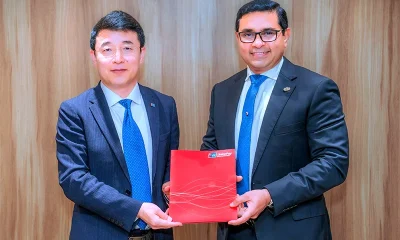
ComBank, UnionPay launch SplendorPlus Card for travelers to China
-
 Business4 days ago
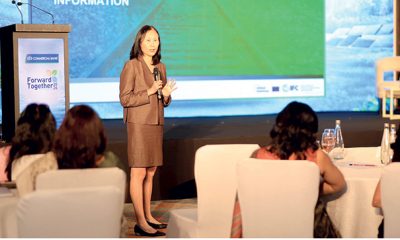
ComBank advances ForwardTogether agenda with event on sustainable business transformation
-
 Opinion7 days ago
Remembering Cedric, who helped neutralise LTTE terrorism
-
 Business7 days ago
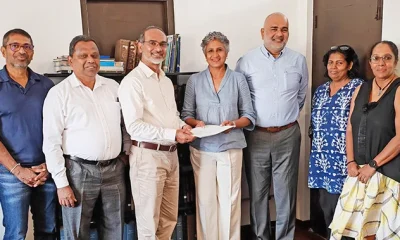
CORALL Conservation Trust Fund – a historic first for SL
-
 Opinion4 days ago
Conference “Microfinance and Credit Regulatory Authority Bill: Neither Here, Nor There”
-
 Opinion6 days ago
A puppet show?
-
 Opinion3 days ago
Luck knocks at your door every day
-
 Features6 days ago
‘Building Blocks’ of early childhood education: Some reflections