
Business
Colombo Club gets its first lady chairperson


The Colombo Club was inaugurated more than 150 years ago by the British for English and Scottish gentlemen resident in Sri Lanka to meet, relax and recuperate. For close to a 125 years it remained the exclusive habitat for gentlemen as ladies were precluded from becoming members. In 1995 the first lady member was admitted followed over the years by other ladies.At the last Annual General Meeting of the Club, history was made as the Club elected a lady member to the Chair for the first time.
In proposing her name to take over the Chair, Immediate Past Chairman Kumar Jayasuriya stated that “the Colombo Club is now poised to create history. In our 150 plus year history, members of the fairer sex were not admitted to membership in the first 125 years of our existence. This injustice was corrected in 1995. We have thereafter steadily progressed on the path of gender neutrality and within a matter of 25 years have reached the pinnacle of that endeavour which is the election of our first Chairperson.
“It is my great privilege to be associated with this historical event by proposing from the Chair the name of Ms. Anushya Coomaraswamy as the Chairperson of the Colombo Club for the ensuing year, having been nominated to this office unanimously by the General Committee of the Club. Anushya has served on the Committee since 2006 and has held the offices of Honorary Treasurer, Honorary Secretary and Vice Chairperson respectively over the last six years and is eminently suited to hold this office. I am sure that the fortunes of the Colombo Club are in very safe hands.”
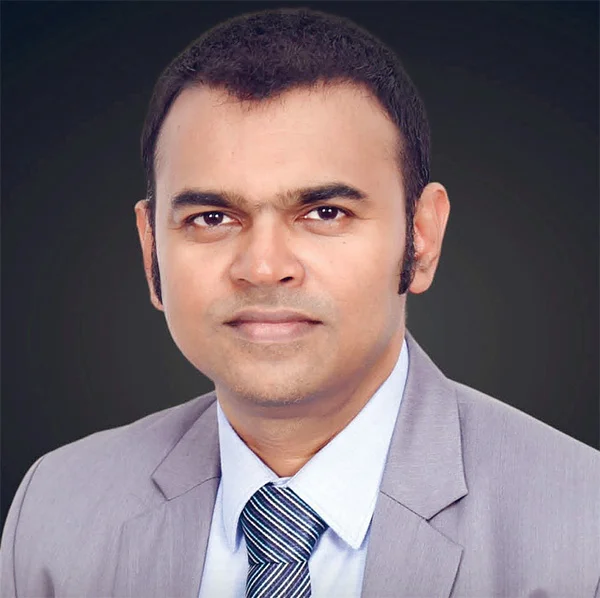
Anushya Coomaraswamy is a member of the Institute of Chartered Accountants of Sri Lanka and of the Chartered Institute of Management Accountants of the UK. She has been the Group Finance Director of John Keells Holdings PLC – at the time the first woman to be appointed to the Board of a blue chip company in Sri Lanka. Thereafter she joined the Ministry of Finance as an Advisor, primarily on Fiscal Policy for a short period, during which time she also served as the Chairman of the Public Utilities Commission and as a member of the Public Enterprise Reforms Commission.
She currently serves as an Independent Non Executive Director on the Board of Printcare PLC.Having served on the Boards of Transparency International (Sri Lanka) and the Centre for Policy Alternatives, she is currently on the Boards of the Law and Society Trust and the Women and Media Collective.
In accepting the position, Miss Coomaraswamy said that “In a world where women are still to be fully recognized and given their rightful place, the Colombo Club has been progressive and that must be acknowledged, appreciated and commended. And for me personally I thank you for your confidence.”
The premises of the Club having been recently refurbished she looks to maintain the high standards set by her immediate predecessors, Nigel Austin and Kumar Jayasuriya, to involve greater participation of its membership while providing a service to members that is of the highest standard. She would also look to promote increased participation of women, who still seem to perceive the Club as being an institution that is predominantly for gentlemen!


By Ifham Nizam
National Transmission Network Service Provider (Pvt) Ltd. (NTNSP), has secured third place in Sri Lanka’s fiercely contested 160 MW/640 MWh Battery Energy Storage System (BESS) tender, beating a number of established private-sector energy players in a major competitive procurement exercise just six months after the restructuring of the Ceylon Electricity Board (CEB).
The result marks a significant early indication that a newly restructured CEB successor company can compete on a commercial footing with established players in the rapidly expanding energy market, Senior Engineer Pubudhu Niroshan told The Island Financial Review.
More significantly, Niroshan said NTNSP’s entry into the tender helped intensify competition and contributed to a roughly 10% reduction in the lowest bid compared with the previous 160 MW/640 MWh BESS procurement, potentially delivering a more favourable outcome for electricity consumers.
“Entering such a highly competitive bidding process within just six months of restructuring and emerging third is by no means an easy task, Niroshan said.
He said the achievement had to be viewed in the context of the calibre and number of competitors involved in the process, adding that NTNSP had demonstrated that a successor company emerging from the CEB restructuring could step into a competitive commercial environment and hold its own against established businesses.
The significance of NTNSP’s participation, however, extended beyond its third-place ranking.
According to Niroshan, the company’s decision to enter the BESS procurement created an additional layer of competition, forcing other bidders to sharpen their commercial offers.
‘The first and second-ranked bidders had NTNSP as another competitor. That itself created additional competitive pressure, he said.
The BESS procurement involved a total capacity of 160 MW/640 MWh, with the programme divided into individual projects.
The procurement was designed to bring private and other eligible project proponents into the development and operation of battery storage facilities, providing an important mechanism for integrating renewable energy and strengthening the electricity system.
The outcome, he said, was particularly important for electricity consumers because greater competition in procurement could ultimately translate into lower costs for the power system.
‘Once you have several serious players competing, offering a fair and competitive price becomes essential. That is ultimately good for the consumer, he said.
Niroshan also referred to concerns previously raised by NTNSP before the Public Utilities Commission of Sri Lanka (PUCSL) regarding prices submitted for BESS projects under the Feed-in Tariff (FiT) mechanism.
He said subsequent market developments had provided support for the view that some of the prices submitted under the FiT mechanism were comparatively high.
For Niroshan, the experience also demonstrated why competition must remain at the heart of the restructuring of the electricity sector.
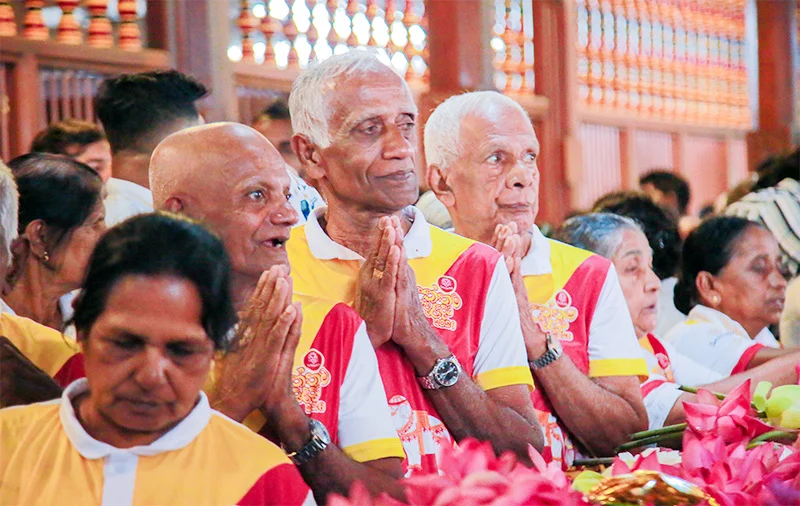
Serendib Flour Mills continued its longstanding commitment to rural communities through the fifth edition of Serendib Uththama Dalada, more than 100 elderly mothers and fathers from remote farming communities to experience the sacred Sri Dalada Perahera in Kandy.
Held on 26 August 2026, the initiative brought together elderly parents from Mahalakotuwa, Elahera and Attanakadawala, many of whom have spent a lifetime engaged in agriculture and contributing towards sustaining communities across the country. For these elders, the initiative offered an opportunity to undertake a deeply meaningful spiritual journey and witness one of Sri Lanka’s most revered religious and cultural traditions.
Conducted under the campaign thought, “Nourishing the hearts of elderly parents with spiritual merits, who once nourished a generation,” Serendib Uththama Dalada recognises the lifelong contribution and sacrifices of farming mothers and fathers while creating an experience that may otherwise remain beyond their reach.
Serendib Flour Mills facilitated the entire journey, providing safe and comfortable return transportation to Kandy aboard three dedicated buses. Special arrangements were also made to enable the participants to worship at the Sri Dalada Maligawa, followed by reserved seating at a specially erected VIP stand, allowing them to comfortably witness the grandeur of the Dalada Perahera.
Siyapatha Finance PLC, the largest fully-owned finance company of the Sampath Bank Group, delivered an exceptional financial performance for the six months ended 30 June 2026, reflecting the Company’s continued strategic growth initiatives, resilient asset quality, and unwavering commitment to sustainable value creation.
The Company recorded a profit after tax (PAT) of Rs. 1,007 million, a robust 43 percent increase from Rs. 706 million in the corresponding period of 2025, while profit before taxes (PBT) grew 38 percent to Rs. 2,334 million from Rs. 1,689 million, demonstrating sustained market and customer confidence in the Company’s core operations.
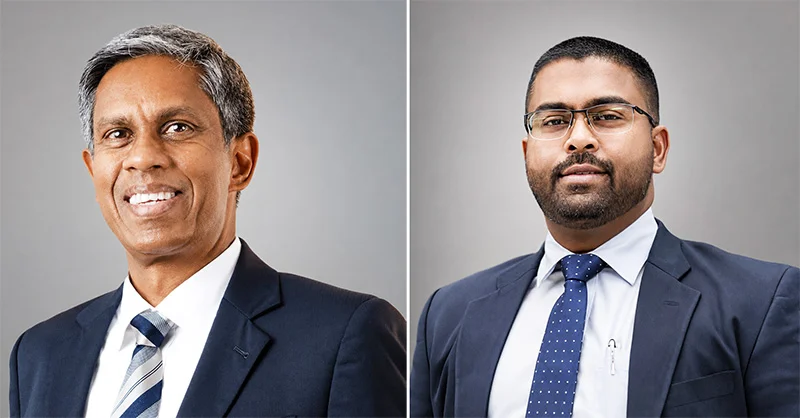
“Our performance in the first half of 2026 is a clear reflection of Siyapatha Finance’s strategic foresight and our unwavering commitment to sustainable growth,” said Siyapatha Finance Chief Executive Officer Mathisha Hewawitharana. “Surpassing the Rs. 104 billion mark in total assets while significantly improving our asset quality underscores the strength of our core operations and the deep trust our customers place in us. As we navigate the evolving macroeconomic landscape, we remain focused on prudent risk management and delivering enhanced value to our stakeholders.”
The Company’s core business operations continued to yield strong returns, with total interest income growing to Rs. 7,719 million from Rs. 5,272 million a year earlier, driving net interest income up to Rs. 3,487 million from Rs. 2,629 million, signifying the Company’s efficient management of assets and liabilities. Other income strengthened to Rs. 1,054 million from Rs. 826 million, reinforcing the effectiveness of the Company’s revenue diversification strategy. The cost-to-income ratio improved to 49 percent from 54 percent, a testament to the Company’s continued focus on operational efficiency and process optimization.
Asset quality strengthened markedly during the period, underscoring the success of Siyapatha Finance’s prudent credit risk management and proactive recovery initiatives. The gross stage 3 loans ratio improved to 4 percent from 8 percent a year earlier, while the net stage 3 loans ratio declined to 2 percent from 3 percent.

Showers in the Uva, Central and Eastern provinces and in Polonnaruwa district

22A: Exclusion of 8 petitions questioned, action filed against SC Registrar, others

Thailand shuts door on undesirables from Sri Lanka

Expertise France and the EU launch media project to strengthen environmental journalism in Sri Lanka

CLA questions non-inclusion of senior judges on five-member SC bench hearing 22A petitions

Whatever on earth happened to meritocracy, pragmatism, and honesty in Sri Lanka?

‘Dates have the highest sugar content to fight Coronavirus’

Sunday Island 27 December – Headlines

#SundayIsland 17th December – Headlines

Sunday Island – 28th March

Sunday Island Headlines – 21 March

Sunday Island – 21st February – Headlines
-

 News5 days ago
Denied of promotion to SC despite vacancies, justice Gurusinghe retires
-

 Latest News6 days ago
Grade 5 scholarship exam results released
-

 News5 days ago
22A: SC urged to suspend hearing, appoint full bench
-

 Midweek Review6 days ago
The local and global dynamics of Sri Lanka’s 22nd Amendment
-
 News3 days ago
Namal remanded until Sept. 18 over Airbus deal investigation
-

 Latest News2 days ago
Tharanga creates history with Diamond League crown in Brussels
-
 News5 days ago
Govt. seeks NATO assistance
-

 News6 days ago
40 professional organisations and TU oppose proposed 22A