
Business
‘Primacy given in SL to primary production rendering the achievement of food security difficult’

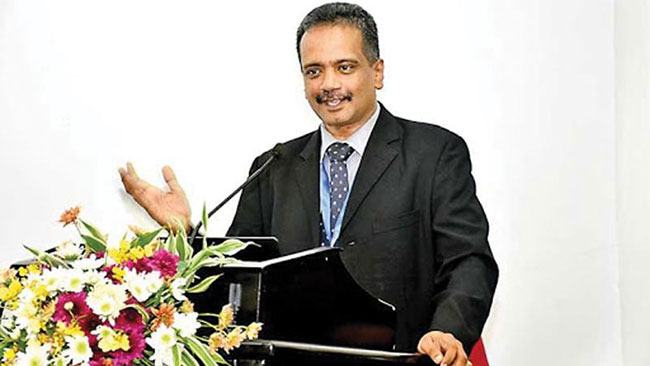
By Ifham Nizam
Sustainable food security is not an easy target to achieve in a country like Sri Lanka, where primary production has been given the priority, Professor Buddhi Marambe of the Department of Crop Science, Faculty of Agriculture, University of Peradeniya said.
Speaking to The Island Financial Review Marambe stressed that concerted efforts are required to achieve this target. Food security cannot be achieved entirely from national agricultural production.
Marambe added: ‘A country cannot be self-sufficient in all types of food to fulfill the needs of the people encircling all components of food security. Thus, food imports also play an important role in filling the demand and supply gap.
‘At this moment, Sri Lanka’s need is a national policy covering all aspects of agriculture, not only to overcome the current food and economic crisis that it experiences, but also to ensure that the whole nation will not fall a prey again to such man-made or natural disasters.
“What we require is a futuristic national policy that is evidence-based, to enhance confidence in all food-system actors and remove the uncertainties created in their minds due to faulty assurances given in the past by politicians and state agencies and help build dignity in a person as a player who contributes to national development. We need not think of doing wonders, but simply move away from extremist ideas, and face the reality, be pragmatic.
“Sri Lanka is famous in making national policies and action plans. However, their implementation is always a question due to lack of proper institutional coordination, monitoring, evaluation and reporting systems. People, including politicians, have rarely been made responsible and accountable for what they say, what decisions they make and impose.
“Hence, a future policy, especially in agriculture, should seriously consider the governance aspects in implementation. There should be a shared vision, responsibility and accountability of all individuals and institutions or entities on who is doing what, what is being done, and what is planned to be done, according to the national policy to support the progress of Sri Lanka’s economy.
“Sri Lanka went through a process to develop an Overarching Agriculture Policy (OAP), and the document was almost finalized in 2020. Food crops, perennial crops, plantation crops, livestock and poultry, fisheries, irrigation, agrarian development, and environment were the areas covered by the OAP, developed through a comprehensive stakeholder consultation process, considering the views from all actors in a food system.
“The consultations for the OAP started at the nine provinces, obtaining views from the ground-level staff, farming community, and then the national level stakeholders and the Department of National Planning (DNP) of the Ministry of Finance provided the required leadership.
“To the best of my knowledge, this is the first time that the DNP was fully involved from the initial stages of developing such a policy due to its cross-cutting nature. This is a timely and appropriate effort given the diverse nature of the broad subsectors covered in agriculture.
“A clear balance and inter-connectivity of subsectors are to be maintained for overall sustainability. The European Commission (EU) provided the required assistance. The OAP seems not moving forward, but it is the high time to bring it to the limelight to provide required guidance to develop the agricultural economy of Sri Lanka.
“We should improve agricultural productivity and production with a view to maximizing the contribution of agriculture to the country’s food security. The productivity achievement should accompany realistic goals. The cry from different sectors of society is for varieties and technologies when a crisis is imminent. We cannot come up with new varieties or breeds overnight. Even for a human child to be born there should be 9-10 months of gestation. A new crop variety in rice would take 6-8 years to be recommended and be released.
“A new cultivar of a crop like tea took about 25 years though now with technological advances, our scientists are able to shorten this gestation period to 18 years. Let us understand this reality. Genetic barriers are not easy to tackle. We need patience, but, proactive forward thinking would make the dream of sustainable food security a reality. Further, we do have a good crop cultivation plan, but should also focus on a post-harvest management plan done simultaneously before crying foul about post-harvest losses, especially during a glut of agricultural produce in the market. These are not based on rocket science or advanced philosophical thinking, but aspects that have been brought to the notice of policy makers on several occasions. Unfortunately, such propositions were not considered favourably.
“As a nation, we need to take our famers out of the cell by continually identifying them as ‘poor farmers’. We should make society understand that the ‘poor doing farming’ and the ‘farmer becoming poor’ are two different aspects. It is the latter that we need to address promptly. Indeed, poverty issues in the country should be addressed. However, agriculture is not the panacea to resolve all the problems of the poor, or the country as a whole. Entrepreneurial farming is the key to the future and needs to be promoted through careful articulation.
“The following seven aspects are priorities in a national policy leading to agriculture development and food security in the foreseeable future, considering crops (food and feed, perennial and plantation crops), animals (livestock, poultry and fisheries) and allied sectors:
“(1) Productivity enhancement of agriculture ecosystems through adoption of Good Agricultural Practices (GAP) and Good Animal Husbandry Practices (GAHP) to be demand-driven, while tackling food nutrition and safety and environment-related issues in production and product-processing.
(2) Development and adoption of climate-resilient crop varieties and animal breeds be supported while ensuring timely availability of inputs (e.g. seeds and planting material, fertilizer, pesticides, irrigation water, machinery for crops, feed and drinking water for animals).
(3) Efficient production technologies (e.g. protected agriculture, micro-irrigation, crop-animal integration, etc.) and value addition (e.g. GAP-certified products, and mechanized production and product-processing systems) be promoted with a special focus on youth and gender considerations.
(4) Efficiency of actors in the urban-rural connectivity in the food system be enhanced to reduce “food miles” (distance of food transport from producer to consumer), losses and prices through improved packaging and storage, and an efficient transportation system.
(5) A market-driven agriculture economy be supported through public-private-producer partnerships (PPPP) with targeted-subsidies, continued well-focused capacity building programmes and centrally-governed extension services.
(6) Dignity of the farming community and all other players in the food system be assured through mechanisms such as pension schemes, credit facilities with less hassle, supporting establishment of farmer companies, etc., where relevant.
(7) All actors in a food system, especially the politicians, officials of the state, private and non-governmental sector including academia and researchers/scientists, be made accountable and responsible for the decisions made and advocacies given in relation to agriculture.”


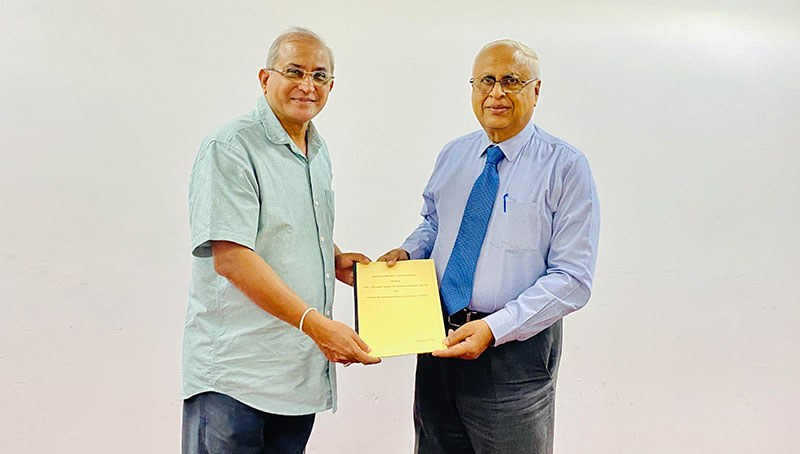
By Sanath Nanayakkare
In a major boost to bilateral economic ties, the Chamber of Construction Industry of Sri Lanka (CCISL) and the Indo–Sri Lanka Chamber of Commerce & Industry (ISCCI) have signed a strategic Memorandum of Understanding (MoU) to deepen cooperation in real estate, infrastructure, and urban development.
The agreement establishes a formal framework for both institutions to drive collaborative initiatives, including business delegations, high-level conferences, workshops, B2B matchmaking sessions, and technical site visits. Designed to bridge businesses, government institutions, and project stakeholders across the Palk Strait, the partnership aims to unlock new avenues for cross-border joint ventures and technology transfers.
A focal point of this newly minted partnership is the facilitation of an upcoming trade delegation from the National Real Estate Development Council (NAREDCO) of India. Comprising major Indian players in the real estate and infrastructure sectors, the visiting delegation will engage in targeted business meetings, workshops, and inspection tours of prominent construction projects in Sri Lanka.
Under the terms of the MoU, CCISL will serve as the principal host coordinator in Sri Lanka. In close consultation with ISCCI, the apex construction body will curate itineraries, identify viable projects for engagement, and facilitate high-level dialogues with key government agencies, regulatory bodies, and industry leaders.
With both nations prioritizing sustainable urban growth, modern construction technologies, and infrastructure expansion, industry leaders view the partnership as a timely catalyst for economic rejuvenation. The collaboration is anticipated to accelerate market access, knowledge exchange, and foreign direct investment into Sri Lanka’s burgeoning property and development sectors.
To ensure the success of the upcoming NAREDCO delegation, CCISL has issued an urgent appeal to statutory authorities and relevant project owners to come forward with viable investment proposals. Stakeholders holding projects seeking foreign investment or technical partnerships are invited to submit comprehensive details to the Secretary General and CEO of CCISL via email at secyces@gmail.com.
Both chambers emphasize that translating this foundational agreement into tangible partnerships and robust capital flows will significantly strengthen bilateral connectivity between the construction and real estate sectors of India and Sri Lanka.

Hettich, the globally renowned German manufacturer of furniture fittings and architectural hardware known for its state-of-the-art manufacturing plants and magical interior solutions across the world celebrated a significant milestone in Sri Lanka, marking 10 years of presence in the country with its inaugural Partner Meet in Colombo.
The landmark event brought together Hettich’s key partners, stakeholders and industry leaders to celebrate a decade of growth, collaboration and shared success, while reaffirming the company’s long-term commitment to the Sri Lankan market.
Over the past decade, Hettich has strengthened its presence in Sri Lanka through its focus on German engineering, innovation, quality and functionality, contributing to the creation of contemporary and intelligently designed living and working spaces across the country.
The gala evening was graced by a distinguished delegation of senior leaders, including Dr. Andreas Hettich, Chairman, Hettich Group Advisory Board; S. K. Poddar, Chairman, Hettich India & Adventz Group; Mr. Akshay Poddar, Director, Hettich India; Andre Eckholt, Managing Director, Hettich India, SAARC, Middle East & Africa; Rahul Thakkar, Director – Sales, Hettich India & SAARC; and Dinusha Bhaskaran, Managing Director, Vallibel One PLC.

GS Evo Motors Limited, the authorized distributor of JMEV electric vehicles in Sri Lanka, has officially launched the JMEV EWIND, a next-generation compact electric SUV. The vehicle is designed to offer strong performance, intelligent technology, premium comfort, and high safety standards, marking another milestone in Sri Lanka’s growing electric mobility sector.
The EWIND features a sleek, aerodynamic exterior with penetrating LED daytime running lights, trapezoidal chain-inspired LED tail lamps, 19-inch alloy wheels, and a bold silhouette. Inside, it offers a spacious cabin with a panoramic moonroof and retractable curtain, an ultra-thin suspended instrument panel, a D-shaped multifunction steering wheel, multi-colour ambient lighting, premium finishes, and electrically adjustable front seats.
The SUV is available in single-motor front-wheel drive configurations, producing up to 108 kW and 210 Nm, with 0–100 km/h acceleration in 8.9 seconds.

Fast Attack Craft P 4447 recovered in successful salvage operation

Showers above 100 mm are likely at some places in the Western, Central, Sabaragamuwa, Southern, North-central and North-western provinces

Shafali, Mandhana power India to eighth Asia Cup title

Tharanga wins Ultimate Javelin title

CIABOC member’s appointment: Controversy over Speaker under probe heading selection process

GMOA: Countrywide cadre revision not done since 2015

‘Dates have the highest sugar content to fight Coronavirus’

Sunday Island 27 December – Headlines

#SundayIsland 17th December – Headlines

Sunday Island – 28th March

Sunday Island Headlines – 21 March

Sunday Island – 21st February – Headlines
-

 Sports3 days ago
DDS set to lose Test captaincy
-

 News6 days ago
Thailand shuts door on undesirables from Sri Lanka
-

 News3 days ago
Sri Lanka faces new grid challenge as rooftop solar surges: former CEB GM
-
 Business6 days ago
CEB successor company breaks into top three in competitive BESS tender
-

 Latest News3 days ago
Shafali, Deepti power India into sixth T20 Asia Cup final
-

 Opinion5 days ago
Navigating Sri Lanka’s Israeli Dilemma
-

 Latest News2 days ago
Sri Lanka thwart Fatima Sana challenge to secure Asia Cup final spot
-

 Features4 days ago
Lost for 90 years: Rare Goby resurfaces in Jaffna