
News
Tax payers look to tighten belts further or migrate as progressive taxes bite

By SHIHAR ANEEZ
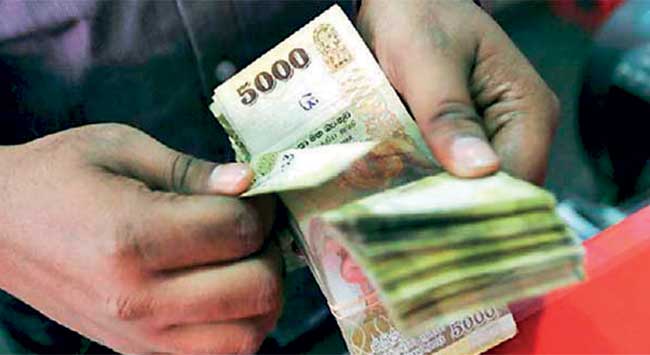
Tens of thousands of Sri Lankan individuals as well as corporates have to cut spending and investment from January as steep income tax rates come into force to finance a bloated state amid 65 percent inflation and turnover tax hikes that had already depleted disposable incomes.
The higher income taxes are coming in to effect nine months after the government declared bankruptcy and announced sovereign debt default and 10 months after the currency collapsed from 200 to 360 to the US dollar almost halving the real income of the people.
But the tax hike is likely to hit the spending on consumption of wage earners in particular who have already taken loans, leases and housing loans.A person who earns 150,000 Sri Lankan rupee monthly will have to pay only 2.3 percent of the total income, but the rate jumps to 28.7 percent to a person who earns 1 million rupees a month.
“I don’t know where to cut spending,” a 52-year old banker who is still struggling to avoid default of his vehicle lease and a home loan told EconomyNext.
“When I took both loans, the interest rate was single digit and I had a monthly saving of 100,000 rupees. But with the high inflation and higher energy prices, no money is available to save now even though I have shifted to cheaper products now,” the father of three said, asking not to be named.
“According to the new tax rates, I will have to pay around 50,000 rupees. But to accommodate that, I will have to either stop paying my car lease or the housing loan. If not, I will have to stop the studies of my kids or reduce the consumption. I am still confused.”
Similar to this banker, thousands of private sector employees who have been paying personal income tax are grumbling about the new tax increases. Some are making plans to migrate.
“I have a lease to pay and a young family,” a young engineer said. “I also took a housing loan with a floating rate when it was offered. Now interest rates have gone up. So I am thinking of migrating.”
Most private sector company officials EconomyNext spoke to said they want to pay taxes, but lack of transparency, still high government spending and wastage, as well as irresponsible political decisions give them a perception that taxation is unfair.
Sri Lanka followed a strategy called ‘Revenue based fiscal consolidation’ from 2015 to 2019 where the entire burden of adjustment was placed on the tax payers, especially the private sector, where cost cutting or ‘spending based consolidation’ was dropped under an International Monetary Fund backed program.
Critics say the unusual strategy departing from standard fiscal consolidation was probably based on Western progressive or ‘anti-state-austerity’ ideology which became popular in Washington policy circles after the 2008-9 collapse of the Federal Reserve’s housing bubble.
Under ‘revenue based fiscal consolidation’ expenditure as a share of GDP went up from 17.3 percent of GDP in 2014 to 18.9 percent by 2018 and 22.3 percent by 2019 according to central bank data as spending outpaced revenues.
Debt to GDP ratio went up from 72.3 percent of GDP in 2014 to 86.2 percent by 2019.Central government external debt went up from 30 percent of GDP in 2014 to 41.3 percent by 2019 as money was printed to suppress interest rates and the currency collapsed twice under a strategy called ‘exchange rate as the first line of defence’.
Growth also stalled as stabilization policies were repeatedly slammed because the ‘first line of defence’ failed to stop currency crises coming from central bank re-financed credit from over-aggressive open market operations.As forex shortages came the government also borrowed heavily abroad from sovereign bonds, syndicated loans and Chinese budget support loans without conditions to tighten policy, pushing up foreign debt adding to previous borrowings including those take for so-called white elephants.
Sri Lanka has a bloated public sector and loss-making state enterprises which the influential Marxists Janatha Vimukthi Peramuna (JVP) and previous Rajapaksa regimes have opposed privatizing.
SOEs are stuffed full of political appointees and are also used by line ministers to get vehicles outside their official allocations.
The public sector is also bloated with unemployed graduates each year, a strategy also popularized by the JVP which was picked up by then President Mahinda Rajapaksa from 2005 as an election winning strategy.
The country has a bloated set of ministers, deputy ministers to the point where the ruling party has no back benchers to speak of.
“Private sector employees are wasting all their energy to sustain the mostly politically appointed and inefficient public sector. How can this be fair?,” Sunil, an owner of a vehicle repair firm said, without giving his full name.
“My employees are earning their income by working in extreme weather conditions and from early morning to late night. How can the government tax these hard working employees just to pay the politically appointed state workers?”
Ministers under successive Sri Lankan governments have filled state institutions with their supporters to ensure easy victory in the next election. Most of these politically appointed people are involved in politics rather than serving the public, analysts say.
Power and Energy Minister Kanchana Wijesekera has said the state-run Ceylon Electricity Board (CEB) has around 26,000 employees instead of optimum capacity of 5,000.In the last few years thousands of meter readers were made permanent employees of the CEB. Meter readers from both CEB and National Water Supply and Drainage board visit the same house every month and take readings from meters that are one or two feet apart.
National carrier Sri Lankan Airlines and state-owned Ceylon Petroleum Corporation (CPC) are also make big losses. Each time the currency collapses under the ‘first line of defencestategy’, both the national debt and losses of the state enterprises go up.
Similarly, a top government official said at least 100,000 state employees are paid without doing anything for the public and removing them is extremely difficult due to trade union protests.
Ex-President Gotabaya Rajapaksa also started another multi-task force to hire people with a low level of education to the public sector. In this budget 9.8 billion rupees was allocated to the multi-task force.
The multi-task force came despite taxes being slashed in 2019, which economic bureaucrats said was needed to close a ‘persistent output gap’ and even more money was printed.
However President Ranil Wickremesinghe has announced some cost cutting measures, departing from the ‘revenue based fiscal consolidation’ measures. He is also trying to privatize state enterprises amid opposition from some political quarters.
Every tax rupee, mainly collected from the country’s private sector, contributes 86 cents to pay the public sector wages and pensions. With current spending outstripping total revenues government borrows to finance day-to-day spending not only to invest.
After the central bank prints money to suppress rates and trigger currency crises, the inevitable stabilization policies that to come in their wake the pushes up the interest bill. There were currency crises in 2015/2016 and 2018.
At the moment, after two years of money printing to suppress rates and boost growth, interest rates are around 30 percent.Unlike in the past, the new tax system considers all the allowances including fuel, phone, and even food as an income and taxed. This means the monthly income does not have to be in cash alone.
Some taxpayers believe that the tax system is unfair because, while wage earners in the formal sector is caught in the net, others categories of potential tax payers may not be similarly paying taxes.State workers including doctors get tax slashed cars, while politicians get tax free cars.
“I have no choice on my personal income tax because it is deducted as Pay As You Earn (PAYE) tax by the company,” Shanaka, a human resource manager in a Colombo-based private sector company told EconomyNext.
“But not many people who earn 10 times more than me don’t do that.
“It’s unfair. Why should I pay high taxes when others through corrupt practices don’t pay taxes and use all the loopholes and evade paying taxes. They even get tax amnesty from time to time by the governments they back in elections.”
Some political analysts have warned of possible protests by private sector and formal sector employees once they see the adverse impacts of the next tax rates.In 2019 similarly progressive individual income tax led to many so-called ‘professionals’ to back ex-President Gotabaya Rajapaksa. The professional led government slashed taxes, printed even more money triggering the worst currency crisis in the central bank’s history.
The transparency of government spending is also one of the concerns why people are reluctant to pay taxes.
Before the excesses under ‘revenue based fiscal consolidation’ a number of so-called white elephants including the Lotus Tower in Colombo has been built on borrowed money.
Two small business owners said despite high taxes by the government this year said they have not seen any improvement in public service provided by the government.
“In fact, the public service is gradually deteriorating as political appointees are there in all government departments,” Shanthan, a rent-a-car business owner, said.
“There is no way I can understand how my tax money is spent and how it is an incentive for my business.
“The government is taxing us more to cover their past inefficiencies. There are a lot of white elephant projects and billions of money has been spent. But there is no public accountability by any of the political leaders.”
“Rather than paying taxes and witnessing the continuous corruption, it is better to leave the country and pay higher taxes in another country to get better services. And I have decided to migrate,” he said without revealing the country he is moving to.
“I have explored all the options to reduce my taxes. But it is very difficult.”
(ECONOMYNEXT)

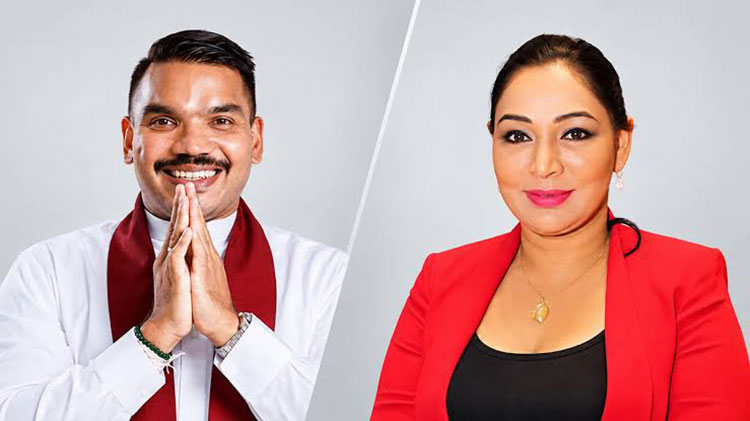
SLPP MP Namal Rajapaksa and former Krrish Group Executive Director and businesswoman Janaki Siriwardena were further remanded until October 23 by the Colombo Chief Magistrate’s Court yesterday in connection with an alleged Rs. 70 million bribery case involving the Krrish Group.
Colombo Chief Magistrate Asanga S. Bodaragama rejected the bail application filed on behalf of Siriwardena.
The Magistrate said the order on Namal Rajapaksa’s bail application was not ready and would be delivered on the next court date.
The Commission to Investigate Allegations of Bribery or Corruption (CIABOC) arrested the two suspects and produced them before court over allegations that a bribe of Rs. 70 million had been solicited and accepted in connection with the affairs of the Krrish Group.

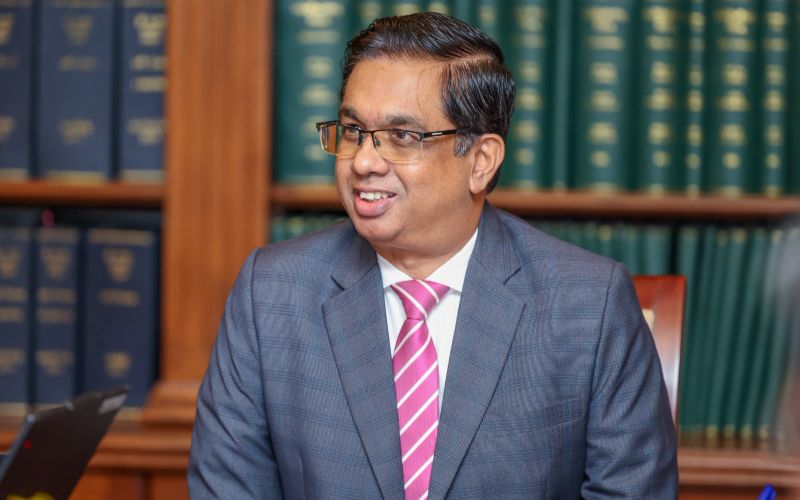
A progress review meeting on reforms and modernisation initiatives at Sri Lanka’s key state revenue-collecting institutions was held on Thursday (15) at the Presidential Secretariat, chaired by Secretary to the President Dr Nandika Sanath Kumanayake, with the participation of representatives of the International Monetary Fund (IMF) and officials of the Revenue Administration, Reform and Modernisation Bureau (RARMB) of the Presidential Secretariat.
At the meeting, the IMF representatives commended the revenue collection efficiency of the Department of Inland Revenue, Sri Lanka Customs and the Department of Excise, the country’s three leading state revenue-collecting institutions. Extensive discussions were also held on the progress of the reform and modernisation programmes being implemented at these institutions.
Secretary to the President Dr Nandika Sanath Kumanayake outlined the progress achieved by the three institutions to date and the reforms planned for implementation in the future.
The IMF representatives also highlighted the importance of strengthening risk management, developing human resources and ensuring the efficient operation of computer systems at the respective institutions.
Senior Additional Secretary to the President Seevali Arukgoda also attended the meeting. The IMF was represented by Cindy Negus, Senior Economist in Revenue Administration for the Asia and Pacific, Europe, Middle East and Central Asia regions; Alison Lister, Revenue Administration Adviser; and Gregory Toppin, Resident Revenue Adviser in Sri Lanka. A group of senior officials from the Revenue Administration, Reform and Modernisation Bureau of the Presidential Secretariat also participated.
(President’s Media Division)
By Anuradha Hiripitiyage
Electricity tariffs should be reduced by between 3 and 5 percent instead of being increased by 2.88 percent in the fourth quarter, as proposed by the National System Operator (NSO), Electricity Consumers’ Association Secretary Sanjeewa Dhammika said.
Addressing a media briefing in Maradagahamula, Divulapitiya, Gampaha, yesterday (16), Dhammika said a proper assessment of electricity generation costs, including the contribution of hydropower, could justify a reduction in tariffs.
He said the NSO had sought approval from the Public Utilities Commission of Sri Lanka (PUCSL) for a 2.88 percent tariff increase, which was expected to generate an additional Rs. 4,438 million.
However, the Commission had indicated that an increase of only 1.46 percent was warranted, amounting to Rs. 2,245 million, he said, adding that even this increase was unnecessary.
Dhammika alleged that the proposed revision sought to pass on to electricity consumers the financial burden arising from the non-arrival of five coal shipments and failed tenders.
“The Government had said that the burden of coal-related losses would not be passed on to the public. It is therefore unjust to make consumers bear these costs,” he said.
He pointed out that the PUCSL had forecast that hydropower would account for 32.34 percent of total electricity generation in the coming quarter, while the cost of such generation would represent only 3.45 percent of the overall cost of electricity production.
Consumers should benefit from the lower cost of hydropower generation rather than bear the burden of more expensive thermal power generation, he said.
Dhammika also questioned the inclusion of Rs. 669 million in capacity charges that had not been approved by the PUCSL, as well as a further Rs. 1,069 million to repay loans relating to incomplete projects.
Including such charges in the proposed tariff revision was unjustifiable, he said.
The PUCSL has given the public until October 30 to submit their views on the proposed tariff revision.
Dhammika said the possibility of increased hydropower generation in the coming weeks, as reservoir levels rise, should also be taken into account when determining electricity tariffs.
He maintained that tariffs could be reduced by 3 to 5 percent if hydropower generation was properly assessed and coal-related losses and unapproved charges were excluded from the calculations.
He further claimed that electricity tariffs could be reduced by as much as 10 percent through the promotion of renewable energy and the effective use of solar power and battery storage systems.
The Electricity Consumers’ Association urged the Government to withdraw the proposed tariff increase, insisting that consumers should not be made to bear costs arising from coal supply problems and other disputed charges.

Namal, Janaki further remanded

Achintha smashes 1,500 metres record at All Island Schools Games

Rare pink diamond goes on display in France 100 years after amateur heist

Nursery owner in China jailed for life after hundreds of children poisoned

Pakistan, Sri Lanka look to find the right mix as World Cup countdown begins

Mumbai Indians and head coach Mahela Jayawardene part ways

‘Dates have the highest sugar content to fight Coronavirus’

Sunday Island 27 December – Headlines

#SundayIsland 17th December – Headlines

Sunday Island – 28th March

Sunday Island Headlines – 21 March

Sunday Island – 21st February – Headlines
-

 News7 days ago
Sri Lanka escalates anti-graft drive with Shiranthi’s jailing
-

 News7 days ago
Iranian ships stranded, Lanka fears US sanctions
-

 Latest News6 days ago
Farhan and Sadaqat help Pakistan seal series in style
-

 Latest News5 days ago
Nissanka’s return headlines Sri Lanka’s Test squad against Pakistan
-

 Features6 days ago
Intake 16: 45 years of duty and honour
-

 News6 days ago
Malwathu Chapter issues statement on talks with President over Gnanasara Thera’s robes
-

 News7 days ago
Navi Pillay’s Lankan affairs in focus as she wins 2026 Nobel Peace Prize
-

 News6 days ago
CP alleges NPP has taken the blame for illegal US sanctions on Iranian vessels