
Features
Normal New Year service after a pre-Christmas World Cup


by Rajan Philips
For auld lang syne, my dear,
for auld lang syne,
we’ll take a cup of kindness yet,
for auld lang syne.
It is not an exaggeration to say that 2022 ended on a high football note as more than half the world’s adult population watched the World Cup Final in Qatar on the penultimate Sunday of the year. Christmas came a week later on the last Sunday of 2022, giving extra time for the seasonal cup of kindness, more so in Argentina which won the World Cup beating France in a penalty shootout after two hours of riveting football. For a country that once (1890s) boasted per capita GDP higher than the US and had it thrice as high Japan in 1950, Argentina now has people living in poverty at 40% and inflation running at 100%. The country confounds economists, but its people have a World Cup of kindness to cheer for auld lang syne (for the sake of old times).
For Qatar and the Arab World, hosting the World Cup had other meanings. It turned out to be a most politically charged sporting event in recent times, with spectator support ranging from pro-Palestinian sympathies to anti-Iranian slogans in solidarity with the prolonged and widespread protests against the government in Iran. Not surprisingly, the western media took the old approach of Orientalism (Edward Said’s celebrated concept critiquing the West’s ‘patronizing’ and ‘essentializing’ approach to studying others) in treating the Arab world as one static and monolithic culture.
The western media was also a bit rich in cavilling at the apparent religious orthodoxy of the Middle East, forgetting the historical ties between football and churches in England and in Europe, and the continuing connections between them throughout South America. The media carping over the Qatar venue was eventually fizzled out by the level of football and the intensity of games that endured throughout the tournament. Pace the detractors, the opening ceremonies in Doha began with a recitation from the Quran, and the final awards ended with Lionel Messi being wrapped in a bisht, a traditional Arab robe by the Emir of Qatar.
Argentina’s victory was a personal accomplishment for Lionel Messi, the 34-year old, diminutive Argentinian football icon, who not only won the World Cup for the first time in five tries but also became the first player in history to score a goal at every stage of the tournament – the group games, the knockout round, quarter finals, semi finals, and the matchless final match. More mesmerizing than the goals he scored were the setups he magically conjured for his teammates to consummate. It was a Messi World Cup that drew the curtain on an otherwise messed up year for practically every country and for the world as whole.
Pope Francis is an Argentinian of Italian origin and a huge soccer fan, but did not watch the final match apparently sticking to his vow since 1990, not to watch sports on television. For his Christmas message from the Vatican, the Pope seemed to draw from Dante’s Inferno and the icy winds blown by the six wings of Satan half-buried in ice in the ninth circle of Hell reserved for traitors, and spoke of the “icy winds of war buffeting humanity.” He pleaded for an immediate end to the “senseless” war in Ukraine, agonized over conflicts in the Middle East and in Africa’s Sahel region, and ‘prayed’ for peace in Yemen and reconciliation in Iran and Myanmar.
2022 might officially be the last year of Covid-19 if the WHO goes ahead, as it has indicated earlier, and declares 2023 to be Covid-free. But the indication came before the current Covid convulsions in China, and the world can only keep its fingers crossed having gone through an almost identical experience in early 2019. The last four years of Covid-19 have been a unique experience to the current occupants of the planet. Even though the world is far better equipped now to handle another Covid chapter, if, God forbid, one were to open anew, the direct and indirect Covid aftermaths are everywhere. Hopefully, Covid-19 will not be a renewed problem in 2023 for Sri Lanka, which has quite a slate of other crises to contend with in the new year.
Sri Lanka’s Dilemmas
For Sri Lanka, 2022 drew to a close with Gotabaya Rajapaksa leaving for the US, leaving the problems he created in 2022 to be carried over to 2023. The New Year question for President Wickremesinghe is which comes first – economic recovery or national reconciliation? The two can go on parallel tracks but the President has enough detractors to pounce on him if there is some tangible progress on the reconciliation front by February 4, but no IMF agreement by that time. On the other hand, if the reconciliation initiative were to fail for whatever reason, that would be a huge setback and frustrated expectations will become a drag on the much needed economic takeoff.
Mr. Wickremesinghe, who has said that he has been keeping out of ‘party politics’ after becoming President, would be well advised to keep it that way in decisions over the timing and conduct of local government elections. He should leave it to the Election Commission to do its job and keep himself at a far enough distance from party campaigns for the local elections. He might, however, consider including referendum questions on the local election ballot to gauge the people’s opinion on nationally important matters.
On the economic front, it is somewhat puzzling why the President has not considered initiating an All-Party conversation on the economy, similar to the one on reconciliation. In fact, an APC on the economy should have come earlier and it had better be now rather than later, or, worse, never. The President could also expand the circle of consultation on the economy by including the Governor of the Central Bank and a cluster of economic experts.
The Opposition SJB has already called for a Parliamentary Select Committee to probe into the decision makings of the Gotabaya Administration that led to Sri Lanka’s uniquely ‘man made’ economic crisis. Others want to extend the probe to assess any potential impact of the Foreign Exchange Act No 12 of 2017 on the current forex crisis insofar as loopholes in the law have been used by exporters to stash away their forex earnings in foreign accounts without bringing them home.
Obviously, this is a ruse to entrap Ranil Wickremesinghe to share the blame equally with the Rajapaksas for the current crisis. That may be all right with the alleged Ranil-Rajapaksa duopoly, but it would be far fetched to blame the current crisis on the 2017 law. According to published data and dollar amounts, 65% of export incomes were repatriated until July 2021. The current repatriation rate is 23%, and the decline began after July 2021, due not so much to the 2017 law as to the more recent collapse of the rupee against the dollar. Hedging against adverse fluctuations in exchange rates was touted by the export community as one of the two main advantages of the 2017 law, the other being the access to foreign currency loans at currency-specific interest rates which are lower than interest rates for rupee loans.
As well, of the now estimated $53 billion export incomes currently stashed way, $35 billion has been attributed to quite a separate, and potentially illegal, process involving offshore accounts dating back all the way to 2007 – the very beginning of the Rajapaksa yugaya. Add to that all the anecdotal totals of all the other monies that have been spirited away throughout the yugaya, Sri Lanka should be able to find enough stashed away dollars to, at least partially, honour its debt payments and meet forex needs for essential imports.
The government’s focus should be on fighting corruption, perhaps specifically targeting corruption in foreign exchange, but without scaring away established exporters. Foreign currency earnings are not only required to boost the country’s balance of payments, but are also essential for the very survival of businesses as the CB Governor Nandalal Weerasinghe has recently warned. Already big exporters are jittery and are looking for greener pastures abroad even as the government, in its desperation for FDI, is ready to transform Colombo’s Port City into a bunkering harbour after previously selling it as the glittering Dubai of South Asia.
Crime and Corruption
One of the positive aspects of an IMF agreement would be the commitment to fight corruption, which will not be so with bilateral debt restructuring. Perhaps the President should ponder a third All-Party Conference on corruption along with his initiatives on the economy and reconciliation. He should also be more objective, if not careful, in selecting his personal advisers and avoid imposters who could bring national embarrassment to the President by exposing themselves to allegations of being ‘petophiles.’
What I am calling here as the petophile saga involving a presidential advisor and his hyperactive accusers is a rather minor symptom of the depraved conditions that Sri Lankan society is steadily sinking into. The peddling of drugs, attacks on university dons, rising murder rate, extortion, criminal cheating and breach of trust are among the graver symptoms of the island’s social malaise. Perpetrators of crimes are seldom apprehended or prosecuted, while the victims of criminals such as those vulnerable to substance abuse are targeted for harsh treatments and not rehabilitation.
The urgency of this situation was brought home before Christmas by the horrific killing of Dinesh Schaffter. Dayan Jayatilleka has called it “a surreal crime: the gruesome, cruel death of a decent, personable businessman belonging to a well-established family,” one that “illustrates the decay of Sri Lanka in the current period,” and whose “horror is bound to impact the image of the country and its business climate.” No one will disagree.
The onus is on the police to find the culprits, not to broadcast tendentious theories through inspired media leaks. There is growing suspicion that this case is on track to enter Sri Lanka’s long list of unsolved cold cases. If so, it would certainly be considered by UNHRC in Geneva as yet another addition to Sri Lanka’s “emblematic cases.” They are symptomatic of Sri Lanka’s social decay and its broken down law enforcement.
The United Nations Office on Drugs and Crimes (UNODC) lists drugs, crime and corruption in addition to terrorism as serious threats to peace, security, human rights and development both globally and within individual countries. Sri Lanka officially prides itself for eliminating terrorism, but has miles to go in combating drugs, crime and corruption. In fact, the incidence of drugs and crime has only increased in the years after terrorism was defeated. This aspect of the Sri Lankan crisis never features on the political radar unlike economic recovery or national reconciliation. There will be no sustainable economic recovery or national reconciliation so long as the national menaces of drugs, crime and corruption continue unabated.



78 Years of Demagoguery, Not Democracy
by Brigadier Ranjan de Silva
rpcdesilva@gmail.com
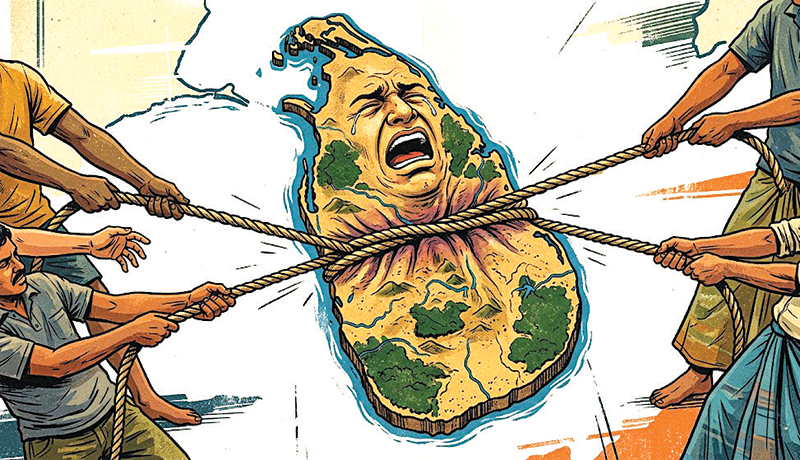
On the 4th of February every year, we raise the lion flag and speak of democracy. We speak of 78 years of “self-rule.” But honesty demands we ask: what kind of rule have we actually had? It was not democracy. Democracy is government for the common good, constrained by law, informed by reason, and accountable to truth.
What Sri Lanka has had for 78 years is demagoguery — government by manipulation, by party, and by passion.
Defining the Curse:
The dictionary defines demagoguery as “political activity that seeks support by appealing to the desires and prejudices of ordinary people rather than by rational argument.” Its tools are simple: divide the people, promise the impossible, demonize the opponent, and govern for the next election, not the next generation. That is the political culture we inherited in 1948 and perfected since.
78 Years of Evidence:
The record is not ambiguous. Policy by Pendulum – 1948–2024. Instead of a national development plan, we got a partisan wrecking ball. 1956: The “Sinhala Only Act” was passed not after linguistic study, but as an election mobilization tool. 1970-77: The SLFP nationalized private enterprise and imposed import controls. 1977: The UNP reversed course with an open economy overnight. 2005-2014: Mega infrastructure was built on Chinese loans with no feasibility transparency. 2015-2019: Those same projects were called “white elephants” and stalled. 2020-2021: The organic fertilizer ban was announced as a populist “green” policy, reversed 6 months later after it collapsed agriculture and food prices. The Colombo Port City, Hambantota Port, and the Central Expressway all followed the same pattern: started, stopped, rebranded. The country pays twice. The party takes credit once. Economics as Election Candy. Demagoguery is expensive. 1960s: Subsidized rice to win rural votes, leading to the 1971 food crisis.
2005-2014:
Fuel subsidies and public sector hiring sprees that doubled the wage bill. 2019:
Unfunded tax cuts that removed Rs. 500 billion in annual revenue with no offset. By April 2022, external debt hit $51 Billion and we defaulted for the first time. The party that cut taxes was not in power to manage the IMF program. The party that inherited it was blamed for the austerity. This is the cycle. Institutions captured. A democracy needs referees. We turned them into party cadres. The 17th Amendment 2001 created independent commissions. The 18th Amendment 2010 abolished them. The 19th 2015 restored them. The 20th 2020 gutted them again. Police transfers, university vice-chancellors, and state bank chairmen have all been decided by party headquarters, not merit.
When the institution serves the party, the citizen gets leftovers.
Identity over Ideas: From 1956 to 1983 to 2009 to 2022, our elections have been won on fear, not spreadsheets. “They will erase your language.” “They will sell the country.” “Only we can protect Buddhism/the minorities/the nation.”
Rational debate on debt, productivity, or climate adaptation never wins a rally. Prejudice does. That is demagoguery by definition.
Party Interest subverted the National Interest. The core damage of 78 years of partisan politics is this: the nation became secondary to the party. Need power sector reform? Impossible, because our unions will strike. Need to cut 300,000 ghost employees? Impossible, because our voters will defect. Need a 20-year education and export plan? Impossible, because it won’t show results before the next election. So, we borrowed. We patched. We lied. The result: a railway system that still runs on 1950s engines, hospitals without paracetamol in 2022, and a brain drain of 300,000+ skilled workers since the crisis. The parties rotated. The country declined.
The Opposition’s Original Sin and here, all parties share guilt equally. In opposition, the job is not to govern. It is to destroy. The UNP in the 60s called the SLFP “communist.” The SLFP in the 70s called the UNP “imperialist.” The JVP called both “traitors.” The SJB, SLPP, and NPP today use the same script with new logos. Every tax is “anti-people.” Every reform is “a sell-out.” Every crisis is proof the other side is evil and must be removed at any cost. Then they win. And implement 80% of what they opposed. Because demagoguery has no principles, only positions. 78 years of unmerciful, bad-faith criticism has not produced accountability. It has produced cynicism. The public now believes all politicians are the same — because for 78 years, they have behaved the same.
Breaking the Curse:
Changing the party in power will not end this. We must change the incentives that reward demagoguery. Three reforms are non-negotiable: Bind future Parliaments to national policy. Pass 10-year frameworks for energy, education, and public debt with 2/3 majority protection. Infrastructure and fiscal rules should outlast one government, as they do in Chile and New Zealand. Depoliticize the state. Independent commissions for police, elections, public service, and bribery must have constitutional budgets and appointment panels that exclude MPs. No more 18th/20th Amendment style rollbacks. Demand better from voters We must stop rewarding the best slogan and start demanding the best spreadsheet. Town halls over rallies. Costings over promises. A 5-year plan over a 5-minute speech.
In 1948, we did not inherit democracy. We inherited an election. For 78 years we have used that election to choose our favourite demagogue. The prize has been debt, division, and decay. The curse of partisan politics will only end when citizens and leaders agree on one principle: Party second. Country first. Until then, February 4th will remain a ceremony, not a celebration.

Export diversification – Missing the wood for the trees – Part II
by Gomi Senadhira
Sri Lanka established its diplomatic presence in the Gulf region only in the early 1980s. First, a small embassy was opened in Abu Dhabi, covering the UAE. Then in 1982, embassies were opened in Jeddah and Kuwait. The embassy in Jeddah covered Saudi Arabia while Kuwait was responsible for Kuwait, Oman, Qatar and Bahrain. Commercial Diplomats were also assigned to these two embassies. A senior private sector executive, with experience in marketing, was posted to Jedda as the commercial counsellor. I was posted to Kuwait as a second secretary (Commercial). Our instructions were very clear. Focus not only on traditional exports. Product diversification was a priority.
Developing Markets for Agricultural Products
At that time, Minister Lalith Athulathmudali had just launched his Export Production Villages (EPV) programme. He believed that the EPVs working closely with the exporters would provide an ideal opportunity for rural households to directly benefit from the government’s new open trade policy. Agricultural products, particularly fruits and vegetables, were a key component of this approach and the ministry thought that the Gulf countries, with large Sri Lankan communities, would have a ready-made market for these items. Thus, from day one we were compelled to explore the market for nontraditional exports; fruits and vegetables (F&Vs) were on the top of our priority list.
From cane baskets to cardboard boxes
Fortunately, the market for the F&Vs products in the region was at a very early stage of development. That provided an opportunity for Sri Lankan exporters, who were also inexperienced, to work with the importers and grow together. For example, in Kuwait, one of our first customers for F&Vs was a small supermarket where the manager was a Sri Lankan. After the first shipment arrived, he invited me to inspect the shipment. I visited the supermarket and was shocked by what I saw. While produce from other countries was packed nicely in cardboard boxes, our packaging mirrored transport to Manning market, cane baskets! As a result, fresh produce had suffered significant damage. A long report, with photographs, to the trade ministry produced an immediate response. After all, this was a pet project of the Minister. Within weeks, shipments were packed in cardboard boxes. Immediately afterwards, an expert on packaging from the Commonwealth Secretariat was sent to Kuwait with an official from the EDB to study the problem.
By then, we had also managed to develop a friendship with the management of the Salmiya supermarket, a large upmarket supermarket patronised by wealthy Kuwaitis and expats. It was a cooperative and the chairman was a Kuwaiti public servant. I could only meet him after 6 PM when his large office functioned as a diwaniya, a cherished cultural space in Kuwaiti society. Guests moved in and out the room. I had to spend time with them sipping many cups of tea. Though that meant at least two hours on each visit, it helped greatly to develop a close relationship. The general manager was an efficient and friendly Palestinian. After many visits we had succeeded in getting an order for F&Vs. The day after the first shipment arrived, I got an urgent call from the GM to come and inspect it. Once again, I was in for a surprise. Inside the cold room, the consignments from other countries were stacked neatly on top of each other, while vegetable boxes from Sri Lanka had collapsed once placed on top of each other, crushing the produce within.
Fortunately, our packaging experts arrived in Kuwait soon after this incident. They spent two days in the Salmiya Supermarket, studying the packaging from other origins. We were also successful in assuring the GM our packaging would improve. After that, packaging improved and exports moved smoothly. With that, Sri Lanka emerged as a small but reliable supplier to the mainstream market, not just the ethnic segment of the market.
Export of Fresh Vegetables by Sea
Towards the end of my tour, a Sri Lankan businessman requested me to find a buyer for cabbages, which he was prepared to export in large quantities by sea. I introduced him to the largest fruit and vegetable importer in Kuwait. Their regular suppliers of similar vegetables were Jordan, Lebanon and Syria. Luckily, the company was keen to diversify the supply sources. A few weeks later, the first container load of cabbages from Sri Lanka arrived in Kuwait. Immediately after the arrival of the container, I visited the company. They were pleased with the quality and the price and were looking forward to importing more fruits and vegetables. Unfortunately, that turned out to be a one-off event. Later on, when I was back in Sri Lanka, the exporter informed me that he couldn’t continue with it due to the problems with the local supply chains.
Floriculture
During the period I was asked by the EDB to explore the market for floricultural products, more particularly for cut flowers. At that time Kuwait was a relatively large importer of cut flowers and live plants. The main suppliers were the Netherlands and Colombia. Importers were also reluctant to move out of the established supply chain, particularly due to “snob value” associated with the product from Europe. However, after some difficulties, one importer agreed to place a pre-paid trial order. After the arrival of that shipment, he was impressed by the quality of the product and the orders expanded rapidly. As a result, by the end of 1985 Kuwait had become a major buyer of Sri Lanka’s floricultural products.
From village to global markets
As a result of the proactive promotional work undertaken by the EDB and the embassies in the region, by 1985, Sri Lanka had managed to acquire a small but significant share of the F&V and floriculture markets in the GCC countries. We had also identified domestic supply chain issues that hindered exports. All that was done, long before Southeast Asian or African countries even entered into that market. In fact, my Southeast Asian colleagues used to contact me often to reserve “durian” for them at the “Sri Lankan supermarket”.
Most importantly, a substantially large share of produce from Sri Lanka in Kuwaiti supermarkets originated in the EPVs. Of course, that didn’t just happen. The ministry (or the minister) using the carrot and stick approach “encouraged” exporters to buy the produce directly from the newly established EPVs. (The writer can be reached at senadhiragomi@gmail.com)
Tales of Mystery and Suspense 17
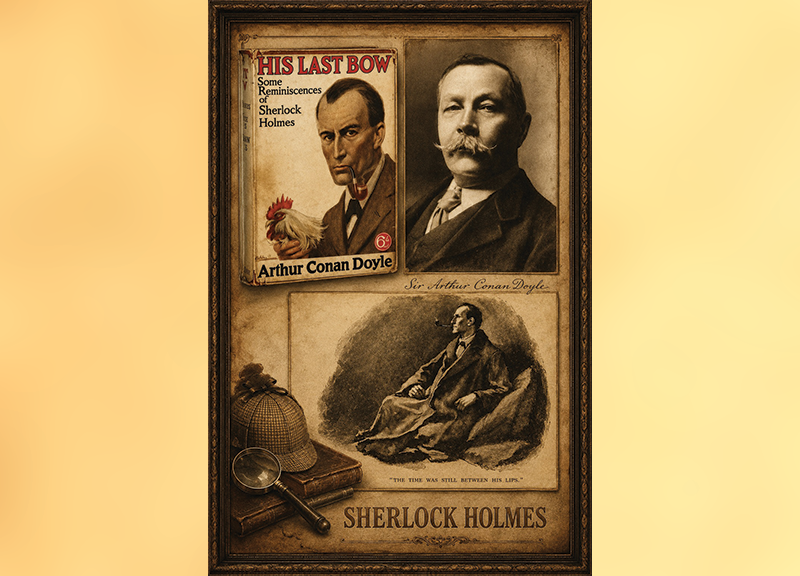
The next collection of short stories I will look at are by the master of this genre, Sir Arthur Conan Doyle. I thought I had read all he had written, but when last year I found a collection of the complete Sherlock Holmes stories, I was delighted to find that there were two collections of short stories I had not come across before.
These are later collections, one of them entitled His Last Bow, which I suppose suggested it was about Holmes’ last appearance. The title story deals with the arrest of a German spy just before the start of World War I, which ended the world as described by Conan Doyle in Holmes’s heyday; this is the stuff of the other stories in that collection.
I found them quite delightful not least because of their wonderful period flavour. There was a diversity of settings, including grand country houses and suburban villas, as well as Baker Street itself, where Holmes had a very jolly time pretending to be dying. And often the plot is approached obliquely, with Holmes’ intervention being invoked by someone who has had a strange experience which leads by convoluted steps to the main plot.
The first story in the first book, which is presented in two parts, includes country houses and an odd introduction by a respectable man invited to stay by a chance acquaintance; he vanishes in the middle of the night, along with his staff. He is called Garcia, with South America being another recurrent subject in the volumes, usually in the form of exotic women who contribute to violent dramas.
Here, Garcia is found to have been killed, but Holmes deduces that invited the staid Mr Eccles because he wanted an alibi. And he works out that it was to another country house that he was headed to when he was killed, deducing the particular isolated house which must have been his target. And, sure enough its tenant turns out to be a former South American dictator, who had in the household a woman who was conspiring with Garcia to take revenge on the brutal Tiger of San Pedro.
She manages to escape, making it clear that Holmes’ diagnosis of the case was correct. The Tiger however gets away, only to be killed in another European capital by others who had suffered under him.
Wonderfully dramatic stuff, in marked contrast to the title story, which is set in a villa taken by a German count collecting lots of material about British defences. The story opens with him entertaining the Secretary of the German Embassy, who tells him it is time he left the country, but having sent away his family he is waiting for some final information. But they are both worried that some of his informants have recently been arrested.
The Secretary crosses with his most valued informant, who turns out to be Holmes, who has of course been responsible for taking in some of the others. He was driven down by the trusty Watson and, after he had found the archive he was looking for. He then hands over a Practical Handbook of Bee Culture, the subject of study of his retirement. That causes consternation but then the chauffeur chloroforms the German while Holmes takes what he wants. But he assures his captive that when in London he will have access to the embassy and could perhaps depart for Germany with his family. Before they leave, he and Watson stand on the terrace for a last chat before all hell breaks loose.
Though I shall resist the temptation to talk about all the stories in His Last Bow, so many are so splendidly convoluted, I fear I must look at a few at least. Of these the most preposterous is perhaps ‘The Devil’s Foot’, involving a gas that created intense fear, which either killed or drove mad those who imbibed it. Needless to say, Holmes, in his keenness to test his theory, nearly succumbs, though Watson is able to save him. And the man who perpetrated the murder was himself killed by the same method, though Holmes allowed his murderer off the hook, given his motive, a compound of love and justice.
Another murderer gets away in ‘The Red Circle’, which involves the New York Mafia, and a couple who manage to get away and then obviate vengeance by getting in first, as it were, much to the relief of Scotland Yard and the American Detective who has come over to arrest the Mafia boss, who is found to have been murdered; his killer sends desperate messages to his wife whom he concealed to stop her being enticed out of her hideout by the villain.
There is another strange poison in ‘The Dying Detective’, when Holmes pretends to have succumbed to a devilish scheme so as to extract a confession from a character who has killed his nephew. ‘The Disappearance of Lady Frances Carfax’ has a bizarre ending when the lady is discovered in a coffin, just about alive, her gross abductors not quite wanting to kill her but needing her out of the way.
In these last cases, there is no real mystery, and the suspense is in the working out of the discovery. Quite otherwise, as in ‘The Devil’s Foot’, there is mystery in ‘The Bruce Partington Plans’, where the identity of the murderer, surprised in his plot by a young clerk in the Ministry, is concealed until the end. This could however have been deduced given the characters involved, and there is not much mystery about the recipient of the stolen plans, a German of course in those days of intense naval rivalry.
But I find I have covered all but one of the stories now. The story that remains is very different from all the rest, dealing with a lady who receives in the post a parcel with two severed ears, male and female.
Holmes deduces that they were not intended for her, but her sister who had been staying with her and who is the nastiest of three sisters. She had, through her perversity, involving passion and envy, been responsible for the death of the third sister, and was driven mad when told of the contents of ‘The Cardboard Box’, so that she got comeuppance though not before wreaking tragedy on others.

Super El Niño threatens to deepen Sri Lanka’s drought and economic woes

From Nazi Germany to Zimbabwe and beyond

This curse of partisan politics in Sri Lanka

Developing markets for fruits, vegetables and flowers in the Gulf

Japan donates refurbished buses

ABC Trade & Investment – All-China Environment Federation partner to drive Sri Lanka’s green infrastructure and investment

‘Dates have the highest sugar content to fight Coronavirus’

Sunday Island 27 December – Headlines

#SundayIsland 17th December – Headlines

Sunday Island – 28th March

Sunday Island Headlines – 21 March

Sunday Island – 21st February – Headlines
-

 News7 days ago
Eight politicians in drug kingpin probe
-

 Features5 days ago
“Wrap Me Up in My Blazer”— A Gentlemanly Bradby Reminiscence
-

 Features4 days ago
When Sri Lankan stories find their own voice
-

 Features7 days ago
Redefining ageing in Sri Lanka
-

 Features5 days ago
JVP/NPP government as seen from outside by Lionel Bopage now domiciled in Australia
-

 News4 days ago
BASL takes exception to Justice Ganepola being denied a place in SC
-

 News7 days ago
CJ first SC judge to benefit from 22A, if enacted: BASL
-
 Editorial6 days ago
Govt. trying to dupe UN Rapporteur?