
News
IS member connected with Sri Lanka Easter bomber held for links with Coimbatore blast suspects: NIA

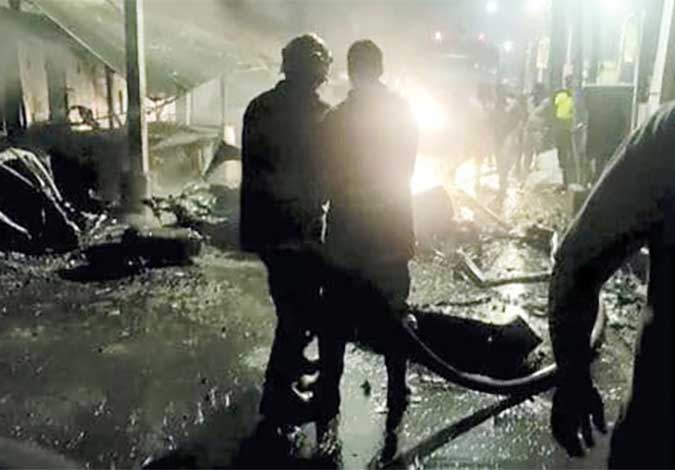
New Delhi: The National Investigation Agency (NIA) on Wednesday arrested a member of terrorist organisation Islamic State (IS) who was in touch with the mastermind of 2019 Easter Day bombings in Sri Lanka, for his alleged links with suspects in the October 23 blast in Tamil Nadu’s Coimbatore
The federal agency also arrested another man, identified as Sanofar Ali, for allegedly taking part in plans to carry out terror attacksin the country.NIA officers familiar with the developments said IS member Sheikh Hidayatullah was allegedly in touch with Maulvi Zahran bin Hashim, the mastermind of the deadly Easter Sunday bombings in Sri Lanka on April 21, 2019 that claimed over 250 lives.
Both Hidayatullah and Sanofar Ali were arrested from Tamil Nadu, an NIA officer said.
“Investigations have revealed that the accused persons had entered into a criminal conspiracy in the interior of forested regions of Asanoor and Kadambur areas of Sathyamangalam forest, Erode district, in February 2022,” NIA said in a statement. “The meetings were led by previously arrested accused Umar Farooq and participated by deceased accused Jameesha Mubeen (died in Coimbatore blast), along with Mohammed Azharuddin ,Sheikh Hidayatullah and Sanofar Ali, where they conspired to prepare for and execute terror acts.”
Jameesha Mubeen, who was questioned by NIA in 2019 for alleged terror links, was charred to death in suspicious circumstances after the LPG cylinder inside a Maruti 800 he was driving exploded near Kottai Eswaran temple in Coimbatore’s Ukkadam on the morning of October 23. The incident took place around 200 metres from a police patrol.
The deceased was registered as the prime accused in the blast case. The state police had invoked the stringent Unlawful Activities (Prevention) Act (UAPA) in the case, which was later handed over to NIA.
According to NIA officers cited above, Hidayatullah, who has been propagating IS ideology since 2017, was earlier arrested along with Azharuddin in June 2019. He was released on bail in 2020. Azharuddin from Ukkadam and leader of Kerala-Tamil Nadu IS module is currently in jail for the Sri Lanka bombings.All the above accused were inspired by Hashim, who masterminded and executed the Sri Lanka bombings — in which 252 people were killed — and planned to carry out similar attacks in two south Indian states at that time.
Prior to the Sri Lanka bombings, Hidayatullah and Hashim were in touch through a Facebook page “KhilafahGFX”, according to NIA’s charge sheet filed against Hidayatullah in 2019. – HT




… America-Pakistan developed required ‘intel’ for operation
By Shamindra Ferdinando
The US Embassy in Colombo declined to comment on a special police probe into the recent narcotics detection, jointly made at the China-managed Colombo International Container Terminal (CICT) by the US Drug Enforcement Administration’s (DEA) New Delhi Country Office and Sri Lanka Police..
US Embassy spokesperson said that the mission wouldn’t add to their press release, issued on 2 Sept., in the immediate aftermath of the raid.
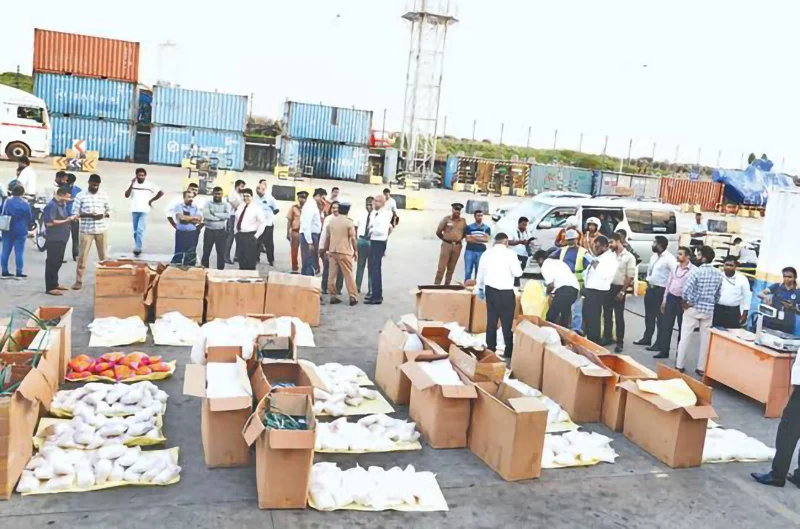
Police Headquarters, on 11 Sept., declared that the Central Crime Investigation Bureau (CCIB) was conducting investigations into the recovery of 473 kg of Crystal Methamphetamine (‘Ice’). Police never acknowledged the role played by the US in the operation.
According to Police Headquarters, on a directive given by IGP Priyantha Weerasooriya, the Special Investigation Unit has launched an internal probe into, what it called, shortcomings and irregularities in the Colombo Port raid.
The Island:
Have you (relevant US authorities) received an update of Sri Lanka’s investigations from the Police?
US Embassy:
U.S. and Sri Lankan law enforcement authorities maintain close and ongoing cooperation on counternarcotics matters, including the exchange of information that helps both countries combat transnational drug trafficking. We don’t have anything further to share on communications with Sri Lankan authorities beyond what we’ve already said publicly about the successful operation.
The Island:
Did the Police seek clarification regarding DEA, New Delhi Country Office role in the successful raid?
US Embassy:
As the Embassy noted publicly following the seizure, cooperation with the U.S. Drug Enforcement Administration contributed to the Sri Lanka Police Narcotics Bureau’s successful seizure of approximately 463 kilograms of methamphetamine at the Port of Colombo.
The seizure demonstrates the value of close U.S.-Sri Lankan cooperation in disrupting transnational narcotics trafficking.
The Island:
Before we raised this issue were you aware of the internal investigation into the drug bust which was also raised in Parliament last week?
The US Embassy:
We don’t have anything further to share beyond what we’ve already said publicly about the successful operation.
Our focus remains on the strong U.S.-Sri Lanka law enforcement partnership and the concrete results our cooperation can deliver—disrupting transnational criminal organisations, cutting off the profits that fuel illicit drug trafficking, and protecting our citizens from the dangers of narcotrafficking.
The US Embassy attributed the success of the counternarcotics operation to the US-Sri Lanka partnership
The US Embassy statement, dated 2 Sept: The U.S. Drug Enforcement Administration’s (DEA) New Delhi Country Office and Sri Lanka’s Police Narcotics Bureau (PNB) conducted a successful joint operation disrupting a Pakistan-based narcotrafficking network attempting to smuggle crystal methamphetamine through Sri Lanka to international markets.
Acting on intelligence developed by DEA’s Foreign Counterparts Unit Pakistan Anti-Narcotics Force Special Investigations Cell between August 14–29 on suspicious maritime containers moving from Pakistan to Colombo, PNB seized approximately 463 kg of crystal methamphetamine with a street value of $21 million, concealed in bath towels, and arrested several suspects, including Pakistani nationals. This operation underscores the strength of the U.S.-Sri Lanka partnership in dismantling transnational criminal organisations that fund terrorism and threaten communities in both our countries. This cooperation builds on long-standing training and technical assistance provided through the U.S. Department of State’s Bureau of International Narcotics and Law Enforcement Affairs (INL) to the Sri Lanka Police and Customs. The United States remains committed to working with Sri Lanka and regional partners to aggressively pursue transnational criminal organizations, deny them the revenue from illicit drug trafficking, and protect our citizens from the dangers of narcotrafficking.”
SLPP National Organiser Namal Rajapaksa, in Parliament, raised questions about the internal investigation into the raid. However, Rajapaksa, too, hasn’t mentioned the US role in the operation. The Special Investigation Unit has recorded a statement from Senior DIG Ranmal Kodituwakku regarding the Colombo Port raid.
MP Rajapaksa questioned the rationale behind questioning the officer who led the raid against the backdrop of controversial releasing of 323 containers from the Colombo Port in January 2025. The failure to question those responsible for the releasing of 323 containers indicated who was behind that operation, MP Rajapaksa told Parliament.
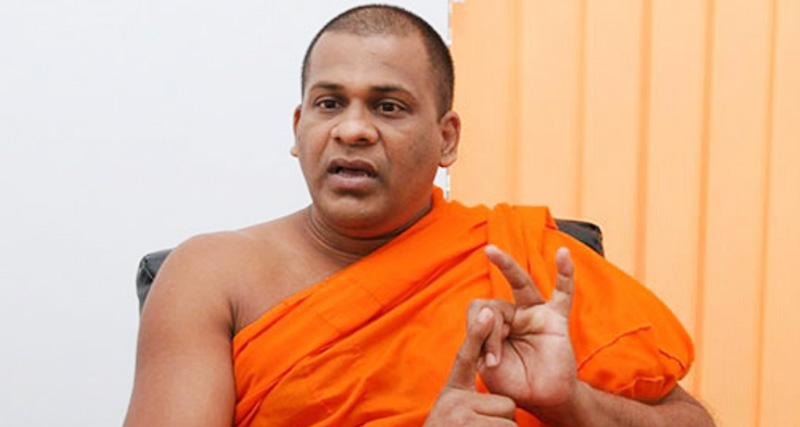
Bodu Bala Sena (BBS) General Secretary Ven. Galagodaaththe Gnanasara Thera appeared before the Colombo High Court yesterday in a case filed by the Attorney General over statements allegedly insulting Islam.
The case was taken up before Colombo High Court Judge Buddhika C. Ragala, who ordered that it be called again on September 30.
His appearance came six days after the Supreme Court invalidated the presidential pardon granted to Gnanasara Thera by former President Maithripala Sirisena in 2019.
Speaking to journalists outside the court, Gnanasara Thera said he was prepared to face the legal process and would abide by the law, rejecting reports that he had gone into hiding following the Supreme Court judgment.
“It is the weak who disappear and flee. We worked for the country and are facing the consequences for that. We are not afraid and will not flee,” he said, noting that he would surrender to the court and face whatever legal consequences following the Supreme Court decision.
The Supreme Court, on September 10, ruled that the presidential pardon granted to Gnanasara Thera by Sirisena was invalid. The judgment followed fundamental rights petitions challenging the legality of the pardon. A three-judge bench, comprising Justices Janak de Silva, Sobhitha Rajakaruna and Sampath Abeykoon, delivered the ruling.
Gnanasara Thera was convicted by the Court of Appeal in 2018 for contempt of court and sentenced to a total of 19 years’ imprisonment to run concurrently as six years. The conviction related to his conduct during proceedings at the Homagama Magistrate’s Court concerning the disappearance of Prageeth Eknaligoda.
He was released from Welikada Prison on May 23, 2019, after then President Maithripala Sirisena had granted him a presidential pardon.
The Supreme Court found the pardon to be arbitrary and invalid in law, following its consideration of the petitions challenging the exercise of the presidential power of clemency.
Meanwhile, police have said they are awaiting the Supreme Court judgment before determining what further action should be taken following the invalidation of the pardon.
The proceedings before the Colombo High Court yesterday are separate from the contempt of court case that resulted in the six-year sentence. They concern alleged statements made by Gnanasara Thera regarding Islam.
In June this year, the Colombo High Court rejected an appeal by Gnanasara Thera against a nine-month prison sentence imposed by the Colombo Magistrate’s Court in connection with statements made at a 2016 media briefing that were found to have disrupted religious coexistence.
The latest High Court proceedings, therefore, form part of separate legal action concerning his alleged remarks about Islam, while the Supreme Court ruling relates specifically to the legality of the 2019 presidential pardon granted in connection with his contempt of court conviction.
The case before the Colombo High Court will be called again on September 30.
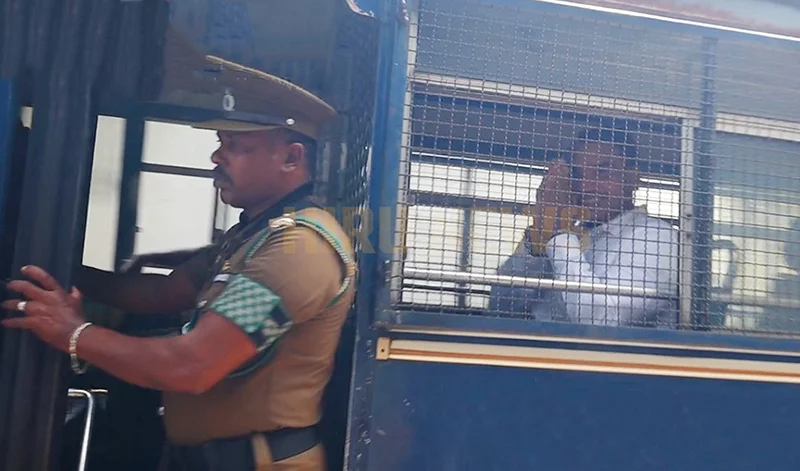
Colombo Fort Magistrate Pasan Amarasena yesterday (16) ordered SLPP National Organiser Namal Rajapaksa, MP, to be further remanded, until September 23. The Magistrate issued the order when Rajapaksa was produced before the court as a suspect in an investigation into an alleged USD 2 million bribe case connected to the acquisition of aircraft for SriLankan Airlines.
The Magistrate issued the order following the submissions made by Deputy Solicitor General Janaka Bandara, appearing on behalf of the Criminal Investigation Department (CID).
President’s Counsel Anil Silva, along with other attorneys representing Rajapaksa, also made submissions before the court.
The Magistrate also announced that a decision on Rajapaksa’s bail application would be announced on 23 September.

Showers in most parts of the island today (17)

US embassy won’t comment on IGP’s probe into joint drug raid

Gnanasara Thera declares outside High Court that he wouldn’t flee

Namal further remanded

22A: LAWASIA questions compostion of five-judge bench

Sri Lanka’s lifestyle coffee culture boom and the two faces of its economy

‘Dates have the highest sugar content to fight Coronavirus’

Sunday Island 27 December – Headlines

#SundayIsland 17th December – Headlines

Sunday Island – 28th March

Sunday Island Headlines – 21 March

Sunday Island – 21st February – Headlines
-

 Sports6 days ago
DDS set to lose Test captaincy
-

 News6 days ago
Sri Lanka faces new grid challenge as rooftop solar surges: former CEB GM
-
 Latest News6 days ago
Shafali, Deepti power India into sixth T20 Asia Cup final
-

 News4 days ago
Gnanasara Thero absconding after SC ruling
-

 Latest News5 days ago
Sri Lanka thwart Fatima Sana challenge to secure Asia Cup final spot
-

 News5 days ago
Ammunition cache found in old Kandy bungalow
-

 Editorial6 days ago
A flight of fancy
-

 News5 days ago
Green Climate Fund (GCF) Regional Dialogue for East and South Asia will be held from 14 to 17 September 2026 at Cinnamon Life at City of Dreams Hotel, Colombo