
News
Whiteflies a growing threat to coconut and other crops in Sri Lanka


Text and pictures by PRIYAN DE SILVA
White flies (Aleyrodidae) have become a threat to coconut and other agricultural crops in Sri Lanka. They damage plants by sucking out its juices. Heavily infested plants can be seriously weakened. Leaves often turn yellow, appear dry and drop prematurely. White flies also transmit crop viruses.
Deputy Director (Research) at the Coconut Research Institute (CRI) Lunuwila, Dr. Nayanie Aratchige says that around 1,500 species of White Fly have been reported from around the world of which four species, Aleurotrachelus atratus (Palm-infesting whitefly), Paraleyrodes minei (Citrus nesting whitefly), Aleurodicus dispersus (Spiraling whitefly) and Aleurodicus cocois (Coconut whitefly) are presently a threat to coconut palms in Sri Lanka.
Dr Aratchige said that the first mention of the White Fly plaguing coconut palms was in Barbados in 1846, and that outbreaks have been reported in the Caribbean and South American regions since the 1990s and outbreaks of Rugose spiraling whitefly (Aleurodicus rugioperculatus) in India since 2016.
The species Aleurodicus dispersus (spiraling white fly) has been present in Sri Lanka since 1990 but it was previously considered a minor pest to coconut palms.
The first major white fly outbreak in coconut plantations in Sri Lanka was reported in 2019 from the Kegalle District and it is believed to have been caused by the accidental introduction of a new species via illegal importation of seedlings, the impact of climate change, sudden drop of natural enemy populations of the native population of whiteflies due to excessive use of insecticides on other crops.

Dr. Nayanie Aratchige
Dr Aratchige said that White Flies had invaded coconut plantations in Gampaha, Kegalle, Kandy, Kalutara, Colombo, Kurunegala, Ratnapura, Puttalam and even the Galle, Matara and Hambantota Districts, which have been battling the Weligama Coconut Leaf Wilt disease for over a decade.
Banana, guava, citrus, avocado, eggplant, okra, cashew, Indian almond (Kottamba), caryota palm (Kithul palm), areca nut, ornamental plants, curry leaves, green chillie, mango, jackfruit, breadfruit, neem, pigeon pea, different varieties of pepper, Water melon, coffee, etc., host the White Fly.
The Coconut Research Institute and the Coconut Cultivation Board are conducting awareness programmes on the identification of the pest and coordinated spraying of insecticides.
Sticky traps
Dr Aratchige said that placing yellow sticky traps or spraying of the following insecticides to control the menace is recommended.
Neem oil and soap mixture
(Neem oil – 10 ml, Soap powder – 05 g dissolved in 1 L of water) or
Thiamethoxam (Actara)
(3g in 10 l of water) or Carbosulfan (Marshal 20) (20ml in 10 l of water) or Chlorantraniliprole+Thiomethoxam (Virtako 40G) (2.5g in 10 l of water)
Neem oil and soap mixture is recommended for all infested areas as this mixture is less toxic to the natural enemies of whiteflies. Artificial insecticides are particularly recommended for newly infested areas and the coconut seedling nurseries.
The CRI is further researching on methods of chemical and biological control and have sought assistance from other countries for importation of exotic natural enemies of the white fly.

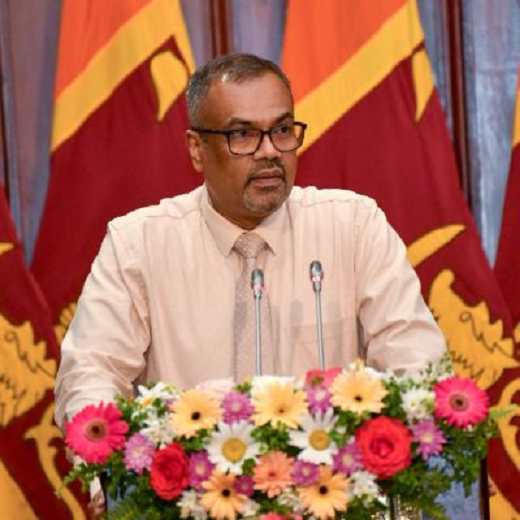
The inaugural ceremony of “Badhu Shakthi 2026” (“බදු ශක්ති 2026”) National Tax Week, organised by the Revenue Administration Reform and Modernisation Unit of the Presidential Secretariat with the objective of strengthening State revenue generation and accelerating the country’s future development process, was held on Monday (06) morning at the Presidential Secretariat under the patronage of Speaker Dr Jagath Wickramaratne.
“Badhu Shakthi 2026” is a year-round national programme aimed at transforming the negative public perception of taxation into a positive one while fostering a culture of voluntary tax compliance. To mark its commencement, a National Tax Week will be observed across the island from 6 to 10 July.
A nationwide media and public awareness campaign will be conducted in parallel, including the distribution of leaflets and a range of promotional activities designed to educate the public directly and encourage greater tax compliance.
Addressing the inaugural event, Speaker Dr Jagath Wickramaratne stated that “Badhu Shakthi 2026” is not simply a tax collection campaign but a national initiative aimed at cultivating responsible citizens who love their country.
Further elaborating, the Speaker said:
“Today marks a significant milestone in our country’s future development and economic stability. The strength and sustainability of any sovereign nation depend on its economic independence. Taxation is one of the key instruments for strengthening State revenue and driving national development.
However, taxation has long been viewed negatively by many people. That perception was largely shaped by those responsible for collecting taxes and by successive administrations. When people develop a sense of national responsibility, their attitudes begin to change. For many years, taxes were regarded as a burden. History has shown us that tax evasion occurred on a significant scale, and it must be acknowledged, however reluctantly, that such practices often enjoyed political patronage.
In the past, the public had little understanding of how their tax contributions were utilised. Taxpayers lacked a clear vision of the benefits derived from the taxes they paid. The present Government has succeeded in changing this situation by fostering a more positive public attitude towards taxation. I wish to pay tribute to all taxpayers who contribute towards the Government’s national development agenda.
Today, people have confidence that the taxes they pay are being put to good use. Expressways, highways and power infrastructure projects are now being implemented using domestic funds. There is a sense of pride among the public that construction of the Kandy Expressway has commenced without obtaining loans from any external source. Cabinet approval has also been granted to commence work on the Kurunegala–Galewela Road.
Today, Sri Lanka has grown stronger as a nation capable of financing development activities through domestic resources rather than relying on foreign borrowing.
In ancient times, the country’s great stupas, reservoirs and irrigation networks were built through the collective contribution of the people. Likewise, Sri Lanka can become a prosperous and developed nation only through collective effort. The taxes collected today are being utilised for the welfare of the people. This was clearly demonstrated when the Government allocated Rs. 500 billion in response to Cyclone Ditwah. In addition, substantial benefits are now being provided to the public through the President’s Fund. Educational assistance is being extended to schoolchildren across every corner of the country. All of these initiatives are being financed through domestic resources.
It is essential that the public are made aware of the real benefits derived from tax revenue and of the development projects being implemented. This will strengthen public confidence in the transparent use of tax revenue. The primary objective of this national programme is to broaden the country’s tax base, improve tax compliance, reduce tax evasion and foster a positive attitude towards taxation. If everyone pays their fair share of taxes, the tax burden borne by others can be reduced.
We do not build a beehive with a single bee. It is created through the collective effort of thousands of bees, making it a remarkable achievement. Likewise, ‘Badhu Shakthi 2026’ is not merely a tax collection campaign. It is a national movement to cultivate responsible citizens who love their country. I extend my sincere appreciation to everyone who has dedicated themselves to making this important initiative a success.”
Labour Minister and Deputy Minister of Finance and Planning Anil Jayantha Fernando:
Labour Minister and Deputy Minister of Finance and Planning Dr. Anil Jayantha Fernando said that a proper understanding of taxation among citizens would enable Sri Lanka to make greater progress towards economic and social transformation.
He noted that while individuals naturally pursue their own personal goals and aspirations, many of these objectives cannot be achieved in isolation. The success of any society depends on cooperation and collective effort.
He further stated:
“Today, paying taxes has become a much simpler process. As a result, tax collection is now carried out more efficiently and systematically. At the same time, the Government recognises its responsibility to ensure that tax revenue collected fairly is managed prudently and utilised for the benefit of society. If the Government fails to demonstrate sound financial discipline, people will lose confidence and become reluctant to pay taxes. This was evident in the past.
Accordingly, the Government has introduced a tax administration system founded on strong fiscal discipline. We will not tolerate fraud, corruption or waste. If we are to rebuild this country, every citizen must contribute willingly and with a sense of national responsibility. This should not be driven solely by legal obligation. We are confident that the people of Sri Lanka will fulfil this responsibility.”
Deputy Minister of Economic Development Nishantha Jayaweera, Director General of Customs Wimal Liyanagama, Director General of Excise M.B.N.A. Premaratne, and Commissioner General of Inland Revenue Rukdevi Fernando also addressed the gathering.
Among those present were Director General of Public Relations to the President Dharmasiri Gamage, senior officials of the Presidential Secretariat, the Ministry of Finance, Sri Lanka Customs, the Department of Excise, the Inland Revenue Department, as well as taxpayers and other invited participants.
News
Renovated Narahenpita Railway Station reopens to the public under the ‘Dream Destination’ initiative

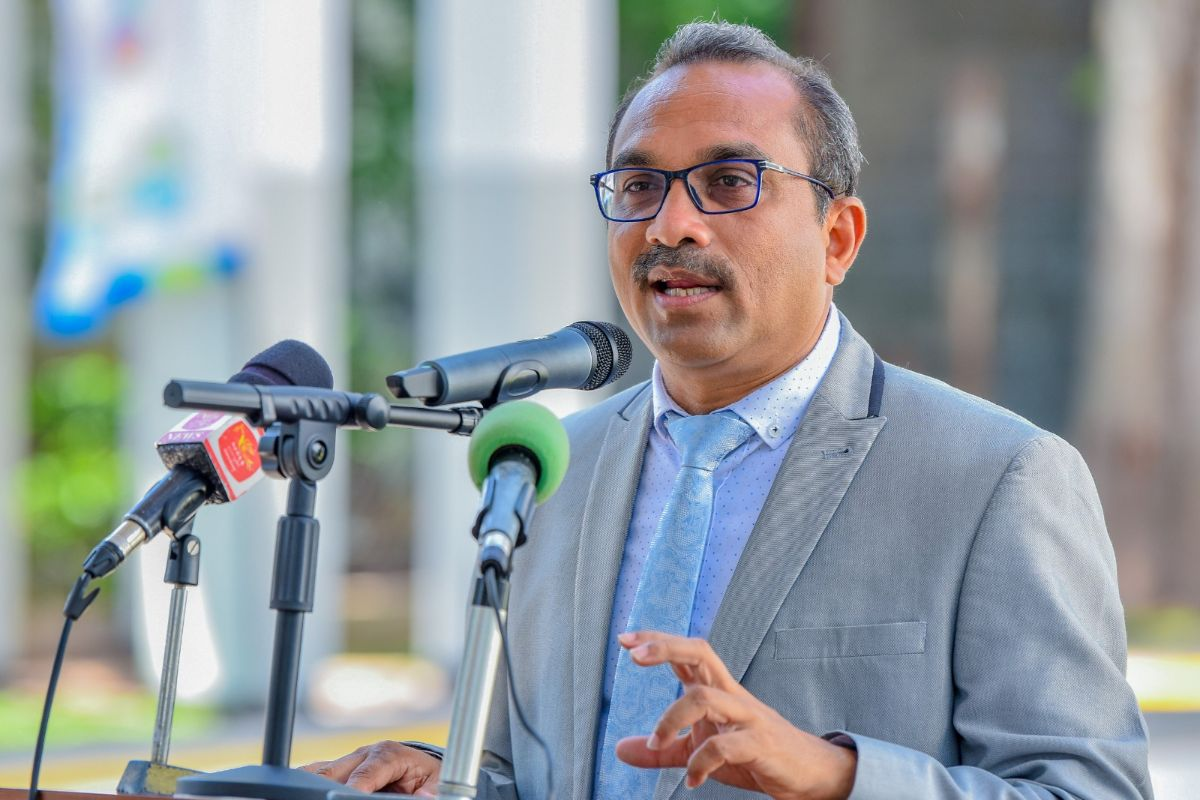
The Narahenpita Railway Station, which has been upgraded and refurbished under the ‘Dream Destination’ programme to modernise and improve facilities at 100 railway stations across the island through a public-private partnership, was officially reopened to the public on Monday (06) morning under the patronage of Minister of Transport, Highways and Urban Development Bimal Rathnayake.
The ‘Dream Destination’ programme is being implemented as a sustainable initiative by the Clean Sri Lanka Secretariat, under the guidance of the Ministry of Transport, Highways and Urban Development and the supervision of the Department of Railways.
Located on the Kelani Valley Railway Line between the Cotta Road and Kirulapone suburban railway stations, Narahenpita Railway Station had remained without refurbishment for many years and had deteriorated into an unsafe facility with inadequate passenger amenities. The station serves a large number of commuters travelling to and from the Narahenpita area, where numerous public and private sector institutions are located.
Accordingly, refurbishment work commenced on 27 September 2025, under the leadership of the Clean Sri Lanka Secretariat, with MAGA Engineering (Pvt.) Ltd. providing financial support and undertaking construction work, while NIO Engineering contributed technical expertise and related services.
The refurbishment included the construction of a new pedestrian overhead bridge, installation of a new station roof, extension of the second passenger platform, improvements to the sanitation and sewerage systems, internal and external repainting, installation of new passenger seating, renovation of the railway quarters, upgrading of the lighting system, resurfacing of the station access road with asphalt, and a range of other improvements to the station and its surrounding infrastructure.
MAGA Engineering (Pvt.) Ltd. invested Rs. 40 million in the project.
Addressing the ceremony, Minister Bimal Rathnayake said that the primary objective of the ‘Dream Destination’ initiative is to improve railway services by enhancing passenger facilities, while noting that upgrading the railway service’s human resources and physical infrastructure is a major undertaking.
He emphasised that the Government’s plan is to resolve long-standing issues while systematically improving the entire railway network, adding that several measures have already been introduced to enhance the efficiency of public transport services.
The Minister further announced that the initial steps towards introducing an electric railway service will be taken next year as part of the expansion of the railway network. The first phase will focus on the Colombo–Panadura, Colombo–Makumbura, and Colombo–Ragama corridors.
Minister Rathnayake also stated that, alongside improvements to public transport, the Government has initiated a collaborative public-private development process to upgrade related infrastructure. He described the ‘Dream Destination’ initiative as another commitment aimed at improving people’s daily lives, ensuring their safety and securing their future, while also incorporating public views and aspirations.
Among those present were Member of Parliament Attorney-at-Law Lakmali Hemachandra, Deputy Mayor of the Colombo Municipal Council Hemantha Weerakoon, United National Party Colombo Municipal Councillor Sunanda Liyanapathirana, Additional Secretary of the Clean Sri Lanka Secretariat Eng. S. P. C. Sugeeshwara, Additional Director General Kapila Senarath, Director H. P. S. Shantha, Director (Social Sector) Chinthaka Rajakaruna, Assistant Director Nishantha Alwis, Regional Coordinator Shashi Piyushan, General Manager of Railways Ravindra Pathmapriya, Additional General Manager (Operations) Chandrasena Bandara, Deputy General Manager (Traffic) N. J. Indipolage, Chief Engineer (Industries) Priyantha Deegala, Co-Managing Director of MAGA Engineering (Pvt.) Ltd. Megha Kularatne, Chief Executive Director Piyadasa Madarasinghe, Project Coordinator Sanjeewa Peiris, Maradana Station Master H. P. K. Pushpa Kumara, Narahenpita Station Master R. M. Rohana Upul Kumara, Station Master (Operations) Madhusha Gunawardhana, together with senior officials from the public and private sectors and a large gathering of invitees.
Bus transport is the primary mode of transport that fulfills the daily transport requirements of the country, and this service is provided by the Sri Lanka Transport Board and a large number of independent private bus operators.
Many problems have arisen, such as excessive competitiveness, poor adherence to the prescribed timetable, a large number of operators on the roads, unsafe behavior of bus operators,
inconvenience encountered by the passengers, traffic congestion, service imbalance, and inefficient use of resources due to the long-standing operational system in providing public passenger transport services.
As a successful solution to these problems, many countries in the world have introduced a ‘Bus Sector Clustering Program,’ and the bus service is operated under joint management in the same transport corridor or geographical area.
It has been acknowledged that the introduction of bus sector clustering, a methodology that involves the clustering of unified and coordinated bus services on interconnected routes under a single management, could be used to achieve the provision of an effective passenger transport service and the minimization of most operational and social issues, as opposed to the operation of a single operating unit.
Accordingly, taking into account the matters furnished by the Minister of Transport, Highways, and Urban Development, the Cabinet of Ministers has approved the implementation of the
pilot program relevant to the bus sector clustering program on the bus corridor covering routes 170, 177, and 190 initially, with the participation of related stakeholders, and to expand the project further based on the results of the pilot project.

“Badhu Shakthi 2026” National Tax Week begins

Renovated Narahenpita Railway Station reopens to the public under the ‘Dream Destination’ initiative

High-scoring draw gives West Indies rare series win

Bus Sector Clustering Pilot Program on route numbers 170, 177, and 190

Switzerland face Argentina in World Cup quarterfinal after beating Colombia

US bombs Sirik, Qeshm, Bandar Abbas over Hormuz attacks

‘Dates have the highest sugar content to fight Coronavirus’

Sunday Island 27 December – Headlines

#SundayIsland 17th December – Headlines

Sunday Island – 28th March

Sunday Island Headlines – 21 March

Sunday Island – 21st February – Headlines
-
 News3 days ago
Singapore-based Buddhist monk marks nearly four decades of humanitarian service
-

 News4 days ago
Freedom 250: US Embassy celebrates America’s 250th Independence Day through magic of American cinema
-
 News5 days ago
CIABOC to question Harak Kata on Rs. 200 mn bribery allegation
-
 News5 days ago
SLAF conducts successful rescue mission under UN command in Central African Republic
-

 News2 days ago
AI concerned over proposed SL military deployment in Haiti
-
 News5 days ago
UNEP support pledged to strengthen Sri Lanka’s Environmental Priorities
-

 Business5 days ago
‘Dialog Air Fibre powers a new era of Ultra Fast Home WiFi’
-

 Features3 days ago
The NPP’s New Challenge: Balancing Easter Lawfare and Economic Welfare