
News
National Environmental Policy and National Environmental Action Plan (2022-2030) launched


Text and pix
by PRIYAN DE SILVA
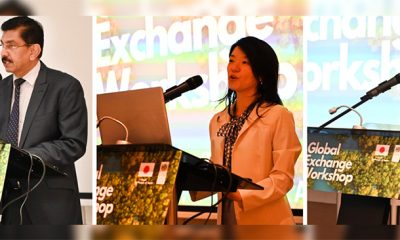
The National Environmental Policy (NEP) and National Environment Action Plan (NEAP) 2022 – 2030 calle the ‘pathway to sustainable development in Sri Lanka’ was launched at the auditorium of the Ministry of Environment on yesterday (19).
Minister of Environment Naseer Ahamed addressing thestakeholders present at the launch said that Sri Lanka had introduced a number of policies, legislations, plans and programmes over the years to address environmental issues. Among others, the National Environmental Policy and Strategy (NEPS) formulated and published by the Ministry of Environment and Natural Resources in 2003 has been the key policy document that guided decisions on environmental issues in Sri Lanka.
The Minister said that as significant changes had taken place nationally and globally affecting our environment after the formulation of NEPS in 2003, the Ministry of Environment recognised the necessity of updating NEPS focusing mainly on land and water resources, biodiversity and eco systems, coastal and marine resources, environmental pollution prevention, control and waste management, built environment and green development, climate change and global environmental challenges, cross-cutting issues and challenges when formulating the National Environmental Policy. He added that the National Environmental Action Plan (2022-2030) was drawn up in consultation with experts and stakeholders as a sequential process turning policy statements into strategic actions.
Referring to an incident where University of Sabaragamuwa, which was conducting research on Waste Management Policy was accused of permitting one of its contractors to dump waste near a waterfall the Minister stressed that all government and private institutions, NGO’s, CSO’s and the public should play their part in implementation of NEP and NEAP. He also requested those present to read both documents and instructed officials to send copies of NEP and NEAP to the University of Sabaragamuwa.
Secretary to the Ministry of Environment Dr. Anil Jasinghe said that the National Environmental Policy and the National Environmental Action Plan had been approved by the cabinet. Dr. Jasinghe quipped that he had second thoughts when signing the cabinet paper as he did not know whether it would be implemented or simply remain as a document.




Latest News
Sun directly overhead Nittambuwa, Algama, Malwana, Aranayake, Meegahakiula and Panamkadu about 12.09 noon today (04)


The sun is going to be directly over the latitudes of Sri Lanka from 28th of August to 07th of September due to its apparent southward relative motion.
The nearest places of Sri Lanka over which the sun is overhead today (04) are Nittambuwa, Algama, Malwana, Aranayake, Meegahakiula and Panamkadu about 12.09 noon.
Plant’s output cut from 270 MW to 140 MW amidst dwindling stocks; energy analysts warn system remains “at a razor’s edge”
By Ifham Nizam
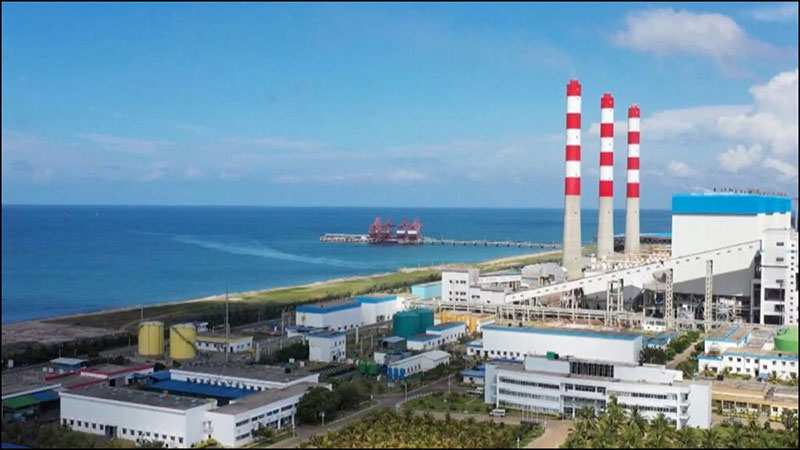
The Norochcholai coal-fired power plant is now digging into the last dredges of its coal stock, with two operational units forced to slash generation from around 270 MW to just 140 MW on Sunday as the plant ran critically short of fuel, according to independent energy analysts and sources familiar with the National System Operator (NSO).
The sudden reduction of approximately 130 MW in coal generation has once again exposed the fragile state of the country’s power supply arrangements, with the plant understood to have coal stocks sufficient only until Friday night.
“This is not how a coal plant is expected to operate. They are digging up the last dredges of coal from the plant,” an independent energy analyst told The Island.
The analyst questioned why the units had been allowed to reach this stage without earlier intervention, arguing that at least one unit should have been deloaded around 10 days ago to conserve the remaining coal.
Had that been done, the analyst said, the country could also have reduced its dependence on more expensive diesel-fired generation during the period when
coal stocks were being conserved.
The latest NSO generation figures highlight the continuing pressure on the system.
Around 7 p.m. on Sunday, when the night peak was reached, total demand stood at 2,552.7 MW. Coal contributed only 282 MW, while major hydro accounted for 1,215.8 MW and thermal-oil generation for 791.9 MW.
The night peak of 2,552.7 MW was substantially higher than the daytime peak of 2,246 MW, according to the NSO Generation Summary for August 30.
The most immediate concern is the remaining coal stock at Norochcholai.
Sources said the plant has coal only to Friday night, making the timing of the next shipment critical.
The first shipment under the emergency arrangement is expected to arrive on Friday, September 4, but the coal unloading will have to begin on the same day if
the power plant is to continue operating without further significant deloading.
That creates another potential vulnerability, with rough sea conditions posing an additional challenge to unloading operations.
Energy sector sources said that even the arrival of the September 4 shipment would not completely eliminate the danger.
The next shipment under the new coal tender would need to commence unloading around September 15. Any significant delay beyond that could again force the Norochcholai units to operate at reduced output.
“We are still at a razor’s edge”
The independent energy analyst said the situation should not be viewed merely as a question of whether a particular vessel arrives on time.
The situation also means that any further reduction in coal generation could have a direct impact on the use of oil-fired power generation, potentially increasing the cost of electricity generation.
The latest NSO figures already show the important role being played by thermal-oil generation during the evening peak, when demand rises sharply.
The analyst questioned the rationale behind allowing the coal units to continue operating at higher loading until stocks reached critically low levels instead of taking measures earlier to stretch the available inventory.
News
22A: BASL decides against making written submissions after SC refuses to grant it right of reply


The Bar Association of Sri Lanka (BASL) has informed the Supreme Court that it would not tender written submissions in respect of the petitions challenging the 22nd Amendment to the Constitution, which were heard on September 1 and 2.
The BASL said it had initially decided not to make written submissions after being deprived of the right of reply when the Solicitor General, appearing for the State, made submissions and explained the rationale and justification for the Bill.
The BASL pointed out that the Solicitor General, who made submissions at the end of the second day of the hearing, had not made a policy document available to the petitioners.
It also said the petitioners had not been given an opportunity to respond orally to the Solicitor General’s submissions or to address the Court on certain questions raised by the judges during their exchanges with the Solicitor General. (SF)

Sun directly overhead Nittambuwa, Algama, Malwana, Aranayake, Meegahakiula and Panamkadu about 12.09 noon today (04)

Showers expected in the Uva, Central and Eastern provinces and in Polonnaruwa and Mullaittivu districts after 2.00 p.m

Norochcholai digs into dwindling coal stocks, two units slash generation

22A: BASL decides against making written submissions after SC refuses to grant it right of reply

CPSL condemns pursuit of military cooperation with NATO

Police probe cops promoting drug business of “Kudu Avishka” operating from Dubai

‘Dates have the highest sugar content to fight Coronavirus’

Sunday Island 27 December – Headlines

#SundayIsland 17th December – Headlines

Sunday Island – 28th March

Sunday Island Headlines – 21 March

Sunday Island – 21st February – Headlines
-

 Features5 days ago
“Wrap Me Up in My Blazer”— A Gentlemanly Bradby Reminiscence
-

 Features4 days ago
When Sri Lankan stories find their own voice
-
 Features5 days ago
JVP/NPP government as seen from outside by Lionel Bopage now domiciled in Australia
-

 News4 days ago
BASL takes exception to Justice Ganepola being denied a place in SC
-

 Editorial6 days ago
Govt. trying to dupe UN Rapporteur?
-
 Features5 days ago
Prof. Savitri Goonesekere: What has she done?
-

 Features5 days ago
World Trade Politics: Canada rebuffs Trump’s tariff blackmail
-
 News5 days ago
Legal avenues explored to bring back Mahendran, aka Harjan Alexander