
News
SJB renews demand for elections, Sajith says ready for “litmus test”

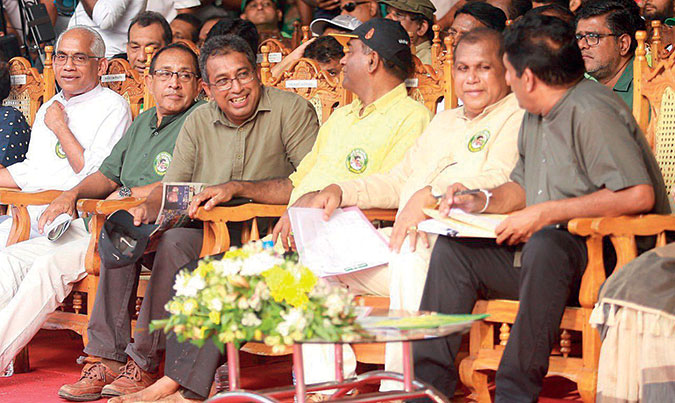
ECONOMYNEXT —At its second annual party convention, Sri Lanka’s main opposition party the Samagi Jana Balawegaya (SJB) renewed its calls for any election while formally adopting a resolution to demand a local government election, with party leader Sajith Premadasa expressing confidence that his party is ready for a litmus test.
Speaking at the SJB’s annual convention on Sunday December 11, Premadasa said the party rejects extreme forms of both capitalism and socialism and follows a centrist path instead with a ‘Sri Lanka First’ vision to develop the country.
“We want an election. We’re ready to face an election. Those of you who work within the confines of air conditioned rooms and palace intrigue, try and destroy the SJB in an election. The SJB and our parliamentary group are ready to take on that challenge,” he said.
The SJB is home to the only team sans corruption or deceit that can bring Sri Lanka out of its ongoing currency crisis, he said, a claim contested by the SJB’s critics who say there are people with various allegations among its fold.
“Our vision is Sri Lanka First, to take the country to the top of the world.
“We reject the extremist capitalism that was standard practice in this country. We reject extreme socialism. We follow a middle path,” he said.
Critics of the party say the party has been unclear about its position regarding International Monetary Fund (IMF)-backed economic reforms proposed by President Ranil Wickremesinghe’s government. In one example, critics say, the party’s low rung leaders are calling for an immediate restructure of Sri Lanka’s loss-making state-run Ceylon Electricity Board, while the party leadership has adopted what the critics claim is a disruptive policy of unconstructive, politically motivated criticism.
SJB Treasurer and MP Harsha de Silva who also spoke at the event said that the party’s plan was to develop Sri Lanka into a knowledge and technology based highly competitive social market economy as a hub of the Indian Ocean.
“Our model will be a synthesis of economic and political freedom where markets thrive yet at the same time we build a strong safety net to ensure equity and social justice for all,” he said. The MP, widely considered the SJB’s voice on economic policy, said economic reforms are absolutely essential and the party will see it to it that these reforms are made.
“We will breakdown protection walls and build bridges to join global production networks,” he said in a tweet recapping his remarks.
“Fact is since the demise of Pres Premadasa, no real focus on manufactured exports. While others progressed from apparels to electrical to electronics we didn’t. Our inward looking statist approach bankrupted us. Only way our youth will have a future is if we join the world! (sp),” he tweeted.
Critics of the SJB say, no matter how eloquently individual SJB members might articulate their position vis-à-vis reforms, SOE restructure, trade liberalisation and industrialisation, the party proper and its leadership have yet to officially announce its stance.SJB National Organiser Tissa Attanayake, meanwhile, said the time has come to force a presidential election from the president.
“We have to talk to Mr Ranil Wickremesinghe and somehow get a presidential election, even forcefully. We have to push for a parliamentary election. Don’t forget 2023 is an election year,” he said.
“Leave this convention with the confidence that we can win any upcoming election,” he told the audience, some of whom were heard shouting slogans at the start of the event ‘our president’ and ‘our king’ when Premadasa arrived at the location.
Though the speakers’ demand was for any election, the party party opted to formally adopt a resolution at the convention to demand only a local government election in the coming year.
Speaking at the event, SJB General Secretary Ranjith Madduma Bandara claimed that the ruling Sri Lanka Podujana Peramuna (SLPP)’s vote base, which stood at 6.9 million in 2019, has now dropped to less than 10% of that number.
“We had 5.5 million. There were two other parties with 450,000 and 250,000 votes each. Neither of those two parties can come where anywhere near the 5.5 million,” he said, triumphantly.
He was likely referring to the leftist National People’s Power, effectively a rebranded Janatha Vimukthi Peramuna (JVP), which obtained some 445,000 votes at the 2020 parliamentary election. The other party was ostensibly the United National Party (UNP), which the SJB broke off of en masse under Premadasa’s leadership in 2020. The UNP, led by Wickremesinghe and represented in parliament by a single MP, managed less than 250,000 votes at the 2020 polls.
Despite its thinly veiled potshot at the JVP, the SJB adopted a formal resolution at the convention to work together with “all progressive and democratic forces” to agitate against what the party called the government’s repression of mass protests and also to demand local government election.
Observers say that the JVP and the Frontline Socialist Party (FSP) and other leftists groups affiliated with the two parties have been instrumental in the success of the Aragalaya street protests that saw the ouster of ex President Gotabaya Rajapaksa. However, critics of the JVP are sceptical that its apparent rise in popularity since the 3% vote in 2020 is still unlikely to translate to a JVP-led government.
Meanwhile supporters of President Wickremesinghe argue that the commander in chief’s popularity is also on the rise, given what appears to be a return to stability after mass unrest earlier in the year, an easing of inflation and the availability of some formerly scarce commodities despite price hikes.
Political analysts say Wickremesinghe’s UNP is looking to form its own new alliance under the president’s leadership, incorporating section of the SLPP and some from the opposition camp, in an upcoming presidential or parliamentary election, whichever may come first.
The SJB convention saw large crowds gathered, but as is usual for party conventions and election rallies in Sri Lanka, they were likely card carrying party members and representatives of the party’s core base and not ordinary voters, and analysts question the SJB’s capacity to form a government at this stage even counting for the massive erosion of the SLPP’s popularity.
The convention saw the guest participation of a number of former SLPP stalwarts such as Dilan Perera, Chandima Weerakkody and others who now sit independently in parliament. Another notable SJB member from the Kaluta district who had been speculated to cross over to the government was also present.
Other resolutions adopted at the convention one to see that parliament pass an Anti-Corruption Bill drafted by SJB and to facilitate youth participation in Sri Lanka’s overall political process and to “recreate the Sri Lanka state” through social, economic and political reforms.
Popular singer Rookantha Goonathilake, who famously sang the UNP theme song ‘Ithin Hadamu Api Aluth Ratak’ but has since joined the SJB, performed for the crowd singing the SJB theme song, which was followed by a number of cultural items.
Some diplomats had also been invited.Premadasa, in his speech, stressed on the importance of an election.
“In a democratic system, what is the best litmus test to evaluate one’s own strength? An election. We want an election. Don’t we?” he said, pointing at the crowd.Some shouts of “yes” were heard.


by Norman Palihawadane
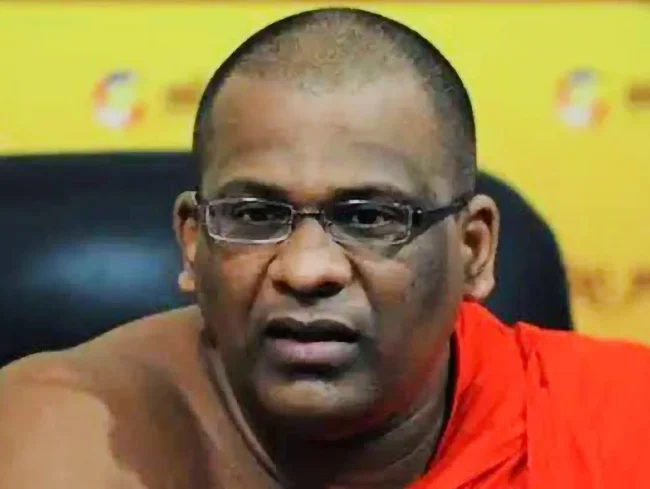
Bodu Bala Sena (BBS) General Secretary Ven. Galagoda Aththe Gnanasara Thera’s whereabouts have remained unknown since the Supreme Court, on Monday, annulled a presidential pardon granted to him in 2019.
Prison officers visited the Thera’s temple in Nawala, Rajagiriya, to take steps to return him to prison to serve the unexpired portion of his six-year sentence. However, monks at the temple had reportedly informed the officials that they were unaware of his whereabouts.
Police spokesman ASP F.U. Wootler said a separate court order was required for the police to trace the Thera, or assist in taking him into prison custody. No such order had been issued so far, he claimed.
Meanwhile, sources close to Gnanasara Thera said he was expected to attend a book launch in Colombo tomorrow (17),
The development follows the Supreme Court declaring the 2019 presidential pardon granted to Gnanasara Thera, by then President Maithripala Sirisena, null and void.
A three-member Supreme Court bench held that the pardon had been granted arbitrarily and violated public trust and principles of natural justice.
Gnanasara Thera had been serving a six-year prison sentence for contempt of court when the then President Sirisena granted him the pardon, in May, 2019. He had served only about nine months of the sentence at the time.
With the pardon annulled, the original sentence remains in force and the Thera is now required to serve the balance of his six-year term.
The Supreme Court ruling has raised questions over the procedure to be followed to return him to prison, with police and prison authorities yet to take custody of him.
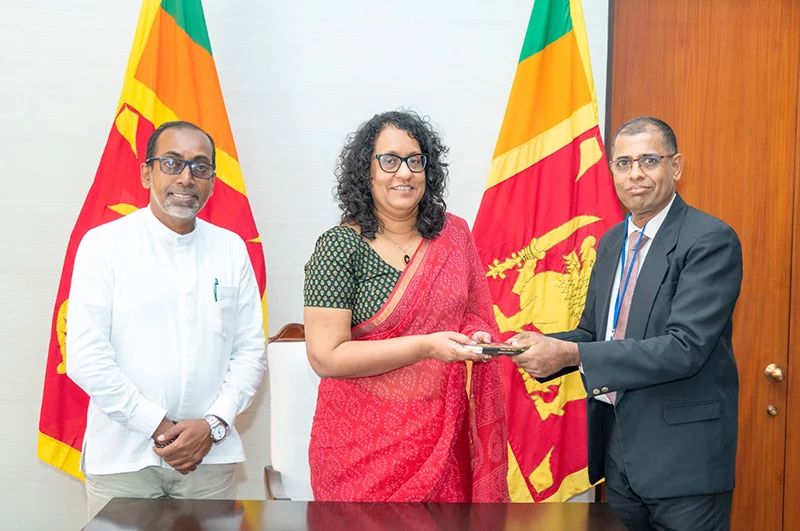
Russian citizens residing or temporarily visiting Sri Lanka will have the opportunity to cast their ballots in the elections to the State Duma of the Federal Assembly of the Russian Federation on September 20.
The Embassy of the Russian Federation in Sri Lanka said polling would be held at polling station No. 8338 at the Russian Embassy, 404, Bauddhaloka Mawatha, Colombo 07.
The polling station will be open from 8 a.m. to 8 p.m. on September 20, according to the Embassy.
Russian citizens aged 18 and above, including those permanently residing in Sri Lanka and those temporarily visiting the country, are eligible to vote, the Embassy said.
Voters are required to visit the polling station during its operating hours and produce documents certifying their Russian citizenship.
The Embassy said prior registration was not required to participate in the voting.
The election will be held to elect deputies to the ninth convocation of the State Duma, the lower house of Russia’s Federal Assembly.
Plastic waste is a growing challenge for Sri Lanka’s food sector, yet important gaps remain in understanding where and how single-use plastics are used, how they move through food value chains, and where interventions could have the greatest impact.
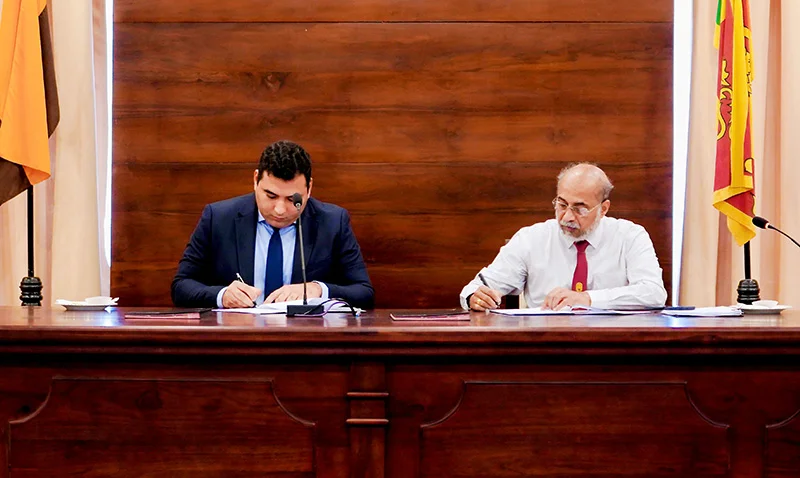
Through the European Union-funded CIRCULAR project, new research will help address these gaps by generating evidence to inform policy, business practices and more sustainable choices. Three research grants, totalling €Euro 110,000, will support university-led studies by research teams from the Faculty of Agriculture at the University of Ruhuna, and the Faculty of Medicine and Faculty of Computing at the University of Kelaniya.
Together, the studies will examine the use, flow and impacts of single-use plastics (SUPs) across selected food and beverage value chains in the Colombo and Galle Districts. The research will also seek to identify practical opportunities to reduce plastic use, promote more sustainable alternatives and strengthen circular economy practices.
At present, available data on plastic waste in Sri Lanka, particularly single-use plastics, do not provide sufficient detail on the sectors, sources and types of plastics involved. This limits the ability of policymakers, businesses and other stakeholders to pinpoint where plastic use can be reduced most effectively and to assess which interventions could deliver the greatest impact. The new research will help provide a more detailed understanding of these patterns, supporting more targeted and evidence-based action.
The three research teams will use a combination of data collection, waste-flow mapping, environmental and public health assessments, and life-cycle approaches to examine these challenges from different perspectives. The findings are expected to help identify opportunities to reduce plastic use, improve resource efficiency and promote more sustainable packaging and waste management practices.
The research grants are part of the CIRCULAR project’s broader efforts to support Sri Lanka’s transition towards more sustainable production and consumption in the food sector. Alongside research and evidence generation, the project works to raise awareness, encourage behaviour change and support approaches that move away from the traditional “take, make and dispose” model towards a more circular economy.
Circular Economy in the Food Sector (CIRCULAR) project is a three-year initiative focused on reducing food loss and food waste (FLW) and Single-use plastic (SUP) waste in the Food Sector in Sri Lanka. Funded by the European Union, and partially co-funded by the German Federal Ministry for Economic Cooperation and Development (BMZ), the project is jointly implemented by Expertise France (EF), the Food and Agriculture Organisation (FAO) and Deutsche Gesellschaft für Internationale Zusammenarbeit (GIZ) GmbH.
By strengthening the evidence base on single-use plastics, the research is expected to provide a stronger foundation for practical action, helping decision-makers, businesses and other stakeholders better understand where change is needed and how more sustainable solutions can be put into practice.

Where is Gnanasara Thera?Police pass buck to court

Russian citizens in Lanka to vote in State Duma elections

Euro 110,000 research drive to tackle plastic waste in food sector

New SAU-RCSS pact to boost South Asian dialogue

A ‘partnership’ like no other!

SLEIS 2026 to examine how Sri Lanka can strengthen its place in Asia’s growth networks

‘Dates have the highest sugar content to fight Coronavirus’

Sunday Island 27 December – Headlines

#SundayIsland 17th December – Headlines

Sunday Island – 28th March

Sunday Island Headlines – 21 March

Sunday Island – 21st February – Headlines
-

 Sports5 days ago
DDS set to lose Test captaincy
-

 News5 days ago
Sri Lanka faces new grid challenge as rooftop solar surges: former CEB GM
-

 Latest News5 days ago
Shafali, Deepti power India into sixth T20 Asia Cup final
-

 Latest News4 days ago
Sri Lanka thwart Fatima Sana challenge to secure Asia Cup final spot
-

 News3 days ago
Gnanasara Thero absconding after SC ruling
-
 Features6 days ago
Lost for 90 years: Rare Goby resurfaces in Jaffna
-

 News4 days ago
Ammunition cache found in old Kandy bungalow
-
 Latest News6 days ago
Italian Naval Vessel ‘ITS Giuseppe Garibaldi’ arrives in Colombo