
News
TNA, SLPP rebels battle for remaining CC slot

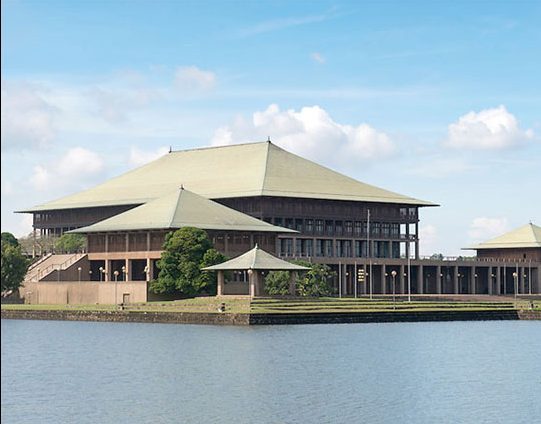
Consensus likely to be further delayed by House being on holiday
By Shamindra Ferdinando
Political parties are yet to reach a consensus on the appointment of a Constitutional Council member who does not represent the government, or the Samagi Jana Balavegaya (SJB) led by the Opposition.
Political sources say that a meeting chaired by Speaker Mahinda Yapa Abeywardena, on 08 Dec. 08, had ended inconclusively
Responding to The Island queries, sources said that the Tamil National Alliance and Uththara Lanka Sabhagaya locked horns over that CC slot. On behalf of the TNA, Jaffna District MP M.A.
Sumanthiran has proposed Vanni district lawmaker, Dharmalingam Siddarthan, as the CC nominee, whereas Wimal Weerawansa named Jayantha Samaraweera, in the absence of Udaya Gammanpila, who hadn’t been present at the commencement of the meeting. However, Gammanpila was named as their nominee, soon after he walked in. Sources said, those present couldn’t reach a unanimous agreement though the meeting lasted over an hour at the Committee Room 01.
The Speaker’s Office said that the CC member was to be appointed, in terms of Article 41A (1) (f) of the Constitution. Accordingly, the. Speaker’s Office requested MPs, who do not represent the government, and those not affiliated with the SJB, to attend. The Speaker has warned that nominations for the said appointment wouldn’t be accepted from those not present at the meeting.
The TNA has pressed for the slot on the basis of none of the six out of seven CC members, so far appointed in ex officio capacity, or nominated, included a Tamil speaking lawmaker. However, the rebel SLPP group has declared that Uththara Lanka Sabhagaya, as well as other breakaway factions, should have the right to be represented as they no longer functioned as part of the ruling party.
In addition to Prime Minister Dinesh Gunawardena, Opposition Leader Sajith Premadasa, and Speaker Abeywardena, who are ex-officio members, the SLPP parliamentary group, the President and the Opposition Leader named Sagara Kariyawasam, Nimal Siripala de Silva and Kabir Hashim as CC members. Only one MP remained to be chosen whereas three civil society members are also yet to be named.
Sources pointed out that the proposal to name Jayantha Samaraweera/Udaya Gammanpila as their nominee has been seconded by Anura Priyadarshana Yapa, another rebel, though not being a member of Uththara Lanka Sabhagaya.
The other SLPP rebel group Nidahas Jathika Sabhawa has refrained from backing their colleagues’ move, sources said.
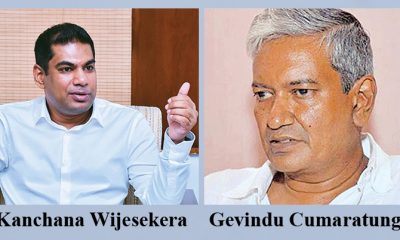
Sources said that Yuthukama leader Gevindu Cumaratunga has pointed out that since Sumanthiran worked closely with President Wickremesinghe, the President’s Counsel should have been considered the President’s nominee, instead of SLFPer Nimal Siripala de Silva. Cumaratunga also questioned the appointment of SLPP General Secretary Sagara Kariyawasam as the SLPP’s nominee as he didn’t vote for the 21st Amendment that paved the way for the 10-member CC.
MP Sudarshini Fernandopulle, leader of the Women Caucus in Parliament, has pointed out the failure on the part of her colleagues to at least to nominate one woman MP.
At one point MP Sumanthiran has declared that they would walk out of the meeting. SLPP rebels found fault with the Speaker for not calling for a vote to pick the CC nominee.
Sources said that SLPP rebels, prior to the meeting, sought clarification from the Secretary General of Parliament, Dhammika Dasanayake, whether they could attend the meeting.
The appointment of 11 Independent Commissions has been held up, pending the finalization of the CC. In terms of the 21st Amendment, overwhelmingly endorsed by Parliament, in October, Independent Commissions cannot be reconstituted until the appointment of the CC.
As the Parliament wouldn’t meet till January 05, next year, the whole process could be held up, sources said.

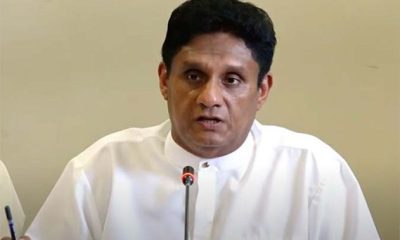

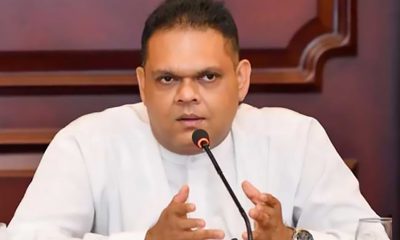

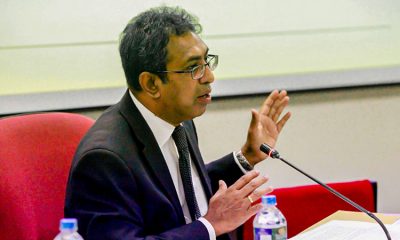




Opp. lashes out at Justice Minister for disparaging remarks about CLA
By Shamindra Ferdinando
The Joint Opposition yesterday (09) tore into Justice and National Integration Minister Harsha Nanayakkara over some disparaging remarks about the Commonwealth Lawyers Association (CLA) in Parliament on Tuesday (08).
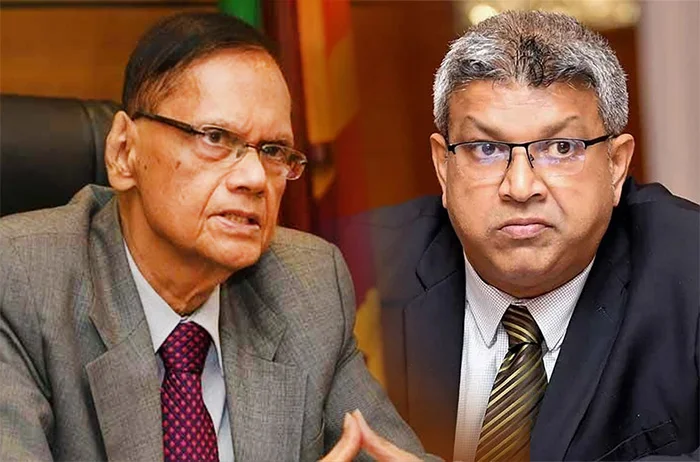
The Convenor of the Opposition grouping, former Law Professor Peiris questioned Minister Nanayakkara’s declaration that the CLA was a private club that granted membership on payments received. Emphasising that the CLA consisted of those in the legal profession in Commonwealth countries, Prof. Peiris told the weekly media briefing at the Flower Road Office of former President Ranil Wickremesinghe that the views expressed by the organisation couldn’t be discarded under any circumstances.
Prof. Peiris dealt with Nanayakkara’s response to the CLA’S concerns about several issues, including the composition of the five-member panel of judges. “How could Minister Nanayakkara dismiss concerns raised by CLA on the basis of the paid-membership of the organisation?” Prof. Peiris asked. If membership became an issue, the government would have to reconsider Sri Lanka’s UN membership, the ex-External Affairs Minister said, pointing out that the country had to make regular payments to retain membership of other UN agencies, as well.
Prof. Peiris said that indefensible attacks on international organisations could cause irreparable damage to the country. Appreciating the CLA’s report on the Supreme Court proceedings on the 01 and 02 September, Prof. Peiris stressed the importance of what he called total transparency in the judicial process. He said that whatever the outcome of a particular legal process, it couldn’t be done behind the backs of the public.
Referring to legal processes regarding the 6th Amendment and 13th Amendment, in 1983 and 1987, respectively, Prof. Peiris said, on both occasions the then Chief Justices Neville Samarakoon and S. Sharvananda constituted benches consisting of all Supreme Court judges.
But, the incumbent CJ Preethi Padman Surasena, in spite of the majority of petitioners demanding all available 13 justices to hear the case, decided to leave out those on the seniority list from second position to fourth position.
The government got offended because the CLA pointed that out for the whole world to take notice, Prof. Peiris said. The former parliamentarian noted that the CJ hadn’t even give a reason for declining the widespread call to involve all available 13 judges. According to him, there had been instances where CJ’s appointed seven justices to hear a particular case. Prof. Peiris cited the 2018 bench of seven judges that heard the petitions against President Maithripala Sirisena over the dissolution of Parliament and a panel constituted in 2023 to hear the 2019 Easter Sunday carnage that claimed the lives of 270 people.
The issue at hand is that the five-member panel of judges hadn’t been selected on the basis of seniority, Prof. Peiris said, once the SC determination was sent and released through the Speaker, they would meticulously examine that to make their position known to the people. Prof. Peiris said that what they really wanted to know was that if seniority hadn’t been the basis for selection what the criterion was.
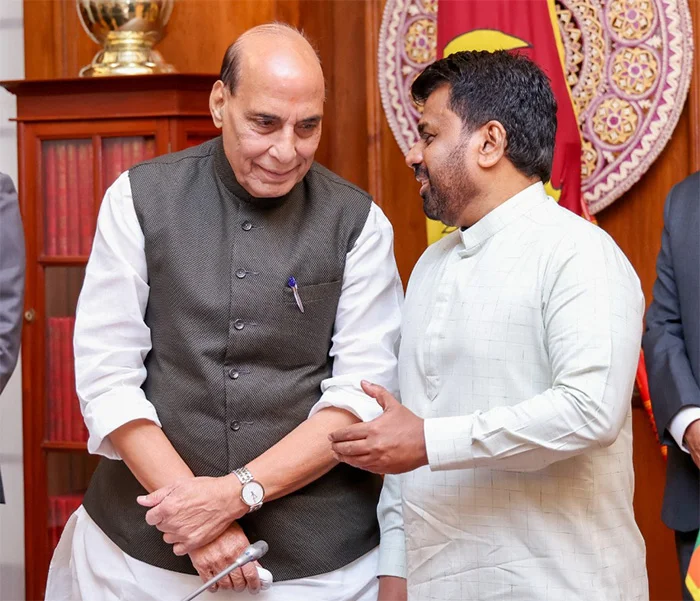
The Indian Defence Ministry in a statement issued yesterday (09) quoted President Anura Kumara Dissanayake as having assured visiting Defence Minister Rajnath Singh that Sri Lanka would never allow its territory to be used for activities inimical to India’s security interests.
The text of the Indian press release: “Visiting Indian Defence Minister Rajnath Singh called on President Anura Kumara Dissanayake in Colombo on September 09, 2026. The two leaders held substantive discussions on issues covering the entire spectrum of the multi-faceted partnership between the two nations, characterised by traditionally warm relations and mutual trust.
The two sides reaffirmed that as civilisational twins, close neighbours and maritime partners, India and Sri Lanka would continue to work together for their development and welfare of the people while working jointly to ensure the safety, security, peace and prosperity of the region. The senior Indian Minister conveyed greetings on behalf of Prime Minister Narendra Modi and underlined that the citizens of the two countries share deep friendship based on strong historical & civilisational links and people-to-people exchanges.
Extending a warm welcome to Mr. Singh, President Dissanayake recalled his interactions with PM Modi and reiterated that Sri Lanka would never allow its territory to be used for any activities inimical to India’s security interests.
President Dissanayake expressed his gratitude for the relief assistance provided by India as part of Operation Sagar Bandhu during Cyclone Ditwah and the comprehensive rehabilitation package extended by New Delhi to facilitate reconstruction and rehabilitation work across different parts of the island. The powerful Indian Defence Minister emphasised that as a closest friend and neighbour of Sri Lanka, India considered it not a favour, but a responsibility to provide assistance as the first responder and would continue to do so in the future as well.
Both leaders virtually inaugurated three Bailey Bridges constructed by the Indian Defence Forces. The two sides also exchanged MoUs on upgradation of L70 Guns for the Sri Lankan Air Force, and cooperation between National Cadet Corps (NCC) & National Defence Colleges (NDC) of both the countries. The MoU on Upgradation of six L70 guns for the Sri Lankan Air Force falls under a Government of India grant. The upgradation of these air defence guns will significantly strengthen the air defence architecture of critical assets in Sri Lanka. These air defence guns were earlier provided to the Sri Lanka Air Force by India.
The MoU on academic cooperation between NDC, India and NDC, Sri Lanka will facilitate knowledge sharing which will be a significant step in further strengthening the academic bonds between both the sister institutes. The MoU on NCC cooperation will formalise the NCC youth exchange programme between India and Sri Lanka. This exchange programme provides a valuable opportunity for NCC cadets from multiple countries across the world to come to New Delhi every year and participate in NCC events.”
News
UK-led Core Group calls Jaffna mass graves a ‘stark reminder’ but stops short of calling for international accountability
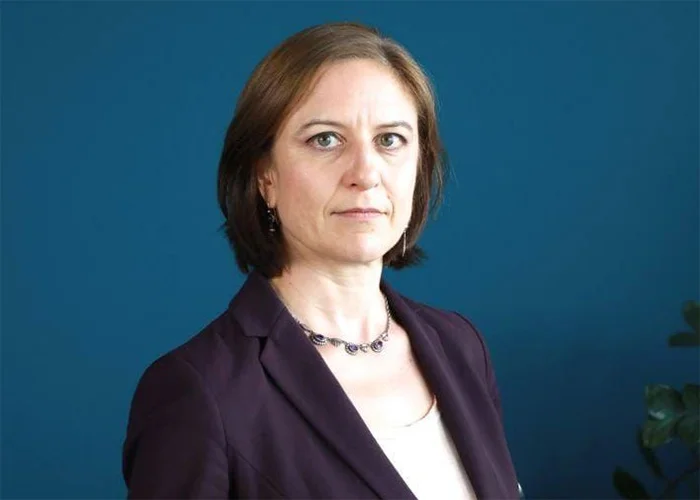
Mass grave excavations in Sri Lanka are a stark reminder that thousands of cases of enforced disappearance remain unresolved, the Sri Lanka Core Group has told the UN Human Rights Council, urging Colombo to translate its stated commitment to reform into concrete progress, while again stopping short of calling for the international accountability that Tamils have long demanded.
The statement, delivered in Geneva, on Tuesday (08), during the Council’s 63rd session by the United Kingdom’s Human Rights Ambassador Eleanor Sanders on behalf of Canada, Malawi, Montenegro, North Macedonia and the UK, welcomed, what it called, the High Commissioner’s balanced assessment of the human rights situation on the island.
The group acknowledged that Sri Lanka had faced considerable challenges recently, including severe weather events and global energy shocks, and welcomed positive developments, including the ratification of the ILO Convention 190 and engagement on the Convention on the Rights of Persons with Disabilities.
“However, much further action is needed to build confidence in accountability and reconciliation efforts,” Sanders said. “Progress in several emblematic cases has not yet been accompanied by a comprehensive,
victim-centred accountability process to address past violations. Mass grave excavations are a stark reminder that thousands of cases of enforced disappearances remain unresolved. And reports of intimidation, harassment, and restrictions affecting civil society, journalists and victims’ groups, including in the North and East, still raise concerns.”
The group urged progress on democratic governance, including advancing legal and institutional reforms, resolving land-related issues, ensuring respect for human rights in detention institutions and strengthening independent institutions.
The statement follows a familiar pattern. In June, the group acknowledged “developments in certain mass grave investigations” and urged that excavations meet international standards, and in March it called for the repeal of the Prevention of Terrorism Act. At the 58th session it welcomed a series of measures Tamils regarded as superficial. Neither this statement, nor its predecessors, names Chemmani, calls for international oversight of the excavation, or addresses the demand for a referral to the International Criminal Court.

Showers will occur in the Western and Sabaragamuwa provinces and in Kandy, Nuwara-Eliya, Galle and Matara districts.


Sri Lanka reiterates its territory won’t be used against India

UK-led Core Group calls Jaffna mass graves a ‘stark reminder’ but stops short of calling for international accountability

India underscores security and defence in overall partnership with SL

If Sri Lanka wants ‘real’ stability, only one way to achieve it, in a short time

‘Dates have the highest sugar content to fight Coronavirus’

Sunday Island 27 December – Headlines

#SundayIsland 17th December – Headlines

Sunday Island – 28th March

Sunday Island Headlines – 21 March

Sunday Island – 21st February – Headlines
-

 News5 days ago
Namal remanded until Sept. 18 over Airbus deal investigation
-

 Latest News4 days ago
Tharanga creates history with Diamond League crown in Brussels
-

 News4 days ago
Dispute which triggered listed company director being detained at BIA resolved
-

 Features3 days ago
After the parade: What a traffic OIC’s walk-out tells us
-
 Opinion6 days ago
In Memory of Dr Upatissa Pethiyagoda
-

 Editorial5 days ago
Power vs Equality
-
 Latest News6 days ago
SLPP MP Namal Rajapaksa arrested by CIABOC
-
Editorial3 days ago
Arrests as theatre