
Editorial
The second wave


The Covid-19 situation has dealt Sri Lanka and all its people a deadly blow on their collective solar plexus. But none of us can place our hands on our chest and swear “not guilty” to the charge of not doing everything we should have in the situation we were placed in. For the past several weeks we have been warned by those who know best that we have been allowing our guard to slip. It has been repeated almost ad nauseam that far too many of us have been acting as though things had normalized; and this was absolutely dangerous. Many people sign off their emails with a ‘stay safe’ exhortation. But how many of them practice what they preach? Human nature is such that the easy way is what the vast majority chooses, however tight the circumstances. Now the deadly virus has caught the feared second wind and the country is faced with many hard options.
The safest thing to do would be to lock down, the way we did or was forced to do, the first time round. But at what cost? Tens of thousands (if not hundreds of thousands) of our people are daily wage earners eking out what is barely sufficient for the day. While a lock down can slow, though not entirely arrest, a community spread, it is not an ironclad guarantee that everything would be tickety boo very quickly. In the meantime an economy that is already in very bad shape sinks deeper in the mire. Added to that is the human misery that it heaps on the poorest of the poor. There was a pre-election handout (if we may call it that) of Rs. 5,000 per needy family. A second similar installment was promised but many people complained that they didn’t get it. A third installment was also supposed to be on the way but that did not materialize.
How badly the Samurdhi poor relief scheme is targeted is common knowledge; large numbers in dire distress do not get it while many of those not qualifying do. There was a newspaper report in the early days of the scheme that an MPs parents were Samurdhi recipients. We do not know whether the son did not look after his elderly parents or whether he facilitated the Samurdhi benefit paid to them. However that be, there is no escaping the reality that even a basic poor relief scheme has been massively politicized in this country of ours. There were reports that the lock down relief granted, with an election down the road, was seized by politicians to gather votes for themselves. It was alleged that application forms for the assistance were sometimes distributed in the homes of Pradeshiya Sabha members. The intervention of the Elections Commission was demanded. Nobody would have been surprised at what happened; the cause for surprise would have been if it did not happen!
President Gotabaya Rajapksa is on public record saying he gets thousands of text messages urging him to bring back Lankans working overseas. Doing that in an unregulated manner will be asking for trouble and the president, with the best will in the world, cannot do that. While all of us can well understand the anguish of our countrymen, who have long supported national coffers with their remittances, stranded in sometimes high risk places undergoing great hardship, there is little that can be done to help them at present. There have been some repatriation flights but not nearly enough. There was talk of reopening the Katunayake International Airport, even in a limited manner, when the Brandix cluster hit us. Obviously tourism on which this country is greatly dependent cannot regain a semblance of normality with Katunayake closed. Even if it was open, given the global reach of the pandemic, there would have been few takers for holidays in this “land like no other.”
Claims and counterclaims are flying around aplenty. Organizations like the GMOA that strongly supported the election of the incumbents say that we had not even utilized the existing 3,000 tests per day capability and were doing only a thousand when the latest blow struck. Then 5,000 tests a day was claimed and the obvious question arises of how it is possible to exceed available testing capacity. Dr. Anil Jasinghe, who held the position of Director General of Health Services when the Covid blow struck, and was one of the most visible front line fighters of the pandemic, was moved out of that job and made Secretary to the Ministry of Environment. It was cynically asked whether this doctor, who held high WHO office in his previous avatar, was expected to fight Covid in the environment. Jasinghe was replaced by a Major General of the Sri Lanka Army Medical Corps.
Now we are told of some strange shenanigans at the Medical Research Institute (MRI) whose acting director has been made deputy director and the deputy director made director, whether acting or not we don’t know. What we do know is that the long-established MRI built by a philanthropist to commemorate Queen Victoria’s diamond jubilee, has for over a century been engaged in doing highly reputed research work in fields like virology, bacteriology, parasitology and much more. It would obviously a fortress for the army of front liners battling the pandemic. A bhikku who was one of the strongest supporters of the ruling SLPP made some scathing remarks about the changing of the guard at the MRI a couple of days back. Health Minister Pavitra Wanniarachchi offered an explanation of sorts in parliament the other day but it is yet unclear whether she has satisfied Ven. Muruttetuwe Ananda whose temple at Narahenpita was a virtual headquarters of the SLPP not so long ago.
What is crystal clear is that the country is confronted with a frightening challenge while its leaders are obsessed with enacting a 20th Amendment to our periodical-like constitution that was not part of the promised “Vistas of Splendor and Prosperity.”


Thursday 10th September, 2026
Sri Lankan politicians are notorious for carrying out personal attacks instead of countering arguments. So, the JVP-NPP government’s attack on the Commonwealth Lawyers’ Association (CLA) in Parliament on Tuesday (08) came as no surprise. The CLA, whose President Steven Thiru attended the recent Supreme Court (SC) hearing of petitions against the 22nd constitutional amendment (22A) bill, as an observer, has raised concern over several key issues, such as the rejection of a request for a full bench, the refusal of a request for the Chief Justice’s recusal, non-inclusion of senior judges on the SC bench, and the denial of opportunity for petitioners to make oral submissions.
Minister of Justice Harshana Nanayakkara took great pains to belittle the CLA, in Parliament on Tuesday, claiming that it was not an organisation officially recognised or registered under the Commonwealth Secretariat. It was a private club whose members paid fees for membership, he claimed. Deputy Minister Sunil Watagala joined the Justice Minister in bashing the CLA. Both of them are lawyers.
The government also resorted to the classical straw-man approach; misrepresenting the CLA arguments as biased views of an organisation lacking Commonwealth recognition, it claimed that they were both unacceptable and unworthy of consideration. The CLA’s observations on the SC hearings went unchallenged in Parliament for all intents and purposes.
Defending the CLA and its observations, Opposition Leader Sajith Premadasa said that if the government did not recognise the CLA it ought to make a formal statement in Parliament to that effect. The ruling party members ignored his challenge. Another Opposition MP demanded to know why the Justice Minister said he had agreed to meet Steven Thiru if he thought the CLA was only a private club.
There is no way the government can justify its diatribe against the CLA. This is what the Commonwealth Secretariat’s own website says about the CLA: “The CLA’s objectives are to maintain and promote the rule of law throughout the Commonwealth: CLA is a pan-Commonwealth organisation which seeks to uphold the rule of law in the Commonwealth by encouraging exchange of ideas between legal professionals, academics and students, through projects and by driving improvements in legal education. It holds a number of short events throughout the year and has a biennial conference, the Commonwealth Law conference, which regularly attracts over 1,000 delegates including some of the finest legal professionals in the world today to discuss issues of interest to the profession over a four-day period.” It will be interesting to hear what the government has to say about this? One can only hope that in a bid to defend the indefensible, the JVP-NPP bigwigs will not condemn the Commonwealth itself as a colonial relic that perpetuates the imperial legacy, facilitates British soft power, reproduces unequal North-South relationship, retains the monarchy as an important symbol of its imperial past, and serves elite interests.
Besides the CLA, the International Association of Judges, representing 93 national organisations across five continents, LAWASIA and the French National Bar Council have taken exception to 22A. In fact, counsel, warnings and criticism need not come from experts for them to be worthy of consideration. For example, a warning that the rear wheels of a heavy vehicle being reversed are dangerously close to the edge of a precipice could come from a child. To disregard such warnings is to invite disaster. One may recall that it was a child who told the proverbial emperor that he was waking in the buff while everyone else was pretending to admire his new clothes.
Meanwhile, the position of some prominent civil society activists and public intellectuals on 22A defies logic. One could argue that they are engaged in an intellectual steeplechase, skillfully clearing all obstacles except the key issues, especially the possible politico-legal consequences of 22A. Perhaps, they are wary of offending President Anura Kumara Dissanayake by expressing their candid views and therefore behave like the proverbial curate who lacked the courage to say an egg on his plate was bad and in deference to his host and Bishop claimed that parts of it were excellent.
If raising mandatory retirement ages is a sine qua non for making a system efficient and doing away with delays, as the government has claimed in the case of the judiciary, then one can argue that the retirement ages of doctors, university teachers, and other state employees must also be raised as part of a strategy to do away with delays that characterise government hospitals, universities, the Department of Motor Traffic, the Department of Registration of Persons, the Department of Immigration and Emigration, the Colombo Port, the state-owned bus service, etc.
The SC determination on 22A is yet to be announced. Nevertheless, if the legitimacy and acceptability of laws derive solely from SC determinations thereon, then one can argue that no one should be critical of the 18th Amendment (2010), which abolished the presidential term limit and concentrated more power in the executive presidency for the benefit of the then President Mahinda Rajapaksa, and the 20th Amendment (2020), which allowed dual citizens to serve as legislators, benefiting the then President Gotabaya Rajapaksa’s sibling Basil. Those amendments passed muster with the apex court but obviously lacked legitimacy and acceptability. The Prevention of Terrorism Act was also ‘duly passed’ by Parliament, but it is one of the worst laws this country has ever seen. The same holds true for 22A, crafted to enable the JVP-led government to consolidate its grip on power and lay the foundation for the perpetuation of its rule. NPP General Secretary Dr. Nihal Abeysinghe has publicly stated that the JVP/NPP will be in power until 2050. One may recall that the JVP went on a killing spree and destroyed state assets worth billions of dollars in a bid to scuttle the 13th Amendment, which was passed by Parliament with a five-sixths majority. So, as for 22A, problems will not go away even if the government succeeds in securing its passage.
Wednesday 9th September, 2026
Power is as addictive as narcotics, and those who savour it cannot let go of it. When out of power, they find themselves in the same predicament as drug addicts who kick the habit cold turkey. Hence politicians’ determined efforts to perpetuate their grip on power regardless of the methods used to achieve that end.
NPP General Secretary Dr. Nihal Abeysinghe has declared that his party will remain in power until 2050, as we reported yesterday. He first said so at a political rally in Kalutara over the weekend. His declaration cannot be dismissed as mere platform rhetoric aimed at boosting the morale of his party’s rank and file or provoking the Opposition, for it is the leitmotif of all speeches made by JVP big guns, who even publicly speak of their intention to establish a one-party rule. A few months ago, after returning from a junket in China, JVP General Secretary Tilvin Silva said the Chinese leaders had told a JVP delegation led by him that a political party had to remain in power for about two decades at a stretch to develop a country.
Interestingly, Dr. Abeysinghe’s statement at issue happened to be made on the same day as US President Donald Trump’s absurd claim that the moon, of all things, belonged to the US. Trump went so far as to post a photo of the moon on Truth Social, with the words, “The Moon is Ours”, written across it. He added a US flag next to the picture, sharing AI-generated images of new black uniforms for the US Space Force, according to media reports. This is what happens to politicians when power goes to their heads. Intoxicated with power, they live between fantasy and reality, so much so that they confuse fantasy with reality and vice versa.
As for Trump and the US, one may recall that when President George W. Bush appointed John Bolton as US Ambassador to the UN in 2005, a US newspaper, which was critical of Bolton, famously said that thankfully the problem was now confined to the UN. Likewise, the earthlings troubled by the consequences of Washington’s hard-power projections replete with military force, economic leverage, and coercive diplomacy to influence or compel the behaviour of other global actors, must be wishing that Trump and the coterie of hawks around him were sent to the moon so that the problem would be confined to the earth’s natural satellite.
It is worth recalling that after defeating the LTTE, launching numerous mega development projects, and securing a second term with an impressive majority, President Mahinda Rajapaksa became so cocky in 2010 that he thought he would be able to retain the coveted presidency indefinitely. He amended the Constitution, enabling himself to seek a third term. But five years later, he became the first serving Sri Lankan President to lose a presidential election. When former Defence Secretary Gotabaya Rajapaksa (GR) became President in 2019, with the SLPP mustering a two-thirds majority in Parliament the following year, many thought he would deliver and secure a second term easily, and the Opposition would have its work cut out to return to power, but a couple of years later, he happened to show a clean pair of heels to the Aragalaya protesters. In Bangladesh, Prime Minister Sheik Hasina, who thought no end of her power, ordered a crackdown on a mass uprising against her government, and the SLPP backers here hailed her counterattack, blaming GR for not having done so to suppress Aragalaya. But a few months later, Hasina fled to India.
Nothing is so certain as the unexpected in politics. When pressure builds up in a polity owing to economic hardships, the suppression of democratic rights, etc., with protests spilling over onto the streets, there is no defence for a government that fails to make good on its promises.
The inhabitants of cloud cuckoo land would do well to be mindful of the fact that those who do not learn from history are doomed to repeat it. The only way the incumbent government leaders could avoid the fate that befell the Rajapaksas here, Hasina in Bangladesh, and other such leaders elsewhere is to bear in mind that mandates are fragile and ephemeral, and it is the people who decide whether a government should continue to be in power.
Tuesday 8th September, 2026
President Anura Kumara Dissanayake has embarked on a nationwide tour to drum up support for his government, whose approval rating has declined, according to a Verite Research opinion survey. It is possible that he has launched his re-election campaign, the way his predecessors did, as some political commentators argue. The Opposition has claimed that the President has launched the ongoing campaign with an eye to a possible referendum on the 22nd Amendment Bill. But he is apparently very confident that he will be able to amend the Constitution without a referendum to raise the retirement ages of the superior court judges.
Addressing a rally in Kalutara over the weekend, President Dissanayake rejected allegations that he was planning to do away with elections with the help of a referendum. He said the parliamentary and presidential elections would not be delayed, and the Provincial Council (PC) polls would be held after clearing some legal obstacles.
Elections to some provincial councils have remained in abeyance since 2017. The Eastern, North Central and Sabaragamuwa Provinces last went to the polls in 2012, followed by the Central, Northern and North Western Provinces in 2013. Elections to the Western, Southern and the Uva Provincial Councils were last held in 2014. There have been two presidential elections, two general elections and two local government elections since 2017 and the country has had four Presidents since then.
The PCs have been functioning without elected representatives all these years, and this amounts to a blatant violation of the Constitution, according to former Chairman of the Election Commission Mahinda Deshapriya.
Deshapriya has gone on record as saying that it is a clear violation of the Constitution for bureaucrats to run the PCs without elected representatives. The blame for this situation should be apportioned to all political parties, Deshapriya has said. The media has quoted him as saying that there is no graver sin than postponing elections, and the PC polls must be held urgently.
If the government is not afraid of facing elections, it need not wait until the so-called legal hurdles are cleared to hold the PC polls. There is an easy way around this problem.
The process of redrawing the boundaries of electorates for implementing the mixed proportional system is bound to drag on indefinitely. The best way out is to hold the PC polls under the Proportional Representation (PR) system so that there will be five long years thereafter for completing the delimitation process, etc. In fact, a private member’s motion has already been presented to Parliament to this effect.
MP Shanakiyan Rasamanickam’s private member’s Bill, titled, “Bill to amend the Provincial Council Elections Act, No. 2 of 1988”, seeking to clear the way for the PC elections, was seconded by MP M. Nizam Kariapper. If ratified, this amendment will provide for holding the PC polls soon under the PR system.
Former Election Commission Chief Deshapriya has said it will be possible to hold the PC elections in four months under the PR system if Parliament passes necessary laws. If they are to be held under the proposed mixed representation system, the PCs will be without elections this year as well, he has said.
The JVP-NPP government has a two-thirds parliamentary majority, which it flaunts at every turn, and therefore it can amend the Provincial Council Elections Act anytime. After all, its election manifesto, A Thriving Nation, A Beautiful Life, promised to hold the local government and provincial council elections within one year of forming a government.

Pakistan seek revenge, Sri Lanka eye another Asia Cup final

Trump says every adult American will get $5,000 if Republicans win midterms

Protesters mistake Pakistan’s U-19 team for asylum seekers in Portsmouth

Steps are being taken to provide accommodation facilities for 16,000 university students – Prime Minister

Showers will occur in the Western and Sabaragamuwa provinces and in Kandy, Nuwara-Eliya, Galle and Matara districts.


‘Dates have the highest sugar content to fight Coronavirus’

Sunday Island 27 December – Headlines

#SundayIsland 17th December – Headlines

Sunday Island – 28th March

Sunday Island Headlines – 21 March

Sunday Island – 21st February – Headlines
-
 News6 days ago
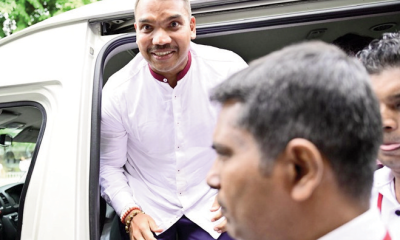
Namal remanded until Sept. 18 over Airbus deal investigation
-

 Latest News5 days ago
Tharanga creates history with Diamond League crown in Brussels
-

 News5 days ago
Dispute which triggered listed company director being detained at BIA resolved
-

 Features4 days ago
After the parade: What a traffic OIC’s walk-out tells us
-
 Opinion7 days ago
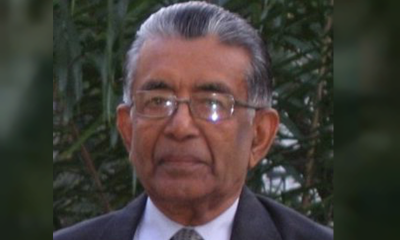
In Memory of Dr Upatissa Pethiyagoda
-

 Editorial6 days ago
Power vs Equality
-
Editorial4 days ago
Arrests as theatre
-
 Latest News6 days ago
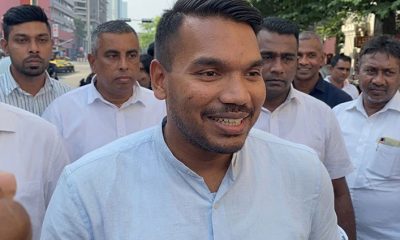
SLPP MP Namal Rajapaksa arrested by CIABOC