
Business
Innovate Lanka concludes with Demo Day and Finale

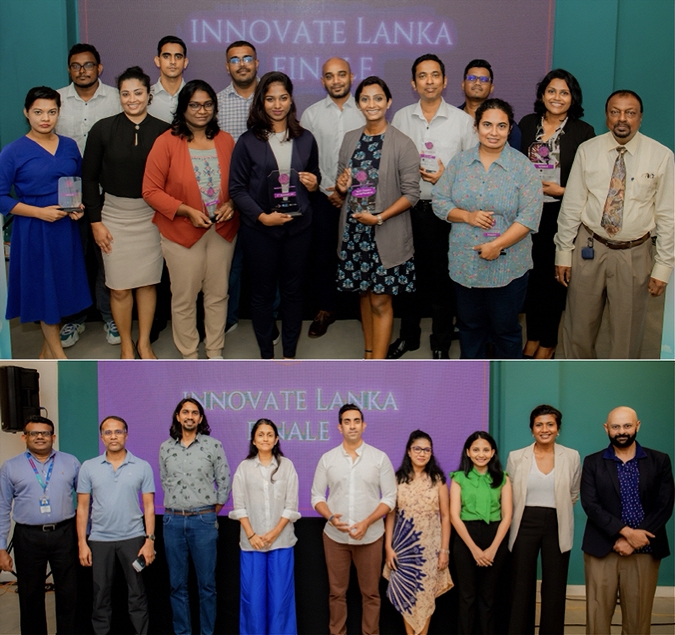
Innovate Lanka recently concluded with its 2022 Demo Day and Finale, where 10 finalists pitched their exceptional ideas to a high profile panel that encompassed Corporate Leaders, Domain Experts and Angel Investors.
Adjudged this year’s winner, AGC Innovate (Pvt) Ltd is a sustainable initiative pioneering technology to convert non-recyclable waste plastics into an industrial raw material called Plastic Modified Asphalt Concrete (PMAC) in Sri Lanka, which will be used for paving roads, car parks and yards. Since its inception in 2018, the company has already completed more than 15 projects, including for RDA, PRDA, Cargills (Ceylon) PLC, John Keells Holdings (Cinnamon Life and Crescat), CBL, French Embassy, etc.
The runner-up for 2022 was DirectPay (Pvt) Ltd, which connects everyone digitally, bringing them one step closer to a cashless society, by introducing modern payment methods for the financial and telecom industries. DirectPay is a FinTech application that provides direct debit facilities, Internet Payment Gateway and LankaQR and JustPay (National QR) technologies to enable customers to make payments across any boundary.
Also awarded was the “Best Female Entrepreneur” title, which was handed out to Bluefish Ceylon (Pvt) Ltd. This fish food manufacturer is dedicated to providing ready-to-eat, flavourful, and nutrient-dense fish products made with hand-picked natural ingredients with an authentic and distinct taste, while adhering to 100% hygiene standards.
A national initiative bringing together Sri Lanka’s main startup and SME ecosystem partners, Innovate Lanka is a program initiated by the Council for Startups (CFS) of The Ceylon Chamber of Commerce (CCC), the Lankan Angel Network (LAN) and Sri Lanka Association for Software Services Companies (SLASSCOM). This program will ideally also serve up the systematic change required to rebuild Sri Lanka, by providing personalized support for every entrepreneur while offering a one-stop-shop for incubation and acceleration, until exit, at the global level.
In addition to the winner, runner-up and “Best Female Entrepreneur” title holders, the Innovate Lanka Demo Day and Finale also offered up presentations by other top 10 finalists. These included WorkXFlow (Pvt) Ltd, EDUS Lanka (Pvt) Ltd, INGROW Holdings (Pvt) Ltd, Ceylon Dhee Ayurved (Pvt) Ltd, Stag Space (Pvt) Ltd, Edutoys (Pvt) Ltd and CrossBorder Payments (Pvt) Ltd.
Garnering an exemplary 70+ entries during its initial, applications stage, Innovate Lanka later went on to thoroughly vet these submissions, ultimately whittling down its pool of startups and SMEs to just the top 10. This was achieved via an intensive pitching and evaluation process, which was facilitated by LAN.
Said LAN Chairperson Chandi Dharmaratne; “We at LAN, along with our global, national and eco-system partners, and the many incubators and accelerators that participated, are committed to supporting SMEs and entrepreneurs during the tough economic times ahead. Programs such as Innovate Lanka will keep dreams of scaling alive, until such time as our economy recovers and more startups and SMEs can bootstrap themselves into the global marketplace.”
Commenting further, CFS Chairman Prajeeth Balasubramaniam said; “Entrepreneurship is critical to stimulate long-term economic growth and national prosperity. As an entrepreneur, today there is no one private sector body representing them to help in all spheres of growth at the different stages. Innovate Lanka platform was created with this in mind as a national initiative that brings all the start-up and SME ecosystem partners together”.
Adding to this, SLASSCOM Chairman Ashique Ali said; “We were happy to partner in this programme as start-ups play a significant role in innovation, creating social, economic, and environmental impact, and generating export revenue. There are a significant number of start-ups which have the potential to scale regionally and globally. SLASSCOM together with other ecosystem partners aim to support these startups through their incubation to scale up journey, realising SLASSCOM’s goal of catalysing 1000 startups by the year 2025.”


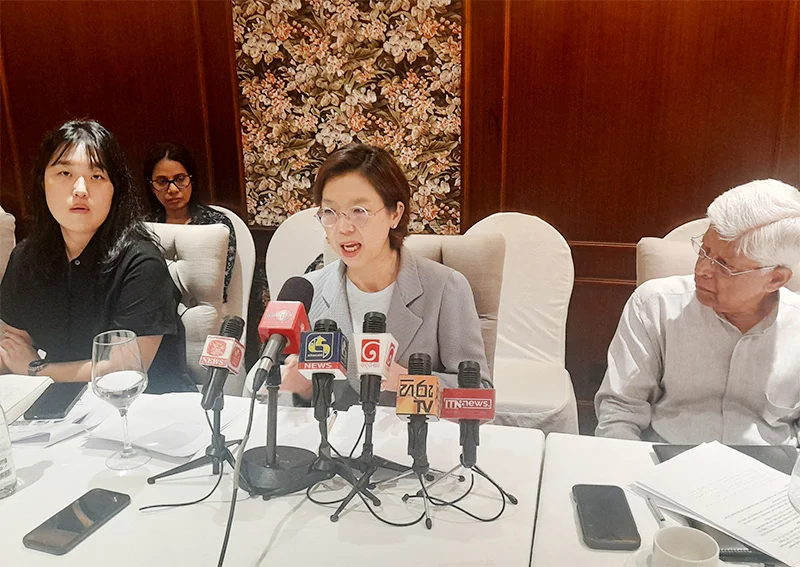
Sri Lanka should mainly focus on upgrading its trade and investment facilitation system while identifying the paramount importance of the issue, South Korean Ambassador to Sri Lanka Miyon Lee said.
The bureaucratic matters—from Customs clearance to tariff lines, licensing, and registration—should be streamlined, she said at a round table forum recently held at the Colombo Club of the Taj Samudra, Colombo. The forum was organized and conducted by the Pathfinder Foundation Sri Lanka and was presided over by its Chairman, Ambassador (Retd) Bernard Goonetilleke.
Ambassador Lee said that the Sri Lankan government and companies must focus on tourism sector development and also find businesses opportunities with Korea.
She also said that if Sri Lanka wants to attract Korean investment into Sri Lanka, Sri Lanka should highly develop its digital sector.
‘On top of that, If Sri Lankan is to sign a FTA or trade agreements, she should focus on niche markets to supply to Korean companies, she explained.
Ambassador Lee added: ‘Korea is highly digital and AI enabled and Sri Lanka needs to concentrate on that as well.
‘Further, it is going to be very important if you will be able to implement all the obligations that are laid out under a WTO agreement.
‘A single window is part of the overall trade architecture that Sri Lanka has to follow.
‘ I think that also follows with the FTA (Free Trade Agreement) negotiations. From Korea’s experience, when we had the financial crisis in 1997, we only pursued WTO negotiations. FTA negotiations came after the financial crisis.
‘The Asia-Pacific Trade Agreement (APTA) is important in this regard.
‘The APTA arrangement includes China, India, Korea, Nepal and Mongolia and 50 percent of Sri Lankan exports to South Korea benefit from the APTA.
‘But other than that, there is not much trade between the two countries. That’s why I think it is going to be very important for Sri Lanka to pursue the RCEP (Regional Comprehensive Economic Partnership) arrangement.
‘Unfortunately, there is not much appetite for upgrading the APTA because we already have separate FTAs with India and China.
‘ We have huge investments in India and in ASEAN countries. I think it would be very important that Sri Lanka uses that kind of opportunity to see if there is any initiative for Sri Lankan companies to provide supplies to Korean companies working in other countries.’
By Hiran H Senewiratne

USD 2.5 million Treasury cyber heist has escalated into a full-blown financial security crisis, with the government scrambling to contain international fallout amid growing fears that multiple foreign debt repayment channels may have been compromised.
In the strongest indication yet of the gravity of the breach, Deputy Finance Minister Dr. Anil Jayantha Fernando told Parliament that investigators had uncovered suspicious irregularities linked to other external payment transactions, including one involving India, suggesting that the cyber intrusion may have extended far beyond the original fraudulent transfer.
The revelation has sent shockwaves through financial and political circles at a time when Sri Lanka is struggling to restore credibility after its historic sovereign default and painful debt restructuring process.
The controversial transfer involved funds earmarked for a debt repayment to Australia Export Finance. However, the money was allegedly diverted into a fraudulent account after what authorities now believe was a sophisticated cyber infiltration targeting Treasury communication and payment authentication systems within the External Resources Department (ERD).
With international confidence hanging in the balance, the Government has moved swiftly to reassure creditors that the incident would not be treated as a sovereign debt default.
Fernando informed Parliament that international debt restructuring advisors had assessed the situation and concluded that the theft constituted a criminal financial breach rather than a deliberate failure by Sri Lanka to honour debt obligations.
Behind the scenes, however, the crisis has triggered an unprecedented multi-agency investigation involving the Criminal Investigation Department (CID), Sri Lanka Computer Emergency Readiness Team (SLCERT), Financial Intelligence Unit (FIU) and foreign law enforcement authorities, including Australian agencies.
Investigators are now carrying out forensic examinations of official email systems, payment authorisation trails, digital devices and Treasury transaction records amid mounting concerns that critical State financial infrastructure may have been exposed to external manipulation.
The scandal has also intensified political tensions, with opposition parties accusing the Government of attempting to downplay the seriousness of the breach while demanding an immediate parliamentary debate and an independent inquiry into Treasury security failures.
Pressure mounted further following the sudden death of an interdicted Finance Ministry official reportedly connected to the ongoing investigation.
Although authorities have not officially linked the death to the fraud probe, the incident has fuelled widespread speculation and heightened public suspicion surrounding the case.
The latest disclosures have raised troubling questions about the vulnerability of Sri Lanka’s public financial systems, particularly as billions of dollars in foreign debt repayments, aid flows and restructuring transactions continue to pass through Government channels under intense international scrutiny.
Financial analysts warn that while creditors may refrain from categorising the incident as a formal default, the cyber heist could still damage Sri Lanka’s credibility unless authorities demonstrate swift accountability, institutional transparency and robust corrective measures.
The Treasury breach is now being viewed not merely as an isolated fraud, but as a major national financial security threat with potentially far-reaching implications for Sri Lanka’s economic recovery and global standing.
By Ifham Nizam
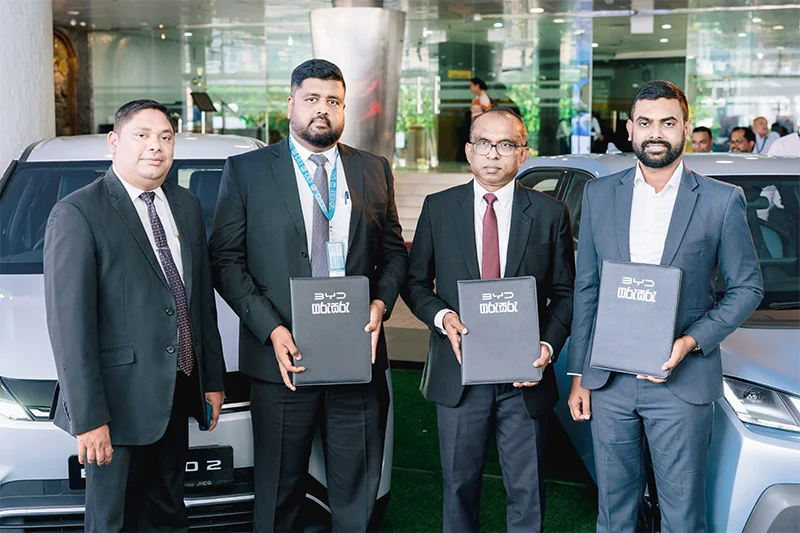
John Keells CG Auto (JKCG Auto), the authorised distributor of BYD and DENZA in Sri Lanka, has launched a campaign in partnership with Bank of Ceylon (BOC) and Sri Lanka Insurance Corporation General Ltd. (SLIC) to accelerate New Energy Vehicles (NEV) adoption among government sector employees.
The initiative, which will run from 4 May to 31 July 2026, is designed to improve accessibility and affordability of NEVs for public servants through a structured set of financing, insurance and ownership support mechanisms.
Open to employees across the government sector, the programme reflects a coordinated effort between industry and national institutions to enable a gradual and practical transition towards cleaner transport options.
As part of the collaboration, JKCG Auto will extend a set of ownership support measures across its BYD and DENZA portfolio, including introductory price considerations, access to home charging infrastructure, and aftersales service support. These are complemented by preferential leasing arrangements facilitated by the Bank of Ceylon, alongside tailored insurance solutions and customer support services from Sri Lanka Insurance Corporation.

State Mortgage and Investment Bank Law No. 13 of 1975 to be amended
Animals Act No. 29 of 1958 amended
Cabinet approves establishment of a ‘Trust’ to carry out the management of the Jaffna Thiruvalluvar Cultural Centre

Prime Minister Keir Starmer under pressure as ministers quit, 80 MPs urge him to resign

Nahid Rana rips through Pakistan to seal a final-session win for Bangladesh

South Africa’s Shabnim Ismail reverses retirement for T20 World Cup

‘Dates have the highest sugar content to fight Coronavirus’

Sunday Island 27 December – Headlines

#SundayIsland 17th December – Headlines

Sunday Island – 28th March

Sunday Island Headlines – 21 March

Sunday Island – 21st February – Headlines
-

 News6 days ago
MIT expert warns of catastrophic consequences of USD 2.5 mn Treasury heist
-

 News3 days ago
Lanka Port City officials to meet investors in Dubai
-

 Editorial6 days ago
Clean Sri Lanka and dirty politics
-

 Editorial5 days ago
The Vijay factor
-

 News4 days ago
SLPP expresses concern over death of former SriLankan CEO
-

 News7 days ago
Development Officer bids Rs. 48 mn for CPC’s V8 at auction
-
 Opinion7 days ago
Postmortem reports and the pursuit of justice
-

 News4 days ago
Police inform Fort Magistrate’s Court of finding ex-CEO of SriLankan dead under suspicious circumstances