
News
Newly described cave bat in Sri Lanka indicates presence of more species

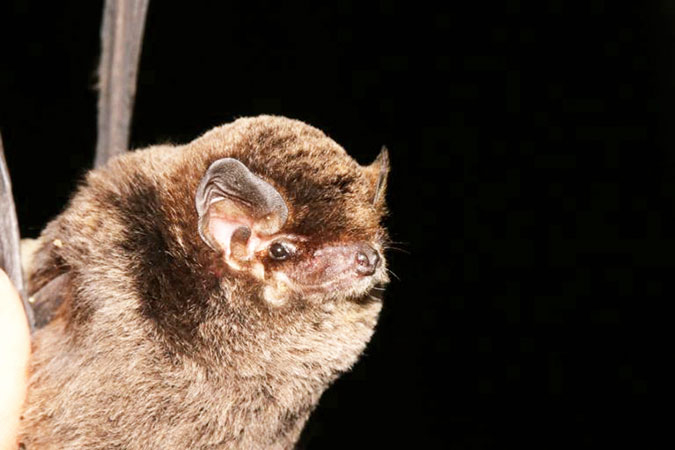
Researchers say a new bat species found in Sri Lanka and South India and named Miniopterus phillipsi in honour of British naturalist W.W.A. Phillips is an indication to the presence of more yet to be identified species, said a report by the Mongabay.It said: Sri Lanka is home to 31 species of bats, but researchers say there could be more given that neighboring India has 132 bat species already described.
The number of identified species in the genus Miniopterus has doubled in Africa, but in Asia, M. phillipsi is the first new addition to this genus after a lapse of six decades.M. phillipsi is a small, insectivorous bat previously identified as Miniopterus fuliginosus; it inhabits caves and its population remains stable, although habitat loss may soon impact these bats.
The 18th and 19th centuries’ Sri Lanka saw many British naturalists studying the island’s rich biodiversity. They also contributed to profiling the same. One of them, W.W.A. Phillips, a tea planter who was particularly interested in mammals, published the Manual of the Mammals of Sri Lanka in 1932. One of the chapters in the book describes the island’s bat fauna, including the Sri Lankan woolly bat (Kerivoula malpasi), a species then new to science.
Now, after 90 years since Phillips’ discovery, young researcher Tharaka Kusuminda, a PhD candidate at the University of Ruhuna, and his team have described a new bat species from Sri Lanka, naming it Miniopterus phillipsi in honour of the British naturalist. Their findings are reported in the journal Acta Chiropterologica.
The new bat is a medium-sized cave-dwelling insectivorous species found in Sri Lanka and India. It was previously misidentified as the Eastern bent-winged bat (Miniopterus fuliginosus), but the new species is generally smaller than M. fuliginosus in both external and skull dimensions. The newly described species does not change the total number of bat species of Sri Lanka, which remains at 31 since the entire population of M. fuliginosus would now be identified as M. phillipsi, says Kusuminda.
“M. fuliginosus is described based on a type specimen collected from a colder region in Nepal, so I had doubts whether the species found in Sri Lanka could be the same”, Kusuminda tells Mongabay. The researchers analysed the available specimen and compared DNA barcoding, which provided conclusive results proving their finding to be of a new species.
The discovery of the new Miniopterus species again highlights the widespread existence of cryptic diversity in bats that needs to be explored using an array of modern techniques like DNA barcoding, among others, says Uttam Saikia of the Zoological Survey of India and an author of the same study.The discovery of the new bat increased the number of bat species in India to 132, as M. fuliginosus populations are also thought to inhabit the colder northern Himalayan range. “The exact geographic boundary of both the species in India is not clear yet, but the bats previously thought as M. fuliginosus in peninsular India would actually be M. phillipsi,” Saikia tells Mongabay.


Approval of the Cabinet of Ministers was granted to the preparation of the Appropriation Bill for the financial year of 2027 at their meeting held on 30.06.2026.
Accordingly, clearance of the Attorney General has been given to the Appropriation Bill prepared by the Legal Draftsman.
Therefore, the Cabinet of Ministers approved the resolution furnished by the President in his capacity as the Minister of Finance, Planning and Economic Development to publish the aforementioned draft bill in the government gazette notification and thereby submit the same to the Parliament for its concurrence.
Latest News
Cabinet approves aditional Rs. 2,500 million to the Paddy Marketing Board to purchase 2026 Yala harvest

The Cabinet of Ministers has approved the resolution furnished by the Minister of Agriculture, Livestock, Land and Irrigation to provide an additional Rs. 2,500 million to the Paddy Marketing Board on a reimbursable basis from the Rs. 7,500 million additional allocations granted to the Ministry to implement
the expedited paddy purchasing program for the 2026 Yala harvest.
Latest News
Cabinet nod to host the 8th Asian Regional Conference of the Commonwealth Parliamentary Association and the 3rd Joint Asian and South-East Asian Regional Conference of the Commonwealth Parliamentary Association
The 8th Asian Regional Conference of the Commonwealth Parliamentary Association (CPA) and the 3rd Joint Asian and South-East Asian Regional Conference of the CPA are planned to be held over three days in Colombo during April/May 2027.
Approximately 90 delegates including speakers, Deputy Speakers, Member of Parliamentarians, and Parliamentary officers representing member countries of the Commonwealth Parliamentary Association, in the Asian and South-East Asian regions, are expected to participate in these conferences.
The Cabinet of Ministers has approved the resolution furnished by the Prime Minister of the Parliament of Sri Lanka to host the said conferences considering the opportunities to strengthen parliamentary diplomacy and regional cooperation, as well as to enhance international recognition of the Parliament of Sri Lanka within the Commonwealth Parliamentary Association.

Draft of the Appropriation Bill for the Financial Year 2027 su mitted to the Parliament
Cabinet approves aditional Rs. 2,500 million to the Paddy Marketing Board to purchase 2026 Yala harvest
Cabinet nod to host the 8th Asian Regional Conference of the Commonwealth Parliamentary Association and the 3rd Joint Asian and South-East Asian Regional Conference of the Commonwealth Parliamentary Association

SAARC Training Workshop on Financial Modeling for Renewable Energy Projects from 5th to 7th October in Colombo
National Children’s Week from 25th September to 01st October

Nairobi and Munich to host 2029 and 2031 World Athletics Championships

‘Dates have the highest sugar content to fight Coronavirus’

Sunday Island 27 December – Headlines

#SundayIsland 17th December – Headlines

Sunday Island – 28th March

Sunday Island Headlines – 21 March

Sunday Island – 21st February – Headlines
-

 Sports5 days ago
DDS set to lose Test captaincy
-

 News5 days ago
Sri Lanka faces new grid challenge as rooftop solar surges: former CEB GM
-

 Latest News5 days ago
Shafali, Deepti power India into sixth T20 Asia Cup final
-

 Opinion7 days ago
Navigating Sri Lanka’s Israeli Dilemma
-

 Latest News4 days ago
Sri Lanka thwart Fatima Sana challenge to secure Asia Cup final spot
-

 News3 days ago
Gnanasara Thero absconding after SC ruling
-

 Features6 days ago
Lost for 90 years: Rare Goby resurfaces in Jaffna
-

 News4 days ago
Ammunition cache found in old Kandy bungalow