
News
SL looking at mechanical tea harvesting to combat labour scarcity

by Chanka Jayasinghe
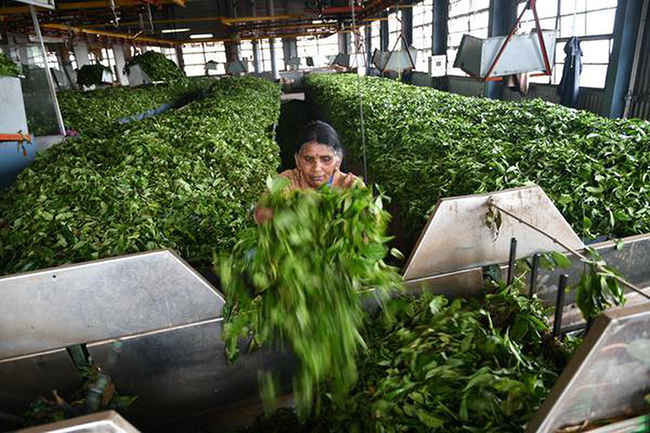
Sri Lanka’s Tea Board, fearing labor shortages, has initiated mechanized tea harvesting with no quality or production loss expected, E.A.J.K. Edirisinghe, Commissioner of the Tea Board said He said the Tea Research Institute (TRI) has already carried out research collaborating with Japan, and identified that efficiency can be improved, while preserving the same production capacity in estates.
“Machine plucking and hand plucking are two different techniques. When you do hand plucking only, the best buds will be plucked. When plucking by machine, we will train the bush for the machine by grooming it,” Edirisinghe told reporters at a media briefing last week. “Then every 15 days, there will be new buds because of the way we groomed the bush.”
He said currently 55 lands in each TRI division have been cultivated with a mechanized tea harvesting model and the cultivators are asked to grow their tea according to the new model.
However, in a publication last year, the TRI mentioned that none of the mechanized harvesting machines tested in Sri Lanka could harvest tea leaves selectively, leaving tender shoots on the bush.
The harvested crop contained mature foliage and twigs etc. which had be removed by manual sorting.Average output of machines is in the range between 50 (small machines) and 350 (large machines) kg/day. But, the sorting and cleaning process need more labor, industry experts say.Machine plucking extends the frequency of harvesting (plucking round) due to non-selective harvesting of leaf. Industry experts say tea yield under mechanical harvesting could fall 30-50 percent in comparison to manual harvesting.
Officials from Planters Association of Ceylon have said machine tea harvesting was tested, but it cannot be implemented in Sri Lanka due to the damage it does to the bush.However, tea board officials said no production will be lost if the bush is first groomed to suit mechanized harvesting.
“If you harvest a previously hand plucked bush by machine, then yes the damage will be great and yes there will be a drop around 20-30 percent,” Edirisinghe said.
“But when you start plucking after grooming, the buds will break on the plucking surface and there will be no damage,” he said, adding that countries like Kenya, Japan and Malaysia use the method without any drop in quality and quantity.Tea Board and Tea Small Holding Development Authority (TSHDA) will provide 437,000 rupees per acre of tea land for those who follow the new model along with a special irrigation system.
“That does not mean hand plucking will be stopped. When there is no labour, we can use machines,” Edirisinghe said.
“The reason why we are doing this is if we ever have to go for mechanical harvesting, then we will have to remove existing plantation and plant anew to adapt to the new order. (Economy Next)


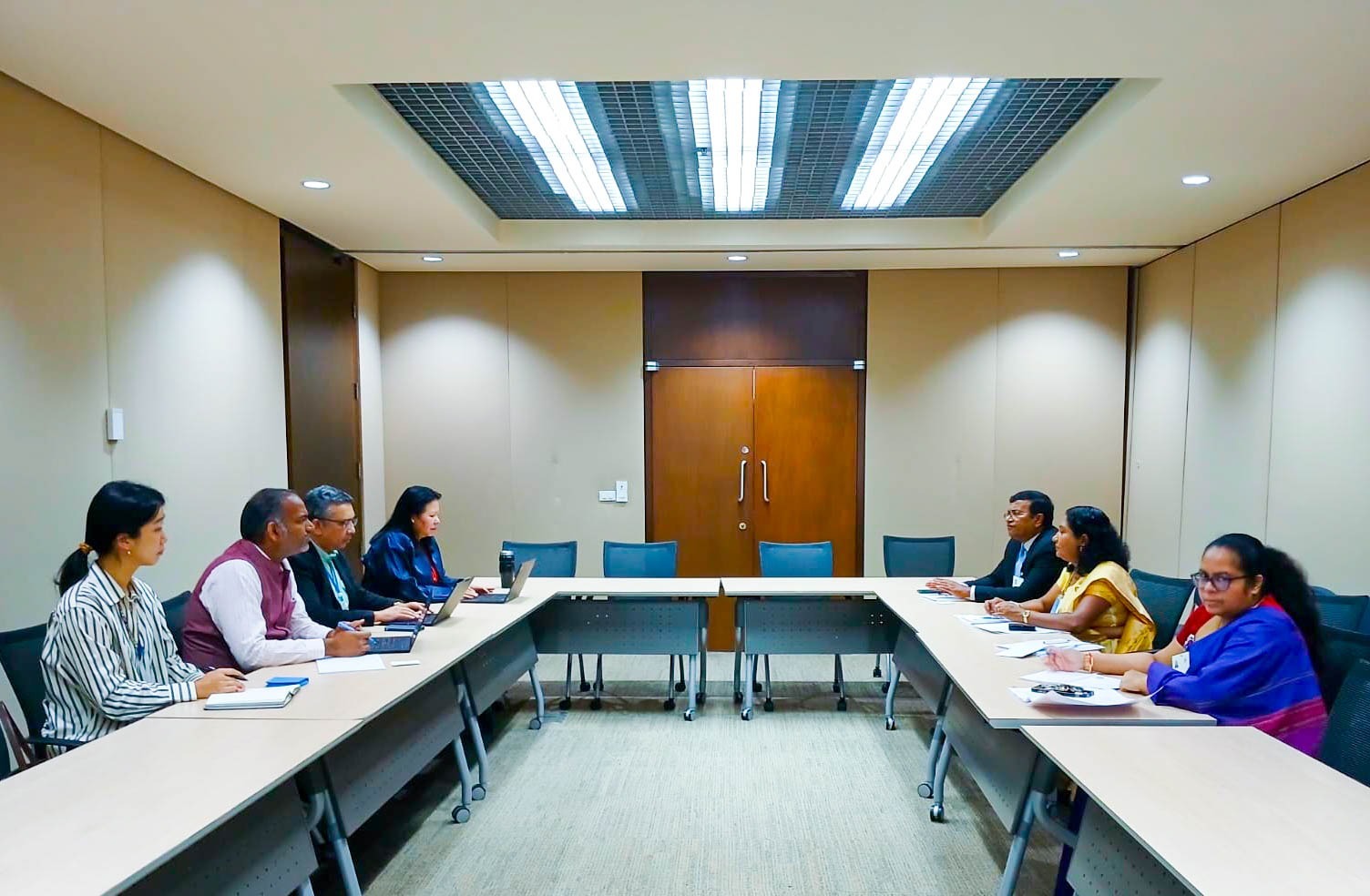
A special bilateral discussion was held on Thursday (02) morning at the United Nations Conference Centre (UNCC) in Bangkok, Thailand, between the Deputy Minister of Environment, Anton Jayakody, and regional representatives of the United Nations Environment Programme (UNEP).
The discussion began with an appreciation of the long-standing relationship between Sri Lanka and UNEP, particularly highlighting Sri Lanka’s role as a UNEA 8 Bureau member and a key partner in Global Environment Facility (GEF) projects. The meeting focused extensively on securing UNEP’s technical
and financial support to advance several of Sri Lanka’s national environmental priorities.
During the meeting, the Deputy Minister expressed Sri Lanka’s gratitude for the guidance provided by UNEP throughout the adoption process of the UNEA Youth Resolution. He outlined the national program currently being designed in Sri Lanka in alignment with the resolution. Under this initiative, attention was drawn to securing UNEP’s technical assistance, capacity-building support, and access to global funding mechanisms.
These resources will be utilized to formulate a “National
Environmental Literacy Index” to assess the environmental awareness of youth, establish “Youth Environmental Committees” spanning from the national to grassroots levels, set up university youth forums, and implement environmental promotion programs driven through sports
In addition, Sri Lanka requested UNEP’s assistance in upgrading its national air quality monitoring systems, enhancing data analysis, and developing policy guidelines.
The Deputy Minister also sought policy advisory services on Extended Producer Responsibility (EPR), technical expertise in plastic waste lifecycle management, and support for pilot projects aimed at minimizing single-use plastics and transitioning toward a circular economy.
Furthermore, the Deputy Minister noted that measures have been taken in collaboration with the Ministry of Transport to expedite sustainable e-mobility projects. He added that Sri Lanka anticipates UNEP’s support for the “Sustainable Cities Integrated Programme” under the country’s GEF 9 national
strategies. Reaffirming Sri Lanka’s active commitment to regional initiatives that foster environmental knowledge sharing among South Asian nations, it is expected that UNEP’s technical intervention during the upcoming GEF 9 financial cycle will continue to support Sri Lanka’s journey toward environmental resilience.
He is the only detainee at old Tangalle prison
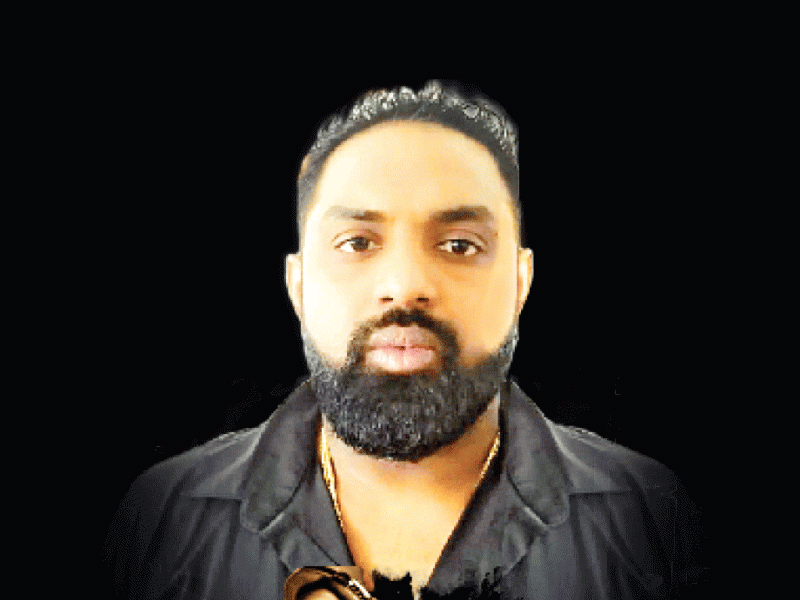
The Commission to Investigate Allegations of Bribery or Corruption (CIABOC) probing bribery allegations pertaining to the recent arrest of attorney-at-law Rakitha Rajapakshe, former SJB Horana organiser Charitha Abeysinghe and another person is expected to question drug dealer Nadun Chintaka Wickremaratne alias Harak Kata being held under the Prevention of Terrorism Act (PTA).
The CIABOC arrested Rakitha and Charitha Kumara Wasantha Abeysinghe and former Director of Airport and Aviation Services Warushahanndige Aruna Sri Chathuranga on 25 June over the Rs 200 mn bribery allegation. Produced before the Colombo Chief Magistrate court on the same day, they were remanded until 3 July.
Sources familiar with the case told The Island that Wickremaratne arrested in Madagascar on 1 March 2023 was brought to Sri Lanka on 14 March 2023, and after preliminary investigations he was detained at the old Tangalle prison. Wickremeratne has been accused of running a major narcotics smuggling operation.
Wickremaratne’s lawyer Udul Premaratne, having visited Wickremeratne, sought the intervention of the Human Rights Commission of Sri Lanka to ensure the latter’s safety.
As many as 90 police (terrorist Investigation Department) and the Special Task Force (STF) have been assigned to the Tangalle old prison where Wickremaratne remains the sole detainee.
The CIABOC, in a statement posted in Sinhala on its website on 25 June said that arrested persons received the money after having initially asked for Rs 500 mn and then reduced it to Rs 200 mn. The Rs 120 mn allegedly received has been described as an advance.
Sources said investigators would question Wickremaratne over his wife’s claim that she had paid Rs. 120 million.
In terms of the PTA, the detention orders can be issued only by the Defence Minister. At the time Wickremaratne was brought to Colombo, Ranil Wickremesinghe held the defence portfolio. According to legal sources, when the President also held the defence portfolio, the responsibility for issuing the detention orders was relegated to the Defence Secretary.
Maj. Gen. Kamal Gunaratne who served as the Defence Secretary during that period.
Sources said that Wickremaratne’s wife was yet to come back and his parents and a brother were believed to be the only visitors except for lawyers. One of the crucial issues was how Wickremaratne had communicated with his wife living abroad, sources said.
By Shamindra Ferdinando
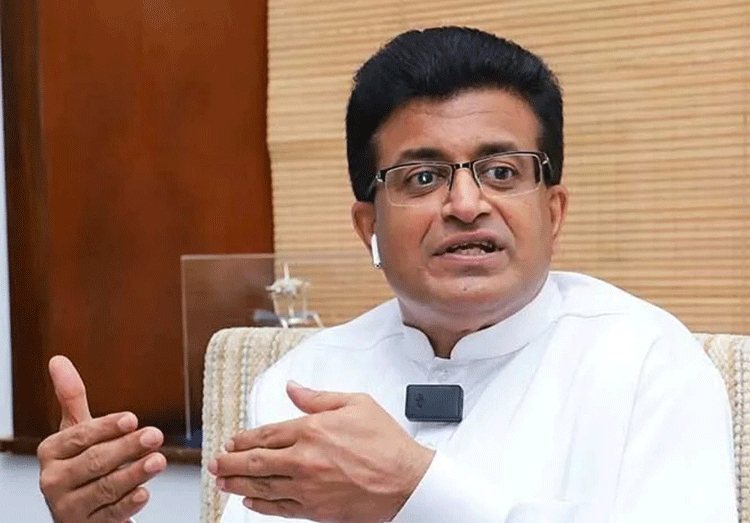
Pivithuru Hela Urumaya (PHU) leader and former Petroleum Minister Udaya Gammanpila yesterday (2) claimed that the price of a litre of Octane 92 petrol and auto diesel could be reduced by Rs 141 and Rs 126, respectively.
The former Energy Minister said that Rs 20 per litre price reduction declared by the Ceylon Petroleum Corporation (CPC) in respect of Octane 92 petrol and Rs 25 drop in litre of auto diesel price proved that the government fleeced the public.
Earlier, Samagi Trade Union Alliance convenor Ananda Palitha claimed that the price of litre of Octane 92 petrol and auto diesel could be reduced by Rs 115.
A litre of Octane 92 is sold at Rs 414 and a litre of auto diesel at Rs 382.
Pointing out that the CPC hadn’t reduced Octane 95 petrol and Super Diesel at least nominally, the former parliamentarian said that the CPC could reduce them by Rs 155 and Rs 149, respectively. A litre of petrol Octane 95 is sold at Rs 495 and a litre of Super Diesel at Rs 478.Gammanpila pointed out that the government had sharply increased prices when the Iran war entered the 12th day having claimed that that it had stocks for 35 days. (SF)

Juventus Training Camp from 6-10 July in Colombo

Wijesundara set for debut as injury-hit Sri Lanka struggle to make up XI

UNEP support pledged to strengthen Sri Lanka’s Environmental Priorities

Ronaldo scores as Portugal come back to win, Croatia denied by late VAR

Lister replaces injured Sears for ODI series in the West Indies

Showers will occur in the Western, Sabaragamuwa and North-western provinces and in Galle, Matara, Kandy, Nuwara-Eliya and Anuradhapura districts

‘Dates have the highest sugar content to fight Coronavirus’

Sunday Island 27 December – Headlines

#SundayIsland 17th December – Headlines

Sunday Island – 28th March

Sunday Island Headlines – 21 March

Sunday Island – 21st February – Headlines
-
 News5 days ago
LAWASIA warns against ad hoc initiative to increase judges’ retirement ages
-

 News6 days ago
Another 1,132 Sri Lankan Personnel to be deployed for United Nations Peacekeeping Missions
-
 News4 days ago
Chamuditha to seek removal of injunction on Youtube programme
-

 Business7 days ago
Month-end profit-takings drive stock trading; indices up
-

 Features4 days ago
Climate action to bring South Asia together
-
 Features6 days ago
People’s Bank expands digital banking network with 125th cheque deposit kiosk
-
 News4 days ago
CPRP alleges another death in custody, seeks protection for witness
-

 News7 days ago
FSP complains of irregularities in a Guinness World Record event held in Sri Lanka