
News
Collectively strengthen pandemic response;Plan for COVID-19 vaccination: WHO

New Delhi, 8 October 2020:
As COVID-19 cases continue to increase in most countries of WHO South-East Asia Region, World Health Organization has called for stronger collective efforts by one and all to curtail the virus transmission; while also urging countries to plan for efficient roll out of COVID-19 vaccines as soon as they are available.
“Like the rest of the world, the Region continues to be at risk. To stop the spread of COVID-19 virus, we need to do it all – continued strong leadership; robust public health measures; clear communication and an engaged, empowered and enabled population – to turn the tide,” said Dr Poonam Khetrapal Singh, Regional Director, WHO South-East Asia Region.
In a communication to the Member countries, the Regional Director said, the global race for COVID-19 vaccine has gathered momentum. In anticipation of development of a safe and effective COVID-19 vaccine, countries should be prepared with an efficient and coordinated strategy and plan for roll-out of vaccination.
Vaccine availability is likely to be limited initially, hence will be important to clearly identify goals of national vaccination strategy, she said.
In the spirit of promoting fair and equitable access to the vaccines across all countries, WHO is proposing that countries prioritize at-risk population as they develop in-country vaccination strategies. Available vaccines should first be provided to priority populations and then expanded to others.
“The COVID-19 vaccination should aim at minimizing the societal and economic impact by reducing deaths caused by the disease,” Dr Khetrapal Singh said.
Listing out nine priority areas for COVID-19 vaccine introduction and roll out, the Regional Director said, a national level coordination committee would be needed to oversee vaccination; an expedited regulatory pathway for approval of new vaccine; a technical advisory group to recommend prioritization of risk groups; protocols on infection prevention and control measures to minimize exposure during immunization sessions; training plans for vaccine introduction; and monitoring systems to measure coverage, acceptability and disease surveillance.
Countries would also need to strengthen vaccine cold chain systems; ensure trained staff perform vigilance activities for vaccine safety; and importantly, a vaccine demand generation plan to instill confidence and acceptance among people for the new vaccine.Ensuring continued WHO support, the Regional Director said, “Together we must continue to strengthen the COVID-19 response by aggressively applying the basic public health measures, and also looking ahead and ensuring that we make full use of emerging tools to control spread, save lives and minimize impact.”

Latest News
Landslide Early Warnings issued to the districts of Kalutara, Kandy, Nuwara Eliya and Ratnapura


The National Building Research Organisation [NBRO] has issued landslide early warnings to the districts of Kalutara, Kandy, Nuwara Eliya and Ratnapura effective from 0400hrs on 12th June 2026 to 0400hrs on 13th June 2026
Accordingly,
LEVEL I [YELLOW] landslide early warnings have been issued to the Divisional Secretaries Divisions and surrounding areas of Palindanuwara in the Kalutara district, Doluwa in the Kandy district, Ambagamuwa in the Nuwara Eliya district and Pelmadulla, Ayagama, Ratnapura, Godakawela, Kalawana and Nivitigala in the Ratnapura district
News
Wife, counsel seek regular access to ex-Spy Chief Sallay held under President’s detention order

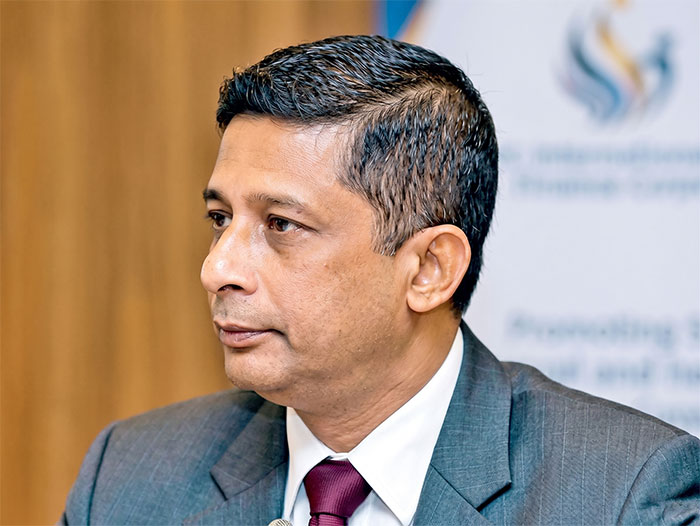
Wife of former State Intelligence Chief Maj. Gen. (Retd.) Suresh Sallay has asked CID Director retired SSP Shani Abeysekera to allow her, her family members and lawyers to visit her husband in the National Hospital, Colombo. Sallay’s counsel has also written to Abeysekera, asking for permission to visit the former spy held on a detention order signed by President Anura Kumara Dissanayake.
The text of Manori’s letter: “I respectfully request your assistance in granting me, and my daughter or alternatively my son, permission to visit my husband, Rtd. Major General Suresh Sallay, who is currently at the National Hospital, Colombo.
“As you are aware, my husband is presently engaged in a fast-unto-death campaign. His physical condition and emotional well-being are of deep concern to our family. During this difficult period, the presence and support of his immediate family are extremely important to him.
“I firmly believe that regular visits from me with our daughter or our son would help uplift his spirits, provide him with much-needed emotional strength, and may encourage him to reconsider continuing this course of action. Family support can play a vital role in preserving his mental and emotional health while he remains hospitalised.
“In view of these exceptional circumstances, I kindly request that permission be granted for either me and my daughter or my son to visit him daily during the period of his hospitalisation.
“I would be most grateful for your compassionate consideration of this request.”
“The text of the counsel’s letter: “I write in my capacity as Counsel for Rtd. Major General Suresh Sallay, who is presently under detention and admitted to the National Hospital, Colombo.
As you are aware, Major General Sallay has embarked on a fast-unto-death campaign, giving rise to serious concerns regarding his physical and mental well-being. In these circumstances, it is imperative that I be granted reasonable and regular access to my client during his hospitalisation.
As his legal representative, I have a professional obligation to monitor his condition and obtain instructions from him so that I may accurately apprise the relevant courts of his health status and any developments affecting his rights and welfare. Effective legal representation requires continuous communication with my client, particularly in light of the grave circumstances presently confronting him.
I also wish to respectfully highlight that Major General Sallay has placed explicit trust and confidence in me as his counsel. Indeed, I was the first person he contacted following his arrest.
Given the trust he reposes in me, I believe I am uniquely positioned to engage with him constructively and persuade him to discontinue this campaign and instead place his confidence in the legal remedies and judicial processes available to him.
For these reasons, I respectfully request that I be granted permission to visit my client on a daily basis during the period of his hospitalization.
Such access would not only facilitate the discharge of my professional responsibilities but may also contribute meaningfully towards safeguarding his health and encouraging a resolution through lawful and institutional means.
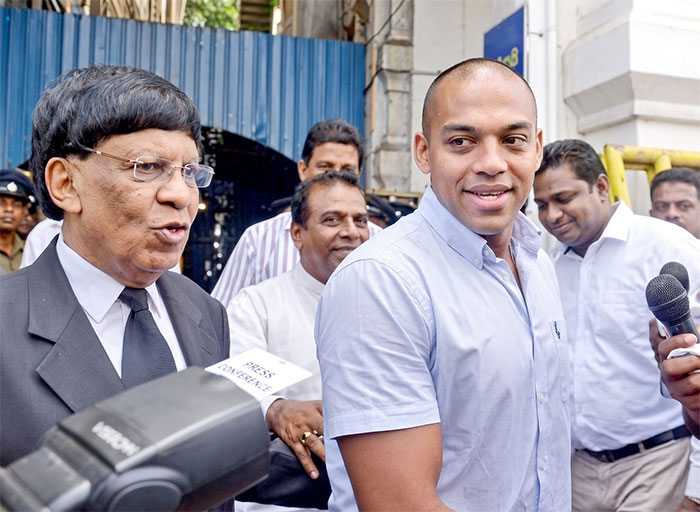
Yoshitha Rajapaksa, who served as a Lieutenant in the Sri Lanka Navy, has now been summoned to the Commission to Investigate Allegations of Bribery or Corruption next Tuesday (16) for questioning over his participation in a Royal Navy training programme in the United Kingdom outside established procedures.
The Commission is expected to record statements in relation to several complaints received regarding his recruitment and subsequent service in the Navy after he enlisted on December 14, 2006.
According to sources, the investigation focuses on allegations concerning the educational qualifications considered at the time of his enlistment, as well as foreign training opportunities he is said to have received while in service, which are suspected to have been granted in violation of due process.
The Bribery Commission has launched the inquiry under the provisions of the Anti-Corruption Act, officials said.

Jailed South Korea ex-president gets 30 more years for sending drones into North

Holder, Joseph set up victory as West Indies go 1-0 up against Sri Lanka

El Niño under way and threatens weather extremes, scientists say

South Korea beat Czech Republic 2-1 in World Cup opener

Police investigate ‘8647’ written in grass on US national mall

Thai Princess Bajrakitiyabha dies after more than three years in coma

‘Dates have the highest sugar content to fight Coronavirus’

Sunday Island 27 December – Headlines

#SundayIsland 17th December – Headlines

Sunday Island – 28th March

Sunday Island Headlines – 21 March

Sunday Island – 21st February – Headlines
-

 News5 days ago
Women’s T20 World Cup 2026 warm-up: Chamari Athapaththu’s 94 helps Sri Lanka beat Pakistan
-

 News6 days ago
Asst. Manager, security officer arrested over Rs 30 mn snatch at Horana PB branch
-

 Editorial4 days ago
Probe Sallay’s complaint
-

 News5 days ago
Lankan-Canadian inducted to Toronto Sports Hall of Fame
-
 News2 days ago
Local firms move millions of dollars overseas for phantom imports: Govt.
-

 Editorial5 days ago
Prez in the dock
-

 Features5 days ago
Entering MIT for my Ph.D program, coping with harsh Boston winter and breasting the tape
-

 News6 days ago
No blanket ban on musical performances; only those promoting LTTE