
News
Indian police find Link between Coimbatore car cylinder explosion, 1998 serial blasts, Lanka Easter bombings


A probe into a recent cylinder blast, in a car, in Coimbatore, has revealed a link with the serial blasts that happened in the Tamil Nadu city, 24 years ago, and the 2019 Easter bombings in Sri Lanka, an Indian media report said.The report published by The Federal said: In 1998, 58 people had died in serial blasts in Coimbatore and more than 200 were injured. The explosions had targeted then national president of the BJP, LK Advani, in the aftermath of the Babri Masjid demolition.
In Sri Lanka, more than 250 people were killed in the Easter bombings in 2019.On 23 October, 75-kg of explosives, including potassium nitrate, were seized from the residence of 29-year-old Jameesha Mubeen who was killed after a gas cylinder exploded in a car he was travelling, in Coimbatore. Mubeen is suspected to have played a key role in a conspiracy bid to carry out sabotage activities.
Investigation by the special team, in Coimbatore, said Mubeen was not a suicide bomber, and he did not know how to handle explosives. “He was not keeping well. In fact, he had suicidal thoughts. But he probably never planned to kill himself in a blast,” a police officer, who is part of the investigation, told The Federal.People who knew Mubeen said that he did not have many friends and mostly kept aloof. Until 2019, he was working at a book shop and later, he was asked to leave after the NIA raided his house, at GM Nagar, in Ukkadam.
Later, he started to make a living by selling old clothes. “He used to get old shirts for INR 5-10, and have them dry-cleaned, which would cost INR10-15. Then, he would pack them and sell them on the platforms and in markets for a cheaper price. That is how he was making a living for all these years,” said a relative of Mubeen.According to police, Mubeen and others had planned terror attacks, in Coimbatore, in at least five places.
“He had collected chemicals, used in country-made bombs. Mubeen, along with a few others, was seen shifting things from his house. So, it was understood that they had planned the attack, but the target was different,” a senior police official, who is part of the investigation, told The Federal.
“During the search, we recovered a piece of paper in which Mubin had written down the names of five places. These might have been his targets. These five places were the police commissioner’s office, the collector’s office, the railway station, the race course, and Victoria town hall,” the official said.
According to the Tamil Nadu Police, one of the six accused in the explosion case, confessed, during interrogation, that he met two men in a Kerala prison who had links with an ISIS group involved in the Easter bombings in Sri Lanka.Feroze Ismail confessed that he had met Mohammed Azharuddin and Rashid Ali, lodged in a prison in the neighbouring state, and further questioning is on to ascertain the motive behind the meeting, they said. Azharuddin and Ali are in jail in connection with a case against them in the neighbouring state.
Five accused were taken to their houses and searches were carried out, police said. Police have arrested five people who had been in contact with Mubeen, and charged them under the Unlawful Activities (Prevention) Act. Mubeen was under the NIA radar in 2019 in the aftermath of the Easter bomb blasts in Sri Lanka, but no case was filed against him, police said.
A link between the 1998 serial blasts and the recent cylinder explosion has emerged with the terror organisation Al-Ummah. One of the six arrested now – Mohammed Thalka or Dalqa is the son of Al-Ummah chief Syed Ahmed Basha’s brother, Nawab Khan, who is in prison now serving a life term and 27 years of rigorous imprisonment in connection with the 1998 serial blasts.On Friday, the National Investigation Agency (NIA) registered a case to probe the cylinder blast.


President Anura Kumara Dissanayake has appointed Air Chief Marshal Kolitha A. Gunathilake (Retd.) as the new Chancellor of General Sir John Kotelawala Defence University.
The letter of appointment was presented to Air Chief Marshal Kolitha A. Gunathilake (Retd.) by Secretary to the President Dr Nandika Sanath Kumanayake at the Presidential Secretariat on Monday (05) afternoon.
Air Chief Marshal Kolitha A. Gunathilake(Retd.) has served as Commander of the Sri Lanka Air Force and as Chief of Defence Staff.
(PMD)

By Shamindra Ferdinando
The government is coming under pressure from civil society organisations to formulate a clear ‘mechanism’ to deal with requests for presidential pardons.
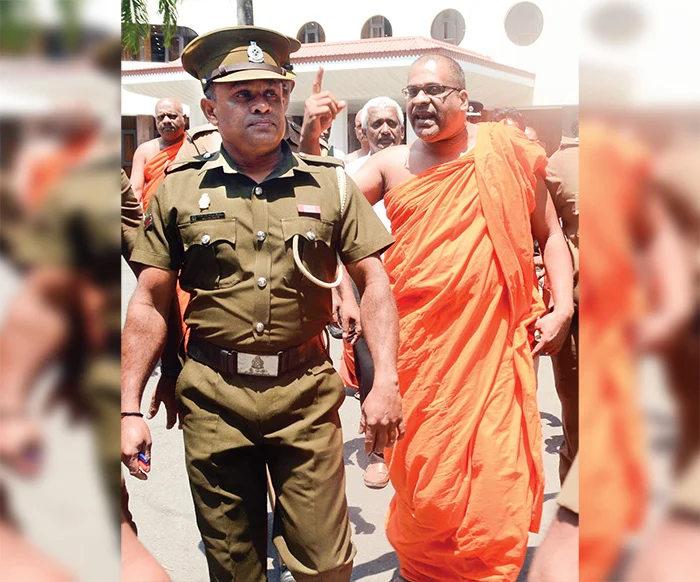
Representing civil society organisations, Gamini Viyangoda yesterday flayed the NPP government for the delay in taking action against Ven. Galagoda Aththe Gnanasara Thera, after the Supreme Court declared the 2019 presidential pardon granted to him by President Maithripala Sirisena null and void. He said successive Presidents had abused their executive power to release convicted persons from prison.
Purawesi Balaya activist Viyangoda pointed out that the Supreme Court ruled that President Sirisena had acted arbitrarily and failed to independently consider the relevant materials before exercising his executive power.
The Court of Appeal, in August 2018, sentenced Gnanasara Thera, General Secretary of the Bodu Bala Sena (BBS), to six years rigorous imprisonment for contempt of court over his conduct during proceedings concerning missing journalist Prageeth Ekneligoda. Viyangoda said that those who had been affected by the monk’s conduct have the right to know on what basis the President released him, in May 2019.
The Court of Appeal yesterday (05) ordered the relevant authorities to enforce the remaining period of imprisonment imposed on the Thera.
Gnanasara Thera, who had been subject to an open warrant for his arrest, was produced before the Court of Appeal, today, by prison officials.
Having considered the submissions made before it, the Court of Appeal directed the Commissioner General of Prisons to take the necessary steps to enforce the remaining period of the sentence imposed on Gnanasara Thera. Police on Saturday (03) apprehended the monk at a forest monastery in Kalutara. The Colombo Magistrate’s Court on Sunday (04) ordered the Thera to be remanded in custody till Monday.
Appearing for Gnanasara Thera, Attorney-at-Law Iresh Seneviratne, together with Attorney-at-Law Pasan Karunaratne, told the court yesterday that his client had been experiencing severe mental distress and had therefore gone to an ‘Aranya Senasanaya’, where he had been staying.
Viyangoda said that examination of presidential pardons, executed over the years, would reveal how successive leaders exploited the executive power to appease their own. Responding to The Island queries, Viyangoda said that Sirisena, in Sept. 2019, just two months before the presidential election, granted Jude Shramantha Jayamaha a Presidential pardon.
Jude Shramantha Jayamaha was sentenced to 12 years by the High Court, but the Court of Appeal revised that sentence to death, in July 2012, which the Supreme Court later upheld. Viyangoda said that though the Supreme Court, in June 2024, declared that the particular Presidential action was illegal and arbitrary, law enoforcement authorities were yet to take tangible measures to enforce the court directive.
Viyangoda stressed that no President should exercise the right to pardon a convicted on his or her own without following laid out procedures. According to him, Sirisena appeared to have simply ordered the monk, and the convicted murderer, released in response to appeals received by him. A comprehensive investigation could identify those who had been involved in these wrongdoings.
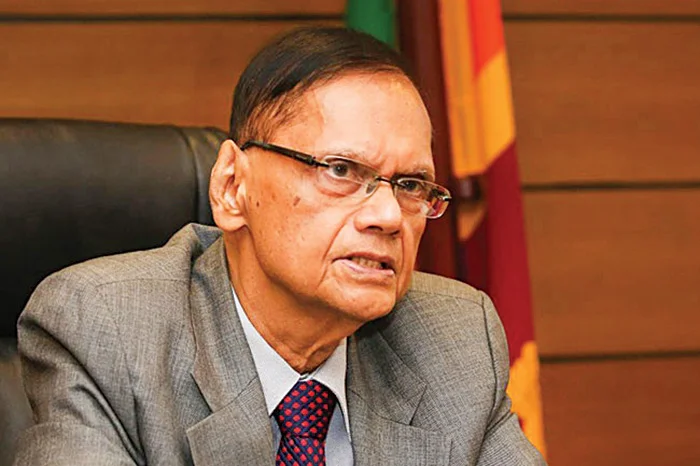
Convenor of Janathawadi Joint Opposition, Prof. G. L. Peiris, yesterday (05) emphasised the responsibility on the part of the government and others to act cautiously when making representations in respect of Sivarasa Anojan facing death sentence in Saudi Arabia over a controversial social media post.
Addressing the media at former President Ranil Wickremesinghe’s Flower Road Office, Prof. Peiris emphasised that whatever representations should be made through the Foreign Ministry.
The one-time External Affairs Minister warned of dire consequences of political party leaders, members of Parliament and civil society making direct representations and trying to get in touch with various Saudi authorities over the phone.
Prof. Peiris said that those who intervened on behalf of Anojan should keep in mind that Sri Lanka should be mindful of the Saudi way of governance and sensitivities.
The former Minister questioned the circumstances Sri Lanka was left out of the recent BRICS summit held in New Delhi. He recalled how former President Wickremesinghe discussed Sri Lanka’s entry into BRICS with Russian President Putin and received an invitation for the Summit there but as a result of the change of government, in Sept. 2024, Sri Lanka ignored that invitation.
That resulted in Sri Lanka being left out from the New Delhi summit, Prof. Peris said.
Prof. Peiris pointed out the absurdity in sending the Foreign Secretary to the BRICS Summit in Russia instead of the President, PM or the Foreign Minister to represent the country.
Referring to the forthcoming conclusion of the current IMF programme, initiated during Wickremesinghe’s time, Prof. Peiris said that Sri Lanka lost a great opportunity to benefit from BRICS by failing to represent the country at a higher level at the Russian summit.
The BRICS nations established the New Development Bank (NDB), originally called the BRICS Development Bank, Prof. Peiris said.
Dismissing NPP government’s explanation regarding Iranian ships awaiting necessary supplies but deprived by US imposed restrictions, the former Minister strongly criticised the administration’s response. According to him, this government responded in a similar manner when the US sank an unarmed Iranian frigate just outside Sri Lankan territorial waters in March this year.
Prof. Peiris declared that the government’s assertion that the US restrictions weren’t only directed at Sri Lanka but all Iranian vessels in other regions as well was not acceptable (SF)
New Chancellor appointed to General Sir John Kotelawala Defence University

Yemen government forces claim recapturing Mocha from Houthis

Showers above 75 mm are likely at some places in the Western, Sabaragamuwa, Central, and Southern provinces after 1.00 pm

Govt. urged to halt ‘illegal’ presidential pardons

GL urges cautious handling of Saudi death row case, blasts govt. over BRICS affair

Shiranthi files anticipatory bail application

‘Dates have the highest sugar content to fight Coronavirus’

Sunday Island 27 December – Headlines

#SundayIsland 17th December – Headlines

Sunday Island – 28th March

Sunday Island Headlines – 21 March

Sunday Island – 21st February – Headlines
-

 Latest News6 days ago
Gold winner Tharanga gets brand-new Honda Vezel from SLAAJ
-

 Features6 days ago
Why Sri Lanka needs an Inclusive Civic Nationalism – urgently
-

 News5 days ago
US-assisted ‘Ice’ detection: NPC to examine IGP’s move to transfer drug-busting team
-

 Editorial4 days ago
Colombo Port drug bust: The plot thickens
-

 News6 days ago
Civil society activist accuses govt. of favouring Ven. Gnanasara
-

 Editorial6 days ago
When crime bosses rise above law and shrines
-
 Midweek Review6 days ago
Dappula’s Easter Sunday ‘grand conspiracy’ claim demolished
-
Editorial5 days ago
Drug busting, transfers and trust deficit