
News
Colombo asks India to send six bisons to reintroduce them in Lanka after 3 centuries

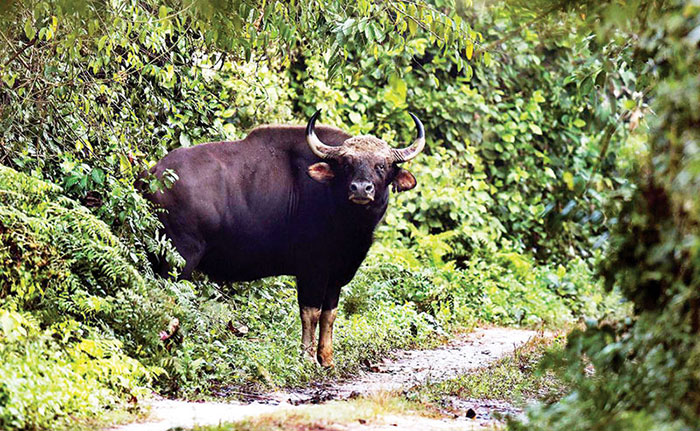
As wildlife diplomacy takes wing, government considers Lankan proposal for translocating gaurs
By Suhasini Haidar
and Jacob Koshy
New Delhi October 15, 2022: Close on the heels of the project that translocated cheetahs from Namibia, the Indian government is considering a proposal from Colombo to export a number of gaurs, or Indian bisons, to Sri Lanka to revive the population of gavaras that have been extinct in the island since the end of the 17th century. If the project is cleared, it would be the first such agreement between India and Sri Lanka, and part of a global trend of “wildlife or zoological diplomacy”, say experts.
Sources said the Ministry of External Affairs (MEA), which received the request in August, has now forwarded it to the Ministry of Environment and Forests (MoEF), “seeking comments” on the proposal to transport at least six specimens, including a bull and three to five cows. According to the written proposal, the Sri Lankan Department of Zoological Gardens would then carry out “captive breeding a herd of about a dozen specimens over a five-year period before trial reintroduction to the wild could take place in accordance with [internationally mandated] guidelines for reintroductions”.
S.P. Yadav, Director, National Tiger Conservation Authority, said the proposal was being studied. “We’ll have to evaluate if the conditions for translocation are right, such that the animal can sustainably thrive over there,” he told The Hindu, estimating the evaluation could take a few months.The suggestion for the proposal came from world-renowned Sri Lankan conservationist Rohan Pethiyagoda, who was awarded the Linnean medal 2022 (U.K. -based equivalent of the Nobel prize for zoology) for his work on restoring fresh water and forest biodiversity.
“As a scientific and cultural collaboration between our two countries, I felt this could be an immensely valuable initiative. But I know it is fraught with difficulties,” said Sri Lankan High Commissioner to India Milinda Moragoda who handed over the preliminary request on the basis of Mr. Pethiyagoda’s suggestion. “India is without a doubt Sri Lanka’s closest friend, supporter and trading partner. We have a shared history, shared cultural identity, and shared gene. We even got Buddhism, on whose traditions we derive our national values, from India,” he added.
Experts say that while “zoological diplomacy” had been practised worldwide, they draw a distinction between “gifts or loans” of animals in captivity to translocation and reintroduction of a species, particularly between neighbouring countries with similar eco-systems. For example, American bison herds were supplemented with animals from Canada after the U.S. herds were almost all wiped out, The U.K. has recently introduced the European bison (Wisent) after an estimated 10,000 years in June 2022(its extinct relative the Steppe Bison was believed to have lived there many centuries ago).
Israel has for decades pursued reintroductions, including of Persian fallow deer. Arabian oryx and other species have been released into the Negev desert, and South Africa has recently used the export of cheetahs to other African countries as a diplomatic tool during the post-apartheid era. More recently, Cambodia has requested translocating tigers from India, which is under consideration.
“Much depends on whether the conditions that caused the extinction have been removed, but reintroduction is known and has frequently been taken up between countries where the range is contiguous,” explained Mahesh Rangaran, Professor of History and Environmental Studies at Ashoka University who has studied conservation history, including such attempts. “In that sense, the animal plays a role as a zoological ambassador between nation states,” he added.
Sri Lankan officials say the gaur, called the gavara in Sinhala, was once widespread and archaeological remains in ancient caves in the island included the remains of the animal. By the end of the 17th century, however, the species appears to have been extirpated in Sri Lanka, although they remain prominent in iconography and mythological stories.The Indian gaur, a reclusive beast that lives in the wild, is the largest wild bovine that is a protected species and included in Schedule I of the Wild Life Protection Act, 1972 and listed as vulnerable in the International Union for Conservation of Nature (IUCN) Red List. There are about 13,000 to 30,000 gaurs in the world with approximately 85% of the population present in India. It is also found in Burma and Thailand.
The first-ever population estimation exercise of the Indian gaur carried out in the Nilgiris Forest Division in February 2020 estimated around 2,000 Indian gaurs to be inhabiting the division. This came after instances of people being attacked or injured by the bison primarily in and around plantations came to light. In 2019, for which the most recent numbers are available, three people were killed and seven injured in attacks by gaurs.
(The Hindu)








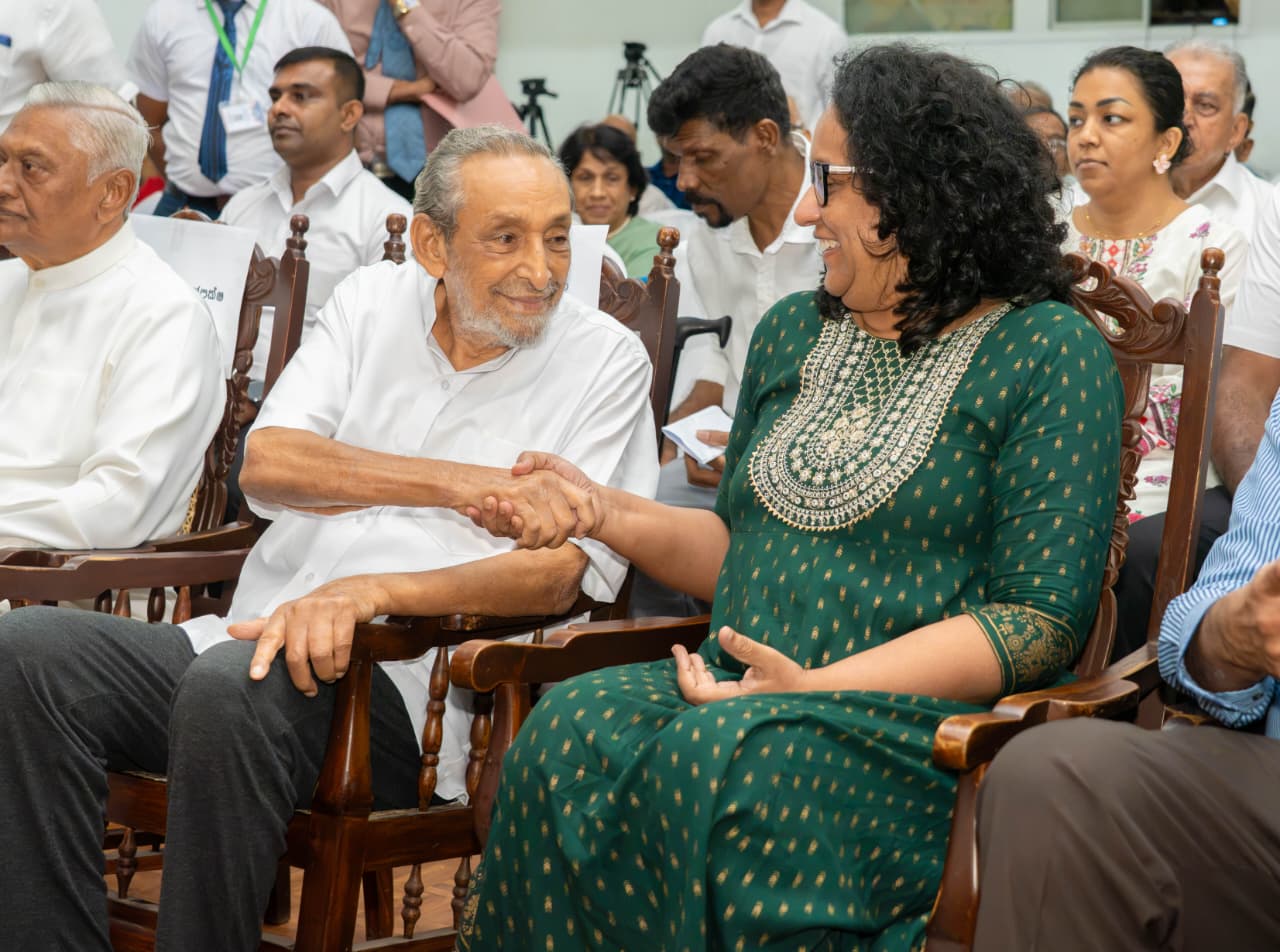
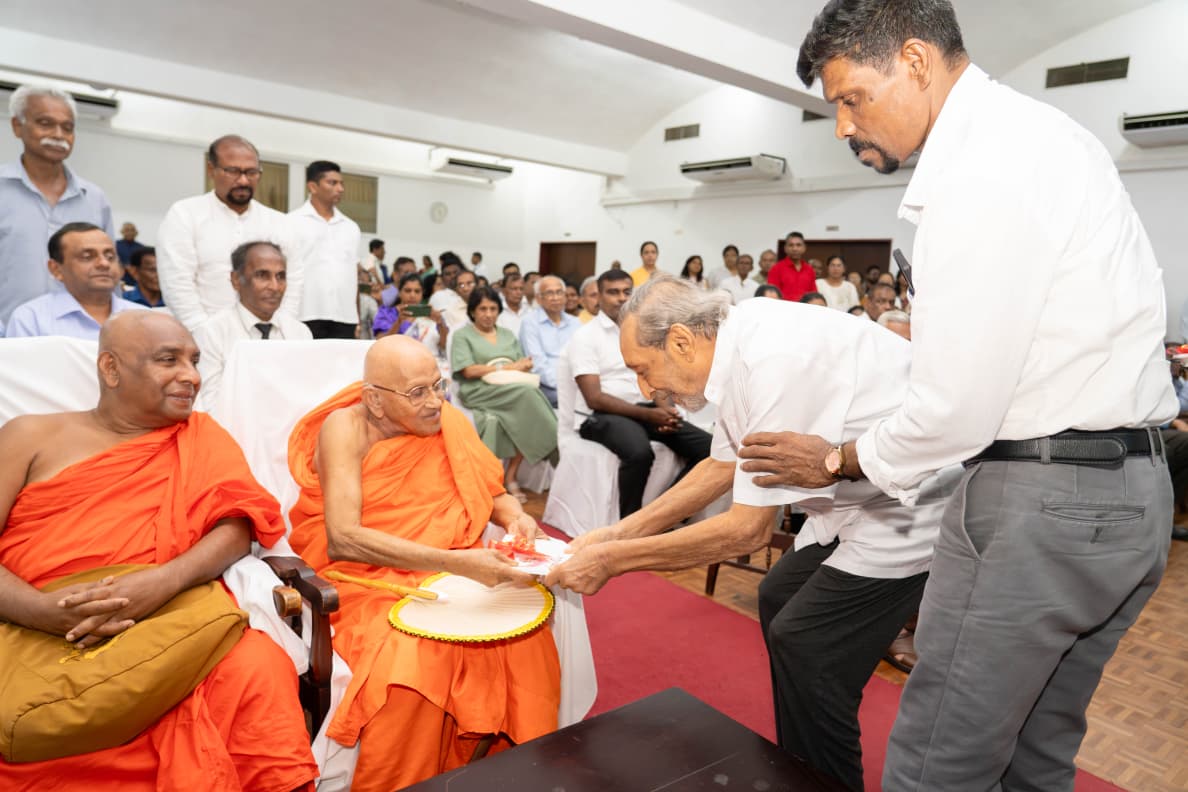
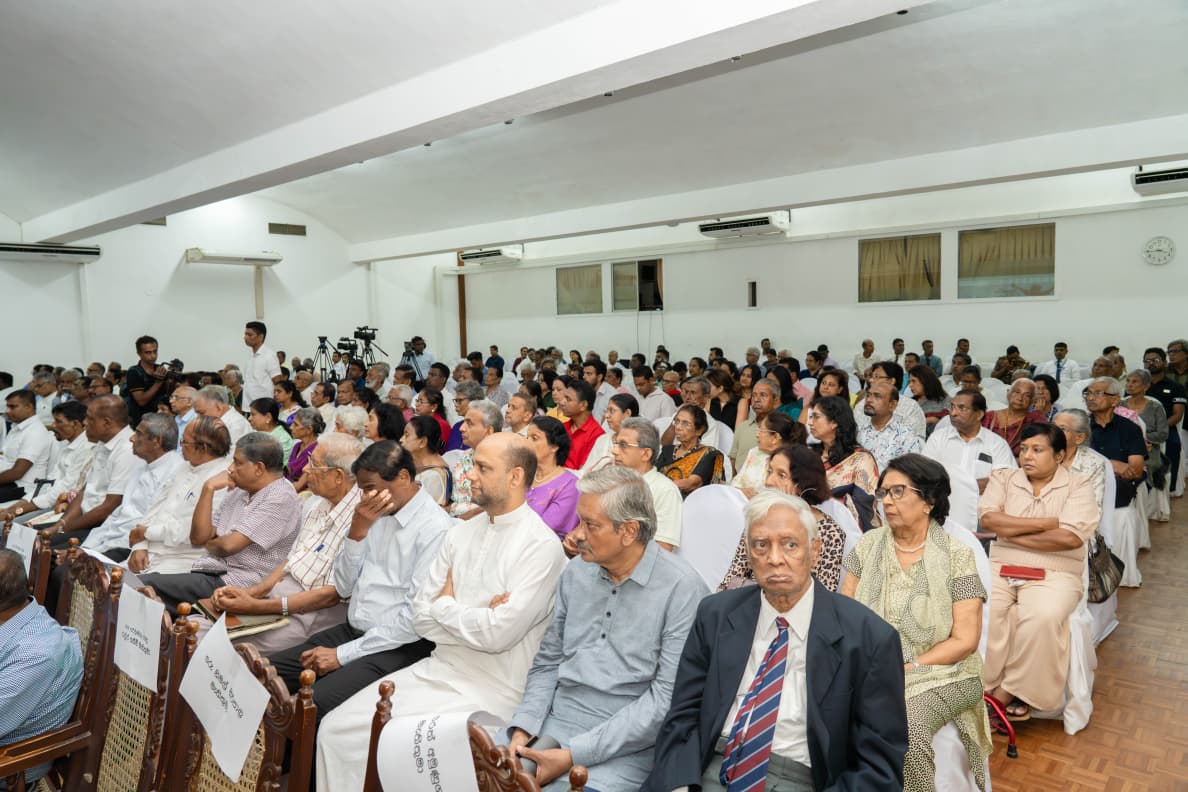
The book “Rathuwewi Mihimadala”, written based on the life story of Vasudeva Nanayakkara, Leader of the Democratic Left Front, was launched on Friday [August 28] at the Bandaranaike Memorial International Conference Hall (BMICH) in Colombo, with the participation of Prime Minister Dr. Harini Amarasuriya.
Speaking to the media afterwards about Vasudeva Nanayakkara, Prime Minister Dr. Harini Amarasuriya stated:
“Vasudeva Nanayakkara is a prominent figure in Sri Lankan politics, particularly within the left-wing political movement. There were several influential figures within the left movement, and that left-wing influence also contributed to bringing the country to where it is today. Politically, there were areas where we agreed and areas where we did not. However, I have great respect for the contribution made by Vasudeva Nanayakkara to left-wing politics. When I entered Parliament in 2020, Vasudeva Nanayakkara was also in Parliament. We sat in the same row, and we spoke about many important as well as interesting moments in his political career. I believe some of these experiences have also been included in this book.”
The event was attended by members of the Maha Sangha, Minister of Justice Harshana Nanayakkara, former President Maithripala Sirisena, former Speakers Karu Jayasuriya and Chamal Rajapaksa, as well as party members, family members and friends.
[Prime Minister’s Media Division]
Latest News
Sun directly overhead Mannar, Periyamadu, Puliyankulam, Welioya and Pulmoddai about 12.11 noon today (30)


The sun is going to be directly over the latitudes of Sri Lanka from 28th of August to 07th of September due to its apparent southward relative motion.
The nearest places of Sri Lanka over which the sun is overhead today (30) are Mannar, Periyamadu, Puliyankulam, Welioya and
Pulmoddai about 12.11 noon.
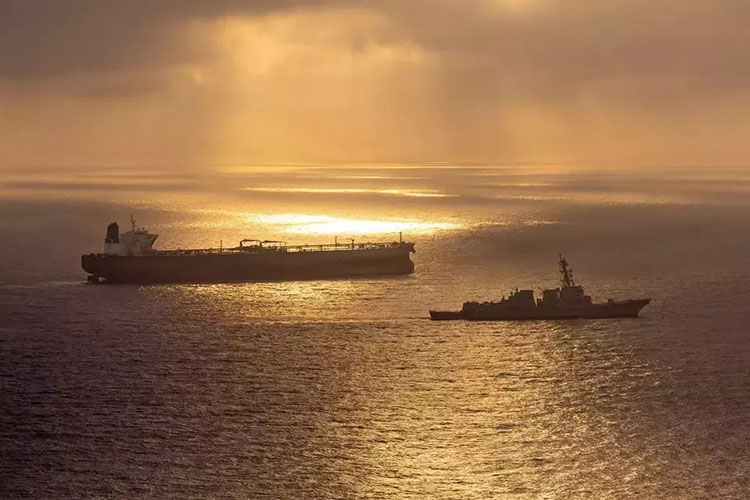
(AFP) Sri Lanka’s maritime authorities were monitoring a fleet of 11 US-sanctioned Iranian oil tankers just off the island’s southern coast, the foreign minister said Wednesday.
The tankers were spotted close to the Galle harbour where an Iranian frigate, IRIS Dena, was sunk by a US submarine in March, killing 104 sailors. Sri Lanka’s navy rescued 32 Iranian sailors from that frigate.
Iranian vessels have been in limbo, unable to return to their home port because of a US blockade.
Sri Lanka’s Foreign minister Vijitha Herath said the tankers were in international waters where they had freedom of navigation.
“These ships are away from our territorial waters… we have no hold on them, nor have we facilitated them,” Herath told AFP.
The military deployed reconnaissance aircraft and patrol boats to monitor the vessels outside Sri Lanka’s 12-nautical-mile territorial waters, a military official told AFP on condition of anonymity.
“There is no indication of any ship-to-ship transfer of oil or illegal discharge of pollutants, so there is no basis for Sri Lankan authorities to take action against them,” the official said.
Many Iranian merchant vessels moved east towards the Strait of Malacca and Singapore due to US sanctions, while several remained near Sri Lankan waters, authorities said.
Sri Lankan officials said Washington had not formally notified Colombo about sanctioned Iranian-flagged vessels

Head teacher evacuated 900 children minutes before school washed away by Nepal floods

UPDATE: Seven killed and 23 missing after boat capsizes off northern Cyprus, says Turkish Cypriot PM

Iceland votes against restarting talks on joining EU

“Rathuwewi Mihimadala” Book Launched with the Participation of the Prime Minister

Turkiye, Somalia forces free cargo vessel hijacked by pirates

Ferry carrying 260 people capsizes off northern Cyprus coast

‘Dates have the highest sugar content to fight Coronavirus’

Sunday Island 27 December – Headlines

#SundayIsland 17th December – Headlines

Sunday Island – 28th March

Sunday Island Headlines – 21 March

Sunday Island – 21st February – Headlines
-

 News6 days ago
Missing doctor’s body found in Mahiyanganaya
-
 News6 days ago
Australia declines to release Finance Secy Suriyapperuma’s citizenship details
-

 News6 days ago
22A: BASL suggests CJ recuse himself from hearing petitions
-

 News3 days ago
Eight politicians in drug kingpin probe
-

 Editorial7 days ago
Govts. drag feet as undergrads age
-
 Features5 days ago
Insights from Chieftains of Uva: Genealogy of two Kandyan Families – Part II
-

 Business3 days ago
Sri Lanka opens up: A new season of direct connectivity
-

 Features3 days ago
Redefining ageing in Sri Lanka